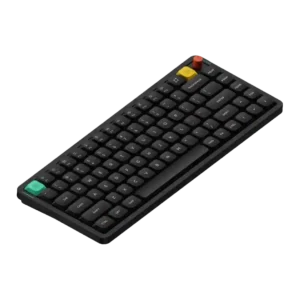
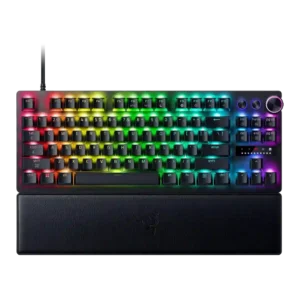
Across reviews, the Air75 V3 is described as cleaner, less hollow, and more refined than earlier low-profile boards, with notably pleasing stock sound.
Acoustic tuning is serviceable rather than class-leading in the limited direct coverage.
Reviewers consistently say actuation is accurate and easy to fine-tune, with precise recognition across the adjustable range.
Analog input support is real and flexible, but usefulness depends heavily on the game; some reviewers loved the controller-like movement while others found support inconsistent.
Brightness can be adjusted in software or shortcuts, but at least one review reports that brightness looks uneven across rows.
Backlight brightness is generally strong, especially on 8K variants, but one review found it dimmer than expected.
Battery life is one of the product’s strongest themes, with very high claims and mostly positive real-world impressions, even if one reviewer measured less than the headline figure.
Build quality is consistently praised, with the aluminum-top and ABS-bottom construction feeling solid and premium in use.
Build quality is widely described as premium and solid, usually anchored by the aluminum top plate, though a few reviews note the plastic lower shell or lighter weight.
Only one review comments directly on the included cable, calling it decent overall but not especially premium.
The detachable braided USB cable is viewed positively where mentioned.
Compatibility is a standout strength, especially for Mac users, while Windows and even iPad use are also described positively.
Compatibility is limited where discussed, especially because Synapse setup is unavailable for Mac and some analog features depend on game support.
Tri-mode connectivity is widely praised for being flexible and easy to manage, with clear switches and convenient dongle storage.
Connectivity is basic wired USB-C only. Reviews frame that as functional but not flexible.
Customization is broad, spanning remaps, knob actions, layers, lighting, and app-specific functions, which gives the board flexibility beyond stock use.
Customization is one of the strongest recurring themes, spanning actuation depth, per-key tuning, profiles, onboard controls, and game-specific behavior.
Its compact footprint is repeatedly framed as a strength for crowded desks, workstation setups, and mobile use.
The smaller variants clearly improve desk space for mouse movement.
Durability impressions are favorable thanks to wear-resistant PBT caps, engraved labels, and generally robust construction.
Durability coverage is positive, with reviewers pointing to heavy-use readiness, long switch life, and materials that should hold up well.
At least one review explicitly notes that switch changes are easy and do not require soldering, making experimentation accessible.
Direct evidence is limited, but one review notes the switch mechanism can be replaced with another Razer optical switch.
Low-profile geometry, sculpted caps, and practical feet contribute to a more comfortable and fatigue-friendly experience than many bulkier keyboards.
Ergonomics are generally positive due to tilt options and smaller variants, though comfort still depends on whether you like the firmer wrist rest.
The board includes extra gaming-oriented functions such as SOCD-style features, but reviews still treat them as bonuses rather than the core reason to buy it.
Features like Snap Tap, dual-step inputs, special onboard shortcuts, and controller-style behavior are repeatedly framed as meaningful competitive extras.
The chassis is described as sturdy with minimal flex, giving the board a firmer and more confident feel than its slim profile suggests.
One review found the chassis rigid enough for normal use but not especially resistant to twisting.
Gaming performance is viewed as competent for casual or secondary gaming, but most reviews still position the board as productivity-first.
Gaming performance is the standout theme across reviews, with repeated praise for speed, responsiveness, counter-strafing, and overall competitive advantage.
Hot-swap support is a well-documented feature and a consistent selling point across the review set.
Reviews explicitly note that the switches are not hot-swappable, which is a clear downside versus more mod-friendly competitors.
The included double-shot PBT keycaps are regularly described as durable, solid-feeling, and appropriate for the premium target.
Double-shot PBT keycaps are widely praised for texture, grip, durability, and premium feel.
The reviewed typing response feels fast and accurate, with one review explicitly calling out strong speed and confidence while typing.
Supported reviews describe the keyboard as highly responsive in both gaming and repeated inputs.
One review notes that the spacing differs slightly from standard mechanical boards, creating a brief adjustment period before comfort returns.
Where discussed, spacing is praised as comfortable and easy to work with.
One long-term review specifically notes low rattle on stabilized keys, suggesting stable key behavior in day-to-day use.
One review specifically praised reduced keycap wobble on the updated 8K model.
Latency is treated as low enough for responsive wired or dongle use, but the board is still framed as casual-gaming friendly rather than esports-first.
Latency is a clear strength, with reviews describing inputs as almost instantaneous and citing very low measured latency on 8K variants.
ISO and JIS availability stand out as meaningful layout additions that broaden the board’s appeal beyond standard ANSI buyers.
Layout flexibility is good, with reviewers noting full-size, TKL, and Mini variants.
Backlighting is present, but one review says the stock caps do not let light shine through the legends well, which can hurt night visibility.
Legend visibility is strong where discussed, with bright, even shine-through coverage.
Macro support is clearly present and repeatedly mentioned as part of the board’s practical everyday customization set.
Macro support is present and directly mentioned, but detailed evaluation is limited.
Reviewers like the material mix of aluminum and ABS, finding it premium enough for the price while keeping the board practical for a low-profile design.
Where discussed directly, the aluminum top plate was seen as a premium materials choice.
Media controls are easy to access through knob functions or software remapping, which adds day-to-day convenience.
Media controls are generally useful and well featured, though a few reviewers disliked the button layout or feel.
Noise level depends heavily on switch choice; the silent option is genuinely quiet, but the board still retains recognizable mechanical character with other switches.
Noise level is the clearest weakness across reviews; many call the board loud, clacky, or rattly, especially for shared spaces.
Onboard memory is positively covered where discussed, making saved profiles and settings practical without always relying on software.
Pass-through is a clear miss; reviews explicitly call out the lack of USB passthrough or extra ports.
Reviews explicitly call out the lack of per-key RGB programming, so lighting control is broad but not granular.
Per-key RGB control is explicitly supported and reviewed positively, though direct discussion is limited.
Multiple reviews cite 1000Hz wired and 2.4GHz polling, with lower Bluetooth polling, which aligns with its work-first but gaming-capable positioning.
Polling performance is strong overall because 8K variants are praised heavily, though one TKL review criticized the base model for topping out at 1,000Hz.
Portability remains a clear strength thanks to the compact low-profile build, though several reviews note the V3 is heavier than some earlier or rival options.
Limited direct evidence suggests portability is decent because the board is relatively light for its class.
Profile management is a strength, with onboard and quick-switch profiles repeatedly praised.
Rapid Trigger is one of the product line’s signature strengths, repeatedly praised for faster resets, easier counter-strafing, and better competitive responsiveness.
Reliability feedback is mostly positive overall, but a handful of reviewers mention software quirks, connection hiccups, or mode oddities.
Where discussed, reliability is a positive, tied to longer-lasting optical switches and fewer failure-prone contacts.
Lighting customization is a recurring positive, with reviews noting easy adjustment of main effects and side-light behavior through software.
Chroma customization is deep, with per-key effects and broad control called out positively.
RGB lighting is generally well-liked for brightness, effects, or appearance, though one review noticed uneven perceived brightness across rows.
RGB quality is consistently praised for bright, even diffusion and strong legend coverage.
The 75% low-profile form factor keeps the board compact and practical while still covering the keys most reviewers expect to use daily.
Form factor coverage is positive, especially for TKL and Mini models that balance features with gaming space.
Software quality is mostly viewed positively for ease of use and capability, though some reviews still mention missing polish or early recognition issues.
Synapse offers very deep control, but reviewers are split on usability; some found it powerful and easy enough, while others called it bloated, finicky, or overwhelming.
Gasket mounting and internal foam are repeatedly credited with reducing hollowness and harshness, materially improving how the board sounds and feels.
Sound damping improved on newer and 8K versions thanks to foam and added dampening, but reviews still do not place the keyboard among the best-sounding boards overall.
Stabilizers are usually described as solid and low-rattle, especially on major keys, though at least one review stops short of calling them class-leading.
Stabilizer quality is mixed: some reviews note good lube or no rattle, while others still hear scratchiness or feel the implementation is only average.
Reviewers consistently praise the switch feel as smooth, tactile or well-traveled depending on switch choice, giving the board a more satisfying feel than many low-profile peers.
Reviewers generally liked the Gen-2 analog optical switches for feeling smooth, light, and fast, though a few noted wobble or a less comfortable bottom-out.
Switch choice covers linear, tactile, and silent options, but multiple reviews still call the overall selection limited compared with some expectations or prior models.
Long-session comfort is a recurring positive, with reviewers highlighting cushioned feel, comfortable profiles, and usable typing angles.
Typing comfort is mixed. Some reviewers found it comfortable for long sessions, but others never fully adjusted or disliked the rigid typing feel.
Typing feel is a major strength, with reviews repeatedly calling it premium, cushioned, refined, and more pleasant than previous Air models.
Typing feel trends positive once actuation is tuned, with many reviewers calling it smooth or satisfying, but several still preferred it more for gaming than daily typing.
Reviewers generally feel the feature set justifies the price, but several also note that it sits above some competing low-profile options.
Value is mixed. Reviewers respect the feature set and performance, but many still question the premium price unless you specifically want its competitive features.
Volume control works out of the box and is widely mentioned, though some reviewers criticize the knob’s wobble rather than the function itself.
The dedicated volume control is positively received in the limited direct coverage.
Wireless performance is generally useful and fast enough, but a few reviews report isolated Bluetooth or dongle quirks that keep it from feeling flawless.
Wrist rest quality is mixed overall: some reviewers appreciated the support, but many found it firmer and less plush than earlier Razer rests.