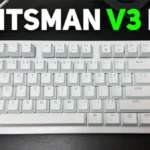
- Better: polling rate The Corsair K70 Pro TKL was noted as offering 8,000Hz polling while the Huntsman Mini remains at 1,000Hz.
Razer Huntsman V3 Pro Review
Bottom Line
Choose it for competitive FPS play, rapid-trigger tuning, and premium Razer customization. Skip it if you need a quiet daily typing board, plush wrist rest, wireless flexibility, or the best value.
Best for competitive FPS players and keyboard enthusiasts who will tune actuation, Rapid Trigger, Snap Tap, profiles, and Synapse settings. It also suits users who prioritize Razer RGB and onboard gaming controls over quiet typing.
Not for casual buyers who will not use analog or rapid-trigger features, or for frequent typists who prioritize quiet sound and plush wrist comfort. It is also a poor fit for users wanting wireless performance or USB passthrough.
Review evidence paints the Razer Huntsman V3 Pro as a performance-first keyboard with standout actuation tuning, Rapid Trigger, Snap Tap, and strong gaming responsiveness. Competitive-focused reviewers repeatedly praised how fast, precise, and customizable it feels, especially for FPS movement and per-key actuation profiles. The tradeoff is that daily typing, acoustics, and comfort are far less settled: some reviewers enjoyed the smooth switches and improved 8K feel, while others criticized loud sound, ping, hollow tone, and firm wrist rests. Value also depends heavily on whether the buyer will actually use the advanced analog features.
Compared in Reviews
Products reviewers directly compared with this model, grouped into quick takeaways.
Wooting 60HE
- Compared: analog keyboard benchmark The Wooting 60HE was treated as the benchmark for this category of customizable-switch keyboards.
- Alternative: analog gaming keyboard alternative The Huntsman V3 Pro TKL was framed as an excellent alternative to the Wooting 60HE.
Akko MOD007
- Cheaper: price and actuation customization The Akko MOD007 was cited as a much cheaper keyboard with similar actuation customization.
Feature Scorecards
Summary
50 reviewed features- Very positive 4.5-5.0 50% 25 features
- Positive 3.5-4.4 22% 11 features
- Neutral 2.5-3.4 18% 9 features
- Negative 1.5-2.4 10% 5 features
- Very negative below 1.5 0% 0 features
Pros
-
Responsiveness was a clear strength, with reviewers describing exceptional gaming responsiveness, more responsive feel in A/B testing, and latency-free input.
-
Actuation precision was praised where discussed, with reviewers calling the switches incredibly accurate and the press measurement impressive.
-
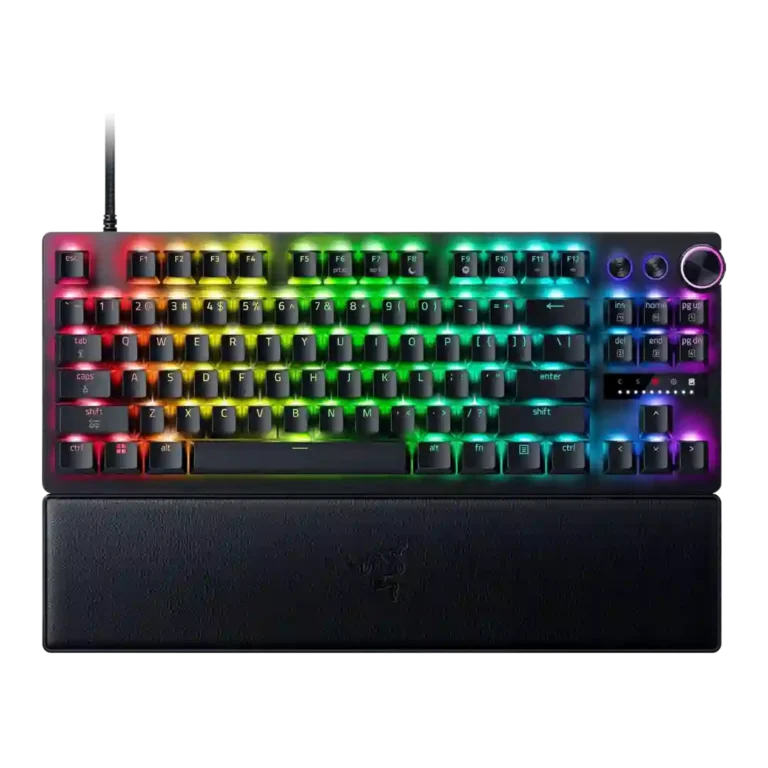
Legend visibility scored well where discussed, with reviewers praising strong, even illumination and clear coverage across key legends.
-
Ergonomics were praised in one 8K review for comfortable spacing, angle, and low-strain long sessions.
-
Layout options were praised on the Mini because its dual-step arrow-key implementation felt intuitive and useful.
-
Per-key lighting control was specifically praised because lighting patterns can be applied on a per-key basis.
-
RGB customization was praised for seemingly endless options through Chroma and Synapse.
-
RGB lighting quality was a consistent positive, with reviewers calling it outstanding, excellent, vivid, precise, and strong-looking.
-
Gaming performance was the strongest consensus point, with many reviewers calling it exceptional, dreamlike, best-in-class, or especially suited to competitive play.
-
Customization options were a major strength, with reviewers praising actuation tuning, onboard controls, deep Synapse options, and flexible per-game settings.
-
Extra gaming features such as Snap Tap and competitive movement tools were praised as game-changing, helpful, or edge-giving for shooters.
-
Profile management was praised for saved gaming and general-use profiles, onboard custom profiles, and quick switching between work and game actuation.
-
Size and form factor were positive overall, with reviewers praising the 60% model and TKL as practical gaming-friendly sizes.
-
Latency impressions were mostly excellent, especially on 8K models, though one reviewer argued the measured advantage was too small for humans to feel.
-
Keycap quality was broadly praised for textured PBT feel, grip, shine resistance, and premium feel, with only one reviewer more mildly positive.
-
Rapid Trigger was one of the most consistently praised features, described as palpable, fast, and effective for repeated inputs, though a few reviewers said casual players may not notice or may need tuning.
-
Reviewers generally liked the analog optical switch feel once tuned, often calling it smooth, controlled, or butter-smooth, though one reviewer found the light presses awkward for daily typing.
-
Design aesthetics were mostly positive, with reviewers describing the board as sleek, refined, premium-looking, tame, or stylish.
-
Volume control was usually praised for tactile grip, quality metal feel, or convenient dial operation.
-
Desk space efficiency was a strength for compact models and TKL layouts, especially for mouse room and cramped desks.
-
Durability was supported by positive comments about PBT keycaps offering better long-term durability than ABS.
-
Key spacing was praised in the 8K TKL review for helping typing feel comfortable.
-
Materials quality was praised for doubleshot PBT plastic that resists wear and finger oils.
-
Portability was praised in one TKL review because the board was light, sturdy, and easy to carry to LAN events.
-
Build quality was usually praised for premium materials, sturdy construction, and solid feel, though a few reviewers found the plastic-heavy body cheaper than expected.
-
Key stability was mostly positive because reviewers noted reduced stem wobble or well-controlled stabilizing, though larger keys could still wobble on the Mini.
-
Typing feel varied strongly by reviewer and version: some found it smooth, satisfying, or much improved, while others called it mediocre or less satisfying than premium mechanical boards.
-
Stabilizer quality was generally positive but not perfect, with reviewers noting lubrication and tuning while also mentioning noise on some stabilizers.
-
Cable quality was mildly positive, with the included cable judged good enough for most users.
-
Onboard memory was positively noted because four editable onboard profiles were enough for the reviewer.
-
Sound dampening was mixed by model: reviewers praised added foam or reduced vibrations on some versions, while the Mini was criticized for needing more padding.
-
Frame rigidity was split by version and reviewer, ranging from minimal or zero flex to a complaint that the chassis gave under twisting.
-
Polling-rate feedback split by version: several reviewers criticized or downplayed 1,000Hz models, while 8K reviewers praised the headline reporting speed but sometimes questioned its practical impact.
-
Typing comfort was mixed, with some reviewers finding the board comfortable or a good all-rounder and others not enjoying long typing sessions.
-
Backlight brightness was mixed: reviewers praised bright shine-through lighting, but one found the lighting dimmer than expected and another noted a whine.
-
Ease of switch replacement was mixed-positive only for Razer optical parts, with one reviewer saying the switch mechanism can be replaced easily.
Cons
-
Media controls were mixed: some reviewers liked the dial and buttons, but others found buttons stiff, unclear, awkward, or unsatisfying.
-
Software quality was mixed: Synapse enables deep tuning and profiles, but reviewers repeatedly called it bloated, confusing, finicky, or overwhelming.
-
Value for money was the broadest tradeoff: reviewers respected the performance and upgrades but often questioned the high price for casual players.
-
Analog input support was highly mixed: some reviewers loved controller-like precision, while others found game support limited, inconsistent, or too much hassle.
-
Wrist rest quality was highly divisive: a few reviewers loved the support, but many criticized the firm, thin, or uncomfortable design.
-
Macro customization was only lightly supported, with one reviewer noting that three custom macro buttons is not a huge number.
-
Acoustics were one of the most disputed areas: 8K updates sounded improved to some reviewers, but many others criticized ping, hollow tone, or poor sound.
-
Compatibility was mixed because Mac users lack Synapse and some games fought keyboard/controller input switching.
-
Connectivity drew criticism from one reviewer because the USB connection and cable routing could be better.
-
Passthrough features were a weakness, with reviewers wishing for extra ports or noting the lack of USB passthrough.
-
Noise level was a recurring concern; many reviewers called the keyboard loud, noisy, or unsuitable for shared spaces, despite one positive note about minimal noise.
-
Switch choice was a weakness: reviewers noted proprietary or non-swappable switch limitations, making the board less flexible for users who prefer changing switch types.
-
Reliability concerns came from RGB failures in one review and occasional spacebar double tapping in another.
-
Hot-swappable switches were a weakness where discussed because the keyboard is not hot-swappable at the switch level.
Compared With Category Average
Compared with other Gaming Keyboards, this product is above average in legend visibility, below average in noise level, acoustics, reliability.
Summary
8 compared features- Above average 0.4+ pts higher 13% 1 feature
- Same as average within 0.3 pts 0% 0 features
- Below average 0.4+ pts lower 88% 7 features
| Attribute | This product | Category average | Difference |
|---|---|---|---|
| noise level | 2.2 | 3.9 | -1.7 |
| acoustics | 2.6 | 4.1 | -1.5 |
| reliability | 2.0 | 3.7 | -1.7 |
| legend visibility | 5.0 | 3.5 | +1.5 |
| compatibility | 2.5 | 3.9 | -1.4 |
| hot-swappable switches | 2.0 | 3.4 | -1.4 |
| connectivity | 2.5 | 3.9 | -1.4 |
| switch options | 2.0 | 3.2 | -1.2 |
FAQ
Is the Razer Huntsman V3 Pro good for competitive gaming?
Yes. Reviewers repeatedly praised its fast actuation, Rapid Trigger, Snap Tap, and responsive feel, especially for FPS movement and strafing.
Is it comfortable for typing?
Opinions were mixed. Some reviewers enjoyed the smooth switches and improved typing feel, while others found the typing sound, light actuation, or overall feel less ideal for daily work.
Is the wrist rest good?
It depends on the reviewer and version. Some found it supportive or comfortable, but many criticized it as thin, hard, stiff, or less plush than older Razer wrist rests.
Does analog input work well?
The analog switches can feel excellent in supported games, but several reviewers found controller-style input game-dependent, limited, or frustrating to configure.
Is the keyboard loud?
Many reviewers said yes. Noise, ping, hollow sound, or poor acoustics were among the most repeated concerns, though some 8K reviews noted improved dampening.
Is it worth the price?
Reviewers generally saw the value for serious competitive players who will use the advanced features. Casual players and frequent typists were often warned that cheaper or better-sounding options may make more sense.
Sample Expert Reviews We Analyzed
These are a few of the reviews included in our analysis.
Video Reviews
- Review score
- 4.0/5
- Review score
- 3.9/5
Article Reviews
Consider This Instead
If you want better noise level
Choose ASUS ROG Falchion RX. It scores 4.9 vs 2.2 for noise level, with a 4.2 overall score.
If you want better reliability
Choose ASUS ROG Azoth Extreme. It scores 5.0 vs 2.0 for reliability, with a 4.1 overall score.
If you want better switch options
Choose MonsGeek M1 V5 HE. It scores 4.8 vs 2.0 for switch options, with a 4.3 overall score.
If you want better wrist rest quality
Choose Keychron K2 HE. It scores 5.0 vs 3.1 for wrist rest quality, with a 4.2 overall score.
Overall Top Gaming Keyboards Alternatives
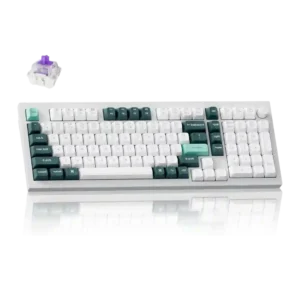
Good if you want a premium 96% Hall Effect keyboard for work and gaming with excellent build, sound, and customization. Skip it if you need cheaper esports-first speed, 8,000Hz polling,...
Pros: cable quality, typing comfort
Cons: portability, switch options
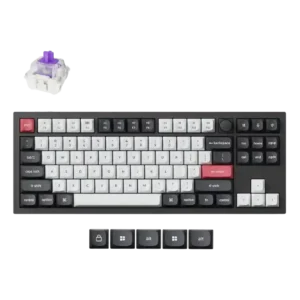
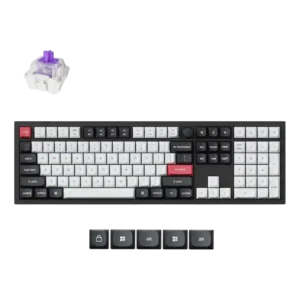
Good if you want a premium full-size Hall Effect keyboard with smooth switches, quiet sound, and deep customization. Skip it if you need a portable, budget-friendly board or broad switch...
Pros: key stability, frame rigidity
Cons: portability, switch options
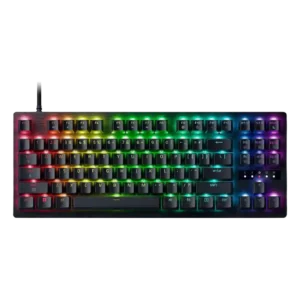
Good if you want a compact Hall Effect keyboard with smooth typing, strong gaming response, bright RGB, and good value. Skip it if you need polished software, quiet heavy presses,...
Pros: desk space efficiency, layout options
Cons: compatibility
Good if you want a premium, quiet TKL Hall Effect keyboard for typing and gaming. Skip it if price, portability, 8,000Hz polling, or broad switch choice matters most.
Pros: build quality, extra gaming features
Cons: switch options, hot-swappable switches