rapid trigger support
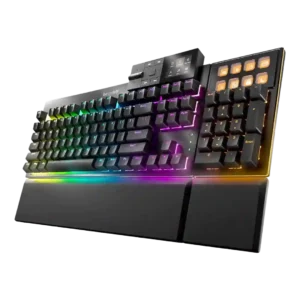
be quiet! Dark Mount
1.6
Rapid trigger support was a repeated weakness: several reviewers explicitly missed Rapid Trigger, adjustable actuation, SOCD, or similar modern gaming functions.
Glorious GMMK 3 HE
4.6
Rapid Trigger earned positive comments for quick successive inputs and snappy response, especially for fast gaming movement.
frame rigidity
be quiet! Dark Mount
4.7
Frame rigidity was repeatedly praised, with reviewers describing the board as solid, planted, robust, and difficult to flex.
Glorious GMMK 3 HE
2.5
Frame rigidity was mixed, with one reviewer noting chassis flex while another said the case was generally rigid aside from top-case movement.
acoustics
be quiet! Dark Mount
5.0
Acoustics were exceptional in the reviews that discussed them directly, with reviewers saying the silent operation was nailed.
Glorious GMMK 3 HE
3.0
Acoustics were mixed to weak on the stock board, with comments ranging from merely decent sound to loud clack or nothing special.
key stability
be quiet! Dark Mount
5.0
Key stability was strong in the main board, with reviewers highlighting little wobble, consistent stabilized keys, and planted feel.
Glorious GMMK 3 HE
3.0
One reviewer noticed slight switch/key wobble, making key stability only average in that review.
extra gaming features
be quiet! Dark Mount
2.3
Extra gaming features were a repeated weakness, with reviewers missing hall effect switches, higher polling, SOCD, analog features, and adjustable actuation.
Glorious GMMK 3 HE
4.0
Extra gaming features were appreciated, but some reviewers thought the base board lacked certain competitive features for the price.
keycap quality
be quiet! Dark Mount
4.6
Keycap quality was mostly praised for PBT durability, texture, and legend longevity, with one reviewer finding the caps slipperier than a competitor.
Glorious GMMK 3 HE
2.9
Keycap quality was inconsistent: PC Gamer liked the crisp GPBT caps, while several others found stock caps cheap-feeling, tacky, or prone to fingerprints.
sound dampening
be quiet! Dark Mount
5.0
Sound dampening was one of the clearest strengths, with reviewers praising the multi-layer foam/silicone system for reducing echo, vibration, and typing noise.
Glorious GMMK 3 HE
3.3
Sound dampening received polarized feedback: one reviewer disliked the thin foam, while others praised internal damping and quiet typing setups.
latency
be quiet! Dark Mount
4.5
Latency-related feedback was positive where discussed, with reviewers saying response time felt sharp and quick during fast or complex input.
Glorious GMMK 3 HE
3.0
Latency impressions were mixed: one review downplayed the perceptible benefit of low lag, while another found it slower than some HE competitors.
macro customization
be quiet! Dark Mount
4.4
Macro customization was broadly praised for display keys, programmable functions, and Windows macro features, though some reviewers found the scope less advanced or less useful than expected.
Glorious GMMK 3 HE
3.2
Macro customization was useful in principle, but evidence was mixed because one reviewer said macros were forgotten during testing.
size and form factor
be quiet! Dark Mount
2.8
Size and form factor drew mixed reactions: one reviewer found the look dated, while another called it big with all modules attached.
Glorious GMMK 3 HE
4.0
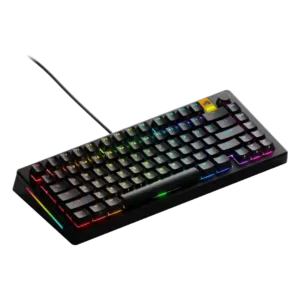
Size and form factor split by preference: compact layouts pleased small-form-factor users, but one 75% reviewer missed a numpad and mistyped initially.
reliability
be quiet! Dark Mount
2.8
Reliability was mixed, with several reviewers reporting bugs, wake issues, profile resets, media desync, loose feet, or port-cover issues.
Glorious GMMK 3 HE
4.0
Reliability was mostly positive from reviewers discussing long-term use and repairability, but one software-related macro issue reduced confidence.
switch options
be quiet! Dark Mount
3.5
Switch choice was seen as adequate but somewhat limited: reviewers liked the silent linear and tactile options, while one wanted a wider default selection.
Glorious GMMK 3 HE
4.6
Reviewers liked the variety of HE switch choices, including tactile/clicky options and samples, with several calling the switch ecosystem unusually flexible.
build quality
be quiet! Dark Mount
4.6
Build quality was broadly strong, especially for the core board, with reviewers praising rigidity, premium feel, and robust construction.
Glorious GMMK 3 HE
3.6
Build quality split reviewers sharply: custom or higher-spec builds felt solid and premium, but the stock plastic base drew repeated criticism.
noise level
be quiet! Dark Mount
4.9
Noise level was the strongest consensus point: reviewers repeatedly called the board extremely quiet, whisper-like, or among the quietest mechanical keyboards they had used.
Glorious GMMK 3 HE
3.9
Noise level varied by configuration, from muted and late-night-friendly to a louder clack on some switch/keycap combinations.
backlight brightness
be quiet! Dark Mount
3.5
Backlight brightness feedback was mixed: reviewers liked brightness controls, but one noted the display-key brightness could not be adjusted.
Glorious GMMK 3 HE
4.5
Backlighting was viewed positively, with powerful LEDs and transparent caps helping the RGB stand out.
compatibility
be quiet! Dark Mount
4.8
Compatibility was a strength because reviewers praised the web-based software for Mac, Linux, browser use, and situations where installing software is not allowed.
Glorious GMMK 3 HE
3.8
Compatibility was mixed: one reviewer had seamless console use, while another warned about possible north-facing LED keycap compatibility issues.
value for money
be quiet! Dark Mount
3.5
Value for money split reviewers: some saw strong value in the modules and quiet design, while others felt the high price was hard to justify.
Glorious GMMK 3 HE
2.6
Value for money was the most common concern: reviewers praised the platform but repeatedly criticized the base price and costly upgrades.
gaming performance
be quiet! Dark Mount
3.8
Gaming performance was judged good for general play, but not exceptional for competitive users because advanced esports features are missing.
Glorious GMMK 3 HE
4.6
Gaming performance was generally strong thanks to precise HE inputs, rapid-trigger controls, and advanced actuation, though one review saw the feature set as merely decent.
profile management
be quiet! Dark Mount
3.8
Profile management was useful but imperfect, with onboard/browser profile handling praised and profile switching or web limitations criticized.
Glorious GMMK 3 HE
4.5
Profile management was praised for handy physical switching and game-specific profile support.
typing feel
be quiet! Dark Mount
4.9
Typing feel was one of the strongest areas, repeatedly described as excellent, smooth, cushioned, fast, and satisfying.
Glorious GMMK 3 HE
4.3
Typing feel was one of the most split areas: several reviewers loved the smooth or upgraded experience, while one called the stock setup mixed.
typing comfort
be quiet! Dark Mount
5.0
Typing comfort was strongly positive, with reviewers calling the board soft, cushioned, comfortable, and suitable for long writing sessions.
Glorious GMMK 3 HE
4.5
Typing comfort was generally favorable, helped by accurate typing, cushioning, and satisfying feedback, especially with preferred switches.
actuation consistency
be quiet! Dark Mount
4.8
Actuation was described as smooth, consistent, and accurate, though reviewers also noted the board lacks adjustable actuation controls.
Glorious GMMK 3 HE
4.3
Adjustable actuation was credited with reducing accidental inputs and improving typing accuracy for different typing styles.
portability
be quiet! Dark Mount
3.5
Portability was limited but not wholly negative: one reviewer found it more portable than a daily driver, though the broader design remains a modular desk keyboard.
Glorious GMMK 3 HE
4.0
Portability was helped by a lightweight or non-cumbersome feel despite the board's substantial construction.
RGB lighting quality
be quiet! Dark Mount
4.4
RGB lighting quality was generally strong, with praise for vivid, uniform, attractive light bars and ambiance; minor complaints included distracting edge lighting or weak purple tones.
Glorious GMMK 3 HE
4.8
RGB lighting quality was a clear strength, with reviewers calling it pretty, eye-popping, and effective through transparent keycaps.
software quality
be quiet! Dark Mount
4.2
Software quality was good overall but inconsistent: reviewers praised the interface and web option, while others reported bugs, missing refinements, or basic functionality.
Glorious GMMK 3 HE
3.8
Software quality was highly mixed: some found Core easy or lightweight, while others reported unintuitive controls, bugs, or polling/profile issues.
desk space efficiency
be quiet! Dark Mount
4.9
Desk space efficiency was praised because the detachable or left-mounted numpad frees mouse space without giving up full-size functionality.
Glorious GMMK 3 HE
4.5
Desk space efficiency was supported by praise for the compact yet functional 75% layout.
polling rate
be quiet! Dark Mount
3.5
The 1,000Hz polling rate was considered fine or a reasonable tradeoff, but reviewers noted it does not compete with faster 8,000Hz gaming boards.
Glorious GMMK 3 HE
3.1
The 8K polling rate impressed some reviewers, but others called its real-world value limited or had trouble accessing it in software.
per-key lighting control
be quiet! Dark Mount
5.0
Per-key lighting control was positively noted where discussed, especially for custom areas, individual keys, and multi-layer lighting control.
Glorious GMMK 3 HE
4.7
Per-key lighting control was supported by multiple reviews that liked individual-key or per-key RGB adjustment.
materials quality
be quiet! Dark Mount
3.6
Materials quality was mixed: reviewers liked aluminum, PBT, and premium materials, but several criticized plastic or ABS elements at this price.
Glorious GMMK 3 HE
3.3
Materials quality depended heavily on configuration: metal/custom builds felt premium, while the stock plastic and keycaps were often criticized for the price.
hot-swappable switches
be quiet! Dark Mount
5.0
Hot-swappable switches were consistently praised for making switches and keycaps easy to replace or customize.
Glorious GMMK 3 HE
4.7
Hot-swappability was a standout, especially the unusual ability to use both magnetic HE and mechanical MX-style switches.
switch feel
be quiet! Dark Mount
4.8
Reviewers consistently praised the Dark Mount switches as smooth, quiet, and pleasing to type on, with only minor caveats about personal preference or lack of a thocky feel.
Glorious GMMK 3 HE
4.5
Switch feel ranged from smooth and satisfying to transformative with upgraded Panda switches, though one reviewer was less convinced by the stock Fox HE feel.
cable quality
be quiet! Dark Mount
3.8
Cable quality received limited but positive-to-mixed feedback, with reviewers noting useful length and toughness but missing older routing or extension conveniences.
Glorious GMMK 3 HE
3.5
Cable quality was only lightly evaluated, with one reviewer calling the included USB-C cable basic but nice enough.
ease of switch replacement
be quiet! Dark Mount
5.0
Ease of switch replacement was positively supported by the hot-swap design and included tools, making switch and keycap replacement straightforward.
Glorious GMMK 3 HE
4.8
Switch replacement was described as easy or convenient across reviews, helped by included tools and simplified access.
RGB customization
be quiet! Dark Mount
4.6
RGB customization was widely praised for deep software control, per-key effects, layers, presets, and web or app configuration.
Glorious GMMK 3 HE
4.8
RGB customization was praised for Core-based control, individual-key color options, and layered per-key lighting effects.
legend visibility
be quiet! Dark Mount
3.7
Legend visibility was mixed: shine-through legends and alternative assignments were praised, while stealth lock icons were criticized as hard to see.
Glorious GMMK 3 HE
3.5
Legend visibility drew a qualified note because one reviewer observed imperfections in the key fonts.
layout options
be quiet! Dark Mount
4.8
Layout options were a major strength, with praise for the TKL/full-size modular design, ambidextrous numpad, and many possible configurations.
Glorious GMMK 3 HE
4.8
Layout options were viewed as a strength because reviewers noted 65%, 75%, and 100% choices serving different preferences.
design aesthetics
be quiet! Dark Mount
4.3
Design aesthetics were mostly praised for mature, premium, clean, or elegant styling, though some reviewers felt it looked dated or plain.
Glorious GMMK 3 HE
4.3
Design aesthetics varied from dull to stunning, with RGB and custom color/material choices often lifting the visual impression.
customization options
be quiet! Dark Mount
4.7
Customization options were a defining strength, with reviewers highlighting modular layouts, remapping, display keys, RGB, macros, and flexible setup choices.
Glorious GMMK 3 HE
4.8
Customization was the strongest consensus attribute, with every review highlighting unusually deep physical, software, or checkout configuration options.
key responsiveness
be quiet! Dark Mount
4.7
Key response was generally described as sharp, precise, and dependable across typing and gaming, with repeated praise for accurate registration.
Glorious GMMK 3 HE
4.7
Responsiveness was widely praised, with reviewers citing crisp action, precise game movement, and highly responsive inputs.
durability
be quiet! Dark Mount
4.8
Durability was supported by praise for PBT keycaps, sturdy construction, long-term feel, and robust materials.
Glorious GMMK 3 HE
4.8
Durability was viewed positively where reviewers focused on repairability, longevity, and Hall Effect switch lifespan.
onboard memory
be quiet! Dark Mount
4.5
Onboard memory was praised where discussed, especially for saving settings or using board-level controls without constant software dependence.
Glorious GMMK 3 HE
4.5
Onboard memory was positively tied to saving and switching up to three keyboard profiles from the board.
analog input support
be quiet! Dark Mount
1.5
Analog input support was criticized as absent, with reviewers noting the switches are not analog, optical, or hall effect.
Glorious GMMK 3 HENo score yet
connectivity
be quiet! Dark Mount
3.9
Connectivity was mixed: wired and modular connections could be sturdy and easy, but reviewers also criticized play, no wireless, or wired-only limitations.
Glorious GMMK 3 HENo score yet
ergonomics
be quiet! Dark Mount
4.6
Ergonomics were generally positive thanks to angle adjustment, wrist rests, modular positioning, and reduced reach, though magnetic feet had some robustness caveats.
Glorious GMMK 3 HENo score yet
media controls
be quiet! Dark Mount
3.5
Media controls were mixed: reviewers liked the dock concept and utility, but many criticized shallow buttons, mushy feel, confusing navigation, or limited flexibility.
Glorious GMMK 3 HENo score yet
passthrough features
be quiet! Dark Mount
1.5
Passthrough features were a weakness, with reviewers criticizing the lack of USB passthrough or the wired-only connection limitations.
Glorious GMMK 3 HENo score yet
stabilizer quality
be quiet! Dark Mount
4.9
Stabilizer quality was a standout, with reviewers repeatedly praising lubrication, reduced rattle, and quiet large keys.
Glorious GMMK 3 HENo score yet
volume control
be quiet! Dark Mount
3.6
Volume control was mixed, with praise for feel and grip offset by criticism that the roller was imprecise or awkward.
Glorious GMMK 3 HENo score yet
wireless performance
be quiet! Dark Mount
1.5
Wireless performance was a weakness because reviewers explicitly noted the lack of 2.4GHz or Bluetooth as a drawback for cable-free users.
Glorious GMMK 3 HENo score yet
wrist rest quality
be quiet! Dark Mount
4.2
Wrist rest quality was mixed but mostly positive: many reviewers found the rests comfortable and secure, while a few criticized alignment, height, or security.
Glorious GMMK 3 HENo score yet