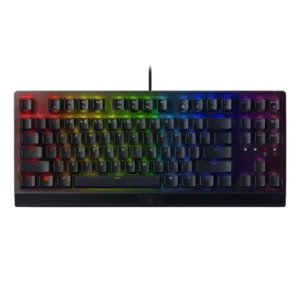
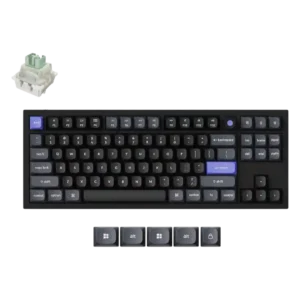
The keyboard’s sound profile draws criticism in the scored reviews. Instead of refined acoustics, reviewers point to ping and generally unpleasant sound character.
One direct review describes the Q3 HE 8K switches as having a soft typing sound, pointing to pleasant but not aggressively damped acoustics.
The direct coverage emphasizes fine-grained actuation tuning, with 0.1mm-level adjustment and very high sensitivity.
Analog-style input is explicitly supported through Analog Mode, which the review frames as controller-like variable input.
Backlight brightness is generally described as vibrant, but not every reviewer sees it as intense. One reviewer specifically calls it more toned down than a brighter competitor.
One direct review shows adjustable lighting brightness and notes the board can be run at full brightness.
Build quality is one of the clearest positives across the reviews. The keyboard is repeatedly described as quality, sturdy, and premium-feeling.
Both direct Q3 HE 8K reviews present the board as strongly built, highlighting an all-metal body and a durable, stable feel.
Cable quality is consistently positive. Reviewers like the braided cable and routing options, even though the cable is not detachable.
One direct review calls out a nice included USB cable and adapter, suggesting the wired package feels solid rather than bare-bones.
Compatibility is functional but limited. Reviews indicate straightforward PC use, while deeper customization is tied to Windows-focused software requirements.
Direct Q3 HE 8K coverage supports broad cross-platform use, with Windows, Mac, and Linux compatibility mentioned across the reviews.
Connectivity is clearly wired-only in the scored reviews. This version is repeatedly described as using a fixed USB-A cable rather than wireless options.
The scored Q3 HE 8K evidence points to a wired connection path, with USB Type-C and reviewer setup focused on wired mode.
Broader customization is one of the keyboard’s strengths. Reviews mention remapping, secondary functions, lighting changes, and deeper software control.
Both direct reviews emphasize deep tuning, from web-based controls to per-key behavior changes and actuation setup.
Desk space efficiency is a weakness in the scored reviews. Writers explicitly mention struggling to fit the keyboard comfortably next to a mouse setup.
The direct evidence describes the Q3 HE 8K as an 80% board, which supports a relatively space-conscious desk footprint compared with larger layouts.
Durability is a repeated theme, with mentions of long-lasting doubleshot caps, high keystroke lifespan, and good resistance to wear. Reviewers generally treat the keyboard as built to last.
One direct review specifically ties the aluminum body to better resistance to physical damage.
The direct evidence supports reasonably easy switch work because the board is explicitly described as hot-swappable.
Ergonomics are generally positive once the board is positioned correctly. Reviews praise typing angles, wrist support, and comfortable hand positioning, though size can make ideal placement harder.
One direct review says the keycap shaping gives the board a more ergonomic feel.
The scored reviews mention gaming-specific extras such as gaming mode, anti-ghosting behavior, and Windows-key lock functionality. These features add practical gaming utility beyond basic typing.
The direct reviews highlight a strong gaming feature set, including snap action, last-key priority, analog-style input, and multi-action keystrokes.
Frame rigidity is praised in the scored reviews. Writers call out very low flex and a notably stable feel.
Both direct reviews tie the metal construction to a stable, rigid overall feel.
In gaming, the keyboard is described as responsive and dependable. Reviewers report that it keeps up in play without causing missed actions or obvious input problems.
Both direct reviews frame the Q3 HE 8K as a gaming-first board that can provide a real edge in play.
One review explicitly states that the keyboard does not support hot swapping. There is no contradictory evidence in the uploaded review set.
Hot-swap support is present, but the direct evidence also shows that compatibility is not especially broad.
The doubleshot ABS keycaps are repeatedly viewed as solid and durable, with praise for their texture and toughness. Reviews do not position them as a premium PBT solution, but they are still well regarded.
The direct reviews point to solid keycap execution through double-shot PBT and thoughtful shaping.
Key response is a clear strength in the reviews. Writers describe the keys as immediately or highly responsive, with no missed combos in use.
One direct review explicitly praises super-fast response times.
Reviews say the key shape and spacing feel standard and comfortable. Nothing suggests an unusual or cramped layout here.
Key stability is generally decent, with one review praising the switch design for added stability. Another review notes slight wobble on some larger keys, so stability is good rather than flawless.
One review explicitly says latency is remarkably low. No conflicting latency complaints appear in the uploaded full-size reviews used for scoring.
One direct review explicitly describes the board as delivering ultra-low latency.
One review frames the standard BlackWidow V3 as the full-size layout option within the V3 family. That gives the line some layout variety even though this specific model is the standard full-size board.
The direct evidence identifies the board as an 80% layout, supporting a compact but not ultra-small format.
One review says the lighting can look uneven and smudged, which hurts how cleanly the legends present. That makes legend clarity less convincing than the keyboard’s stronger areas.
Macro support is consistently confirmed. Reviews mention both software-based macro setup and on-the-fly macro recording.
Both direct reviews describe strong macro support, from custom macro programming to bundling multiple actions into one press.
Reviews consistently mention the aluminum top and overall premium-feeling material mix. The build is not all-metal, but the material choices still leave a strong impression.
Both direct reviews speak positively about the materials, especially the aluminum chassis and overall premium feel.
Media controls are a consistent convenience feature in the reviews. Writers repeatedly mention the roller/button setup for playback functions.
The direct evidence points to useful knob-based media-style control, with one review also noting knob remapping in software.
Noise level is a recurring tradeoff. The keyboard is repeatedly described as clicky and can be loud enough to bother others, especially with green switches.
The only direct sound commentary says the switches have a soft typing sound, which suggests moderate noise rather than a harsh report.
Onboard memory is directly referenced in the scored reviews, with support for up to five profiles. That gives the keyboard some settings portability without starting from scratch every time.
One direct review says the keyboard can store up to three profiles, supporting limited onboard storage.
One scored review explicitly says there is no USB pass-through. That feature is simply absent rather than weakly implemented.
Per-key lighting control is directly confirmed in multiple reviews. The software is described as allowing individual-key lighting adjustment rather than only broad presets.
Direct Q3 HE 8K coverage confirms per-key lighting hardware, with each key described as having south-facing backlighting.
One review directly cites a 1000 Hz polling rate alongside N-key rollover. That points to strong input reporting on paper and in use.
Both direct reviews make 8K polling a headline strength and treat it as a major performance differentiator.
One scored review says the keyboard is lightweight for a full-size mechanical board. That helps portability somewhat, even though the keyboard is still physically large.
One direct review measures the board at 1886g, so portability looks like a clear weakness rather than a strength.
Profile management is a repeated feature in the reviews. Writers mention saving or syncing up to five profiles.
One direct review says the board can store three profiles and switch among them from a rear toggle.
Both direct reviews confirm rapid trigger support and present it as part of the competitive feature set.
Reliability comes through strongly in the scored reviews. Writers report no performance issues and no missed key presses or combos in use.
RGB customization is a strong point in the review set. Reviewers highlight Synapse/Chroma controls, broad color choices, and theme-friendly lighting behavior.
The direct evidence supports meaningful RGB control, including multiple lighting zones and adjustable effects.
RGB lighting quality is a mixed strength. Several reviews call it vibrant and eye-catching, while others specifically note uneven bleed-through or smudged-looking illumination on some versions.
One direct review says the lighting can produce high-contrast combinations that make a setup pop.
The keyboard is consistently described as full-size with a numpad. That layout suits buyers who want a traditional desk keyboard, but it also contributes to its bulk.
The direct evidence describes an 80% form factor, keeping the board compact without collapsing into a tiny layout.
Software quality is mixed. One review finds Synapse worked fine and offered flexibility, while another calls it clunky and difficult to use.
Both direct reviews speak well of the web-based configurator, emphasizing remapping depth and the lack of software downloads.
Sound dampening appears limited. The main direct evidence is pinging plus a hollow-sounding spacebar, which points to minimal damping.
One scored review notes slight wobble on larger keys. That suggests stabilizer performance is serviceable, but not a standout strength.
Across reviews, the switch feel is consistently described as clicky and tactile, with the green option getting favorable comparisons to familiar blue-style switches. The feel is generally positive for both typing and gaming.
One direct review says the switches deliver a stable and responsive typing feel.
Reviews confirm the keyboard is sold with two switch choices, green and yellow. That gives buyers some flexibility, but the overall switch selection is still limited.
Hot-swap exists, but one direct review clearly says switch choice is restricted to Keychron’s own Ultra-Fast Lime Magnetic switches.
Typing comfort is a notable strength in the scored reviews. Writers describe the keys as gentle on the hands and comfortable over extended use.
One direct review says the keycap profile hugs the fingers, supporting comfortable longer use once adapted to the shape.
Typing feel is broadly positive, with reviewers describing it as pleasant, fast, and accurate. One review is more measured, calling the switches decent rather than exceptional.
One direct review directly praises the Q3 HE 8K typing feel as stable and responsive.
Value for money is generally positive in the scored reviews. Writers describe the pricing as sensible or mid-range, though not necessarily class-leading against every cheaper alternative.
Volume control is one of the keyboard’s most consistently praised extras. Multiple reviews specifically call out the roller or wheel as useful and convenient.
One direct review explicitly shows a dedicated volume knob.
The included wrist rest is useful and often comfortable, but it is not universally loved. Several reviews say it feels plastic, less premium than the Pro version, or too loosely attached/unattached.