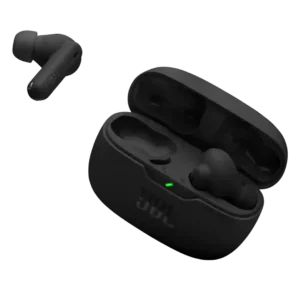
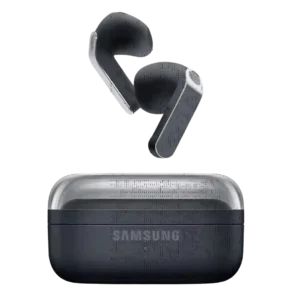
ANC is one of the strongest recurring positives, with several reviewers calling it impressive for the price, though one reviewer finds it only decent and another says it is not great.
ANC is the main weakness. The open design limits sealing, so the effect is modest against chatter and steady noise and much less convincing against higher-frequency or sudden sounds, even if it appears somewhat improved over Buds 3.
One review reports easy Android pairing, with no Android-specific problems mentioned.
Android compatibility is strong, and Galaxy phones get the most complete experience. Non-Samsung Android users still get meaningful control through Samsung's software, but the best extras remain Galaxy-first.
The JBL app is repeatedly described as useful for this price, adding audio modes, EQ changes, controls, and extra features.
Samsung's settings integration and Wearables app expose useful controls, EQ options, and ANC adjustments. The software feels feature-rich, though some advanced features stay exclusive to Galaxy phones.
Multiple reviews say video mode or newer tuning helps lip-sync and reduces audio lag when watching video.
The sound is generally bass-forward, but reactions split: some reviewers like the punch and weight, while others think the bass is weak or could go further.
Bass is a standout strength, with reviewers repeatedly calling it punchy, warm, and satisfyingly deep for an open-fit earbud. It is not as textured as the Pro model, but it gives the Buds 4 a lively, full sound.
Battery life is a clear standout across the reviews, with repeated praise for 40-hour total endurance and strong single-charge runtime.
Battery life is acceptable rather than exceptional at roughly 5 to 6 hours from the buds and up to 30 hours with the case. Reviewers treat endurance as serviceable, not a category advantage.
Bluetooth performance is consistently positive, with stable connections, Bluetooth 5.3 mentions, and smooth pairing to watches and other devices.
Connectivity looks strong overall, helped by Bluetooth 6.1 and solid range in real-world use. The bigger limitation is not dropouts but that the smartest switching behavior is mostly reserved for Samsung-centric setups.
Build quality is viewed as solid for the money, with reviewers saying the buds do not feel flimsy even if they are not ultra-premium.
Build and finish are seen as more refined than the previous generation, with a more polished stem design and cleaner execution. The Buds 4 feel premium enough for the price, though not especially rugged.
The case is easy to dock buds into and pocket-friendly, but one reviewer finds removing the buds a little awkward.
The case earns positive marks for its flatter layout, translucent lid, and practical physical pairing button. It feels useful and better thought out than a generic accessory shell.
USB-C charging and fast top-ups are positives, but one reviewer notes the lack of wireless charging.
Several reviewers say the earbuds stay comfortable over longer sessions and do not create much fatigue.
Comfort is one of the Buds 4's biggest wins, especially for listeners who prefer open-fit earbuds or have smaller ears. The only caveat is that the looser fit can require occasional readjustment.
The design is a familiar stem style, and reviewers generally like the clean, simple look.
Design feedback is favorable overall: slimmer stems, a cleaner case, and a more polished look improve the presentation. The main knock is that the styling still feels very close to Apple's template.
Fit is secure for several reviewers, including during movement, but one reviewer says their ear shape still caused fit problems.
The box includes multiple ear tip sizes, giving users some room to improve fit.
The app supports both preset EQ choices and user-made custom EQ profiles, which reviewers see as a meaningful feature.
EQ flexibility is unusually strong for mainstream earbuds, with both a multi-band equalizer and preset options available. This gives listeners real room to tailor the sound signature.
The app includes a Find My Buds feature that can make a misplaced earbud beep.
At least one review confirms the package includes a USB-C charging cable and multiple ear tip sizes.
One review says the earbuds do not offer the nuanced separation you would get from a higher-end model.
The Buds 4 separate vocals, synths, percussion, and layered mixes well for the class. They are not hyper-analytical, but they rarely sound congested or smeared.
A four-microphone setup is repeatedly called out as a key hardware feature, even though call-performance opinions still vary.
One review specifically says wind and background noise make the mics sound worse on calls.
Noise reduction during calls performs better than expected and can suppress loud background noise effectively. The tradeoff is that strong processing can make the speaker sound a bit digitized.
Call quality is the main tradeoff area: some reviewers say the mic setup sounds clear enough, while another says voices get muddy and distant in noise.
Call quality is good in quiet spaces and usable in noisier ones, but it is not best-in-class. Voices remain understandable, though they can sound slightly muffled or processed compared with stronger premium rivals.
Midrange is generally described as decent to clear, without major praise or major complaints.
Midrange tuning is clear and well judged, keeping vocals and core instruments present even with the Buds 4's fuller bass. This helps the earbuds sound richer than many entry-level competitors.
One reviewer says the earbuds paired easily across multiple device types, suggesting broad everyday compatibility.
Basic listening works across devices, but the overall experience is plainly Samsung-centric. iPhone users and people mixing Apple, Windows, and Galaxy hardware lose access to several of the best features.
One review explicitly says multipoint lets you switch between devices instantly.
Automatic switching is strongest inside the Galaxy ecosystem and notably less convenient elsewhere. Mixed-device users should expect more manual intervention than they would want at this price.
Isolation is usable but mixed: one review says you do get some isolation, while another says outside sound still gets in.
Passive isolation is weak because the open design does not create a proper seal. That physical limitation is a big reason the ANC never becomes truly class-competitive.
One reviewer says the case slides into a pocket easily, supporting good day-to-day portability.
Preset EQ options are useful rather than gimmicky, with reviewers saying presets can improve the sound to better match preferences.
Voice Aware exists, but one reviewer says it is hard to notice working in practice.
Setup is described as straightforward, with quick pairing and little friction across the reviews that mention it.
Setup and customization are straightforward on Galaxy phones and still manageable on other Android devices through Wearables. The biggest friction comes from Galaxy-only options rather than a confusing interface.
One reviewer explicitly reports noticeable sound leakage.
Overall sound quality ranges from decent to very good depending on taste, with stronger reactions from reviewers who like a consumer-friendly tuning.
Sound quality is the clearest reason to buy the Buds 4. Across the reviews, the earbuds are praised for rich tuning, strong bass, clear vocals, and a presentation that beats many direct price rivals.
For everyday earbuds, the Buds 4 sound fairly open and spacious, especially with higher-quality Galaxy playback modes enabled. They do not sound huge, but they avoid the boxed-in feel common at this tier.
The spatial sound feature is present, but one review says it does not create a truly immersive result.
Spatial audio is present as a headline feature, but clear enthusiasm is limited. It adds another box to the feature list more than it defines the Buds 4 listening experience.
Two reviews say the buds stay put well during movement, including casual activity and running.
Fit stability is acceptable for regular daily use, but the open shape can shift enough to require adjustment. This is not the best pick for people who prioritize a locked-in feel.
Touch controls are described as easy to use and feature-rich enough for playback, ANC, and other basic actions.
Touch and stem-based controls are a strength. Reviewers repeatedly call them easy to locate, responsive, and customizable, with the flatter stem helping usability.
Transparency and ambient modes work, but the detailed reviews call them basic, digital-sounding, or less natural than pricier alternatives.
Treble gets mixed feedback, from washed out in one review to crisp and clear in others.
Treble comes through cleanly with good detail and vocal presence. Reviewers do not describe it as harsh or thin, which helps the Buds 4 avoid sounding brittle despite their lively tuning.
Multiple reviews confirm USB-C charging support on the case or in-box cable.
Value is one of the clearest strengths, with repeated praise for how much battery, ANC, and features JBL fits into the price.
Hold controls can trigger the phone's voice assistant, with one review specifically noting Android and iOS behavior.
Voice assistant support is solid on paper, with access to Bixby and Gemini plus Galaxy-focused conveniences. It adds real hands-free utility, even if reviewers do not treat it as the product's main selling point.
One review says the earbuds get pretty loud.
The earbuds are consistently described as IP54-rated or sweat/splash resistant, making them suitable for workouts and light rain.
IP54 is enough for sweat and light splashes, making the Buds 4 workable for everyday workouts and commuting. Still, the rating is not especially rugged and is a downgrade from tougher earlier protection.
Reviewers call them lightweight and easy to keep in the ear for long stretches.