Average score
P1
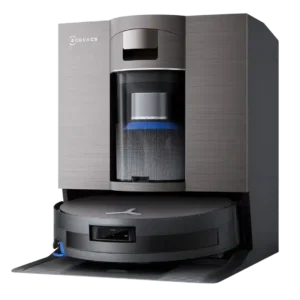
Product 1: Ecovacs Deebot X11 OmniCyclone
3.9
P2
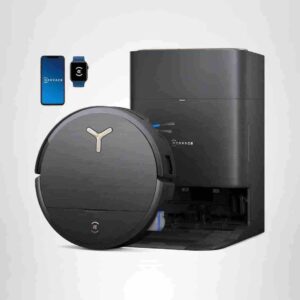
Product 2: Ecovacs Deebot X9 Pro Omni...
3.9
Accessories and Tools
P1
Product 1: Ecovacs Deebot X11 OmniCyclone
2.8
Accessory feedback was mixed: some appreciated the included cleaning brush, but several reviews criticized the lack of spare brushes, filters, mops, or sample solution.
P2
Product 2: Ecovacs Deebot X9 Pro Omni...
4.0
Included parts were viewed as simple and mostly pre-assembled, with only the ramp and power cord left to attach.
Adaptive chassis lift
P1
Product 1: Ecovacs Deebot X11 OmniCyclone
3.9
Threshold and chassis-lift performance was highly context-dependent, ranging from excellent climbing in some homes to unimpressive or stuck behavior in others.
P2
Product 2: Ecovacs Deebot X9 Pro Omni...
3.4
Adaptive lifting evidence was mixed: one preview praised lift-up design, while The Gadgeteer said the sweeper brush failed to lift in a wet mess.
Aesthetic design and finish
P1
Product 1: Ecovacs Deebot X11 OmniCyclone
4.3
Reviewers generally liked the premium, modern design, metallic accents, and stylish dock, even where the base footprint was divisive.
P2
Product 2: Ecovacs Deebot X9 Pro Omni...
4.4
Design sentiment was strongly positive, with several reviewers praising the brushed finish, sleek base, and premium-looking tower.
AI, Smart, App and Automation
P1
Product 1: Ecovacs Deebot X11 OmniCyclone
3.5
AI, app, and automation evidence was mixed: the app was often capable and feature-rich, but AI modes and voice commands were inconsistent in several reviews.
P2
Product 2: Ecovacs Deebot X9 Pro Omni...
4.5
Smart features and app experience were mostly praised for control depth, Matter, Yiko, and organization, but mapping and control usability drew caveats.
Area Rug Handling
P1
Product 1: Ecovacs Deebot X11 OmniCyclone
2.0
Area-rug handling was a repeated concern, especially with small rugs, tassels, bath mats, door mats, and long-pile rugs.
P2
Product 2: Ecovacs Deebot X9 Pro Omni...
4.1
Area-rug handling was mixed: it recognized rugs well and performed well on carpets/rugs, but one review noted a rug-related stuck incident.
Assembly and Setup
P1
Product 1: Ecovacs Deebot X11 OmniCyclone
4.9
Setup was consistently described as simple, fast, or easy, with the app and QR-code pairing helping most reviewers get running quickly.
P2
Product 2: Ecovacs Deebot X9 Pro Omni...
3.9
Setup was mostly described as simple or stress-free, though one reviewer had initial mapping/setup frustrations.
Automatic shutoff for obstructions
P1
Product 1: Ecovacs Deebot X11 OmniCyclone
3.0
Automatic obstruction shutoff had limited but mixed evidence, with one reviewer appreciating the warning halt while criticizing the situation that triggered it.
P2Product 2: Ecovacs Deebot X9 Pro Omni...
No score yetBag-full indicator
P1
Product 1: Ecovacs Deebot X11 OmniCyclone
2.3
Bag-full indicator evidence was negative, with reviewers wanting clearer or better alerts for when the bagless bin needed emptying.
P2Product 2: Ecovacs Deebot X9 Pro Omni...
No score yetBattery and Charging
P1
Product 1: Ecovacs Deebot X11 OmniCyclone
5.0
Battery and charging was one of the strongest themes, with reviewers praising PowerBoost fast charging and reduced downtime in large homes.
P2
Product 2: Ecovacs Deebot X9 Pro Omni...
3.3
Battery feedback was mixed to weak: some reviewers found runtime sufficient or improved, but Vacuum Wars called high-power battery performance a weak point.
Bin and Bag
P1
Product 1: Ecovacs Deebot X11 OmniCyclone
4.0
The bagless bin was widely seen as a major convenience and cost saver, but reviewers also noted smaller capacity, damp debris, or more frequent manual emptying.
P2
Product 2: Ecovacs Deebot X9 Pro Omni...
2.7
The internal bin was a repeated drawback in Vacuum Wars evidence, with lower-than-average capacity called out.
Build quality and durability
P1
Product 1: Ecovacs Deebot X11 OmniCyclone
4.0
Build quality was mostly positive, with solid construction and no creaky parts, though one reviewer questioned the water-tank handle design.
P2
Product 2: Ecovacs Deebot X9 Pro Omni...
3.5
Build-quality evidence was limited to a mixed design-material impression: the finish looked premium, but the robot still felt plastic up close.
Carpet — High-Pile Pickup
P1
Product 1: Ecovacs Deebot X11 OmniCyclone
2.3
High-pile carpet performance was mixed to weak, with long-pile carpets and carpet sand stress tests exposing limitations.
P2Product 2: Ecovacs Deebot X9 Pro Omni...
No score yetCarpet — Low-Pile Pickup
P1
Product 1: Ecovacs Deebot X11 OmniCyclone
4.5
Low-pile or standard carpet pickup was praised in wall-to-wall carpet testing, with strong daily pickup and grooming.
P2
Product 2: Ecovacs Deebot X9 Pro Omni...
4.7
Low-pile and general carpet pickup was very strong, with awards, rice-on-carpet results, and welcome-mat success.
Carpet — Medium-Pile Pickup
P1
Product 1: Ecovacs Deebot X11 OmniCyclone
4.8
Medium-pile carpet evidence was strong in Vacuum Wars-style testing, where embedded debris scores were well above average.
P2
Product 2: Ecovacs Deebot X9 Pro Omni...
5.0
Carpet pickup and deep-clean results were excellent, with awards-level scores and praise for soft-floor performance.
Clogging and debris prevention
P1
Product 1: Ecovacs Deebot X11 OmniCyclone
2.5
Clogging and debris prevention was mixed: hair systems performed well, but large chunks could still lodge in the canister.
P2
Product 2: Ecovacs Deebot X9 Pro Omni...
1.5
Clogging was a serious weakness in the Lifehacker review, which reported repeated clogs during active vacuuming.
Comparative performance
P1
Product 1: Ecovacs Deebot X11 OmniCyclone
4.3
Comparative performance was strong in several rankings and head-to-head references, though some rivals remained better for navigation or value.
P2
Product 2: Ecovacs Deebot X9 Pro Omni...
4.5
Comparative performance was favorable overall, with awards-level praise and a comparison review finding the X9 slightly stronger than X8 at vacuuming.
Controls and UI
P1
Product 1: Ecovacs Deebot X11 OmniCyclone
4.0
Controls were generally usable through the app, Home app, voice, or physical buttons, though some reviewers preferred app controls over less reliable voice features.
P2
Product 2: Ecovacs Deebot X9 Pro Omni...
3.5
Controls were mixed: PCMag criticized sluggish physical controls, while The Gadgeteer found Yiko voice control worked extremely well.
Corner Cleaning (Robot)
P1
Product 1: Ecovacs Deebot X11 OmniCyclone
2.8
Corner cleaning was mixed to weak: reviewers appreciated edge systems but still reported missed strips, corners, or manual touch-up needs.
P2
Product 2: Ecovacs Deebot X9 Pro Omni...
2.9
Corner cleaning had a notable missing-feature caveat: Vacuum Wars called out the lack of an auto-extending side brush on the X9.
Crevice / Groove Pickup (Hard Floors)
P1
Product 1: Ecovacs Deebot X11 OmniCyclone
4.5
Crevice and groove pickup was positively described where reviewers saw it reach small areas, edges, and crevices.
P2Product 2: Ecovacs Deebot X9 Pro Omni...
No score yetCyclone performance
P1
Product 1: Ecovacs Deebot X11 OmniCyclone
4.3
Cyclone performance was generally praised for easy bagless emptying and strong auto-empty behavior, with some maintenance caveats.
P2Product 2: Ecovacs Deebot X9 Pro Omni...
No score yetDocking and Auto-Empty Reliability (Robot)
P1
Product 1: Ecovacs Deebot X11 OmniCyclone
3.7
Docking and auto-empty reliability was mixed: most auto-empty results were good, but one reviewer had a malfunction requiring replacement.
P2
Product 2: Ecovacs Deebot X9 Pro Omni...
3.5
Docking and auto-empty reliability was mixed, with recharge/resume and dock functions praised but one PCMag test reporting a clogged self-empty event.
Dock noise
P1
Product 1: Ecovacs Deebot X11 OmniCyclone
2.5
Dock noise was a consistent caveat: normal cleaning could be quiet, but auto-emptying and maintenance cycles were often loud or jarring.
P2Product 2: Ecovacs Deebot X9 Pro Omni...
No score yetDried-On Stain Removal
P1
Product 1: Ecovacs Deebot X11 OmniCyclone
4.3
Dried-on stain removal was usually strong, especially in tests with coffee, jam, jelly, and soy sauce, though one review saw poor ketchup-stain detection.
P2
Product 2: Ecovacs Deebot X9 Pro Omni...
4.7
Dried-on stain results were very strong overall, including record-level test praise, with only a comparison review noting the X8 was slightly better.
Ease of use
P1
Product 1: Ecovacs Deebot X11 OmniCyclone
3.5
Ease of use was mostly positive, but one review warned that deeper app settings and voice features could confuse less technical users.
P2
Product 2: Ecovacs Deebot X9 Pro Omni...
3.9
Ease of use was polarized, with set-it-and-forget-it praise offset by Lifehacker's complaint about excessive intervention.
Edge and Baseboard Cleaning (Hard Floors)
P1
Product 1: Ecovacs Deebot X11 OmniCyclone
4.6
Hard-floor edge and baseboard cleaning was often praised for close coverage, although several reviews still found corner or border limitations.
P2
Product 2: Ecovacs Deebot X9 Pro Omni...
4.0
Edge and baseboard mopping was often praised, especially the extending roller, but some reviewers found missed strips or edge debris.
Edge‑Following Accuracy (Robot)
P1
Product 1: Ecovacs Deebot X11 OmniCyclone
3.0
Edge-following accuracy was mixed, with some daily cleaning working fine but uneven following or odd fluctuations near moulding.
P2Product 2: Ecovacs Deebot X9 Pro Omni...
No score yetEmptying and Mess Control
P1
Product 1: Ecovacs Deebot X11 OmniCyclone
3.3
Emptying and mess control was mixed: bagless emptying was convenient, but damp debris, dust, and more frequent manual emptying were common caveats.
P2
Product 2: Ecovacs Deebot X9 Pro Omni...
2.5
Emptying and mess control were mixed to weak, with reports of dropped cat litter, threshold debris, and wet-mess spreading.
Filtration / Dust Containment
P1
Product 1: Ecovacs Deebot X11 OmniCyclone
3.8
Dust containment earned moderate praise for the bagless filtration concept, but one maintenance review wanted better filter cleaning and exhaust sealing.
P2Product 2: Ecovacs Deebot X9 Pro Omni...
No score yetFloor Drying Time
P1
Product 1: Ecovacs Deebot X11 OmniCyclone
4.5
Floor drying evidence was positive where Vacuum Wars measured very little water left behind after cleaning.
P2
Product 2: Ecovacs Deebot X9 Pro Omni...
4.8
Floor drying was a strength, with praise for low water left behind, adjustable moisture, and a fully dried mop roller.
Floorhead design
P1
Product 1: Ecovacs Deebot X11 OmniCyclone
4.0
The main brush and floorhead design received praise for its anti-tangle approach and pickup support.
P2
Product 2: Ecovacs Deebot X9 Pro Omni...
3.6
Floorhead design drew mixed reactions: The Gadgeteer praised the improved side sweeper, while Lifehacker thought the roller looked undersized.
Floor shine after cleaning
P1
Product 1: Ecovacs Deebot X11 OmniCyclone
5.0
Floor shine was positively mentioned by a reviewer who said hard floors looked shiny and clean after runs.
P2Product 2: Ecovacs Deebot X9 Pro Omni...
No score yetFresh Liquid Pickup Speed
P1
Product 1: Ecovacs Deebot X11 OmniCyclone
5.0
Fresh liquid pickup was excellent where tested, with soy sauce and wet messes cleaned very thoroughly.
P2
Product 2: Ecovacs Deebot X9 Pro Omni...
4.5
Fresh-liquid pickup evidence was positive, including a spilled-milk demo and confidence in the roller mop's wet-spill design.
Hair-removal channel issues
P1Product 1: Ecovacs Deebot X11 OmniCyclone
No score yet
P2
Product 2: Ecovacs Deebot X9 Pro Omni...
1.5
Hair-removal channel issues were negative in Lifehacker's review, where hair wrapped tightly enough to require cutting away.
Hair Pickup — Carpets
P1
Product 1: Ecovacs Deebot X11 OmniCyclone
4.9
Carpet hair pickup was a major strength, with multiple tests reporting perfect or near-perfect pet-hair pickup.
P2
Product 2: Ecovacs Deebot X9 Pro Omni...
4.8
Carpet hair pickup was excellent overall, with high pet-hair scores and praise for removing visible pet hair from rugs and carpet.
Hair Pickup — Hard Floors
P1
Product 1: Ecovacs Deebot X11 OmniCyclone
5.0
Hard-floor hair pickup was praised by a reviewer with pets, who found trace pet hair was collected well.
P2
Product 2: Ecovacs Deebot X9 Pro Omni...
5.0
Hard-floor hair pickup was praised in daily use, including crumbs, hair, and muddy paw prints.
Hair‑Wrap / Tangle Resistance
P1
Product 1: Ecovacs Deebot X11 OmniCyclone
4.7
Hair-wrap resistance was consistently praised, although one Reddit-shaped review still saw long hair collect over time.
P2
Product 2: Ecovacs Deebot X9 Pro Omni...
4.2
Hair-wrap resistance was mostly excellent, with perfect tangle-test results and household praise, though Lifehacker reported hair strangling the roller.
Hard Floor — Fine Dust Pickup
P1
Product 1: Ecovacs Deebot X11 OmniCyclone
4.0
Hard-floor fine-dust pickup was positive in PCMag’s hard-floor testing.
P2
Product 2: Ecovacs Deebot X9 Pro Omni...
4.6
Hard-floor fine-dust pickup was generally strong, with praise for efficient fine-debris pickup and dust/micro-debris collection.
Hard Floor — Large Debris Intake
P1
Product 1: Ecovacs Deebot X11 OmniCyclone
5.0
Hard-floor large-debris intake was praised in a video review that showed it could easily take in large debris.
P2
Product 2: Ecovacs Deebot X9 Pro Omni...
4.1
Large hard-floor debris pickup was mostly positive in tests, though The Gadgeteer saw cracker pieces flung during an extreme wet mess.
Headlight and LED lights
P1
Product 1: Ecovacs Deebot X11 OmniCyclone
4.0
Headlight and LED evidence was positive where the headlight helped the robot navigate in low light without issue.
P2Product 2: Ecovacs Deebot X9 Pro Omni...
No score yetHeating element
P1
Product 1: Ecovacs Deebot X11 OmniCyclone
4.5
The hot-water wash system was praised for reducing bacteria and odors in the mop system.
P2
Product 2: Ecovacs Deebot X9 Pro Omni...
5.0
The heated drying element was praised enthusiastically in one daily-use review for fully drying the mop roller.
Innovation compared to competitors
P1
Product 1: Ecovacs Deebot X11 OmniCyclone
4.6
Innovation compared to competitors was praised, especially for combining bagless auto-emptying, fast charging, roller mopping, and high suction.
P2
Product 2: Ecovacs Deebot X9 Pro Omni...
4.4
Innovation was praised mainly around the roller-mop and convenience advances, though some coverage was preview/demo-based rather than long-term testing.
Kid-friendliness
P1
Product 1: Ecovacs Deebot X11 OmniCyclone
2.5
Kid-friendliness had limited mixed evidence: one long-term reviewer noted the dock-cleaning sound could scare a young child.
P2Product 2: Ecovacs Deebot X9 Pro Omni...
No score yetLarge debris handling
P1
Product 1: Ecovacs Deebot X11 OmniCyclone
4.0
Large debris handling was mostly positive in hard-floor tests, though one review found larger debris more troublesome.
P2
Product 2: Ecovacs Deebot X9 Pro Omni...
2.5
Large-debris handling was mixed to negative: it could pick up debris, but some reviewers saw dropped debris or clogs from larger particles.
Low-profile design
P1
Product 1: Ecovacs Deebot X11 OmniCyclone
3.3
Low-profile design was mixed: the robot fits under much furniture, but some reviewers said it is not actually slim enough or has limited low-furniture clearance.
P2
Product 2: Ecovacs Deebot X9 Pro Omni...
3.4
Low-profile design was mixed: internal navigation helped it get under furniture, but Vacuum Wars noted it was still slightly taller than average.
Maintenance requirements
P1
Product 1: Ecovacs Deebot X11 OmniCyclone
4.4
Maintenance requirements were generally favorable for a flagship, though water tanks, bagless bins, filters, and periodic cleanup still need attention.
P2
Product 2: Ecovacs Deebot X9 Pro Omni...
3.7
Maintenance requirements were mixed: self-maintenance and reminders were praised, while clog-prone use required too much intervention for one reviewer.
Maneuverability and Handling
P1
Product 1: Ecovacs Deebot X11 OmniCyclone
4.0
Maneuverability was positive where reviewers described the robot as agile and capable moving through the home.
P2
Product 2: Ecovacs Deebot X9 Pro Omni...
3.9
Handling was mixed: one review called it clumsy around irregular furniture, while a preview demo praised navigation through a crowded coffee shop.
Map and Path Efficiency (Robot Vacuums)
P1
Product 1: Ecovacs Deebot X11 OmniCyclone
3.4
Mapping and path efficiency were mixed: some reviewers saw fast, reliable mapping, while others reported inaccurate room splits, first-run chaos, or slower navigation.
P2
Product 2: Ecovacs Deebot X9 Pro Omni...
3.7
Navigation and mapping split reviews: Vacuum Wars and Android Authority praised efficiency, while PCMag and Lifehacker criticized blocky or inaccurate maps.
Mop lifting system
P1
Product 1: Ecovacs Deebot X11 OmniCyclone
4.8
Mop lifting worked well in several reviews, keeping rugs and carpet edges dry when transitioning between surfaces.
P2
Product 2: Ecovacs Deebot X9 Pro Omni...
4.5
Mop lifting was praised for keeping carpets dry and lifting components out of the way, though evidence mostly focused on design effectiveness.
Mopping performance
P1
Product 1: Ecovacs Deebot X11 OmniCyclone
4.7
Mopping performance was one of the strongest attributes, with many reviewers praising the roller mop, stain cleaning, edge mopping, and floor finish.
P2
Product 2: Ecovacs Deebot X9 Pro Omni...
4.7
Mopping performance was the most consistent strength, with awards, strong stain results, daily-use praise, and only a few edge/residue caveats.
Noise level
P1
Product 1: Ecovacs Deebot X11 OmniCyclone
4.3
Most reviewers found normal operation quiet for a flagship robot, while a few noted dock emptying or some runs were still noticeable.
P2
Product 2: Ecovacs Deebot X9 Pro Omni...
3.8
Noise feedback was limited and mixed: one review listed quiet operation as a pro, while another disliked how chatty the robot was.
Obstacle Avoidance (Robot)
P1
Product 1: Ecovacs Deebot X11 OmniCyclone
4.1
Obstacle avoidance ranged from excellent cable and object avoidance to failures with socks, toys, bath mats, or cliffs.
P2
Product 2: Ecovacs Deebot X9 Pro Omni...
4.4
Obstacle avoidance was generally above average or impressive, but not flawless; some reviews still reported real-world stuck events.
Odor control
P1
Product 1: Ecovacs Deebot X11 OmniCyclone
4.8
Odor control was mostly positive, with multiple reviewers reporting little or no smell after mopping, though dirty water can smell if left sitting.
P2
Product 2: Ecovacs Deebot X9 Pro Omni...
4.5
Odor-control evidence was positive, with praise for fresh-smelling mop maintenance and drying that helps prevent bacteria growth.
Ongoing ownership costs (bags, filters, batteries)
P1
Product 1: Ecovacs Deebot X11 OmniCyclone
4.4
Ownership costs were mostly favorable because the bagless dock eliminates bags, but dual cleaning solutions and replacement parts add possible costs.
P2
Product 2: Ecovacs Deebot X9 Pro Omni...
4.2
Ownership-cost evidence was limited but positive for refill flexibility, since one reviewer liked using their own cleaning fluid.
Overall cleaning convenience
P1
Product 1: Ecovacs Deebot X11 OmniCyclone
4.7
Overall cleaning convenience was a standout, with reviewers saying it reduced mental load, kept floors clean with little effort, and simplified routines.
P2
Product 2: Ecovacs Deebot X9 Pro Omni...
4.7
Overall convenience was a strong positive, with daily-use reviewers emphasizing set-it-and-forget-it cleaning and less babysitting.
Overall durability/longevity
P1
Product 1: Ecovacs Deebot X11 OmniCyclone
4.5
The long-term review reported the product’s early positive impressions still held up after three months of use.
P2Product 2: Ecovacs Deebot X9 Pro Omni...
No score yetOverall opinion
P1
Product 1: Ecovacs Deebot X11 OmniCyclone
4.3
Overall opinion was mostly positive, with many reviewers calling it a top-tier or compelling flagship, balanced by concerns over rugs, navigation, and price.
P2
Product 2: Ecovacs Deebot X9 Pro Omni...
4.4
Overall opinion leaned strongly positive, including multiple best-ever or top-tier verdicts, though Lifehacker was notably more lukewarm.
Packaging quality
P1
Product 1: Ecovacs Deebot X11 OmniCyclone
4.5
Packaging and unboxing comments were favorable where mentioned, especially around protective packaging and a simple premium unboxing.
P2Product 2: Ecovacs Deebot X9 Pro Omni...
No score yetPet-Ready Features
P1
Product 1: Ecovacs Deebot X11 OmniCyclone
5.0
Pet-ready features were strongly praised, especially for homes with shedding pets because carpet pet-hair pickup and reduced bag costs stood out.
P2
Product 2: Ecovacs Deebot X9 Pro Omni...
4.9
Pet-focused evidence was strong overall, with awards and real-home praise for pet hair, shedding, and dirty paws.
Price and Value
P1
Product 1: Ecovacs Deebot X11 OmniCyclone
3.2
Value opinions were mixed: several reviewers felt the performance justified the premium, while others urged sales or said rivals offered better value.
P2
Product 2: Ecovacs Deebot X9 Pro Omni...
3.3
Value sentiment split sharply, from worth-the-splurge praise to repeated concerns that the full premium price is hard to justify.
Runtime
P1
Product 1: Ecovacs Deebot X11 OmniCyclone
4.9
Runtime was widely praised, especially for large-home cleaning enabled by quick charging and long continuous runs.
P2
Product 2: Ecovacs Deebot X9 Pro Omni...
3.8
Runtime evidence was adequate but not standout: PCMag found it sufficient for most homes, while Bob Vila wanted a slightly longer-lasting battery.
Scratch resistance
P1
Product 1: Ecovacs Deebot X11 OmniCyclone
4.5
Scratch resistance evidence was positive in hard-floor testing, where reviewers saw no visible scratches after cleaning.
P2Product 2: Ecovacs Deebot X9 Pro Omni...
No score yetSelf-cleaning cycle
P1
Product 1: Ecovacs Deebot X11 OmniCyclone
4.3
Self-cleaning was well liked, with reviewers praising the dock’s mop washing, drying, and cleaner roller maintenance.
P2
Product 2: Ecovacs Deebot X9 Pro Omni...
4.7
Self-cleaning was a clear strength, with reviewers praising mop washing, dock maintenance, and clean-mop behavior after tests.
Software-update support / feature longevity
P1
Product 1: Ecovacs Deebot X11 OmniCyclone
3.3
Software longevity was uncertain: reviewers noted updates and possible future fixes, but some concerns depended on future software improvement.
P2
Product 2: Ecovacs Deebot X9 Pro Omni...
4.0
Software support evidence was limited but positive in one review, where an over-the-air update fixed an early issue.
Solution / Liquid system
P1
Product 1: Ecovacs Deebot X11 OmniCyclone
3.0
The dual liquid system was useful for targeted cleaning in some reviews, but several criticized separate solutions as expensive, a hassle, or not included.
P2
Product 2: Ecovacs Deebot X9 Pro Omni...
3.9
Liquid-system feedback was mixed, with praise for low refill frequency and fluid flexibility but complaints about a smaller cleaning-fluid tank.
Storage footprint and upright-stand stability
P1
Product 1: Ecovacs Deebot X11 OmniCyclone
2.5
The base station’s size was a recurring drawback, with reviewers noting it is large, visible, and needs room around it.
P2
Product 2: Ecovacs Deebot X9 Pro Omni...
4.2
The base station was generally seen as attractive and compact, though one review preferred the older tank layout.
Streaking / Residue
P1
Product 1: Ecovacs Deebot X11 OmniCyclone
3.8
Streaking and residue results were mixed: several reviewers saw little streaking, but sticky residue remained in some stress tests.
P2
Product 2: Ecovacs Deebot X9 Pro Omni...
3.9
Residue and streaking were mixed: many tests praised low water and streak control, while stress tests noted sticky residue or streaks.
Stuck resistance
P1
Product 1: Ecovacs Deebot X11 OmniCyclone
2.8
Stuck resistance was mixed: some reviewers saw few or no stuck events, while others repeatedly rescued it from rugs, mats, or furniture.
P2
Product 2: Ecovacs Deebot X9 Pro Omni...
2.9
Stuck resistance was mixed: some reviewers reported threshold or furniture hang-ups, while The Gadgeteer saw zero issues after an initial rug incident.
Suction and Airflow
P1
Product 1: Ecovacs Deebot X11 OmniCyclone
4.6
Reviewers repeatedly praised the X11’s suction and airflow, with lab-style and home tests calling it exceptionally powerful, though one PCMag stress test found carpet sand pickup weaker.
P2
Product 2: Ecovacs Deebot X9 Pro Omni...
4.5
Reviewers consistently praised unusually strong airflow and suction, especially on carpet and stubborn debris, though one reviewer found the vacuum merely okay on flat floors.
Suitability for heavy-duty use
P1
Product 1: Ecovacs Deebot X11 OmniCyclone
5.0
Heavy-duty suitability was praised by reviewers using it for bigger, high-traffic homes with pets, kids, or demanding debris.
P2
Product 2: Ecovacs Deebot X9 Pro Omni...
3.5
Heavy-duty suitability was only moderately supported because an unfair paste-like mess was handled admirably but imperfectly.
Suitability for small spaces
P1
Product 1: Ecovacs Deebot X11 OmniCyclone
3.3
Small-space suitability was mixed: one review said it suits small and large homes, while another warned the robot may be too wide for smaller apartments.
P2
Product 2: Ecovacs Deebot X9 Pro Omni...
4.0
Small-space suitability was supported by one review that found mapping worked better in a hallway and small kitchen than in larger rooms.
Support and Reliability
P1
Product 1: Ecovacs Deebot X11 OmniCyclone
3.0
Reliability evidence was mixed because one reviewer experienced an auto-empty failure, but the replacement unit did not repeat the issue.
P2
Product 2: Ecovacs Deebot X9 Pro Omni...
3.3
Reliability evidence was mixed, with one reviewer saying day-to-day use worked reliably and another reporting incomplete assigned-area cleaning.
Surface safety with attachments
P1
Product 1: Ecovacs Deebot X11 OmniCyclone
4.5
Surface safety around edges was positive where the mop’s small wheels let it glide along walls without damage.
P2Product 2: Ecovacs Deebot X9 Pro Omni...
No score yetTool-change simplicity
P1Product 1: Ecovacs Deebot X11 OmniCyclone
No score yet
P2
Product 2: Ecovacs Deebot X9 Pro Omni...
4.5
Tool access was praised in one review, with the dustbin described as easy to pop out.
Under-Furniture Pickup
P1
Product 1: Ecovacs Deebot X11 OmniCyclone
4.5
Under-furniture pickup was positive where the low-enough body reached areas under furniture and appliances that often go untouched.
P2
Product 2: Ecovacs Deebot X9 Pro Omni...
2.3
Under-furniture pickup was a limitation in Lifehacker's review because the roller mop could not slide under some appliances.
Value-for-money
P1
Product 1: Ecovacs Deebot X11 OmniCyclone
2.0
Value-for-money evidence was negative in one review that felt the premium position was not justified against stronger rivals.
P2
Product 2: Ecovacs Deebot X9 Pro Omni...
2.7
Value-for-money evidence was limited and negative in the X8 comparison, where both models were called expensive.
Versatility
P1
Product 1: Ecovacs Deebot X11 OmniCyclone
4.5
Versatility was praised where reviewers felt it combined strong robot-vacuum and robot-mop technologies into one system.
P2
Product 2: Ecovacs Deebot X9 Pro Omni...
4.5
Versatility was praised in Android Authority's review as a package combining the brand's best floor-cleaning features.
Water tank
P1
Product 1: Ecovacs Deebot X11 OmniCyclone
3.2
Water-tank feedback was mixed: some liked easy access and good size, while others found the tanks small or needing frequent refills and dumps.
P2
Product 2: Ecovacs Deebot X9 Pro Omni...
3.5
Water-tank sentiment was mixed: tanks were easy to access, but the hidden smaller tanks required more filling and emptying.
Weight
P1
Product 1: Ecovacs Deebot X11 OmniCyclone
2.5
Weight had limited negative evidence, with one reviewer warning the base should not be lifted out from above because it is heavy.
P2Product 2: Ecovacs Deebot X9 Pro Omni...
No score yet