When reviewers comment on sound, they describe a quiet, deeper, lightly thocky tone rather than a clicky or sharp one.
The sound profile is a major strength, with reviewers calling it amazing, tighter, quieter, thocky, or creamy depending on preference.
PCMag found the actuation feel consistent across the board, with crisp scissor-switch response rather than mushiness.
Several reviews note controller-like analog behavior, including light presses, variable input depth, and better fit for racing or movement control.
Brightness can be adjusted and is generally usable, but battery life drops sharply when the lighting is pushed high.
Reviews mention onboard brightness controls and say the lighting remains visible even under strong ambient light.
Battery life is heavily mode-dependent: reviewers praise long endurance with lighting off or reduced, but multiple reviews say RGB dramatically cuts runtime.
One review cites up to 120 hours with RGB off, but notes heavier lighting use can require recharging every few days.
Build quality is a standout, with repeated praise for the premium finish, sturdy aluminum top plate, and minimal flex despite the thin chassis.
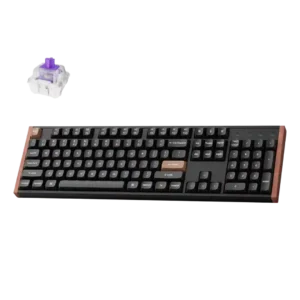
Reviews consistently describe the keyboard as premium, solid, and well made, with aluminum, wood accents, and strong overall finish.
The included braided USB-C cable is consistently seen as a nice premium extra, though at least one review notes that it is short.
Cable mentions are limited but positive, calling out a braided USB-A to USB-C cable and a nice angled USB connector.
Cross-platform support is one of the Joro's strongest points, with repeated praise for Windows/macOS use and Mac-friendly legends or layout support.
Reviews confirm support across Mac, Windows, Android, and major browsers for the web launcher.
Reviews consistently highlight easy tri-device Bluetooth pairing plus wired USB-C use, making switching between devices one of the board's most dependable strengths.
Reviews consistently note triple-mode use, covering Bluetooth, 2.4 GHz wireless, wired USB-C, and multi-device pairing.
Synapse adds meaningful remapping and feature control, but some reviewers note missing remap coverage or software dependence for advanced functions.
Reviews repeatedly highlight adjustable actuation, per-key tuning, remapping, and other configuration depth as major strengths.
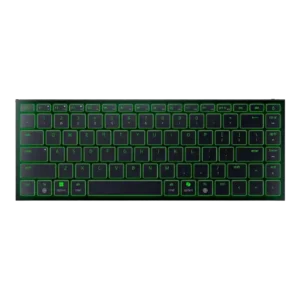
The compact 75% design keeps core controls while saving desk space, which reviewers repeatedly frame as a major benefit.
One review says the large full-size layout is not ideal for small desks.
Reviewers report solid long-term sturdiness, with the slim chassis resisting flex and everyday travel stress well.
Reviews connect durability to the aluminum frame, PBT caps, matte finish, and oil resistance.
One review says switch swapping is seamless when using compatible switches.
Ergonomics are the clearest weakness: the fixed low angle helps portability but repeatedly causes fatigue or discomfort for some users.
Adjustable feet and multiple typing angles are praised, and one reviewer explicitly says a higher incline feels more comfortable.
Gaming extras like Snap Tap, NKRO, and anti-ghosting are present, giving the Joro more gaming utility than most travel keyboards.
Reviews call out advanced gaming tools such as DKS, Snap Click, turbo-like long press behavior, and rapid trigger-based input tricks.
Structural rigidity is excellent, with multiple reviewers explicitly calling out the lack of flex even under pressure.
Reviewers describe the board as weighty, stable on the desk, and resistant to twisting.
Gaming performance is acceptable for casual or secondary use, but reviewers regularly stop short of recommending it as a primary board for serious competitive play.
Reviews describe gaming as fluid, accurate, and highly responsive, with clear benefits in FPS and other input-sensitive games.
One review confirms support for hot-swapping compatible magnetic switches.
Keycaps get mixed-positive feedback: legends and shine-through are appreciated, but some reviewers mention smoothness or smudge-prone surfaces.
Reviews praise the double-shot PBT keycaps for grip and oil resistance, though one review notes the special edition does not use shine-through caps.
Responsiveness is decent overall, but reviewers disagree more here than elsewhere, with some calling it responsive and others saying the keys rebound too slowly.
Reviews highlight fast, responsive inputs with precise control and especially strong responsiveness in gaming use.
Key spacing is generally praised for preserving full-size arrows and usable spacing, though the compact layout still takes some adjustment.
Where specifically discussed, the keys are described as wobble-free and stable rather than mushy or loose.
Reviews report stable keypresses and improved large-key stability from the upgraded stabilizers.
Bluetooth latency is a recurring caveat: several reviews say it is fine for everyday use and casual play but noticeable in faster competitive gaming.
One review explicitly describes the Hall Effect implementation as ultra low latency.
The 75% layout with function row and extra navigation is practical, though not every reviewer loves the specific key choices.
Main legends are usually praised as crisp and durable, but some reviews note that secondary functions are harder to see because they are not backlit.
Legend visibility is mixed. One reviewer found the legends more legible than an older K10, while others note the caps are not shine-through, which can limit readability in darker conditions.
Macro support exists and can be powerful, but some reviewers note that advanced macro-style features rely on Synapse being active.
Multiple reviews confirm macro support through the launcher, including standard macro assignment and more advanced command behavior.
Material quality is repeatedly described as premium for the category, especially the aluminum top and overall finish.
Aluminum, rosewood, and PBT keycaps are repeatedly highlighted as premium materials.
Media controls are available through function layers rather than dedicated keys, which makes them useful but not especially elegant.
One review highlights F-row shortcuts for media control.
Noise levels are consistently low, making the Joro one of the quieter boards in its class and easy to use in shared spaces.
Reviews generally describe the board as quieter than expected, with smooth linear switches and calmer large-key sound.
The keyboard supports saving changes on the board itself, which helps retain profiles and custom behavior without constant software reliance.
One review explicitly says the keyboard can store two layouts onboard.
Per-key lighting control is a clear limitation: multiple reviews explicitly describe the lighting as single-zone or one-color rather than individually addressable.
One review explicitly confirms per-key RGB adjustment.
Wired mode's 1,000Hz polling is a meaningful plus for gaming-minded users, even if the wireless story is less impressive.
Multiple reviews call out the 1000 Hz polling rate as a reason the keyboard feels responsive for gaming and close to wired performance.
Portability is the Joro's defining strength, with nearly every reviewer praising how slim, light, and bag-friendly it is.
One review says the full-size chassis is heavier and less portable than a smaller board.
Profile handling is solid, with reviewers noting multiple savable profiles and the ability to switch between them later.
Reviews mention customizable modes and onboard storage for two layouts, suggesting some profile-style management even if it is not deeply discussed.
Reviews confirm Rapid Trigger support and frame it as one of the K10 HE’s main performance features for faster repeated inputs.
Day-to-day reliability is generally good once connected, but sleep behavior and the occasional reconnect hiccup keep it from being flawless.
RGB customization is flexible enough for effects and color changes, especially through Synapse, but it is not as granular as Razer's full gaming boards.
Reviews note lots of RGB effects and modes, plus lighting customization through the web tool.
The RGB itself is widely praised as bright, vibrant, and attractive, especially considering the keyboard's travel-focused design.
One review says the RGB looks fantastic and visually appealing around the keys rather than through them.
The ultra-low-profile 75% form factor balances compactness with more usable keys than many travel boards.
The K10 HE is consistently presented as a full-size or 100% board that keeps the numpad and favors users who want the full layout.
Synapse is usually seen as useful and capable, especially with Mac support added, but some reviews flag setup gaps or dependence for advanced features.
Software impressions are mixed but mostly positive. Reviews like the web-based launcher for ease, labeling, and no-install setup, while one says it still feels barebones and lacks better macro tools or offline access.
Sound dampening is not a strength; at least one review specifically calls out a harsher landing and missing dampening.
Multiple reviews explicitly mention acoustic foams or damping layers contributing to the board’s sound and feel.
When key wobble is discussed, reviewers describe the typing action as controlled and free of mush, suggesting solid stabilization for the format.
Upgraded stabilizers are credited with firmer large keys, reduced rattle, and quieter operation.
Switch feel gets mixed-positive marks: the scissor switches are often called crisp, tactile, or satisfying for the type, but they do not replace a good mechanical board.
Reviewers consistently describe the magnetic switches as nice, smooth, and stable, though one review says the linear action can feel a bit sterile for general typing.
Reviews only discuss a single low-profile scissor-switch implementation, so switch variety appears limited.
One review notes the switch ecosystem is limited because compatible switches are proprietary and must be bought from Keychron.
Typing comfort is good for many users once acclimated, but comfort over very long sessions is less consistent because of the flat angle.
Reviews describe the full-size layout as comfortable for work and say actuation tuning lets users shape the feel to preference.
Typing feel is one of the more successful parts of the Joro, with several reviews comparing it favorably to premium laptop keyboards or the Magic Keyboard.
Typing is described as butter smooth and very smooth overall, but one review says the linear feel can come across as sterile for general typing.
Value is the biggest sticking point: reviewers often like the design and portability but still argue the asking price is hard to justify.
Reviews generally say the K10 HE justifies its price through its build, switch tech, and feature set, though the cost is still premium.
Volume control exists on the function layer, but the lack of dedicated controls makes it less convenient than on larger boards.
Wireless performance is good enough for productivity and casual use, with generally reliable Bluetooth pairing, but sleep wake delays and gaming limits show its ceiling.
Reviews say wireless feels close to wired, with no obvious performance loss in use.