
Multiple reviews confirm a 3.5mm analog input or included cable for wired listening, giving the headphones a useful backup connection.
ANC is one of the strongest recurring positives: reviewers say it handles low-frequency rumble especially well and performs far above typical budget expectations, even if it does not match top Sony or Bose models.
Software features go well beyond basics, with repeated mentions of AI translation, Anka, HearID, decibel monitoring, and other app-driven extras.
Styling is generally understated rather than flashy, which some reviewers treat as a plus for a clean or discreet everyday look.
One review notes audible hiss in processed listening modes, so background self-noise is present even if the ANC itself is strong for the price.
Direct evidence suggests the ANC can cut noise without obviously altering the headphones’ sound signature.
At least one review specifically says the ANC does not noticeably harm the way the headphones sound.
Android support is a selling point because reviews repeatedly tie Android devices to LDAC access and Fast Pair convenience.
The Soundcore app is consistently treated as an important part of the package, with reviewers calling it full-featured, polished, or especially useful.
Automatic play-pause behavior is supported, though one review notes you may need to enable or calibrate it in the app first.
Bass is repeatedly described as full, punchy, or weighty without getting excessively muddy, though a few reviews note a slightly bass-forward consumer tuning.
Bass is generally controlled and textured, with some listeners hearing a fuller, pillowy low end and others calling it restrained or dry compared with bassier alternatives. Sub-bass is present but not the main emphasis, so slam-heads may want more weight.
Battery life is one of the standout features, with most reviews treating the real-world stamina as excellent even when one tester fell short of the top claim in LDAC mode.
The one direct connectivity judgment calls Bluetooth pairing quick and stable in normal use.
The Space 2’s Bluetooth 6.1 spec is explicitly highlighted in multiple reviews as part of its strong feature sheet.
Build quality lands in a good-for-the-price middle ground: most reviews call it solid enough, though a few still say it feels cheaper than premium competitors.
Build quality is consistently described as excellent, with premium materials, tight assembly, and a refined feel. Several reviews highlight serviceability and long-term durability as part of the value proposition.
Physical controls are widely praised for being straightforward, tactile, and easier to trust than budget touch controls.
Cable impressions are mixed: many find the stock cable sturdy and functional, but some report microphonics or less-than-ideal ergonomics, and several note the lack of a balanced stock option.
Case protection is a recurring weak spot because the box includes only a soft pouch rather than a hard shell case.
The included hard/semi-hard case is widely praised as well-made and protective, with room for cables/adapters and a secure zipper. It supports storage and occasional transport effectively.
Fast charging is repeatedly highlighted: several reviews cite about four hours of playback from only five minutes of charging.
Clamp is usually described as balanced or comfortable, though one review notes it is on the stronger side to improve isolation.
Clamp force is generally described as moderate and well-distributed, supporting stability without obvious pain. A handful of impressions mention the clamp feeling a bit tight out of the box, with minor adjustment/break-in helping.
Codec coverage is broad for the price, with repeated mentions of SBC, AAC, LDAC, and even LC3 in one review.
Comfort is one of the most consistent strengths in the entire review set, with many reviewers saying the Space 2 stays easy to wear for hours at a time.
Comfort is a consistent strength: the self-adjusting suspension design and soft pads enable long listening sessions for most people. A few note fit quirks (small cups for some ears or clamp that starts slightly tight).
Connectivity is flexible for the class, combining wireless listening with USB-C charging and a wired 3.5mm option.
Design feedback is positive overall, with reviewers calling the headphones clean, attractive, good-looking, or premium-looking despite a simple silhouette.
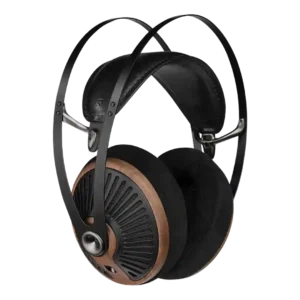
Design is a standout, with walnut accents and Meze’s mid-century styling repeatedly called premium-looking and distinctive. Even critics of the tuning tend to praise the aesthetics and finish quality.
The wired 3.5mm fallback is explicitly welcomed as a practical convenience when battery is low or you want a simple cable connection.
The detachable dual 3.5mm system is convenient for replacement, yet recessed/narrow connector sizing can limit third-party cable compatibility compared with more universal designs. Connection security itself is generally praised.
The included USB-C DAC dongle/adapter is viewed as a nice convenience for modern devices, generally adequate for casual listening. Enthusiast reviewers still expect better performance from dedicated DAC/amps.
One review raises a cautious question about how well the build will hold up to repeated travel abuse, so long-term durability remains less proven than comfort or battery life.
The earpads are repeatedly described as plush, cushy, soft, or memory-foam lined, helping the headphones feel more comfortable than their price suggests.
Velour/suede pads are commonly described as plush, breathable, and comfortable, helping distribute pressure and avoid hotspots. Some users wish for a touch more ear room, but pad comfort is still rated highly.
The earcups can swivel flat, and at least one review explicitly notes that fold-and-swivel behavior for easier packing.
Cup articulation is generally sufficient for a good seal/fit, with tilt helping the pads conform, though some describe movement as limited compared with more freely articulating designs.
EQ control is unusually strong for the price, thanks to the recurring eight-band custom EQ and app-based tuning tools.
The launch feature set is repeatedly framed as unusually comprehensive for the money, combining ANC, LDAC, wear detection, multipoint, and app extras.
Tonality is often described as balanced or smooth rather than strictly neutral, with a coherent frequency integration that avoids obvious bloat. Some characterize it as tastefully colored (warm-bright/W-shaped) rather than reference-flat.
The auto/self-adjusting headband system is repeatedly singled out as one of the best parts of the design, requiring little to no fiddling while spreading pressure evenly. It also helps with consistent fit and comfort over time.
Headband padding is described as cushioned, plush, or ultra-soft, helping spread weight evenly during longer wear.
Where hinges are mentioned, they are described as solid or built to last rather than flimsy.
Build discussions suggest robust hinges and a durable chassis, with spring-steel structures and solid joints expected to hold up well over years of use.
Only one review speaks directly to immersion and describes some added depth, but it also stops short of calling the effect natural or essential.
Included extras are basic but functional: reviewers mention a pouch plus charging and analog cables rather than a more premium accessory bundle.
Accessories are generally seen as generous for the price: a protective case, cables, and adapters (often including USB-C). The main recurring complaint is the absence of a balanced cable in the box.
Multiple reviews say instruments are easy to place and distinguish, pointing to above-average separation for this price class.
Instrument separation and imaging are widely regarded as excellent for the price, helping complex mixes stay organized and making positional cues easy to track. Even reviewers who nitpick tuning tend to credit the Silva’s placement and delineation.
The integrated mic system is a standard part of the package and is consistently referenced in reviews that discuss calling features.
LDAC support is a clear headline feature here, appearing across reviews as one of the Space 2’s strongest value-adds for higher-quality wireless audio.
One review lists LC3 support alongside the standard codecs, which suggests some degree of readiness for newer Bluetooth audio workflows.
When pushed louder, reviewers who mention it report the presentation staying composed, with bass and treble control holding together without obvious strain.
The call system’s AI/background-noise reduction is generally seen as effective at separating speech from surrounding noise, though wind and very loud settings still challenge it.
Call quality is serviceable to solid rather than class-leading, with voices staying audible but not especially natural or full-bodied in tougher environments.
Midrange performance is generally clear enough for vocals, but several reviewers note the mids sit a little behind the mix or could sound more natural.
Midrange is a highlight for many, with clear, forward vocals/instruments and an overall transparent character. A few note that certain vocal ranges can sound a bit thin, scooped, or pushed depending on recording and pairing.
At least one review explicitly says the app feature set is available on both iOS and Android, even though codec support differs.
Reviewers frequently describe good compatibility across sources (phones with dongles, laptops, DAPs, and desktop amps), helped by easy drivability. Some note it scales with source quality and can reveal harshness from poor gear.
Dual-device use is treated as a real strength, with reviews confirming multipoint support and seamless switching between paired devices.
Passive isolation gets help from the clamp and deep ear cushions, so the headphones block a useful amount of noise even before ANC is factored in.
As open-backs, passive isolation is low and sound leakage is expected; a couple of reviewers note mild attenuation compared to very open designs, but these are still best for quiet rooms.
One review specifically notes that built-in soundscapes are stored on the headphones, giving the Space 2 a limited form of offline onboard playback.
The overall recommendation trend is strongly positive: reviewers repeatedly say the Space 2 is easy to recommend, shortlist, or outright endorse at its price.
The Space 2 folds flat or inward for easier storage, making it more travel-friendly than many bulkier over-ear rivals.
Portability is mixed: they’re easy to drive and include a protective case, but the open-back design and size make them better suited to home or quiet environments than true travel/commute use.
Several design notes say the finish and detailing help the Space 2 feel more premium than many rivals around this price.
Preset options are broad and useful, with recurring mentions of Soundcore Signature and multiple alternate sound profiles.
Where discussed, earpads are replaceable and intended for long-term ownership, with guides or documentation supporting pad swaps and maintenance.
Sensor-based features are present, with reviews directly mentioning on-head or wear-detection hardware inside the earcup.
Smart extras are plentiful, including HearID, Nap Mode, Soundscape or white-noise features, and related personalization tools that add value beyond basic playback.
Smart pause behavior is described as quick and reliable where tested, reducing friction when taking the headphones on and off.
Smudge resistance is not a strength on darker finishes: at least two reviews mention marks, smudges, dust, or fingerprints.
Setup and software use appear straightforward overall, with reviewers saying the controls and app are easy to understand without much friction.
Across the listening tests, reviewers consistently describe the Space 2 as good-sounding for the money, with only modest caveats about refinement versus pricier models.
Across reviews, the 105 Silva is described as an engaging open-back with a premium “Meze” presentation: natural timbre, strong technicalities for the price, and a tuning that favors musical enjoyment over strict neutrality. A minority find the voicing less competitive on pure sound-per-dollar versus cheaper rivals without EQ.
Reviews regularly mention a solid sense of width and space, with the presentation sounding wider than expected for a closed-back budget model.
Soundstage impressions vary: some describe it as expansive, airy, and three-dimensional, while others find it only moderately wide or a touch narrow with limited depth/layering. Imaging is commonly cited as more consistent than sheer stage size.
Spatial or 3D audio is present, but reactions are mixed: some reviewers call it fine or better than expected, while others found it artificial or not especially useful.
Fit stability gets a positive note in one review that says the clamp kept the headphones secure without excess pressure.
Fit stability is usually strong thanks to moderate clamp and the suspension design, with reports of little slippage and secure positioning. One review flags potential fit issues for smaller heads due to the frame geometry.
Sustainability is repeatedly tied to Meze’s serviceable approach: parts can be replaced rather than discarding the headphone, supporting longevity and repairability over time.
Transparency mode is usable and sometimes clear enough for awareness, but reviews frequently mention hiss, artificiality, or otherwise middling pass-through quality.
Travel use is a natural fit thanks to the foldable design, long battery life, effective ANC, and repeated travel-focused recommendations.
Treble is usually called clear, crisp, or clean, with enough detail to avoid sounding dull while staying short of the sharpest premium-headphone highs.
Treble is typically praised for clarity and refinement, but several reviews note peaks/extra air that can sound a little spicy, sizzly, or less forgiving on bright or compressed tracks. Others hear it as smooth and well-balanced for long sessions.
USB-C is available for charging, but one review specifically notes that the port does not carry audio.
USB-C support comes via an included adapter/dongle, enabling plug-and-play use with phones and computers lacking a headphone jack. It’s positioned as convenience rather than a high-end solution.
Value for money is arguably the Space 2’s biggest theme, with many reviewers saying the feature set, comfort, and performance over-deliver at about $130.
Voice-assistant access is present through button customization, giving users a direct way to trigger their preferred assistant from the headphones.
Multiple reviews call the 105 Silva very easy to drive (high sensitivity, modest impedance) and capable of reaching loud listening levels from phones, dongles, laptops, and DAPs. Higher-quality sources can still improve refinement and control.
Only direct evidence here is negative: one review explicitly notes there is no IP rating, so water or sweat protection is not a selling point.
Auto-pause and resume is confirmed across several reviews and is generally treated as a dependable quality-of-life feature.
Where wear detection is judged directly, reviewers call it quick, accurate, or calibration-ready rather than flaky.
Low weight is a big contributor to comfort, with several reviews highlighting the roughly 261-265g build as light enough for long sessions.
At roughly mid-300g, the Silva isn’t ultra-light, but reviewers frequently say it feels lighter on-head due to excellent weight distribution. Most report minimal fatigue from weight during extended sessions.
Wind performance is a clear weakness in the one direct test, which says the microphones struggle in blustery conditions.