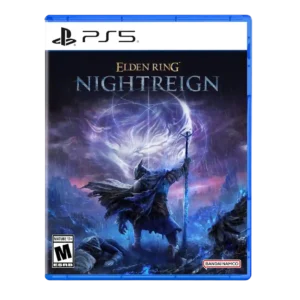
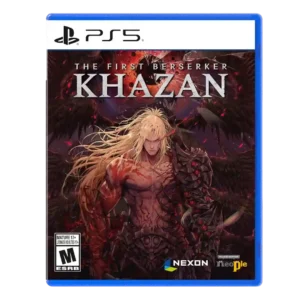
Reviews note an easy mode, summon help, and an arachnophobia toggle, giving players several ways to soften the challenge.
One review says enemy AI can break down under three-player pressure, making some encounters feel messy.
One review says the animations, along with the broader presentation, can look absolutely stunning.
Enemy and combat animations are repeatedly praised as smooth, expressive, and satisfying in motion.
One review says the fantasy art direction remains striking even within a heavily reused asset base.
The cel-shaded, hand-drawn-inspired presentation stands out as one of the game’s clearest strengths.
One review says the run-based structure sacrifices some of Elden Ring's melancholy scenic presence.
A bleak palette and tense environmental presentation reinforce the revenge story’s grim mood.
Boss design is one of the clearest strengths, though some reviews say the health pools can make those fights drag.
Bosses are widely seen as the highlight—demanding, readable, and memorable—though a few reviews still call out frustrating mechanics.
One review describes the game as having minimum bugs alongside decent performance.
Technical issues seem limited overall, with one review seeing no glitches and another reporting only a few minor bugs.
One review says the lock-on camera can feel like it is fighting the player in crowded battles.
Camera impressions are mixed: some found it solid and helpful, while others mention occasional trouble in specific situations.
One review says the character-specific storylines are surprisingly well done and help the Nightfarers stand out.
Khazan and the broader cast are often seen as underdeveloped, with arcs and growth that do not fully capitalize on the setup.
Checkpoints placed right before bosses are a major quality-of-life win and sharply reduce runback frustration.
The Nightfarers are usually described as distinct, useful, and broadly well balanced.
Co-op is one of Nightreign's biggest strengths, especially when the team is coordinated and communicating well.
Combat is often described as excellent and energized by the new format, though one review finds it uneven in practice.
Combat is the game’s defining strength, consistently praised for its speed, depth, and rewarding parry-dodge interplay.
Summoned allies can help as distractions, but their AI is often described as unreliable and sometimes wasteful.
Class and run variation help, but repeated points of interest and repeated encounters keep variety from feeling fully convincing.
Movement and combat inputs are consistently described as smooth, responsive, and precise.
The core loop is compelling and fast to click with, but one review says repetition eventually wears the format down.
The mission-to-boss structure successfully recreates a satisfying soulslike loop even when it feels familiar.
Crafting is straightforward and easier to understand than some genre peers, though its full utility opens up a bit later.
One long-play review reports a couple of crashes across roughly 60 hours, suggesting minor but real instability.
The lack of cross-play is a repeated and unanimous negative across the supporting reviews.
Difficulty is a major pain point, especially in solo play, with several reviews calling the balance harsh or overtuned.
The difficulty is rewarding for many, but boss balance is one of the most divisive parts of the game.
One review highlights strong emotional swings, with co-op runs creating wonder, frustration, and euphoria.
One review says there is still plenty to finish and collect even after a long time with the game.
One review says rotating mini-bosses help encounters stay fresher than pure reuse would suggest.
Enemy variety is generally strong, though some later impressions say repetition can creep in over long play sessions.
One review says the terrain and environmental variety feel careful, purposeful, and visually striking.
Levels and locales are repeatedly described as detailed, attractive, and enjoyable to move through.
Exploration has real appeal when teams learn the map, but the timer can sharply limit how much wandering feels viable.
Exploration offers worthwhile secrets and shortcuts, but several reviews still say stages are fairly linear or limited in optional discovery.
The spin-off still preserves Elden Ring and FromSoftware combat DNA strongly enough to satisfy series fans.
Returning to checkpoints or missions is convenient, and the hub structure makes travel between objectives fairly painless.
Frame-rate stability varies by setup, with some reviewers seeing slowdown and others reporting mostly smooth performance.
Performance is usually steady, with little to no frame-rate trouble outside occasional rare drops.
When the conditions are right, the game is consistently described as exciting and very fun.
Even skeptical or genre-weary reviewers say the game is consistently exciting and hard to put down.
Reviews praise the underlying systems for balancing speed, routing, and streamlined build rules, though one review says the structure can still feel restrictive.
Visual presentation is broadly praised, ranging from perfectly fine to gorgeous, even when reuse is obvious.
Raw fidelity is seen as good rather than best-in-class, with visual appeal driven more by style than technical showmanship.
One review says the repeated setup before Nightlords turns the experience into a grind.
The one Steam Deck-focused review says the game is verified and plays very well on the device.
One review says the game throws varied locations and unexplained icons at players, hurting immediate clarity.
Khazan adds some smart twists, but most reviews still see it as heavily derivative rather than especially original.
The learning curve is steep because the game expects fast system knowledge and a lot of failure-driven learning.
Early bosses and systems can be harsh, and several reviewers say the game teaches its ideas abruptly.
Level design trends positive overall, especially once the game opens up later, though some mission layouts can feel samey.
Loot can meaningfully shape builds and often feels purposeful, though randomness sometimes withholds the tools players want.
Loot is plentiful but generally manageable, with enough gear and sets to support build tinkering without becoming overwhelming.
Lore is lighter than base Elden Ring, but one review still finds enough mystery to fuel speculation.
Supplemental tools like the relationship map help flesh out the setting and backstory for players who want more context.
One review says the map can feel cluttered and unintuitive even if it still gives teams enough guidance to move.
Mission maps and shortcut-heavy layouts are helpful, but backtracking and mission-reset behavior can be clunky.
Matchmaking is inconsistent across reviews, ranging from quick and painless to unreliable.
Menus and information tools are usable but not especially welcoming or clear to parse quickly.
One review explicitly notes that the game is not expected to add microtransactions later.
One review says movement is noticeably faster and more agile, which fits the run-based format well.
The trio-first multiplayer structure is clear, but repeated complaints about missing duos and limited comms drag the design down.
Most reviews that discuss the story treat it as light scaffolding rather than a major strength.
The revenge premise and setting are engaging enough to keep players moving, but the story rarely matches the strength of the gameplay.
Basic class pickup is approachable, but newcomers can still feel overwhelmed once the run starts moving.
Tutorials help, but the opening hours and early bosses do not always showcase or teach the game cleanly.
Online stability is uneven, with some reports of lag or netcode issues and others seeing only occasional disconnects.
The semi-randomized map structure and shifting conditions help the world feel dynamic despite the fixed overall space.
Reviewers see real invention in the co-op roguelike pivot, even if the game also leans heavily on reused assets.
The pace is intentionally frantic and fast, which some reviewers find thrilling and others find exhausting.
One review reports acceptable overall performance but still flags frame drops and uneven smoothness.
Across platforms, reviewers frequently describe performance as polished, stable, and well-optimized.
One review describes the overall package as quite well polished despite its rough edges.
Reviews consistently present Khazan as a notably polished release with strong presentation and solid overall finish.
Run-to-run progression has strong momentum, but the relic layer is often described as thin, random, or inconsistent.
Lacrima rewards, skill growth, and multiple advancement layers make repeated attempts feel productive instead of wasted.
Khazan’s setup is strong, but some reviewers still find him flat or emotionally distant as a lead.
Remembrance and objective-based questing adds direction, but one review says some steps can be frustrating to parse.
Randomness and the one-more-run pull give Nightreign strong replay hooks, even if some reviewers say the cadence turns rote.
Replay value is decent thanks to NG+, weapon differences, and build experimentation, though customization limits cap long-term variety.
Autosaving appears dependable, with one reviewer specifically noting that crashes did not cost meaningful progress.
Supporting characters are often described as underused or too slight to leave much of an impression.
Weapon-specific trees are a major strength, offering meaningful abilities, combos, and build direction.
Social tooling is weak overall, with repeated complaints about missing voice or text chat and limited in-game communication.
Sound design and audio impact are broadly praised across the reviews that discuss them.
Weapon impacts, combat audio, and environmental sound all earn strong praise for adding weight to fights.
The soundtrack is a consistent strength, with boss and overall musical presentation repeatedly singled out.
The soundtrack is well-liked and effective at supporting bosses and dramatic moments.
The tutorials are clear, helpful, and generally unobtrusive.
Gear and character upgrades are broad and useful, though some reviewers note they come online a bit later than ideal.
Interface readability needs work, with cluttered maps and weak completion signaling drawing criticism.
Reference tools like the compendium and encyclopedia make systems easier to parse and support experimentation.
The lower asking price is repeatedly framed as fair or strong value for the package on offer.
Reviews that address price directly frame the game as worth buying at full cost.
One review praises the Nightlord spectacle for delivering especially strong visual flair.
Combat and boss effects are repeatedly highlighted as a good match for the game’s stylized presentation.
Voice acting gets some praise, but another review says it does not reach the standard of earlier Souls titles.
Voice acting is a consistent positive, with several reviews singling it out as strong or believable.
Weapon and build choices can feel flexible and meaningful, though some classes or loadouts come off weaker than others.
One review says the borrowed Elden Ring world still does a lot of heavy lifting for curiosity and appeal.
The DNF setting, factions, and supernatural backdrop help the world feel broader than the revenge plot alone.
One review says the character writing in Remembrances is especially poignant for a FromSoftware game.
Writing impressions are mixed, landing between entertainingly edgy and formulaic.