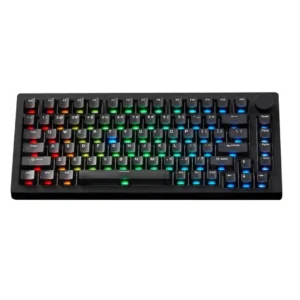
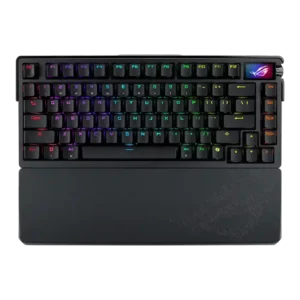
Compare MonsGeek M1 V5 HE vs ASUS ROG Azoth Extreme

P1 MonsGeek M1 V5 HE
P2 ASUS ROG Azoth Extreme

Comparison Takeaways

MonsGeek M1 V5 HE

Where It Has the Edge

  • rapid trigger support is 4.7 vs 2.0. Rapid trigger support is a major gaming strength, offering fine adjustment and low thresholds that reviewers found useful...
  • software quality is 4.2 vs 2.1. Software quality is mixed-positive: VIA and web software are powerful and accessible, but TMR software still has quirks,...
  • value for money is 4.6 vs 2.8. Value for money is very strong across reviews, especially for aluminum build, wireless, battery, modding, and gaming features...
  • polling rate is 4.7 vs 3.5. Polling-rate evidence is positive, especially for TMR and HE models with 8K claims or tests; the VIA model's...

ASUS ROG Azoth Extreme

Where It Has the Edge

  • reliability is 5.0 vs 3.1. Reliability had limited but strong evidence, with one reviewer reporting no stability issues or perceivable latency.
  • ergonomics is 4.3 vs 3.5. Ergonomics were praised for wrist-rest comfort, softer typing options, and comfortable key spacing, though not every ergonomic element...
  • frame rigidity is 5.0 vs 4.1. Frame rigidity was rated very highly because reviewers emphasized the aluminum frame, lack of flex, and tank-like solidity.
  • connectivity is 4.8 vs 4.0. Connectivity was praised for tri-mode support, seamless wireless setup, Bluetooth flexibility, and USB-port-saving receiver options.
Average score
Product 1: MonsGeek M1 V5 HE
4.3
Product 2: ASUS ROG Azoth Extreme
4.1
acoustics
Product 1: MonsGeek M1 V5 HE
4.5

Acoustics are a major positive, with reviewers describing the stock sound as pleasant, clean, dampened, refined, or excellent, though one found it merely good rather than great.

Product 2: ASUS ROG Azoth Extreme
4.5

Acoustics were praised across most reviews for refined, clean, thocky, or enthusiast-level sound, though one reviewer preferred the Q3 Max tone.

actuation consistency
Product 1: MonsGeek M1 V5 HE
4.4

Actuation consistency is strong at practical settings, with reviewers generally avoiding accidental inputs, while very sensitive settings or mechanical switches with rapid trigger can need adjustment.

Product 2: ASUS ROG Azoth Extreme
4.7

Actuation consistency was praised for quick, consistent actuation and direct keystrokes from the NX Snow setup.

analog input support
Product 1: MonsGeek M1 V5 HE
No score yet
Product 2: ASUS ROG Azoth Extreme
2.0

Analog input support was weak because reviewers pointed to missing analog or Hall-effect functionality as a drawback against speed-focused keyboards.

backlight brightness
Product 1: MonsGeek M1 V5 HE
4.1

Backlight brightness is praised in several VIA/HE variants but criticized on one TMR setup as not bright enough for side legends.

Product 2: ASUS ROG Azoth Extreme
3.2

Backlight brightness was a common caveat, with reviewers saying the RGB was not the brightest, lackluster, or too dim at maximum.

battery life
Product 1: MonsGeek M1 V5 HE
4.8

Battery life is one of the most consistently praised areas, helped by the 8000mAh pack and multi-week or high-percentage real-world reports.

Product 2: ASUS ROG Azoth Extreme
4.6

Battery life was praised as excellent, pretty good, incredible, or long-lasting, even when reviewers noted display and RGB settings affect endurance.

build quality
Product 1: MonsGeek M1 V5 HE
4.7

Build quality is one of the strongest areas, with repeated praise for aluminum construction, premium feel, weight, and overall solidity.

Product 2: ASUS ROG Azoth Extreme
4.8

Build quality received the broadest praise, with reviewers repeatedly calling the Azoth Extreme premium, tank-like, solid, and among the best-built gaming keyboards.

cable quality
Product 1: MonsGeek M1 V5 HE
3.0

Cable quality is mixed, from acceptable and nice-feeling to clearly not durable or lacking premium coiled/braided treatment.

Product 2: ASUS ROG Azoth Extreme
No score yet
compatibility
Product 1: MonsGeek M1 V5 HE
3.9

Compatibility is positive for OS, switch, and device support, but repeatedly held back by the hidden Caps Lock mode switch.

Product 2: ASUS ROG Azoth Extreme
3.1

Compatibility was mixed: aftermarket switch and keycap flexibility was appreciated, but north-facing switches created Cherry-profile and enthusiast-keycap caveats.

connectivity
Product 1: MonsGeek M1 V5 HE
4.0

Connectivity is broadly strong thanks to tri-mode support, though Bluetooth delays, cable-fit issues, and the hidden mode switch create caveats.

Product 2: ASUS ROG Azoth Extreme
4.8

Connectivity was praised for tri-mode support, seamless wireless setup, Bluetooth flexibility, and USB-port-saving receiver options.

customization options
Product 1: MonsGeek M1 V5 HE
4.8

Customization options are a central strength, spanning disassembly, switch swaps, actuation, macros, lighting, knob functions, and sound tuning.

Product 2: ASUS ROG Azoth Extreme
4.5

Customization options were a defining strength, led by the adjustable gasket, hot-swap design, OLED options, and broad software controls.

design aesthetics
Product 1: MonsGeek M1 V5 HE
4.5

Design aesthetics are mostly praised as clean, premium, appealing, or elegant, though simpler/minimal styling depends on taste.

Product 2: ASUS ROG Azoth Extreme
4.6

Design aesthetics were praised for premium machining, distinctive metal styling, and a striking look, with only minor taste-based caveats.

desk space efficiency
Product 1: MonsGeek M1 V5 HE
No score yet
Product 2: ASUS ROG Azoth Extreme
4.5

Desk space efficiency was supported by the 75% layout balancing compactness with practical functionality.

durability
Product 1: MonsGeek M1 V5 HE
4.8

Durability is supported by direct reviewer confidence that the hardware feels built to last.

Product 2: ASUS ROG Azoth Extreme
4.7

Durability evidence was positive, with reviewers pointing to premium heft, durable feel, and sturdy magnetic feet.

ease of switch replacement
Product 1: MonsGeek M1 V5 HE
4.8

Ease of switch replacement and modding is a standout because the ball-catch case and hot-swap design make opening, tinkering, and cleaning fast.

Product 2: ASUS ROG Azoth Extreme
4.5

Ease of switch replacement was positive because reviewers found access or switching straightforward and appreciated included tools.

ergonomics
Product 1: MonsGeek M1 V5 HE
3.5

Ergonomics are mixed: the typing angle and slanted case can feel comfortable, but fixed feet, sharp edges, or flatter angles bother some reviewers.

Product 2: ASUS ROG Azoth Extreme
4.3

Ergonomics were praised for wrist-rest comfort, softer typing options, and comfortable key spacing, though not every ergonomic element was universally loved.

extra gaming features
Product 1: MonsGeek M1 V5 HE
4.7

Extra gaming features are a major strength, with SOCD, DKS, rapid trigger, snap key, actuation tuning, and FPS-focused controls all praised.

Product 2: ASUS ROG Azoth Extreme
4.0

Extra gaming features were mixed-positive: reviewers liked the OLED, KPS, polling booster, and novelty features, but often questioned practical need.

frame rigidity
Product 1: MonsGeek M1 V5 HE
4.1

Frame rigidity is mostly strong thanks to the aluminum case, though a few reviewers noticed looseness in ball-catch handling or uneven flex after foam removal.

Product 2: ASUS ROG Azoth Extreme
5.0

Frame rigidity was rated very highly because reviewers emphasized the aluminum frame, lack of flex, and tank-like solidity.

gaming performance
Product 1: MonsGeek M1 V5 HE
4.8

Gaming performance is repeatedly praised as responsive and feature-rich, with reviewers saying it did not hold them back and can give gamers an edge.

Product 2: ASUS ROG Azoth Extreme
4.7

Gaming performance was praised overall, especially with smooth switches and responsive feel, though one reviewer framed it as a better all-rounder than a pure gaming specialist.

hot-swappable switches
Product 1: MonsGeek M1 V5 HE
4.8

Hot-swappable switch support is highly praised, especially the ability to use 3-pin, 5-pin, magnetic, and mechanical switches depending on version.

Product 2: ASUS ROG Azoth Extreme
4.1

Hot-swappable switches were viewed as useful and convenient, though one reviewer felt the feature is less valuable at such a high prebuilt price.

keycap quality
Product 1: MonsGeek M1 V5 HE
4.0

Keycap quality is mostly positive, with praise for PBT, frosted, gradient, or transparent caps, but some reviewers dislike smoothness, removal difficulty, or hollow feel.

Product 2: ASUS ROG Azoth Extreme
3.4

Keycap quality was mixed: reviewers liked PBT durability and shine-through capability, but several disliked the font, texture, or north-facing RGB tradeoff.

key responsiveness
Product 1: MonsGeek M1 V5 HE
4.4

Responsiveness is a clear strength in gaming-focused reviews, though one VIA review reported lag after plugging the board in.

Product 2: ASUS ROG Azoth Extreme
4.6

Responsiveness was praised through fast response, quicker actuation, and improved reaction time in games.

key spacing
Product 1: MonsGeek M1 V5 HE
No score yet
Product 2: ASUS ROG Azoth Extreme
5.0

Key spacing had limited evidence but was praised as part of a very comfortable typing experience.

key stability
Product 1: MonsGeek M1 V5 HE
4.6

Key stability receives strong praise, especially for minimal stem wobble and stable switch feel.

Product 2: ASUS ROG Azoth Extreme
4.6

Key stability was praised for reduced wobble, commendable stability, and strong stabilization across the board.

latency
Product 1: MonsGeek M1 V5 HE
4.7

Latency evidence is positive overall, with reviewers reporting very low measured latency and no meaningful lag in wired or wireless use.

Product 2: ASUS ROG Azoth Extreme
4.8

Latency evidence was strongly positive, with reviewers reporting no noticeable lag, near-zero latency, and improved reaction feel.

layout options
Product 1: MonsGeek M1 V5 HE
4.5

Layout options are well received, especially 75% navigation keys, knob placement, ISO availability, and Windows/Mac support, even with the hidden mode switch caveat.

Product 2: ASUS ROG Azoth Extreme
4.5

Layout options were viewed positively, especially the 75% layout and improved function-row spacing.

legend visibility
Product 1: MonsGeek M1 V5 HE
3.9

Legend visibility is mixed: standard legends are readable, but side-printed or dimmer RGB variants can require visual adjustment.

Product 2: ASUS ROG Azoth Extreme
4.0

Legend visibility was acceptable rather than exceptional, with one reviewer saying the lighting was just enough to see the legends clearly.

macro customization
Product 1: MonsGeek M1 V5 HE
4.4

Macro customization is supported through VIA or web software and generally viewed as a useful plus, though most reviewers mention it briefly.

Product 2: ASUS ROG Azoth Extreme
4.0

Macro customization had limited but positive evidence, with one reviewer noting many macro possibilities.

materials quality
Product 1: MonsGeek M1 V5 HE
4.7

Materials quality is consistently high, centered on the aluminum case, premium feel, and quality finishes, with minor finish and cable caveats.

Product 2: ASUS ROG Azoth Extreme
4.9

Materials quality was consistently praised, especially the aluminum body, carbon fiber plate, and premium-feeling construction.

media controls
Product 1: MonsGeek M1 V5 HE
4.3

Media controls are useful through the knob and software remapping, but one reviewer found the knob's default usefulness limited.

Product 2: ASUS ROG Azoth Extreme
4.1

Media controls were generally liked for tactile or improved knob control, though one reviewer wanted a more tactile feel.

noise level
Product 1: MonsGeek M1 V5 HE
4.2

Noise level varies by switch and variant: clicky switches are louder, but many magnetic or foam-filled builds are described as quiet, muted, or resonance-free.

Product 2: ASUS ROG Azoth Extreme
4.5

Noise level was favorable, with reviewers describing the sound as muted or quiet while still satisfying.

onboard memory
Product 1: MonsGeek M1 V5 HE
4.5

Onboard memory is praised for preserving settings across computers without making PC changes an issue.

Product 2: ASUS ROG Azoth Extreme
No score yet
passthrough features
Product 1: MonsGeek M1 V5 HE
No score yet
Product 2: ASUS ROG Azoth Extreme
3.0

Passthrough features had limited support and were only mildly positive because one reviewer called the USB passthrough dongle adapter slightly bulky.

polling rate
Product 1: MonsGeek M1 V5 HE
4.7

Polling-rate evidence is positive, especially for TMR and HE models with 8K claims or tests; the VIA model's lower rates are still described as acceptable.

Product 2: ASUS ROG Azoth Extreme
3.5

Polling rate was mixed: reviewers appreciated 8,000Hz as premium or useful for competitive users, but several said they could not feel a meaningful difference.

portability
Product 1: MonsGeek M1 V5 HE
1.8

Portability is poor because multiple reviewers emphasize the keyboard is extremely heavy and not suited for travel.

Product 2: ASUS ROG Azoth Extreme
2.5

Portability was weak because removable feet looked easy to lose and the overall package was treated as heavy and stationary.

profile management
Product 1: MonsGeek M1 V5 HE
4.8

Profile management gets limited but positive evidence, especially quick profile switching that one reviewer explicitly loved.

Product 2: ASUS ROG Azoth Extreme
No score yet
rapid trigger support
Product 1: MonsGeek M1 V5 HE
4.7

Rapid trigger support is a major gaming strength, offering fine adjustment and low thresholds that reviewers found useful when tuned properly.

Product 2: ASUS ROG Azoth Extreme
2.0

Rapid trigger support was the repeated weakness, with reviewers noting the lack of rapid trigger or Hall-effect-style competitive features.

reliability
Product 1: MonsGeek M1 V5 HE
3.1

Reliability is mixed: most gaming and daily-use reports are clean, but reviewers also mention double-click behavior at edge settings and one unit's ghost volume inputs.

Product 2: ASUS ROG Azoth Extreme
5.0

Reliability had limited but strong evidence, with one reviewer reporting no stability issues or perceivable latency.

RGB customization
Product 1: MonsGeek M1 V5 HE
4.0

RGB customization is useful through VIA or MonsGeek software, but built-in effects can be standard and small issues such as charging indicators remain.

Product 2: ASUS ROG Azoth Extreme
4.0

RGB customization had limited opinionated support, but the available evidence praised adjustable lighting effects through the software and hardware controls.

RGB lighting quality
Product 1: MonsGeek M1 V5 HE
3.9

RGB lighting quality ranges from vibrant and clean to dull or blocked by keycaps, making lighting one of the more mixed attributes.

Product 2: ASUS ROG Azoth Extreme
3.6

RGB lighting quality was mixed: some liked vivid shine-through, while others found the lighting dull, lackluster, or aesthetically too blacked-out.

size and form factor
Product 1: MonsGeek M1 V5 HE
3.9

Size and form factor evidence favors the 75% layout as compact and capable, though weight and productivity/travel use limit its appeal.

Product 2: ASUS ROG Azoth Extreme
4.0

The size and form factor were generally positive for users wanting a compact 75% keyboard with enough dedicated keys, though the heavy build limits mobility.

software quality
Product 1: MonsGeek M1 V5 HE
4.2

Software quality is mixed-positive: VIA and web software are powerful and accessible, but TMR software still has quirks, bugs, and plugin friction.

Product 2: ASUS ROG Azoth Extreme
2.1

Software quality was a repeated concern; Armoury Crate was described as slow, frustrating, poorly laid out, or a least-favorite peripheral app.

sound dampening
Product 1: MonsGeek M1 V5 HE
4.3

Sound dampening is effective in most builds, helping reduce hollowness and resonance, though some reviewers consider the foams typical or limiting for foamless builds.

Product 2: ASUS ROG Azoth Extreme
4.7

Sound dampening was strongly praised for reducing ping, hollow reverberation, and case resonance through foam and silicone layers.

stabilizer quality
Product 1: MonsGeek M1 V5 HE
4.5

Stabilizers are generally praised as lubed, stable, rattle-free, or minimally wobbly, with included extras adding flexibility.

Product 2: ASUS ROG Azoth Extreme
4.5

Stabilizer quality was mostly strong, with praise for tuned, smooth, low-rattle stabilizers and one minor backspace rattle caveat.

switch feel
Product 1: MonsGeek M1 V5 HE
4.5

Switch feel is widely praised as smooth, stable, satisfying, or fantastic, with a few reviewers noting switch preference depends on force and sound taste.

Product 2: ASUS ROG Azoth Extreme
4.9

Reviewers consistently praised the NX Snow switch feel as smooth, lubed, and enjoyable, with only preference-based caveats around linear versus tactile or clicky choices.

switch options
Product 1: MonsGeek M1 V5 HE
4.8

Reviewers consistently value the switch ecosystem, especially the TMR model's ability to mix magnetic and mechanical switches and the availability of multiple Akko options.

Product 2: ASUS ROG Azoth Extreme
4.1

Switch options were viewed positively because reviewers noted NX Snow, NX Storm, and mechanical switch choice, though evidence centered on available feel preferences rather than deep testing of every option.

typing comfort
Product 1: MonsGeek M1 V5 HE
4.7

Typing comfort is positive overall, with reviewers calling it comfortable, accurate, pleasant for daily use, or a joy to type on.

Product 2: ASUS ROG Azoth Extreme
4.8

Typing comfort was a major strength, with reviewers calling it excellent for work, comfortable, and satisfying over extended use.

typing feel
Product 1: MonsGeek M1 V5 HE
4.5

Typing feel is generally comfortable, cushioned, and satisfying, though foam removal or softer gasket behavior can make the feel less even for some users.

Product 2: ASUS ROG Azoth Extreme
4.9

Typing feel was one of the strongest themes, with reviewers repeatedly calling the board excellent, premium, satisfying, and unusually good for daily typing.

value for money
Product 1: MonsGeek M1 V5 HE
4.6

Value for money is very strong across reviews, especially for aluminum build, wireless, battery, modding, and gaming features at the stated prices.

Product 2: ASUS ROG Azoth Extreme
2.8

Value for money was the central tradeoff: reviewers loved the keyboard's quality but repeatedly questioned or criticized its $500-class price.

volume control
Product 1: MonsGeek M1 V5 HE
3.8

Volume control is mixed but generally useful: the knob can handle volume and mute, while one reviewer saw random volume inputs and another wanted more utility.

Product 2: ASUS ROG Azoth Extreme
4.2

Volume control was positive but not deeply tested; reviewers liked the knob's practical volume function while noting some tactility caveats.

wireless performance
Product 1: MonsGeek M1 V5 HE
4.4

Wireless performance is mostly strong, with stable 2.4GHz/Bluetooth results and low wireless latency, though one review noted Bluetooth wake delays.

Product 2: ASUS ROG Azoth Extreme
4.7

Wireless performance was consistently strong, with reviewers reporting stable, flawless, or very consistent wireless behavior.

wrist rest quality
Product 1: MonsGeek M1 V5 HE
No score yet
Product 2: ASUS ROG Azoth Extreme
3.8

Wrist rest quality was mixed: reviewers liked its comfort, heft, and fit, but criticized wear and the lack of magnetic attachment.