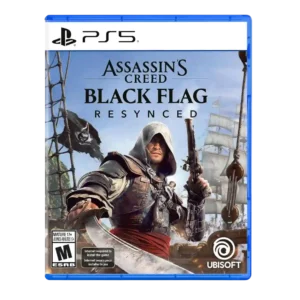
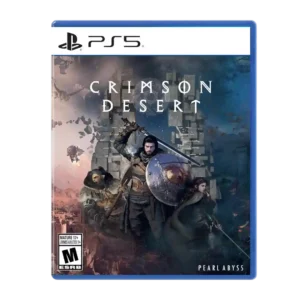
Age appropriateness skews low because reviews explicitly mention strong swearing and brutal violence.
Supported reviews say detection and mission AI should react more flexibly than the original, though one reviewer still noticed enemies waiting their turn in combat.
Animation coverage is generally positive, citing modern motion capture, smooth character movement, and reanimated combat, though the evidence is still preview-based.
Animation quality is praised where discussed, especially in combat presentation and motion work.
The visual direction is praised by the cited reviewer, while also acknowledging that some players may feel the brighter remake loses some original soul.
Art direction is strong, with reviewers admiring the world’s aesthetic coherence and beauty even when other systems wobble.
Reviewers repeatedly highlight the livelier Caribbean mood, brighter lighting, stronger weather, stormy seas, and more sensory presentation as major atmosphere gains.
Atmosphere is a major strength thanks to evocative lighting, weather, and nighttime mood.
Boss design is divisive: reviewers like the scale and number of bosses, but many also call them frustrating, unbalanced, or exhausting.
Bug frequency is noticeable but not catastrophic in most reviews, with issues ranging from minor quirks to progress blockers.
Only one preview directly raised camera behavior, criticizing a harsh view change during assassination animations.
Camera behavior is a clear complaint, especially in combat where it can fail to cooperate.
Character-development evidence centers on added Edward-focused material, his internal struggles, and a new scene with his wife, all framed as fleshing out the story.
Character development is limited, with reviews specifically noting a lack of real growth and depth.
The major checkpoint-related improvement is that stealth detection no longer automatically desynchronizes the player during the revamped tailing and eavesdropping missions.
Checkpointing is inconsistent, and repeated attempts can become tedious because of where the game saves progress.
Combat is one of the most covered upgrades, with repeated mentions of perfect parries, faster attacks, chain takedowns, more tool use, and a less passive counter-only feel.
Combat is widely praised for its ferocity, depth, and variety, even though some reviews also note tedium or balance issues in longer encounters.
Companions are useful in combat support roles, especially when helping thin enemy groups during larger engagements.
The evidence points to new chapters, new story content, crew additions, and fresh quests, while still keeping the base single-player Black Flag structure.
Content variety is exceptional, with reviewers repeatedly stressing just how many systems, activities, and side pursuits are packed in.
Control-related comments are positive, especially around reduced old-control friction, tighter movement, and a smoother, more reactive feel.
Control responsiveness is a frequent sore spot, with multiple reviews calling the mappings convoluted or awkward, especially on controller.
The core loop is consistently framed as old-style action adventure rather than an RPG, preserving the single-player Edward Kenway adventure while modernizing combat and stealth.
The core loop lands well for reviewers who wanted a giant single-player sandbox built around action, exploration, and long-form progression.
Crafting is meaningful to survival and upgrades, but at least one review finds the material grind burdensome.
Crash stability is uneven, as multiple reviews mention hard crashes or a few crashes during long sessions.
Dialogue quality is criticized sharply in the most direct review coverage, with one reviewer calling the dialogue outright bad.
Reviewers expect combat to be less trivially easy through tighter parry timing and limits on chains, though one preview worries slow-motion cues could soften the challenge.
Difficulty balance is a common complaint because bosses and attrition-heavy encounters can feel punishing or unfair.
DLC coverage is consistently negative because the remake does not include the original DLC content, especially Freedom Cry.
Naval handling is treated as a strength, with weather-influenced waves, ship handling, and mostly familiar Black Flag sailing updated rather than replaced.
Resource and economy systems are dense and varied, though the food, healing, and gathering loops can become a burden.
The supporting review links more expressive faces to the potential for stronger emotional delivery in the story.
Emotional impact is present in places but limited, with one review saying the Greymane reunion arc carries most of the emotional weight.
Endgame support appears weak in the cited review coverage, with one outlet saying there is effectively no endgame to speak of.
Only one source directly mentions new enemy variety, citing a new Demolitionist enemy with a blunderbuss-style role.
Enemy variety is viewed positively where discussed, with reviewers noting the range of enemy types encountered across the world.
Environmental detail is one of the most praised areas, with sources citing livelier towns, high-resolution textures, improved scenery, and richer Caribbean spaces.
Environmental detail is exceptional, with reviewers singling out foliage and scenery density in particular.
Exploration evidence points to added locations, more expansive underwater areas, and bigger-feeling environmental upgrades rather than a larger core map.
Exploration is one of the game’s clearest strengths thanks to strong discovery, rewarding wandering, and constant curiosity hooks.
Facial animation impressions are mostly positive, with handcrafted faces and more expressive characters, though one preview describes the results as hit or miss.
Facial animations are a weak point, with janky faces and off lip-sync called out directly.
The strongest faithfulness evidence is that the remake preserves Edward's story, the non-RPG action-adventure structure, and the recognizable Black Flag identity.
Family friendliness is low for the same reason: the tone, language, and violence are not described as kid-oriented.
Fast travel is repeatedly described as inconvenient, sparse, or too dependent on extra steps.
Flying and gliding are a major highlight, giving traversal a strong sense of freedom once those tools open up.
Frame-rate evidence is technical rather than hands-on, citing uncapped PC frame rate support and console 60 fps options, not verified launch stability.
Frame-rate stability is generally strong in the cited PC and PS5 Pro impressions, though some heavy scenes still cause dips.
Fun-factor evidence is limited but positive, with previews describing the remake as off to a strong start and compelling enough to pre-order.
Fun factor stays high for many reviewers despite the friction, with several still calling the overall experience thrilling or a blast.
Gameplay mechanics are broadly supported through claims of rebuilt systems, enhanced gameplay features, core gameplay changes, and stronger moment-to-moment play.
Reviews describe the gameplay mechanics as deep and expressive, with hard-hitting combat that keeps adding useful options.
Graphics are the most consistently praised category, with sources highlighting modernized lighting, textures, water, character detail, and a strong visual leap over the original.
Graphics quality is a major selling point across reviews, with repeated praise for vistas, scale, and overall visual impact.
Grind is a notable downside because gathering, crafting, and upkeep tasks can take a lot of time.
Handheld suitability is supported by technical coverage of dedicated presets for devices such as Steam Deck or ROG Ally.
Handheld play is positively noted in the Xbox Ally X impression, which says the game still runs just fine there.
HUD clarity is mixed because one preview notes the old minimap is replaced by a compass, making the change partly a matter of preference.
Immersion evidence points to the Anvil rebuild, stronger world realism, and enhanced gameplay features that keep the player in the Caribbean fantasy.
Immersion is strong when the world simulation clicks, with towns and NPC activity helping Pywel feel lived in.
Innovation gets credit for pushing scale, systems, and open-world ambition in ways some reviewers see as a leap forward.
The learning curve is steep early on, especially given the game’s scale, system density, and sparse quality-of-life guidance.
Level-design evidence focuses on livelier towns, more climbable scenery, detailed paths, extra NPCs, and improved draw distance.
Level design earns praise for its verticality and layered terrain, which make routes and points of interest feel more interesting to navigate.
Load-time coverage is mostly positive thanks to seamless areas and docking, though PC storage choices may still affect streaming or load behavior.
Load times are acceptable but not spotless, with one review noting slow initial loads before later improvement.
Loot evidence is limited to one preview describing new outfits and weapons placed in added locations.
Loot is interesting in concept and tied to strong progression hooks, but inventory friction and storage limits blunt the payoff.
Lore depth is mixed: new rifts and Edward-focused material are promising, but removal of the original modern-day framing leaves some story implications unresolved.
Lore exists and can add texture, but at least one review says too much of it is pushed into menu entries instead of the main storytelling.
Navigation evidence is mixed, with weather-based sea navigation and a returning notoriety indicator praised while the minimap-to-compass change may divide players.
Map and navigation design is mixed: some reviewers enjoy the map’s sense of adventure, while others dislike unclear fast-travel iconography.
Menu usability is a weak area because inventory and storage management are described as frustrating or terrible.
Only one preview directly raises microtransaction concerns, criticizing cosmetic pet sales and unique-perk bonuses as potentially troubling.
Mission design is repeatedly described as improved through less punishing tailing and eavesdropping, more ways to progress, and better adaptation after detection.
Mission design can feel drawn out, with some errands and objective chains taking longer than reviewers felt they should.
Mission variety is supported by new chapters, fresh quests, and six hours of mostly story-focused content.
Mission variety is a major strength, ranging from big battles to mundane odd jobs and smaller character-driven detours.
Monetization coverage is limited and cautious, based on pre-order and perk-related concerns rather than broad evidence of intrusive monetization.
Movement feel is broadly positive thanks to fluid parkour, back and side ejects, and freer running, but some previews worry about slower pacing or sluggish transitions.
Movement feels serviceable but uneven, with slow on-foot traversal and occasional frustration from clunky handling.
Multiplayer scores low because the original PvP mode is absent from this remake, even though several sources expected that cut.
Narrative coverage is positive overall, emphasizing added story quests, new scenes, expanded arcs, and a focus on Edward's single-player adventure.
Narrative quality is widely seen as a weakness, with several reviews calling the story messy, forgettable, or underpowered.
Onboarding is rough for many players because the game front-loads systems and gives limited guidance at the start.
The open world is described as familiar in size and identity but more seamless, more detailed, and easier to move through without visible loading interruptions.
The open world is repeatedly described as enormous, ambitious, and technologically impressive rather than empty.
Originality is seen as moderate-positive: the game borrows heavily, but at least one review still says the whole thing feels new overall.
Only one review directly comments on pacing, noting that the parkour appears slower than the original in some footage.
Pacing is a recurring weakness because padding, long travel stretches, and repetitive chores can drag momentum down.
Performance evidence is incomplete but promising, with technical support such as a benchmark tool and upscalers, while one preview warns final performance remains unknown.
Performance optimization is strong on PC in these reviews, with multiple outlets describing stable performance across different setups.
Platform support looks strong on PC, with DLSS, FSR, XeSS, HDR, ultrawide support, and detailed preset coverage.
Platform-specific support looks solid in the reviewed builds thanks to display modes, ultrawide support, and other platform-aware options.
Platforming precision is mixed: new side/back ejects and jumps are welcome, but two previews flag a slower or stop-start feel in some movements.
Platforming precision is mixed to weak because several reviews mention imprecise movement and accidental falls in traversal-heavy sections.
Polish impressions lean positive, with several previews describing the remake as not corner-cutting and expanded in the right areas, though launch proof is still pending.
Polish feels lacking relative to the game’s ambition, with reviewers saying it needed more cleanup and focus.
Progression evidence includes weapons with unique perks, outfit perks moved into trinkets, and the returning notoriety or fleet-style progression cues.
Progression is engaging once builds open up, but some reviewers say gear growth starts slowly or feels underwhelming early.
Edward Kenway remains central, with new material focused on his internal struggles and personal story rather than replacing the original protagonist.
Protagonist appeal is mixed-low because Kliff is often described as blank, muted, or not especially compelling.
Puzzle design is mixed-positive overall: many reviewers enjoy the ruins and problem-solving, but others call certain solutions finicky or frustrating.
Quest-design evidence is limited but positive, centered on new crew-specific quest lines.
Quest design is a strength in breadth and payoff, with side content often feeling substantial rather than throwaway filler.
The remake quality consensus is strong: sources repeatedly describe it as rebuilt from the ground up, visually reworked, and more than a simple remaster.
Replay value looks high because reviewers describe a world large enough to revisit for hundreds of hours and still uncover more.
Sandbox freedom is supported by comments about shaping the adventure, open-world freedom, and letting players adapt instead of restarting missions.
Sandbox freedom is a standout, with reviewers repeatedly emphasizing how much the game lets players experiment and wander.
Save reliability is a serious concern in the worst-reported case because one quest bug locked progression entirely.
Side-character depth is a major addition, with new officers, individual questlines, and expanded arcs for familiar characters such as Blackbeard and Stede Bonnet.
Side-character depth is modest but better than the lead, especially in moments where the Greymanes reconnect and bond.
The skill tree is praised for adding moves and changing playstyles instead of only handing out flat stat bumps.
Sound design evidence is narrow and mixed, with one reviewer noting the original kill animations lacked sound impact while discussing the remake's combat presentation.
Soundtrack coverage is positive, with multiple sources confirming classic shanties, new shanties, and new music.
The soundtrack is repeatedly praised as one of the game’s standout presentation strengths.
Stealth is one of the most improved systems, with crouching, revised detection outcomes, and less punitive tailing rules frequently cited.
Stealth is directly criticized as one of the least successful mechanics in the package.
Tutorial quality is mixed to weak, with reviews saying explanations are vague or still leave players confused.
The upgrade system appears deeper through alternate-fire Jackdaw weapons, officer abilities, ship upgrades, and weapon perk changes.
The upgrade system is tied to Abyss Artifacts and skill-tree growth, giving upgrades a clear role in character development.
UI evidence is mixed, with one source noting a tool-selection window and another finding the on-screen UI somewhat messy.
User interface design is criticized for messy markers and hard-to-read management screens.
Value is mixed: the remake adds major upgrades and new content, but several sources question the package because multiplayer and DLC are missing and pre-order caution remains.
Value for money looks strong in the positive coverage because the game offers a huge amount of content for one purchase.
Visual effects are strongly praised, especially ray tracing, lighting, water rendering, reflections, and more colorful presentation.
Visual effects earn strong praise, particularly for weather, vistas, and other spectacle-heavy moments.
Voice-acting evidence is limited but positive because Matt Ryan is identified as returning as Edward.
Voice acting is a bright spot, with several reviews calling performances excellent or top shelf.
Weapon balance is uneven where discussed, with bows and archery skills specifically called out as underwhelming.
World-building evidence is limited but positive, pointing to distinct city atmosphere and denser NPC presence.
World-building is praised for making Pywel feel deliberately placed and lived in rather than randomly assembled.
World interactivity is supported by weather that affects sailing, livelier storm conditions, and environmental changes that influence play.
World interactivity is strong overall because the environment reacts in meaningful ways, though one review still found broader reactivity underwhelming.
Writing quality is cautiously positive, with praise for Edward-focused additions and returning writer involvement, balanced by concern over integration.
Writing quality trends negative because reviewers describe the story beats and characterization as undercooked or nonsensical.