
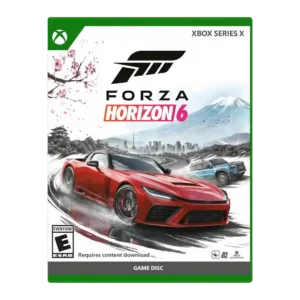
Accessibility is one of the best-supported positives. Reviews repeatedly cite easy inputs, auto-combos, simple commands, and pick-up-and-play design that help newcomers enter the genre.
The reviews specifically mention assist-style options such as autosteering that should make Horizon 6 easier for a broader range of players to enjoy.
AI behavior is criticized in story mode, where enemies are said to lack meaningful strategy or abilities. The evidence supports a low score for single-player AI challenge.
Animation quality is repeatedly praised through immaculate frames, anime-like movement, and detailed cel-shaded animation. The evidence supports a top-tier visual animation score.
Art direction is excellent. Reviews praise the cel-shaded look, anime-style presentation, and fast visual style as central to the product’s identity.
Reviewers praise the Japanese setting’s visual identity, saying the locales capture iconic aesthetics with real care and precision.
The setting is often described as vivid and alive, though one review says Tokyo can still feel too empty in preview footage.
Bug frequency is supported mainly by the PS5 review’s custom-lobby connection problems. Evidence is limited but negative.
Character development is limited and mixed. The scored evidence focuses on Android 21, who is described as having an interesting enough storyline but also leaving the reviewer conflicted.
One preview highlights roster rebalancing aimed at making vehicle classes more evenly competitive instead of funneling players into a few dominant builds.
Co-op experience has limited support through party matches where multiple players control characters. The evidence suggests an interesting feature but also notes setup limitations.
Combat is the product’s clearest strength. Reviews repeatedly praise the tag-team fighting, simple-but-varied systems, intensity, accessibility, and the way matches feel exciting even when the surrounding modes stumble.
Community features are present through private fights, replays, chatting, emotes, stickers, and an online community. Functionality is useful but depends on the lobby and online experience.
Car Meets appear to deepen the car culture angle by letting players browse shared designs and even buy pink slips from appealing builds.
Competitive balance is generally positive but not perfect. Reviews praise roster balance and team variety, while some note lower skill ceiling, repeated character slots, or offense-heavy play.
Content variety is generally solid, with story, arcade, local, online, tournament-style, and other modes mentioned. A few reviews still note roster or content limits, especially compared with expectations for Dragon Ball games.
Previews point to a huge roster of cars and a broad mix of things to do beyond standard races, from collecting to open-world activities.
Controller impressions are mostly positive on Switch, with Joy-Cons and single-controller setups working better than expected, though one review calls attached Joy-Cons sub-par for fast movement.
Wheel impressions say Horizon 6 responds accurately, with steering going where the player expects rather than fighting inputs.
The core loop lands well because the moment-to-moment fighting is repeatedly described as fun, frantic, and satisfying. Even critical reviews still point to the actual fighting as the main draw.
The loop is still built around driving, exploring, and naturally stumbling into activities instead of focusing only on structured race wins.
Couch co-op and local play are supported through single Joy-Con play, local tournament options, and quick local battles. The evidence is favorable for casual local sessions.
Crash stability is a problem in the PS5 review, which reports a crash while searching for an opponent. The evidence is limited but clear.
Cross-play support is poor in the PS5 evidence, which states there is no crossplay with PS4 or other platforms.
Dialogue is a positive fan-service element. Reviews praise character-specific dialogue, Dragon Ball melodrama and jokes, and team conversations that reward series knowledge.
Difficulty balance is uneven. Story fights are often called easy or flat, while arcade and hard paths add challenge and occasional spikes that some reviewers found frustrating.
DLC value is a common caveat. Reviews complain about paying for DLC fighters, a pricey season pass, or expensive individual add-on characters.
Driving stays approachable and Horizon-like, but at least one preview finds the controller handling twitchy and overly prone to oversteer.
The in-game economy is supported by currency earned through play and used for capsules. Reviews describe it as part of the unlock loop rather than a major balancing problem.
Early hands-on coverage suggests credits come in quickly enough to support experimenting with upgrades and swaps without much friction.
Emotional impact is supported through nostalgia. One review explicitly describes a dopamine rush from recreated Dragon Ball moments, which supports a strong but fandom-dependent emotional score.
Enemy variety is weak in the story mode evidence, where one review describes repeated mindless clones. This supports a low score tied specifically to single-player enemy repetition.
Environmental detail is supported by praise for precise character and background detail. Evidence is limited but positive.
Japan’s map is repeatedly described as dense and richly detailed, even by critics who still want more city life and traffic.
Exploration is one of the strongest themes in the reviews, with multiple writers saying the world constantly tempts them to keep roaming.
Faithfulness to franchise is exceptional. Reviews repeatedly call out Dragon Ball care, anime accuracy, fan service, source-material respect, and iconic scene recreation.
At least one outlet frames Horizon 6 as a return to form that preserves Horizon’s identity while improving where Horizon 5 felt weaker.
Player houses doubling as fast travel points should make moving around the large map much easier once they are unlocked.
Frame rate stability is very strong. Multiple reviews cite 60FPS, no noticeable dips, and performance comparable to other platforms.
Preview players repeatedly describe the available quality mode as stable and locked in rather than inconsistent.
Fun factor is high where directly scored. Reviews call the game awesome and just as fun as expected, reinforcing the strong reaction to its combat and presentation.
Across previews, Horizon 6 is repeatedly described as playful, approachable driving fun, especially when the handling and event design line up.
The mechanics are described as streamlined and accessible while still retaining enough depth. Reviewers tie the strong mechanics to simplified inputs, polished systems, and an approachable fighting structure.
The underlying mechanics remain rooted in Horizon’s familiar open-world racing formula: explore freely, enter events, and customize cars.
Graphics quality is one of the most praised attributes. Reviewers repeatedly describe the game as stunning, fantastic, anime-like, crisp, and visually impressive across platforms.
The Japan setting is widely described as the best-looking Horizon yet, with multiple previews calling it a clear visual step up.
Grind level is a story-mode drawback. Reviews call the story a grind and point to link-level grinding as part of the single-player structure.
Handheld play suitability is excellent in Switch-focused reviews. Portability, commute play, and practice while traveling are repeatedly framed as major benefits.
One PC-focused review argues the modest minimum requirements make handheld play on Steam Deck-class devices look plausible.
HUD clarity is supported by one review saying the screen remains readable despite intense effects. Evidence is limited but favorable.
New awareness tools like the proximity radar and optional leaderboard elements are praised for adding information without forcing clutter.
Immersion is supported by the review that says the game looks, sounds, and feels incredible. Evidence is limited but positive.
The best previews say the map sells a convincing Japanese driving fantasy, though some footage still feels less lived-in than it should.
Innovation is moderate-to-positive. Reviewers highlight a subtle mechanical reset and a refreshed arcade structure, but they do not frame the whole package as radically original.
Reviewers see meaningful additions such as Time Attack circuits and Car Meets, but not a full reinvention of the Horizon template.
The learning curve is widely framed as approachable but not shallow. Reviews describe easy entry, gradual depth, and enough room for advanced or hardcore players to improve.
Sensitive handling and car-specific tuning mean some players will need time to adapt before the driving fully clicks.
Live-service support is a concern in the PS5 review, which says support had already wrapped up. The evidence is limited but relevant to long-term expectations.
Load times are a recurring weakness where discussed. Reviews mention long load times, dull or frequent waits, and slow transitions into lobbies or matches.
The loot system is discussed mainly through Z Capsules, which unlock cosmetic colors and other items. The evidence supports a neutral-to-mixed score because it exists but is not central to the experience.
Lore depth is supported through fan-service moments that depend on Dragon Ball lore knowledge. The evidence points to meaningful franchise callbacks rather than a deep original mythology.
Map and navigation design receives limited evidence through the hub-based mode navigation. The scored review describes how players engage with modes through the hub world rather than praising it strongly.
The GPS and road layout are described as clear and useful, helping the giant map feel easy to traverse instead of cumbersome.
Matchmaking quality is inconsistent. Some reviews found pairing manageable, but many mention long waits, difficulty finding opponents, or lobby issues that hurt online access.
Menu usability is mixed-to-negative because multiple reviews dislike the lobby-as-menu structure, forced extra steps, or confusing navigation, even when some menu shortcuts help.
Microtransaction impact is relatively low in most evidence. Reviews note cosmetic capsules, no real-money purchases in several versions, and generally inoffensive unlocks.
The race events sound reliable and on-brand for Horizon, even if previews have not yet shown radically new event structure.
Mission variety is weak where directly discussed. The scored evidence points to repetitive tutorials within story mode rather than varied objective design.
The early build already shows a wide spread of event types, including circuit races, drag races, rally events, stunts, and cross-country play.
Monetization fairness is mostly favorable in the scored evidence because capsules and currencies are described as earned in-game and not requiring real money.
Movement is praised for feeling freeform, smooth, and well-paced. Reviewers point to dashes, tags, and the not-too-fast, not-too-long rhythm as key reasons fights stay readable and exciting.
Input feel earns good marks on a wheel, but controller-based handling impressions are more mixed because of the extra twitchiness.
Multiplayer design is broadly positive, especially for local and online match variety. Reviews note human opponents, multiple match types, and opportunities to fight friends or family.
Preview coverage points to flexible social racing options, with events and spaces that support solo play, competitive play, and shared-session activity.
Narrative quality is the most consistently mixed area. Some reviewers found the story interesting, easy to play, or entertaining, while many criticized it as padded, thin, boring, cheesy, or not engaging.
The onboarding experience is praised where the game is described as a strong onramp into fighting games. The evidence centers on immediate accessibility without heavy tutorial burden.
The opening tourist setup and guided intro appear welcoming, giving players an easy way into the setting and early progression systems.
Online stability is mixed. Several reviews report stable matches, smooth netcode, or low lag, while others describe poor functionality, connection problems, or likely lag depending on setup.
The map is the consensus standout, with repeated praise for its size, density, variety, and how rewarding it is to simply drive around.
Japan makes the package feel fresher, but several reviews also say the broader Horizon structure remains very familiar.
Pacing is mixed. Combat is described as fast and furious, but story progression is criticized for dragging and asking players to settle in for a long haul.
Reviews praise how travel, exploration, and progression flow together, making even the space between events feel worthwhile.
Performance optimization is strong, especially on Switch. Reviews cite no slowdown, no frame dips, and strong overall technical execution.
Early PC-focused coverage is optimistic that Horizon 6 is being built with strong optimization in mind rather than punishing requirements.
Platform-specific features vary by version. Reviews mention Switch 1v1 and 2v2 options, PS5 4K and rollback improvements, and Switch cloud saves.
Wheel support receives explicit attention, and early impressions suggest Horizon 6 is taking steering-wheel play more seriously than before.
Overall polish is strong when reviewers discuss presentation and port quality, though some interface and online problems prevent it from being flawless.
Multiple previews say the overall presentation feels more polished than previous entries, especially visually.
Progression receives modest praise where reviewers mention match rewards, party leveling, and character swapping. It gives the single-player structure some direction, though it is not treated as a main strength.
The return of gated wristbands and slower unlock pacing is broadly seen as a more purposeful and satisfying progression structure.
Replay value comes mainly from continued combat mastery, tag experimentation, arcade play, and replay tools. Reviewers who liked the fighting say they wanted to keep digging into it.
Several reviewers kept roaming long after the guided preview content ended, which suggests strong short-term replay pull.
A major appeal is the freedom to drive almost anywhere, pick your own activities, and set your own pace.
Save system reliability is criticized in the review that says story mode did not autosave progress. The evidence is limited but sharply negative.
Seasonal changes are described as more dramatic and meaningful than before, especially in Japan’s contrasting regions.
Server reliability is a weakness in the evidence. Reviews mention quitting problems and beta traffic crashing the game, so the score is below average despite some stable match reports elsewhere.
Social features are weak in the scored evidence because the hub does not allow meaningful chat or coordination. The feature exists, but the implementation is limited.
Permanent Car Meets and related shared-world hooks are positioned as stronger social anchors than past Horizon games offered.
Sound design is positively supported. Reviews mention on-point sound design and explosive sounds that contribute to the intensity of fights.
Previews mention improved weather audio, engine sounds, and surface detail that help the world and cars feel more tactile.
Soundtrack quality is mixed. One review praises the music tracks, while another calls the music mostly forgettable, producing a moderate score.
One preview specifically praises the Japanese radio vibe and says the music brings back classic Horizon energy.
Tutorial quality is sharply divided. Some reviews call practice or tutorial tools deep and comprehensive, while others say the tutorial is terrible, under-explained, repetitive, or poorly integrated into story mode.
Tuning, garage customization, and more impactful upgrades are all highlighted as meaningful parts of the experience.
User interface design is a weak point in the strongest direct evidence, where the reviewer explicitly dislikes the interface.
Reviewers like the cleaner map presentation and the extra control over UI elements such as split times and radar placement.
Value for money is favorable overall. Reviews call it must-own, worth playing, a strong buy, and a top Switch fighting game, though the DLC caveats are handled separately.
Visual effects are a major strength. Reviews cite screen-filling attacks, explosive combat, energy beams, auras, and dramatic finishes that sell the Dragon Ball fantasy.
Weather, lighting, and screenshot-friendly presentation are repeatedly singled out as strengths.
Voice acting is positively supported by the review that calls the voiceovers very well done. The evidence is limited but favorable.
The setting sells a strong sense of place through biomes, landmarks, and a more distinct regional identity than prior maps.
This is a recurring weak spot, with reviews noting that traffic and the city still react very little to the player.
Writing quality varies by context. Reviewers criticize the main story, but also point to genuinely funny moments, humor, and character exchanges as bright spots.