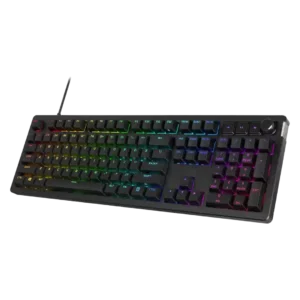
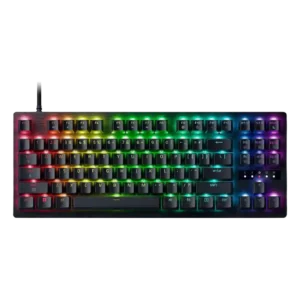
Compare HyperX Alloy Rise vs Razer Huntsman V3 TKL

P1 HyperX Alloy Rise
P2 Razer Huntsman V3 TKL

Comparison Takeaways

HyperX Alloy Rise

Where It Has the Edge

  • key stability is 4.6 vs 2.5. Key stability is praised where discussed, with reviewers noting stable switches and keys that stay in place even...
  • typing comfort is 4.0 vs 2.5. Typing comfort is usually strong thanks to softness and reduced fatigue, but some reviewers found the board harsh...
  • media controls is 4.0 vs 3.0. Media controls are mixed: reviewers often praise tactile dedicated buttons, but Tom's Hardware finds onboard controls limited and...
  • ergonomics is 3.8 vs 3.0. Ergonomics are mixed: compact models are praised for reach and wrist placement, while full-size or tall versions drew...

Razer Huntsman V3 TKL

Where It Has the Edge

  • portability is 5.0 vs 2.3. Portability is better than a typical gaming keyboard thanks to the TKL size and detachable cable, making tournament...
  • cable quality is 4.5 vs 2.0. The detachable USB-C cable is appreciated because it keeps the board easier to pack and avoids a forced...
  • frame rigidity is 4.8 vs 3.1. The frame feels rigid and premium, with very little flex called out and sturdy construction reinforced by the...
  • extra gaming features is 4.7 vs 3.1. Snap Tap and similar esports features are treated as genuinely powerful, even game-changing for competitive movement. The same...
Average score
Product 1: HyperX Alloy Rise
4.0
Product 2: Razer Huntsman V3 TKL
4.3
acoustics
Product 1: HyperX Alloy Rise
3.9

Acoustics are mixed but mostly positive: several reviews praise clean or dampened sound, while IGN and Windows Central hear sharper, metallic, or clacky notes.

Product 2: Razer Huntsman V3 TKL
4.1

Most reviewers like the sound more than expected, especially where foam dampening gives the board a more controlled tone. One take still finds it clickier than thockier, so the sound is improved rather than silent.

actuation consistency
Product 1: HyperX Alloy Rise
4.0

Actuation consistency is mixed: some reviews praise consistent, controlled keypresses, while TechRadar reports misinputs from the sensitive switches.

Product 2: Razer Huntsman V3 TKL
4.4

The analog switches are repeatedly praised for precise, consistent actuation and highly adjustable reset behavior. The main caveat is that very sensitive settings can lead to accidental inputs until tuned.

analog input support
Product 1: HyperX Alloy Rise
No score yet
Product 2: Razer Huntsman V3 TKL
4.8

Analog support is one of the board's biggest strengths, with reviewers praising pressure-sensitive control, controller-style behavior, and precise optical switching. It is most useful for players who will actually tune those deeper inputs.

backlight brightness
Product 1: HyperX Alloy Rise
4.5

Backlight brightness is praised for strong saturation and non-dim maximum brightness without becoming irritating.

Product 2: Razer Huntsman V3 TKL
5.0

The lighting comes through the keycaps cleanly and vividly, giving the board a bright look without reviewers calling it harsh.

battery life
Product 1: HyperX Alloy Rise
4.7

Battery life is a clear wireless-model strength, with reviewers reporting long runtime and being impressed by endurance.

Product 2: Razer Huntsman V3 TKL
No score yet
build quality
Product 1: HyperX Alloy Rise
4.5

Build quality is generally strong, with reviewers calling the keyboard solid, sturdy, high-grade, or robust despite some concerns around magnetic pieces.

Product 2: Razer Huntsman V3 TKL
4.8

Build quality lands as a clear strength: reviewers describe the board as solid, sturdy, premium-feeling, and competitive-grade despite its compact size.

cable quality
Product 1: HyperX Alloy Rise
2.0

Cable quality is criticized by Noisy Pixel, which found the USB cable and mounting area poorly integrated into the keyboard's design.

Product 2: Razer Huntsman V3 TKL
4.5

The detachable USB-C cable is appreciated because it keeps the board easier to pack and avoids a forced wired design.

compatibility
Product 1: HyperX Alloy Rise
4.8

Compatibility is positive where evaluated, with reviewers noting broad switch/keycap support and device versatility.

Product 2: Razer Huntsman V3 TKL
4.5

Gaming features are described as useful across many games, though Snap Tap may be restricted in some competitive titles.

connectivity
Product 1: HyperX Alloy Rise
4.1

Connectivity is strong on wireless models thanks to tri-mode and multi-device support, while wired-only versions are treated as a limitation.

Product 2: Razer Huntsman V3 TKL
3.8

The wired USB-C setup is generally fine, with praise for the detachable cable. One reviewer notes the recessed port is harder to reach, but also sees the secure fit as a fair tradeoff.

customization options
Product 1: HyperX Alloy Rise
4.2

Customization options are a core strength, with broad praise for plates, badges, switches, RGB, and profiles, though some reviewers felt the ecosystem was premature or overpriced.

Product 2: Razer Huntsman V3 TKL
4.9

Customization is a standout: reviewers highlight actuation tuning, Rapid Trigger settings, onboard adjustments, software control, browser options, and deep analog behavior.

design aesthetics
Product 1: HyperX Alloy Rise
4.0

Design aesthetics are subjective: several reviewers like the clean, understated look, while others find the stock design plain or unremarkable.

Product 2: Razer Huntsman V3 TKL
4.5

The board gets strong marks for its brushed-metal look, sleek minimalism, and functional esports styling. It is understated rather than flashy until the RGB is on.

desk space efficiency
Product 1: HyperX Alloy Rise
4.2

Desk space efficiency is strongest on the 75% model, which reviewers say saves space while retaining important keys and improving wrist placement.

Product 2: Razer Huntsman V3 TKL
4.0

The compact TKL body is treated as easy to fit on a setup while still feeling solid, making it friendlier for tighter desks than a full-size board.

durability
Product 1: HyperX Alloy Rise
4.7

Durability is supported by PBT wear resistance, long-lasting keycaps, and reviewers' sense that the keyboard is built to last.

Product 2: Razer Huntsman V3 TKL
5.0

Durability is praised in the stronger hands-on takes, with one reviewer calling out shock absorption and another saying it feels built like a tank.

ease of switch replacement
Product 1: HyperX Alloy Rise
2.8

Ease of switch replacement is mixed: Tom's Hardware finds the keyboard easy to customize, while Noisy Pixel reports stiff, challenging switch removal.

Product 2: Razer Huntsman V3 TKL
No score yet
ergonomics
Product 1: HyperX Alloy Rise
3.8

Ergonomics are mixed: compact models are praised for reach and wrist placement, while full-size or tall versions drew complaints about discomfort.

Product 2: Razer Huntsman V3 TKL
3.0

Comfort is more mixed: the feet help the angle, but the elevated, thick keycaps can make movement and wrist position awkward for typing.

extra gaming features
Product 1: HyperX Alloy Rise
3.1

Extra gaming features are mixed: anti-ghosting and game mode are useful, but some reviewers say the board lacks truly gamer-specific enhancements or sensitive actuation options.

Product 2: Razer Huntsman V3 TKL
4.7

Snap Tap and similar esports features are treated as genuinely powerful, even game-changing for competitive movement. The same strength can be situational because certain games may restrict them.

frame rigidity
Product 1: HyperX Alloy Rise
3.1

Frame rigidity is mixed: reviewers praise flex-free construction, but several criticize the magnetic top plate for looseness or easy removal.

Product 2: Razer Huntsman V3 TKL
4.8

The frame feels rigid and premium, with very little flex called out and sturdy construction reinforced by the board's compact build.

gaming performance
Product 1: HyperX Alloy Rise
4.2

Gaming performance is broadly solid to excellent, with reviewers finding it competitive and responsive, though Noisy Pixel felt it lacked distinct gamer-focused behavior.

Product 2: Razer Huntsman V3 TKL
4.8

Gaming performance is the main reason to buy it: reviewers describe smooth, reactive, pro-level play with fast input handling and strong competitive control.

hot-swappable switches
Product 1: HyperX Alloy Rise
4.5

Hot-swappable switches are consistently positive, giving users functional flexibility and easy future upgrades without soldering.

Product 2: Razer Huntsman V3 TKL
No score yet
keycap quality
Product 1: HyperX Alloy Rise
4.6

Keycap quality is consistently strong, with praise for thick or textured PBT, grip, clean aesthetics, and long-wearing materials.

Product 2: Razer Huntsman V3 TKL
4.5

The doubleshot PBT keycaps are widely liked for texture, comfort, gaming traction, and resistance to shine. The only real split is whether their height and graining fit every typist.

key responsiveness
Product 1: HyperX Alloy Rise
4.2

Responsiveness is a major strength, with multiple reviewers calling inputs instant or highly responsive; a few noted deep actuation or misfires depending on switch sensitivity.

Product 2: Razer Huntsman V3 TKL
4.9

Responsiveness is consistently praised, from pressure-sensitive analog control to instantaneous-feeling keystrokes and crisp movement changes.

key spacing
Product 1: HyperX Alloy Rise
4.1

Key spacing is mostly positive, with one reviewer calling it perfect, though TechRadar disliked the subtle F/J bumps.

Product 2: Razer Huntsman V3 TKL
4.0

The WASD area and nearby keys are described as comfortably spaced for gaming, even by a reviewer who disliked the board more for typing.

key stability
Product 1: HyperX Alloy Rise
4.6

Key stability is praised where discussed, with reviewers noting stable switches and keys that stay in place even after customization.

Product 2: Razer Huntsman V3 TKL
2.5

Key stability is a weak point in one review, which reports noticeable wobble that makes presses feel less secure.

latency
Product 1: HyperX Alloy Rise
4.6

Latency is usually praised as essentially unnoticeable or extremely low, though Dexerto notes it cannot match faster hall-effect gaming boards.

Product 2: Razer Huntsman V3 TKL
4.9

Latency is a major strength, with reviewers tying the 8KHz implementation to extremely low input delay and tight on-screen response.

layout options
Product 1: HyperX Alloy Rise
3.8

Layout options are mixed: reviewers value the 75% balance and full-size choice, but some dislike missing or remapped keys.

Product 2: Razer Huntsman V3 TKL
No score yet
legend visibility
Product 1: HyperX Alloy Rise
4.7

Legend visibility is praised for dark-room use and clear readability, with one reviewer also liking the visible function legends.

Product 2: Razer Huntsman V3 TKL
4.5

The legends are treated positively because the keycaps let lighting pass through cleanly and are described as resistant to fading.

macro customization
Product 1: HyperX Alloy Rise
4.3

Macro customization is useful and appreciated, with reviewers noting key remaps, macro setup, and enough flexibility for game profiles.

Product 2: Razer Huntsman V3 TKL
4.5

Key assignment depth is strong, including multi-action inputs and dual-step behavior that let players map more than one action to a keypress.

materials quality
Product 1: HyperX Alloy Rise
4.6

Materials quality is positive where evaluated, especially for the aluminum top plate and sturdy, flex-free frame construction.

Product 2: Razer Huntsman V3 TKL
4.5

Materials feel premium across the stronger reviews, especially the aluminum top plate and textured PBT caps.

media controls
Product 1: HyperX Alloy Rise
4.0

Media controls are mixed: reviewers often praise tactile dedicated buttons, but Tom's Hardware finds onboard controls limited and TechRadar finds the buttons cheap.

Product 2: Razer Huntsman V3 TKL
3.0

Media controls are a compromise. The board still has regular media keys, but reviewers note that the dial and dedicated multi-function controls from pricier variants are gone.

noise level
Product 1: HyperX Alloy Rise
3.9

Noise level is context-dependent: some reviewers call it quieter than peers, while IGN found it louder than a typical linear mechanical board.

Product 2: Razer Huntsman V3 TKL
3.5

Noise impressions are mixed. One reviewer finds it quieter than many mechanical boards, while another says it is still audible enough to be questionable for a quiet office.

onboard memory
Product 1: HyperX Alloy Rise
4.7

Onboard memory is praised where discussed because settings or configurations can be saved directly to the keyboard.

Product 2: Razer Huntsman V3 TKL
No score yet
passthrough features
Product 1: HyperX Alloy Rise
No score yet
Product 2: Razer Huntsman V3 TKL
2.5

Keyboard passthrough for controller emulation is a sore spot in one review, where it occasionally failed until the board was replugged.

per-key lighting control
Product 1: HyperX Alloy Rise
4.4

Per-key lighting control is generally well received, with reviewers noting individual key assignment and easier multi-key selection workflows.

Product 2: Razer Huntsman V3 TKL
5.0

Per-key RGB control is a clear plus, with both app and web control contributing to a highly customizable lighting setup.

polling rate
Product 1: HyperX Alloy Rise
3.8

The 8,000Hz polling rate is recognized as high-end, but reviewers are split on practical benefit because some found the returns negligible.

Product 2: Razer Huntsman V3 TKL
5.0

The 8KHz polling rate is repeatedly framed as a serious speed upgrade, especially for competitive play where tiny input delays matter.

portability
Product 1: HyperX Alloy Rise
2.3

Portability is a weakness because the magnetic top cover can come off when lifting or require a special grip.

Product 2: Razer Huntsman V3 TKL
5.0

Portability is better than a typical gaming keyboard thanks to the TKL size and detachable cable, making tournament or LAN travel feel practical.

profile management
Product 1: HyperX Alloy Rise
3.9

Profile management is mixed: onboard/profile switching is praised, but Tom's Hardware and How-To Geek found profile or lighting control limitations.

Product 2: Razer Huntsman V3 TKL
4.0

Profiles are useful in Synapse, including game-oriented presets that can be selected with Fn shortcuts.

rapid trigger support
Product 1: HyperX Alloy Rise
No score yet
Product 2: Razer Huntsman V3 TKL
4.9

Rapid Trigger is one of the best-reviewed features, praised for fast resets, movement control, and competitive FPS value.

reliability
Product 1: HyperX Alloy Rise
4.2

Reliability is mixed: some reviews describe consistent, reliable operation, while Windows Central reports intermittent inconsistency.

Product 2: Razer Huntsman V3 TKL
No score yet
RGB customization
Product 1: HyperX Alloy Rise
4.5

RGB customization is a strength, with reviewers liking layered effects, presets, per-user patterns, and broad software control.

Product 2: Razer Huntsman V3 TKL
5.0

RGB customization is rich, with presets and per-key lighting giving users plenty of room to build a flashy or personalized look.

RGB lighting quality
Product 1: HyperX Alloy Rise
4.4

RGB lighting quality is often praised as bright, vibrant, sharp, or evenly distributed, but Windows Central reported occasional lighting shutoffs.

Product 2: Razer Huntsman V3 TKL
4.7

RGB lighting is consistently liked, from subtle color accents to a bright, polished look that reviewers call gorgeous.

size and form factor
Product 1: HyperX Alloy Rise
4.3

Size and form factor are mostly positive, especially the compact 75% model, though full-size reviewers warn about reduced mouse space.

Product 2: Razer Huntsman V3 TKL
4.3

The TKL form factor is praised for being compact and backpack-friendly without feeling flimsy.

software quality
Product 1: HyperX Alloy Rise
3.4

Software quality is divisive: some reviewers find NGENUITY easy or even great, while many call it basic, limited, buggy, or frustrating.

Product 2: Razer Huntsman V3 TKL
4.0

Software is powerful and mostly easy to use, with Synapse and browser-based tuning covering deep settings. A few bugs and occasional setting issues keep it from being flawless.

sound dampening
Product 1: HyperX Alloy Rise
4.5

Sound dampening is widely praised, with reviewers crediting foam, gaskets, or integrated dampening for reduced harshness and better sound.

Product 2: Razer Huntsman V3 TKL
3.8

Sound dampening is improved in the more positive takes, especially where foam creates a better typing sound. One review still finds the switches under-damped and a little harsh.

stabilizer quality
Product 1: HyperX Alloy Rise
4.5

Stabilizer quality is praised in the detailed reviews, especially for reduced rattle, stability, and factory lubrication.

Product 2: Razer Huntsman V3 TKL
No score yet
switch feel
Product 1: HyperX Alloy Rise
4.4

Reviewers generally liked the HyperX switches for their smooth, satisfying, responsive feel, though IGN and TechRadar found them harsher or too sensitive for some users.

Product 2: Razer Huntsman V3 TKL
4.0

Switch feel depends on priorities: reviewers like the smooth analog response and strong gaming behavior, but one finds the feedback at the top of travel too vague.

switch options
Product 1: HyperX Alloy Rise
4.1

Switch choice is positive but limited: reviewers appreciated linear/tactile options and replaceable kits, with most praise tied to the ability to tune feel.

Product 2: Razer Huntsman V3 TKL
No score yet
typing comfort
Product 1: HyperX Alloy Rise
4.0

Typing comfort is usually strong thanks to softness and reduced fatigue, but some reviewers found the board harsh or palm pressure problematic.

Product 2: Razer Huntsman V3 TKL
2.5

Typing comfort is the clearest tradeoff. Some reviewers enjoy the typing experience, but the most critical take says the high keycaps make finger movement and wrist position uncomfortable.

typing feel
Product 1: HyperX Alloy Rise
4.5

Typing feel is one of the strongest themes, ranging from outstanding and premium to smooth and satisfying, though IGN found the keystroke harsher than rivals.

Product 2: Razer Huntsman V3 TKL
4.1

Typing feel ranges from excellent to merely acceptable. The best reviews call it a dream or a great typing experience, while the critical review finds the keys somewhat harsh.

value for money
Product 1: HyperX Alloy Rise
3.2

Value for money is the biggest split: reviewers like the keyboard more on sale, but many criticize full MSRP against strong alternatives.

Product 2: Razer Huntsman V3 TKL
4.6

Value is strong for the target buyer: reviewers like getting the core esports features, 8KHz polling, and analog customization below higher-end alternatives.

volume control
Product 1: HyperX Alloy Rise
4.1

Volume control is generally good, with praise for tactile or notched feel, though Noisy Pixel wanted smoother rotation.

Product 2: Razer Huntsman V3 TKL
No score yet
wireless performance
Product 1: HyperX Alloy Rise
4.2

Wireless performance is mostly strong, with praise for low latency and no input delay, but Windows Central experienced occasional disconnects.

Product 2: Razer Huntsman V3 TKL
No score yet
wrist rest quality
Product 1: HyperX Alloy Rise
2.0

Wrist rest quality is effectively a weakness because multiple reviewers specifically wished one was included or needed for comfort.

Product 2: Razer Huntsman V3 TKL
3.5

The lack of an included wrist rest is noted, but at least one reviewer says this version does not really miss the accessory.