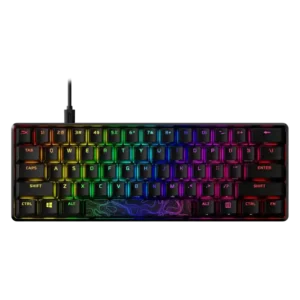
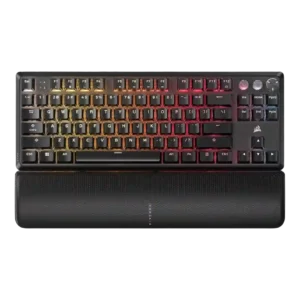
Compare HyperX Alloy Origins vs Corsair K70 PRO

P1 HyperX Alloy Origins
P2 Corsair K70 PRO

Comparison Takeaways

HyperX Alloy Origins

Where It Has the Edge

  • desk space efficiency is 4.9 vs 3.2. Desk space efficiency is strongly supported, especially for TKL, 60%, and 65% variants that leave more mouse room.
  • polling rate is 4.5 vs 2.9. Polling rate evidence is positive but limited, with reviewers calling the 1000 Hz-class polling or scan behavior suitable...
  • customization options is 5.0 vs 3.5. Customization options are strong where reviewers discuss remapping and key assignment, especially on the Core model.
  • acoustics is 3.8 vs 2.7. Acoustics are mixed, ranging from satisfying thock and pleasant sound to loud, clacky, or stabilizer-rattly impressions.

Corsair K70 PRO

Where It Has the Edge

  • reliability is 4.8 vs 1.5. Reliability was strong in full-size reviews, with praise for no dropped keystrokes or lag, though one TKL review...
  • profile management is 4.9 vs 2.3. Profile management was a strength, with repeated praise for onboard profiles, game/typing setups, and saved settings without running...
  • per-key lighting control is 5.0 vs 3.0. Per-key lighting control had limited but positive evidence, with one review emphasizing individual key color programming as part...
  • volume control is 4.8 vs 3.0. Volume control was a standout positive, with reviewers repeatedly praising smooth, grippy, accurate, tactile, or notchy rollers and...
Average score
Product 1: HyperX Alloy Origins
3.9
Product 2: Corsair K70 PRO
3.9
acoustics
Product 1: HyperX Alloy Origins
3.8

Acoustics are mixed, ranging from satisfying thock and pleasant sound to loud, clacky, or stabilizer-rattly impressions.

Product 2: Corsair K70 PRO
2.7

Acoustics were one of the most mixed areas, with praise for low ping in one review but repeated complaints about hollow sound, harsh clacking, or ping.

actuation consistency
Product 1: HyperX Alloy Origins
5.0

One reviewer explicitly praised the speed and consistency of the keyboard and switch combination.

Product 2: Corsair K70 PRO
4.0

Actuation consistency was praised in mechanical-switch testing, but mixed Hall-effect and mechanical switch coverage created a more uneven feel in one TKL review.

backlight brightness
Product 1: HyperX Alloy Origins
5.0

Backlight brightness is a major strength, with reviewers repeatedly describing the lighting as extremely bright or easy to adjust.

Product 2: Corsair K70 PRO
4.1

Backlight brightness evidence was limited but positive, with reviewers finding it visible without becoming distracting.

battery life
Product 1: HyperX Alloy Origins
No score yet
Product 2: Corsair K70 PRO
2.0

Battery life had limited evidence from the Mini Wireless review, where RGB-on runtime was criticized as poor.

build quality
Product 1: HyperX Alloy Origins
4.9

Build quality is the standout consensus strength, with reviewers repeatedly praising the aluminum body, weight, sturdiness, and premium feel.

Product 2: Corsair K70 PRO
4.4

Build quality was mostly praised for solidity and premium feel, though some reviews flagged simplicity, ping-related build concerns, or cost-cut corners.

cable quality
Product 1: HyperX Alloy Origins
3.6

Cable quality is polarized, with praise for detachable braided USB-C cables but criticism of stiffness, kinks, and recessed-port compatibility.

Product 2: Corsair K70 PRO
4.5

Cable quality was a clear positive, with reviewers liking detachable USB-C, premium braided feel, useful length, and easier transport.

compatibility
Product 1: HyperX Alloy Origins
4.0

Compatibility evidence is generally favorable for consoles and major platforms, though one review notes no macOS or Linux support for that model.

Product 2: Corsair K70 PRO
4.3

Compatibility was mostly positive for PC, Mac, Linux, Xbox, and multi-device use, though PS5 support was criticized elsewhere in the source.

connectivity
Product 1: HyperX Alloy Origins
3.5

Connectivity is mixed: detachable USB-C is appreciated, but reviewers noted software detection issues and no multi-device use.

Product 2: Corsair K70 PRO
3.6

Connectivity was praised for easy wired plug-and-play and USB-C, but several reviewers disliked the lack of wireless choice.

customization options
Product 1: HyperX Alloy Origins
5.0

Customization options are strong where reviewers discuss remapping and key assignment, especially on the Core model.

Product 2: Corsair K70 PRO
3.5

Customization options were strong overall, especially on Hall-effect TKL models and iCUE, but some reviews saw limits from mixed switch coverage or brand software.

design aesthetics
Product 1: HyperX Alloy Origins
4.4

Design aesthetics are mostly praised as sleek, simple, attractive, or understated, though one reviewer found the design too slippery and plain.

Product 2: Corsair K70 PRO
4.4

Design aesthetics were generally praised for clean, simple, sleek styling, though a few reviewers found brushed aluminum or generic gaming looks less exciting.

desk space efficiency
Product 1: HyperX Alloy Origins
4.9

Desk space efficiency is strongly supported, especially for TKL, 60%, and 65% variants that leave more mouse room.

Product 2: Corsair K70 PRO
3.2

Desk space efficiency was context-dependent; stable rubber feet helped, but some reviewers noted sliding feet or full-size bulk.

durability
Product 1: HyperX Alloy Origins
4.5

Durability evidence is positive but limited, including expected longevity and a long-term report of continued use.

Product 2: Corsair K70 PRO
4.9

Durability evidence centered on PBT keycaps and legends, which reviewers expected to resist wear, shine, and fading.

ease of switch replacement
Product 1: HyperX Alloy Origins
1.0

Ease of switch replacement is poor where discussed, because changing switches requires desoldering both LED and switch components.

Product 2: Corsair K70 PRO
1.5

Ease of switch replacement was criticized where switches were not hot-swappable, requiring soldering or whole-keyboard replacement for failures.

ergonomics
Product 1: HyperX Alloy Origins
4.0

Ergonomics are mixed: adjustable feet and smaller layouts help comfort, but wrist fatigue and the need for a wrist rest appear in several reviews.

Product 2: Corsair K70 PRO
3.4

Ergonomics were mixed, with comfortable angle options and wrist slopes offset by palm-rest interference in one review.

extra gaming features
Product 1: HyperX Alloy Origins
5.0

Extra gaming features are strong, with NKRO, anti-ghosting, and game mode earning positive evidence for avoiding missed or accidental inputs.

Product 2: Corsair K70 PRO
4.1

Extra gaming features were useful to many reviewers, especially Tournament/Game Mode, though some called Tournament Mode niche or unnecessary.

frame rigidity
Product 1: HyperX Alloy Origins
5.0

Frame rigidity is excellent in the review evidence, with repeated comments about minimal flex, no give, and stable placement.

Product 2: Corsair K70 PRO
4.2

Frame rigidity was usually strong, with many reviewers noting little or no flex, though one review found more flex than expected.

gaming performance
Product 1: HyperX Alloy Origins
4.6

Gaming performance is one of the strongest areas, repeatedly praised as responsive, accurate, low-lag, and well suited to fast games.

Product 2: Corsair K70 PRO
4.7

Gaming performance was one of the strongest areas, with many reviewers calling the keyboard fast, accurate, responsive, and excellent in real gameplay.

hot-swappable switches
Product 1: HyperX Alloy Origins
2.0

Hot-swappable switch support is a weakness because reviewers specifically wanted hot-swap capability and noted its absence.

Product 2: Corsair K70 PRO
2.1

Hot-swappable switch support was a major split: some models finally offered it, while many Pro/RGB Pro reviews criticized the lack of hot-swap repairability.

keycap quality
Product 1: HyperX Alloy Origins
3.5

Keycap quality is mixed: PBT-equipped compact versions are praised, while ABS caps on other versions draw shine, oil, rattle, and durability complaints.

Product 2: Corsair K70 PRO
4.4

Keycap quality was usually praised for PBT material, durability, texture, and legends, though one TKL review criticized ABS caps as cheap.

key responsiveness
Product 1: HyperX Alloy Origins
4.5

Responsiveness is a clear strength, with reviewers citing quick, precise inputs, reduced accidental presses, and skill activation that kept up with games.

Product 2: Corsair K70 PRO
4.9

Key responsiveness scored strongly across gaming-focused reviews, with repeated praise for fast, precise inputs and reliable command registration.

key spacing
Product 1: HyperX Alloy Origins
3.8

Key spacing is context-dependent: the 60% model can feel tightly packed, while other layouts are described as standard or not cramped.

Product 2: Corsair K70 PRO
4.0

Key spacing had limited evidence, with one review saying the keys were well spaced despite some wobble.

key stability
Product 1: HyperX Alloy Origins
4.5

Key stability is generally positive, with reviewers noting no wobble or only minor wobble that was not distracting.

Product 2: Corsair K70 PRO
3.5

Key stability had limited evidence; the one scored review found some wobble but said it was not distracting in normal use.

latency
Product 1: HyperX Alloy Origins
5.0

Latency evidence is strongly positive: reviewers measured tight or very low latency and reported no detectable lag in use.

Product 2: Corsair K70 PRO
4.2

Latency impressions were positive in several gaming reviews, but some reviewers said the measurable gains were too small for humans to feel.

layout options
Product 1: HyperX Alloy Origins
3.9

Layout options are useful for gamers who want smaller boards, but the 60% layout creates productivity tradeoffs for some users.

Product 2: Corsair K70 PRO
4.2

Layout options evidence was positive but limited, covering useful full-size gaming benefits and alternative layout support through software.

legend visibility
Product 1: HyperX Alloy Origins
5.0

Legend visibility has positive evidence from the 60% model, where side-printed secondary functions were easy to recognize.

Product 2: Corsair K70 PRO
4.1

Legend visibility was mostly positive thanks to crisp fonts and durable legends, but a few reviews disliked indicator visibility or reduced RGB shine-through.

macro customization
Product 1: HyperX Alloy Origins
3.5

Macro customization is available and useful, but reviewers also found it less intuitive or less capable than dedicated macro-focused alternatives.

Product 2: Corsair K70 PRO
4.5

Macro customization was praised for easy recording, remapping, and programmable keys, though one reviewer wished for dedicated macro keys.

materials quality
Product 1: HyperX Alloy Origins
5.0

Materials quality is strongly positive, especially the aircraft-grade aluminum construction and high-quality case feel.

Product 2: Corsair K70 PRO
4.8

Materials quality was praised where reviewed, especially for brushed aluminum, solid plastic, and a premium-feeling chassis.

media controls
Product 1: HyperX Alloy Origins
2.8

Media controls are adequate through function layers, but reviewers repeatedly wished for separate or dedicated media keys.

Product 2: Corsair K70 PRO
4.4

Media controls were mostly praised for convenience, dedicated buttons, and immediate usefulness, though one TKL review found the buttons unresponsive.

noise level
Product 1: HyperX Alloy Origins
3.2

Noise level depends on switch and reviewer tolerance; some found it quieter or inoffensive, while others called it noisy or annoying.

Product 2: Corsair K70 PRO
3.1

Noise level depended heavily on switch choice and board acoustics, with quiet Red-switch praise balanced by noisy, clicky, and ping-heavy complaints.

onboard memory
Product 1: HyperX Alloy Origins
3.8

Onboard memory is helpful for saving profiles across systems, but several reviewers considered the three-profile limit modest.

Product 2: Corsair K70 PRO
4.9

Onboard memory was repeatedly praised for storing profiles, lighting layers, macros, and settings directly on the keyboard.

passthrough features
Product 1: HyperX Alloy Origins
2.0

Passthrough features are a clear weakness where discussed, because losing the prior USB passthrough/charging port disappointed reviewers.

Product 2: Corsair K70 PRO
2.5

Passthrough features were a weakness, with reviewers missing built-in USB passthrough from earlier or competing keyboards.

per-key lighting control
Product 1: HyperX Alloy Origins
3.0

Per-key lighting control is supported, but one reviewer found the layered workflow slow and awkward for detailed per-key setups.

Product 2: Corsair K70 PRO
5.0

Per-key lighting control had limited but positive evidence, with one review emphasizing individual key color programming as part of the keyboard’s main appeal.

polling rate
Product 1: HyperX Alloy Origins
4.5

Polling rate evidence is positive but limited, with reviewers calling the 1000 Hz-class polling or scan behavior suitable for gaming.

Product 2: Corsair K70 PRO
2.9

The 8,000Hz polling rate divided reviewers: some noticed benefits in gaming, while many called it unnoticeable, unnecessary, or only marginally useful.

portability
Product 1: HyperX Alloy Origins
4.4

Portability is a strength for the compact versions and detachable-cable design, especially for travel and LAN-style use.

Product 2: Corsair K70 PRO
4.1

Portability evidence was positive when detachable cables, onboard profiles, or lighter TKL construction made travel or moving easier.

profile management
Product 1: HyperX Alloy Origins
2.3

Profile management is useful in theory, but evidence includes sync failures, unresponsive presets, and a three-profile limitation.

Product 2: Corsair K70 PRO
4.9

Profile management was a strength, with repeated praise for onboard profiles, game/typing setups, and saved settings without running software.

rapid trigger support
Product 1: HyperX Alloy Origins
No score yet
Product 2: Corsair K70 PRO
4.8

Rapid trigger support was treated as a real competitive feature, especially for Hall-effect TKL models, though reviewers also noted the risk of accidental inputs.

reliability
Product 1: HyperX Alloy Origins
1.5

Reliability has limited negative evidence from one reviewer who reported severe lighting/profile glitches after restarts or unplugging.

Product 2: Corsair K70 PRO
4.8

Reliability was strong in full-size reviews, with praise for no dropped keystrokes or lag, though one TKL review noted early system-specific issues.

RGB customization
Product 1: HyperX Alloy Origins
3.7

RGB customization is capable and often easy, but reviewers also criticized limited presets/effects and occasional setup friction.

Product 2: Corsair K70 PRO
4.6

RGB customization was a major strength, with reviewers praising iCUE control, layers, profiles, individual color control, and broad lighting flexibility.

RGB lighting quality
Product 1: HyperX Alloy Origins
4.8

RGB lighting quality is consistently praised for brightness, saturation, vividness, and attractive shine-through effects, with one color-mixing caveat.

Product 2: Corsair K70 PRO
4.4

RGB lighting quality was praised for vivid lighting, accurate whites, strong reflections, and daytime visibility, with one Mini Wireless review finding LEDs dim.

size and form factor
Product 1: HyperX Alloy Origins
4.3

Size and form factor are praised for compactness and no-nonsense gaming use, though the smallest models involve compromises.

Product 2: Corsair K70 PRO
3.7

Size and form factor evidence was mixed: some liked the standard full-size layout, while others preferred smaller boards.

software quality
Product 1: HyperX Alloy Origins
2.8

Software quality is the most uneven area, with some reviewers finding it easy and others reporting confusing workflows, bugs, limits, or install problems.

Product 2: Corsair K70 PRO
4.1

Software quality was generally positive, with iCUE praised for depth and control, though some reviewers found it confusing, heavy, or occasionally frustrating.

sound dampening
Product 1: HyperX Alloy Origins
3.0

Sound dampening evidence is limited and mildly negative, with one review noting the lack of foam lets sound travel more freely.

Product 2: Corsair K70 PRO
2.5

Sound dampening drew criticism when silicone layers or internal design failed to control ping, though one TKL review said silicone helped.

stabilizer quality
Product 1: HyperX Alloy Origins
3.2

Stabilizer quality is mixed: some reviewers found little rattle, while others reported squeaking, looseness, or insufficient factory tuning.

Product 2: Corsair K70 PRO
3.0

Stabilizer quality was mixed: some reviews found little rattle or a strong spacebar, while others complained about ping, rattle, or inconsistent lube.

switch feel
Product 1: HyperX Alloy Origins
4.4

Reviewers generally describe the HyperX switches as smooth, familiar, satisfying, and good for gaming, though a few prefer Cherry-style or tactile alternatives for typing.

Product 2: Corsair K70 PRO
4.0

Reviewers generally liked the Cherry MX and Hall-effect switch feel, praising smoothness and responsiveness, though some called Speed switches too sensitive, mixed switches distracting, or certain switches rough.

switch options
Product 1: HyperX Alloy Origins
3.2

Switch choice is appreciated across the lineup, but smaller variants receive criticism when they ship with only linear switches or delayed tactile/clicky options.

Product 2: Corsair K70 PRO
4.4

Switch selection was a consistent strength, with reviewers praising the range of Cherry MX options, though one review noted that some versions offered fewer variants.

typing comfort
Product 1: HyperX Alloy Origins
3.8

Typing comfort is mixed but generally favorable, with several reviewers enjoying daily typing while others note sensitivity or wrist comfort issues.

Product 2: Corsair K70 PRO
4.5

Typing comfort was mostly positive when reviewers discussed comfortable keycaps, wrist support, and long typing sessions.

typing feel
Product 1: HyperX Alloy Origins
4.4

Typing feel is mostly favorable, with reviewers calling it solid, satisfying, fluid, and easy to type on, though 60% sensitivity caused problems for some.

Product 2: Corsair K70 PRO
3.9

Typing feel ranged from excellent and breezy to merely adequate or underwhelming, with sound and switch choice strongly shaping the experience.

value for money
Product 1: HyperX Alloy Origins
4.3

Value is generally strong, with many reviewers calling the price fair, competitive, or excellent; one reviewer felt the MSRP was too high.

Product 2: Corsair K70 PRO
3.8

Value for money was heavily mixed: many reviewers justified the premium price, while others called it high, only reasonable, or poor against alternatives.

volume control
Product 1: HyperX Alloy Origins
3.0

Volume control is split: full-size reviewers wanted a dial or wheel, while one long-term Core user praised the volume shortcut placement.

Product 2: Corsair K70 PRO
4.8

Volume control was a standout positive, with reviewers repeatedly praising smooth, grippy, accurate, tactile, or notchy rollers and knobs.

wireless performance
Product 1: HyperX Alloy Origins
No score yet
Product 2: Corsair K70 PRO
2.9

Wireless performance was mostly a limitation for wired models, though the Mini Wireless evidence reported no wireless signal issues.

wrist rest quality
Product 1: HyperX Alloy Origins
No score yet
Product 2: Corsair K70 PRO
3.9

Wrist rest quality varied widely, from very comfortable and secure to gross-feeling, loose, or intrusive depending on reviewer and model.