Average score
P1
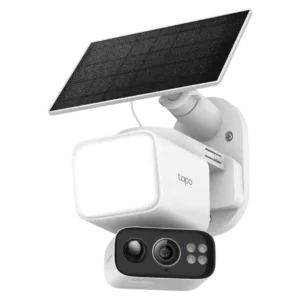
Product 1: Tapo C615F Kit
4.2
P2
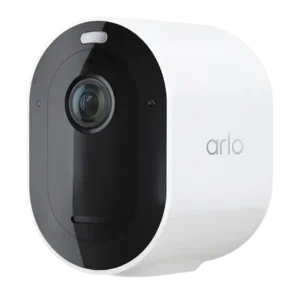
Product 2: Arlo Pro 5s Spotlight Security...
4.0
App controls and settings
P1
Product 1: Tapo C615F Kit
4.2
The Tapo app offered many useful settings and controls, but setup menus and some bugs kept the app experience from being universally smooth.
P2
Product 2: Arlo Pro 5s Spotlight Security...
4.6
App controls are widely praised for modes, routines, dashboards, settings, and granular customization, even if the depth can take time to master.
Articulation range
P1
Product 1: Tapo C615F Kit
4.6
The articulation range was broadly praised for offsetting the narrow lens and enabling broad 360-degree-style coverage.
P2Product 2: Arlo Pro 5s Spotlight Security...
No score yetAudio recording quality
P1
Product 1: Tapo C615F Kit
3.8
Audio was usable overall, with clear results in some tests, but two-way listening could become challenging or lower while tracking.
P2
Product 2: Arlo Pro 5s Spotlight Security...
4.6
Two-way audio is generally praised as clear and low-lag, though one reviewer notes conversations can still feel slightly delayed.
Battery life
P1
Product 1: Tapo C615F Kit
4.6
Battery life evidence was strongly positive, with reviewers reporting high charge retention or confidence in long-term solar-assisted operation.
P2
Product 2: Arlo Pro 5s Spotlight Security...
3.4
Battery life is mixed: reviewers like the improvement and low-power options, but real-world estimates often fall closer to three or four months than eight.
Build quality
P1
Product 1: Tapo C615F Kit
4.4
Build quality comments were positive, focused on a sturdy mount and a well-made solar panel.
P2
Product 2: Arlo Pro 5s Spotlight Security...
3.8
Build quality is mostly praised as premium and well designed, but one reviewer strongly criticizes the easily scratched front panel.
Cable management
P1
Product 1: Tapo C615F Kit
3.4
Cable management was mixed: one reviewer liked the clean mounted look, while another struggled with the thick watertight USB-C connector.
P2
Product 2: Arlo Pro 5s Spotlight Security...
2.0
Cable management is a recurring annoyance because reviewers dislike the proprietary magnetic charging cable and the need to keep track of it.
Cloud storage plan value
P1
Product 1: Tapo C615F Kit
4.3
Cloud storage was treated as optional and fairly nonessential because the core detection and recording features remained usable without a plan.
P2
Product 2: Arlo Pro 5s Spotlight Security...
2.0
Cloud plan value is the most repeated concern: reviewers like cloud features but often criticize how many core features require Arlo Secure.
Color accuracy
P1
Product 1: Tapo C615F Kit
4.0
Color accuracy was split between one reviewer calling colors accurate and another saying daytime colors looked muted with artifacting.
P2
Product 2: Arlo Pro 5s Spotlight Security...
4.7
Color quality receives strong praise, with reviewers noting good saturation, accurate forensic detail, and excellent HDR handling.
Connectivity options
P1
Product 1: Tapo C615F Kit
4.0
Connectivity was adequate in the one scored review, where 2.4GHz Wi-Fi was considered sufficient and potentially better for range.
P2
Product 2: Arlo Pro 5s Spotlight Security...
4.5
Connectivity options are a strength when the camera connects directly to Wi-Fi and supports 5GHz, though some setup and range caveats remain.
Continuous recording capability
P1
Product 1: Tapo C615F Kit
3.1
The 24/7 capture mode was divisive: some liked solar-compatible timelapse capture, while others felt the wording was misleading or missed true continuous recording.
P2Product 2: Arlo Pro 5s Spotlight Security...
No score yetCustomer support responsiveness
P1Product 1: Tapo C615F Kit
No score yet
P2
Product 2: Arlo Pro 5s Spotlight Security...
1.5
Customer support receives one negative data point, where WIRED says Arlo technical support could not resolve loading and lag issues.
Customizable motion zones
P1
Product 1: Tapo C615F Kit
4.6
Motion-zone controls were praised for letting users tailor detection by subject type and area rather than using one broad zone.
P2
Product 2: Arlo Pro 5s Spotlight Security...
4.8
Activity zones are praised as useful for reducing unnecessary alerts, especially when users want notifications only from specific parts of the frame.
Detection features
P1
Product 1: Tapo C615F Kit
4.4
Detection features were one of the clearest strengths, with frequent praise for free AI detection and tracking despite some range and false-alert caveats.
P2
Product 2: Arlo Pro 5s Spotlight Security...
4.9
Detection features are strongly praised overall, especially person, animal, vehicle, and package recognition, with several reviewers reporting high accuracy.
Detection range
P1
Product 1: Tapo C615F Kit
3.1
Detection range was mixed: one tester saw useful range around 30 feet, while others found sensitivity weaker at distance or outside the PIR sensor’s view.
P2Product 2: Arlo Pro 5s Spotlight Security...
No score yetDigital zoom clarity
P1
Product 1: Tapo C615F Kit
4.2
Digital zoom benefited from the 2K sensor, with one reviewer saying it kept zoomed images sharper than 1080p cameras.
P2
Product 2: Arlo Pro 5s Spotlight Security...
3.8
Digital zoom is useful for identifying subjects, but reviewers disagree on how much detail is lost when zooming or using zoom-and-track features.
Dual-band (2.4/5GHz) performance
P1Product 1: Tapo C615F Kit
No score yet
P2
Product 2: Arlo Pro 5s Spotlight Security...
4.3
Dual-band Wi-Fi is generally viewed as a useful upgrade for responsiveness and loading, but setup still often begins on 2.4GHz and can cause friction.
Durability
P1
Product 1: Tapo C615F Kit
4.5
Durability evidence was limited but positive, with one review saying outdoor wet exposure was not a concern.
P2
Product 2: Arlo Pro 5s Spotlight Security...
3.0
Durability evidence is split between confidence in weather sealing and a serious complaint about the scratch-prone front plastic.
Event recording reliability
P1
Product 1: Tapo C615F Kit
4.8
Event recording reliability was strong in PCWorld’s test, with no missing video, thumbnails, or similar hiccups.
P2
Product 2: Arlo Pro 5s Spotlight Security...
5.0
Event recording and trigger reliability score well where tested, with reviewers saying integrations worked every time and events were not missed.
False alert filter effectiveness
P1
Product 1: Tapo C615F Kit
3.2
False-alert filtering was mixed: subject-specific settings helped avoid unwanted triggers, but reviewers also reported hit-or-miss detection and PIR limits.
P2
Product 2: Arlo Pro 5s Spotlight Security...
5.0
False alert filtering is praised where discussed, with activity zones and detection filters helping cut noise and reduce false positives.
Field of view
P1
Product 1: Tapo C615F Kit
2.9
The fixed sensor view was consistently described as narrow or only adequate, with pan/tilt helping offset but not eliminate the limitation.
P2
Product 2: Arlo Pro 5s Spotlight Security...
4.8
The 160-degree view is repeatedly treated as a real advantage for covering more area from one fixed position.
Floodlight brightness
P1
Product 1: Tapo C615F Kit
4.5
Floodlight brightness was a major strength, repeatedly described as bright enough to illuminate yards despite being less powerful than some wired rivals.
P2Product 2: Arlo Pro 5s Spotlight Security...
No score yetFrame rate
P1Product 1: Tapo C615F Kit
No score yet
P2
Product 2: Arlo Pro 5s Spotlight Security...
3.3
Frame rate is the one video-quality caveat: reviewers note motion can show more artifacts or blur than higher-frame-rate competitors.
HomeKit integration
P1Product 1: Tapo C615F Kit
No score yet
P2
Product 2: Arlo Pro 5s Spotlight Security...
2.7
HomeKit support is a clear pain point: some reviewers say it is absent, while others note it requires extra hub hardware or additional Apple services.
Hub requirement
P1
Product 1: Tapo C615F Kit
4.5
A hub was not required, which reviewers treated as a positive even when they liked the optional hub for centralized storage.
P2
Product 2: Arlo Pro 5s Spotlight Security...
3.0
The hub requirement is context-dependent: reviewers like that a hub is not needed for basic use, but criticize needing one for local storage or HomeKit.
IFTTT/automation compatibility
P1
Product 1: Tapo C615F Kit
3.5
Automation support was described as simple but useful, especially for households with several Tapo devices.
P2
Product 2: Arlo Pro 5s Spotlight Security...
4.8
IFTTT and automation support receive positive mentions, especially for third-party interactions and routines tied to other smart devices.
Included accessories
P1
Product 1: Tapo C615F Kit
4.1
Included accessories were helpful overall, especially the guide, mount, solar setup, and clean-install hardware.
P2Product 2: Arlo Pro 5s Spotlight Security...
No score yetInstallation and Mounting
P1
Product 1: Tapo C615F Kit
4.6
Installation was consistently described as easy, straightforward, or well-guided by the app and included mounting process.
P2
Product 2: Arlo Pro 5s Spotlight Security...
4.4
Installation is usually described as easy, quick, or intuitive, though Wi-Fi setup on some networks can still be frustrating.
Lens distortion correction
P1
Product 1: Tapo C615F Kit
4.8
Lens distortion was praised in PCWorld’s test, where distortion was practically absent due to the limited viewing angle.
P2Product 2: Arlo Pro 5s Spotlight Security...
No score yetLocal storage option convenience
P1
Product 1: Tapo C615F Kit
4.5
Local storage was repeatedly praised as flexible, subscription-free, and convenient through microSD, hub, or device-local recording options.
P2
Product 2: Arlo Pro 5s Spotlight Security...
2.0
Local storage is a weakness because it typically requires an extra Arlo Smart Hub, making it less convenient than cameras with built-in microSD storage.
Low-light performance
P1
Product 1: Tapo C615F Kit
3.7
Low-light results were strong when the floodlight was involved, but one reviewer found tracking image quality weak without enough light.
P2
Product 2: Arlo Pro 5s Spotlight Security...
4.7
Low-light performance is viewed positively, with reviewers highlighting strong color night results and clear images when lighting is limited.
Mesh network compatibility
P1Product 1: Tapo C615F Kit
No score yet
P2
Product 2: Arlo Pro 5s Spotlight Security...
1.5
Mesh network compatibility is mixed to poor, with multiple reviewers reporting setup trouble on mesh or combined-band networks.
Microphone sensitivity
P1
Product 1: Tapo C615F Kit
3.9
Microphone pickup was strong in one yard test but less consistent while the camera moved to track a target.
P2
Product 2: Arlo Pro 5s Spotlight Security...
4.0
The microphone is presented as sensitive enough to avoid missing important audio, but only one review gives opinionated support for this attribute.
Mobile app reliability
P1
Product 1: Tapo C615F Kit
3.4
App reliability was mixed: setup worked smoothly in one review, but another hit a persistent privacy-mode error.
P2
Product 2: Arlo Pro 5s Spotlight Security...
4.4
The mobile app is generally considered stable, fast, and easy to use after setup, though the wider Arlo system can take time to learn.
Mounting flexibility
P1
Product 1: Tapo C615F Kit
4.2
Mounting flexibility was mostly praised for separable solar-panel placement and versatile mounts, though one review disliked the lack of tabletop or inverted use.
P2
Product 2: Arlo Pro 5s Spotlight Security...
4.0
Mounting flexibility is mostly positive because the battery-powered design allows broad placement, but at least one reviewer criticizes the included mount as fiddly.
Night vision
P1
Product 1: Tapo C615F Kit
4.4
Night vision drew mostly positive comments, with reviewers praising both color and IR modes, while one noted IR and low-light motion still have limits.
P2
Product 2: Arlo Pro 5s Spotlight Security...
4.4
Night vision earns broad praise, especially color night vision, though one reviewer found the color/spotlight behavior more hit-or-miss.
Notification management
P1
Product 1: Tapo C615F Kit
4.1
Notification management was useful and customizable, though rich snapshot notifications remained tied to cloud service.
P2
Product 2: Arlo Pro 5s Spotlight Security...
4.8
Notification management is a major strength, with rich alerts, previews, filters, and object-specific controls repeatedly praised.
Notification speed
P1
Product 1: Tapo C615F Kit
3.5
Notification speed was acceptable rather than instant, with one tester seeing about 30 seconds and another wanting it a little quicker despite a 6-second result.
P2
Product 2: Arlo Pro 5s Spotlight Security...
5.0
Notification speed is one of the product’s clearest strengths, with reviewers repeatedly describing alerts as swift, instantaneous, or faster than competing setups.
On-device features
P1
Product 1: Tapo C615F Kit
4.5
On-device features were praised because the camera remained fully functional without paying for cloud extras.
P2Product 2: Arlo Pro 5s Spotlight Security...
No score yetOn-device processing (AI)
P1
Product 1: Tapo C615F Kit
4.8
On-device AI was praised because person, pet, and vehicle detection did not require an added cloud subscription.
P2Product 2: Arlo Pro 5s Spotlight Security...
No score yetPower options (battery)
P1
Product 1: Tapo C615F Kit
4.8
Battery-powered operation was praised in PCWorld’s verdict as part of a low-cost floodlight camera that performs well.
P2
Product 2: Arlo Pro 5s Spotlight Security...
5.0
Battery power helps make installation wire-free and simple, but the proprietary charging setup remains a practical nuisance.
Power options (solar panel)
P1
Product 1: Tapo C615F Kit
4.8
Solar power received broad praise for keeping the battery topped up, enabling remote installs, and reducing charging anxiety even in cloudy or snowy use.
P2
Product 2: Arlo Pro 5s Spotlight Security...
4.8
Solar-panel support is praised as a way to reduce or eliminate manual battery charging, especially for harder-to-reach installations.
Price value
P1
Product 1: Tapo C615F Kit
4.7
Price value was a standout strength, with reviewers repeatedly calling the sub-$100 package impressive, affordable, and easy to recommend.
P2
Product 2: Arlo Pro 5s Spotlight Security...
3.4
Price value is mixed: reviewers call the camera premium and capable, but many warn that upfront price plus subscription costs hurt value.
PTZ (pan/tilt/zoom) control responsiveness
P1
Product 1: Tapo C615F Kit
4.7
PTZ response and tracking were widely praised as smooth, quick, and useful for following subjects through a yard.
P2Product 2: Arlo Pro 5s Spotlight Security...
No score yetRecording start-time lag
P1
Product 1: Tapo C615F Kit
4.5
Recording start lag was praised in the Tom’s Guide test, where motion recording began without a noticeable delay.
P2Product 2: Arlo Pro 5s Spotlight Security...
No score yetSize and footprint
P1
Product 1: Tapo C615F Kit
4.2
The camera’s size was viewed positively, with reviewers describing it as compact or small while still feature-packed.
P2
Product 2: Arlo Pro 5s Spotlight Security...
4.0
Size and footprint have limited positive evidence, with one review describing the camera as a small, minimalist box.
Smart-home integration (Alexa, Google, Siri, HomeKit, Matter, Thread)
P1
Product 1: Tapo C615F Kit
4.2
Alexa, Google, and the broader Tapo ecosystem were viewed positively for users already invested in compatible smart-home setups.
P2
Product 2: Arlo Pro 5s Spotlight Security...
4.1
Smart-home integration is broad, with praise for Alexa, Google, IFTTT, SmartThings, and automation support, but HomeKit friction pulls the category down.
Smart home accessory compatibility
P1
Product 1: Tapo C615F Kit
4.8
Accessory compatibility looked strong inside the Tapo ecosystem, with reviewers highlighting multiple smart-home integrations and companion hub use.
P2
Product 2: Arlo Pro 5s Spotlight Security...
5.0
Smart-home accessory compatibility is supported by successful Alexa/Echo Show and Wyze Bulb routine testing in one review.
Sound detection accuracy
P1Product 1: Tapo C615F Kit
No score yet
P2
Product 2: Arlo Pro 5s Spotlight Security...
5.0
Sound detection has limited but positive evidence, with one reviewer especially liking the alarm detection feature.
Speaker volume
P1
Product 1: Tapo C615F Kit
4.8
The siren/speaker output was described as very loud and deterrent enough for the homestead use case.
P2
Product 2: Arlo Pro 5s Spotlight Security...
4.0
Speaker and siren loudness are mostly viewed positively, though one reviewer was not impressed by siren volume.
Spotlight features
P1
Product 1: Tapo C615F Kit
4.2
Spotlight and floodlight controls were useful for directing light, customizing brightness, and choosing lighting behavior.
P2
Product 2: Arlo Pro 5s Spotlight Security...
4.3
Spotlight features are generally useful for color night vision and deterrence, though one reviewer says they are not a replacement for dedicated lighting.
Streaming reliability
P1
Product 1: Tapo C615F Kit
4.5
Live view and playback loaded quickly in multiple tests, with no reported missing thumbnails or playback hiccups in the scored evidence.
P2
Product 2: Arlo Pro 5s Spotlight Security...
4.0
Live streaming is usually quick and reliable, though reviewers occasionally report longer load times or lag.
System scalability
P1
Product 1: Tapo C615F Kit
4.8
System scalability was praised for multi-camera views and local hub-based recording across several cameras.
P2
Product 2: Arlo Pro 5s Spotlight Security...
5.0
System scalability has limited but positive evidence, with one reviewer saying the Pro 5 integrates well into an existing Arlo camera system.
Video resolution and detail
P1
Product 1: Tapo C615F Kit
4.3
Reviewers generally found the 2K footage sharp, clear, and detailed, though one reviewer noted artifacting and muted image quality in tougher motion scenes.
P2
Product 2: Arlo Pro 5s Spotlight Security...
4.6
Reviewers strongly praise the Pro 5S for crisp, detailed 2K footage, with several calling its image quality excellent or among the best in its class.
Weather resistance rating (IP code)
P1
Product 1: Tapo C615F Kit
4.4
Weather resistance was treated positively, with reviewers noting rain, dust, water exposure, and outdoor use without major concern.
P2
Product 2: Arlo Pro 5s Spotlight Security...
3.8
Weather resistance is treated as adequate for outdoor placement, though one reviewer raises caution for harsher conditions.
Web portal access
P1Product 1: Tapo C615F Kit
No score yet
P2
Product 2: Arlo Pro 5s Spotlight Security...
4.5
Web portal access has limited but positive evidence, with one reviewer finding the availability of controls in the web portal useful.
wired
P1
Product 1: Tapo C615F Kit
4.7
Wire-free operation was one of the strongest themes, with reviewers repeatedly praising the lack of electrical wiring or outlet requirements.
P2
Product 2: Arlo Pro 5s Spotlight Security...
2.0
Wired use is not a strength: one reviewer specifically warns that the charging cable is not rated for outdoor permanent use.