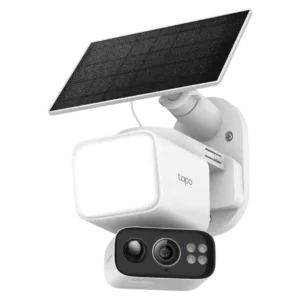
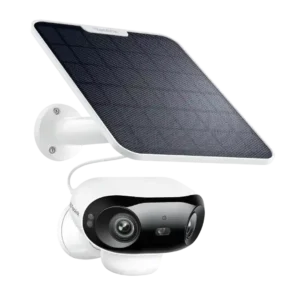
App controls are broad and generally well liked. Reviews mention brightness settings, manual light control, smart playback, detection settings, PTZ controls, and many customization options.
The Reolink app offers extensive controls—video quality, stitching tweaks, brightness, detection types, zones, privacy masks, spotlight/siren, and schedules—making it powerful for tinkerers. Several reviewers also describe the UI as busy or occasionally clunky, especially when reviewing the wide panorama.
Articulation range is a defining strength. Reviews repeatedly cite 360-degree or near-360-degree pan coverage, tilt range, and broad no-blind-spot positioning.
Two-way audio and captured audio are generally serviceable. Several reviewers mention clear voice pickup or built-in mic and speaker support, though one notes audio can drop lower while the camera is tracking.
Two-way audio is widely considered usable, with several reviewers calling it clear enough for talking to visitors, while others report some lag or distortion. Overall audio performance is adequate for deterrence and quick conversations, not intercom-grade quality.
Battery life is strong when solar charging is available. Reviewers cite up to 140-day claims and several hands-on experiences where the camera stayed topped up or barely dropped during testing.
Battery life varies dramatically by environment: with the solar panel and moderate traffic, many reviewers report stable high charge levels, while high-traffic recording, poor sun, or cold weather can drain the battery in weeks. Plan on solar for most outdoor installs to avoid frequent manual charging.
Build quality evidence is positive but not extensive. Reviewers mention a sturdy mount, a well-made solar panel, and design details that help manage rain around the lens.
Build quality is consistently described as sturdy and premium-feeling for the category, with solid mounts and well-sealed access points. The included mounting hardware is often praised as robust.
Cable management evidence centers on the included extension cables and solar-panel wiring. Reviewers mention a 13-foot cable, a 12.5-foot cable, and an extension wire for flexible solar placement.
Cloud storage is optional and generally framed as good value rather than mandatory. Reviewers cite Tapo Care pricing, rich notifications, and the fact that most core functionality works without a subscription.
Cloud storage is optional and positioned as off-site backup and, in some cases, richer notifications (like snapshots). Value perceptions vary by region and availability, with some reviews citing reasonable monthly pricing and others noting limited support at the time.
Color accuracy has limited but positive evidence. One reviewer said colors looked accurate with strong contrast in test footage.
Color reproduction is often praised for nighttime usability (ColorX plus spotlights), producing more informative color footage than typical IR-only battery cams. A recurring caveat is that very bright lights can blow out highlights and the panorama can make small subjects harder to judge without zooming.
Connectivity evidence is mixed. One review reports dual-band Wi-Fi, while video reviewers say it only connects to 2.4GHz, so the score reflects useful but inconsistent connectivity support.
Connectivity is Wi-Fi-first (often highlighted as Wi-Fi 6) with Bluetooth used for easy initial pairing in some setups. There’s no PoE option, so long-term reliability depends on Wi-Fi coverage and power strategy.
Continuous recording capability is mixed because 24/7 capture is not the same as full continuous video recording in several reviews. Some evidence describes interval stills or time-lapse behavior, while other reviews mention firmware or 24/7 capture support.
Most reviews emphasize this is a motion-clip camera rather than a true 24/7 recorder, which is a dealbreaker for some security-first buyers. Several reviewers recommend using schedules to balance coverage and battery, and a few explicitly wished for continuous recording.
When paired with the Reolink Home Hub, reviews mention added multi-camera perks such as cross-camera tracking or coordination features, though detailed testing of this capability is limited in the set.
The app supports configurable detection zones, including per-category zones in some reviews. This lets users tune people, pets, vehicles, or motion areas rather than treating the whole frame the same.
Reviewers consistently praise the depth of tuning: activity/motion zones, sensitivity controls, schedules, and object filters (including size-based filtering in at least one review). These controls help reduce false alerts and tailor detection for people, vehicles, and animals.
Detection features are broad and consistently mentioned. Reviewers cite person, pet, vehicle, motion detection, AI tracking, and subject-following behavior across many tests.
Smart detection for people, vehicles, and animals is generally rated effective, with PIR and AI helping classification and alert filtering. Out-of-box sensitivity can be trigger-happy, but most reviews report good results after tuning zones and sensitivity.
Detection range and sensitivity are mixed. One test found roughly 30-foot detection and another praised perfect detection in use, while other evidence noted weak sensitivity or PIR-trigger limits.
Detection range is generally strong for a battery cam, with reports of reliable person detection around 40 feet and useful detection/classification even farther in open areas. A few notes suggest edge-of-frame detection can be less consistent depending on placement.
Digital zoom evidence is limited but positive for a 2K camera. Reviewers say the higher resolution helps keep zoomed footage sharper and mention 12x pinch-to-zoom support.
High resolution helps with digital inspection: at least one reviewer reports reading license plates around 45–50 feet in favorable conditions. Motion cadence limits how crisp moving details look, so zoom works best for relatively static moments.
Wi-Fi evidence is mixed because one review lists dual-band 2.4/5GHz, while two video reviews say it only connects to 2.4GHz. The score reflects that conflict in the supplied reviews.
Dual-band Wi-Fi 6 (2.4/5 GHz) is repeatedly credited for stable connectivity and smoother live view/streaming, particularly outdoors. Performance still depends on router quality and signal strength at the mounting spot.
The dual-lens panorama is widely seen as the camera’s defining advantage, delivering broad coverage with less distortion than many ultra-wide lenses. The main drawback is the stitching seam, which can blur or mismatch when subjects pass through the center overlap.
Durability evidence is limited but positive. One reviewer reported substantial rain exposure during testing alongside the IP65 weather rating.
Physical durability is generally viewed as good, with tough-feeling housings and outdoor-ready hardware. A skeptical take notes that any solar-panel setup adds long-term exposure and potential wear points.
Event recording reliability is supported by limited but positive evidence. One review found no missing videos or thumbnails, and another emphasized that key wildlife, delivery, or intruder events would be captured.
Event capture is generally described as accurate once tuned, but at least one long-term review reports less reliable motion detection at extreme edges until repositioned. Combined with occasional start lag, reliability depends on mounting height, angle, and traffic level.
False-alert filtering is a weakness in the limited tested evidence. One reviewer received false person and pet positives when nothing was happening on camera.
Filtering is generally effective once configured, with PIR plus subject classification and zone/sensitivity controls reducing false alerts from trees, pets, or passing cars. Some reviewers still note initial trigger-happy defaults or occasional misfires that require tuning.
The fixed lens view is repeatedly described as relatively narrow at about 100 degrees diagonal. Reviewers offset that limitation with the motorized pan and tilt coverage.
The 180° horizontal panorama is a major strength for covering large areas with one camera, but many reviewers warn the ~50° vertical view is tight and can miss activity directly below or above. The panoramic aspect can also feel letterboxed or awkward to review on a phone unless you rotate to landscape or zoom.
Floodlight brightness is one of the most consistently praised attributes. Reviewers repeatedly describe the 800-lumen output as bright, yard-filling, or effective, while some note it is dimmer than larger wired floodlights.
Frame-rate evidence points to selectable 15 or 20 fps operation, with reviewers confirming up to 20 fps. The reviews do not frame this as a premium high-frame-rate camera, but the stated options are adequate for its 2K class.
Multiple reviews call out the 15 fps cap (or 10–15 fps operation), which makes fast motion look choppy compared with 24/30 fps rivals and can reduce usable detail on moving subjects.
Multiple reviews explicitly call out that HomeKit is not supported, which matters for Apple-first households.
A hub is optional rather than required in the reviewed evidence. Reviewers note the Homebase does not come standard and that a hub is not required, though it can centralize local recordings.
A hub is not required for basic operation, but several reviews recommend it for safer indoor storage, multi-camera management, and extra features. Buyers who worry about camera theft or want a more system-like setup benefit most from adding the hub.
Automation support appears through Tapo ecosystem smart actions and app-based automation suggestions. Evidence does not show formal IFTTT service support, but reviewers describe if-this-then-that style actions inside Tapo.
Automation support is portrayed as basic: some reviewers note missing conveniences like actionable automation triggers (e.g., turning on lights) or deeper IFTTT-style workflows.
Included accessories are well supported. Reviews mention mounting hardware, anchors, screws, quick-start guides, templates, solar panel, and charging or extension cables.
Most reviews describe a strong in-box kit (mounts, straps, templates, cables, and often the solar panel), which reduces setup friction. The main missing item called out repeatedly is the microSD card.
Installation is widely described as simple or app-guided. Multiple reviewers mention straightforward onboarding, easy mounting, and clear in-app or boxed setup guidance.
No summary yet.
LED indicator visibility has limited evidence. One setup test notes the red and green status lights during pairing.
Lens distortion is not a major concern in the reviews. One reviewer found distortion practically nil, while another noted physical lens shielding that helps route rain away from the lens.
The dual-lens approach reduces the extreme fisheye distortion you often see on single-lens ultra-wides, and some reviewers call the panorama clean. The tradeoff is occasional stitch artifacts or softness at the seam, especially when a person stands in the center overlap.
Local storage is one of the strongest supported features. Reviews repeatedly cite microSD support up to 512GB, local hub storage options, and the ability to avoid cloud-only recording.
Local storage flexibility is a standout: microSD on-camera, optional Home Hub storage, and support for FTP/NAS are repeatedly highlighted. Reviewers also note microSD is not included and on-camera storage can be vulnerable if the camera is stolen, making the hub or cloud more appealing for security-critical installs.
Low-light results are mixed but generally useful: some reviewers praised full-color night footage and dark-yard visibility, while one noted that low-light tracking quality suffers without the floodlight.
Low-light video is a highlight, with reviewers describing convincing color in dim conditions where many cameras fall back to IR. A recurring nit is that bright point light sources can look overblown, and the wide panorama can make small subjects harder to inspect without zooming.
Microphone sensitivity receives limited but useful support. One reviewer could still be heard clearly at 35 feet, while another found audio could be low during tracking.
Microphone pickup is generally described as clear enough to hear visitors during live view and recordings, with no major complaints beyond typical outdoor noise and distance limitations.
The app is generally easy to use and feature-rich, but not flawless. Positive evidence includes easy navigation and responsiveness, while one review reported a persistent privacy-mode error.
App reliability feedback is mixed: many describe smooth live view and a clean interface, while others call the experience clunky with confusing storage errors, slow-to-refresh previews, or UI friction for the panoramic format.
Mounting flexibility is strong. Reviews describe separate solar-panel placement, wall, ceiling, eave, and pole mounting options, and use in places wired cameras cannot reach.
Mounting options are praised: adjustable brackets, strap mounts for trees/poles, and even tripod-thread style mounting in at least one review. This flexibility helps with renters or tricky placements.
Night vision is a clear strength in the reviews, with repeated support for both infrared and color night modes. Results are strongest when the floodlight or spotlights contribute light.
ColorX plus the built-in spotlights produces unusually good color night video for a battery camera, with strong detail when there is some ambient light. In truly dark scenes, reviewers say you’ll want the spotlights, and overall night performance drops if you disable lighting entirely.
Notification management is flexible but partly paywalled. Reviews mention activity filters, category-specific notifications, and image-rich notifications that require Tapo Care.
The app offers robust filtering (people/vehicle/animal), schedules, and sensitivity controls to manage alert volume. Some reviewers want quality-of-life features like snooze or geofencing that aren’t consistently available.
Notification speed is usable but not consistently instant. One reviewer measured about 30 seconds in a cellular test, while another saw a 6-second alert and called it not bad.
Alert delivery is typically quick, with one test showing roughly a 6-second alert time and others describing notifications as responsive. Some reviewers still observe occasional delays depending on network conditions and settings.
On-device features are a strength because core detection and tracking functions work out of the box. Reviews repeatedly stress that these useful features do not require a subscription.
On-device or subscription-free AI is repeatedly praised. Reviewers emphasize that person, pet, vehicle detection and AI tracking work without requiring a paid plan.
Multiple sources say the Argus battery line does not natively support ONVIF/RTSP, and one review notes RTSP may only be possible via the hub or may not work reliably. This camera is not aimed at third-party NVR/Home Assistant integrations.
The stated operating range appears adequate on paper, but at least one cold-climate long-term test reports significant winter battery/charging degradation even with solar. Warm-weather reviews do not flag temperature issues.
The product does not provide optical zoom in the reviewed evidence. The relevant review explicitly says it is not optical zoom, so optical zoom performance is a weakness.
Battery power support is strong, with repeated references to the 10,400mAh rechargeable battery and up to 140-day claims. Real-world testing suggests the battery can stay healthy when paired with solar.
The built-in battery enables easy placement but can drain quickly with heavy traffic, long spotlight use, or poor solar exposure. Some reviews mention quick top-ups via USB, but charging can be finicky with certain cables due to the recessed port.
Solar power is one of the most strongly supported benefits. Reviews repeatedly mention the included solar panel, 45-minute sunlight claim, and real-world ability to keep the battery topped up.
The included or commonly bundled solar panel is frequently described as highly effective at keeping the camera topped up in decent sun, enabling a set-and-forget experience. Downsides include bulk/appearance, maintenance/exposure concerns, and reduced effectiveness in cloudy or winter conditions.
The reviews show some control over capture intervals or recording buffer behavior rather than full pre-roll video emphasis. Evidence includes 24/7 capture interval settings and configurable recording buffer options.
Price value is a major strength. Reviewers repeatedly call the camera impressive or affordable for under $100, especially because solar power, local storage, floodlight, and PTZ tracking are included.
Overall value is viewed positively when you need 180° coverage and want local storage without mandatory fees, especially since many bundles include the solar panel. Critics argue the price is less compelling if you’d rather buy wired cameras for 24/7 recording and smoother motion.
Privacy zone evidence is limited to app settings that allow users to mask areas they do not want recorded. The review mentions the setting but does not deeply test ease or accuracy.
Privacy masks are repeatedly highlighted as a strong feature, letting you block portions of the image for neighbors, pools, or sensitive areas and reducing unwanted alerts in those zones.
PTZ responsiveness is a repeated strength. Reviewers describe smooth tracking, quick preset movement, useful manual pan and tilt control, and the ability to follow subjects across the yard or driveway.
Recording start behavior is mostly positive, with one reviewer reporting no noticeable delay and another showing the camera already tracking. A more critical review still wished the battery-powered PIR system were quicker.
A few reviews mention the camera can be slow to begin recording or that you may miss the very start of fast action, especially with the wide view and battery-triggered workflow. Tweaking sensitivity, zones, and placement can help, but it’s not as instant as a wired, always-on system.
Size and footprint are mixed. Some reviewers call the camera small or compact, while another notes the solar panel adds bulk and the housing has measurable depth.
Despite being compact for a dual-lens battery camera, several reviewers describe it as heavier/bulkier and awkwardly shaped compared with earlier Argus models. That shape makes wall/ceiling mounting more or less mandatory.
Smart-home integration evidence centers on Alexa and Google Home or Google/Amazon device compatibility. The supplied reviews do not support HomeKit, Matter, Thread, or Siri integration.
Alexa and Google Assistant support is commonly mentioned for basic viewing/voice actions, but reviewers characterize the smart-home integration as limited compared with more automation-friendly ecosystems. Some also report smart display live-view loading can be slow.
Accessory and ecosystem compatibility is strongest within Tapo's own ecosystem. Reviews describe integrations with Tapo hubs, multiple cameras, smart actions, and other Tapo devices.
Speaker and alarm output are treated as useful deterrent features. Reviews mention the rear speaker, speaker-volume controls, built-in alarms, and one loud siren test.
Speaker loudness is a common complaint: multiple reviewers describe the speaker as quiet, making two-way talk less effective at distance and the siren more attention-getting than truly intimidating.
Spotlight and auxiliary lighting features are useful additions to the main floodlight. Reviews mention lens-side LEDs, spotlights that help color recording, and automatic or manual light behavior.
Spotlights are a key part of the night strategy, enabling brighter, clearer color video and adding deterrence. Reviewers like the adjustable brightness, but a few note auto behavior can be inconsistent or that the lights aren’t a true floodlight.
Streaming and playback reliability are positive in the available evidence. One review says video loaded quickly from cloud or microSD storage, and another says live view opened quickly.
System scalability is supported through multi-camera viewing, up-to-10-camera cloud plans, hub recording, and adding other Tapo cameras or devices. The reviews frame the Tapo ecosystem as expandable.
Home Hub support is positioned as the path to scaling: centralized storage indoors and the ability to manage multiple cameras from one place. At least one review cites support for several cameras on a single hub.
Review evidence consistently describes the camera as 2K or 2K 3MP, with several hands-on reviewers saying detail was crisp enough for faces or everyday security viewing. One reviewer noted some artifacting, so detail is strongest when lighting and motion are favorable.
Across reviews, daytime footage is notably crisp and detailed for a battery camera, and the stitched panorama can preserve enough detail for identification at distance. Several reviewers note the advertised 4K is effectively a 5120×1440 panorama and the center stitch can soften fine details.
Weather resistance is consistently supported by IP65 references. One hands-on reviewer also reported the camera was rained on during testing.
Weatherproofing is generally treated as solid for outdoor use (often cited as IP66, with one review noting IP65). Reviewers also describe good sealing around ports and compartments.
The product's wire-free design is a major theme. Reviews repeatedly say it avoids electrical wiring, outlets, buried cables, or hardwired installation constraints.