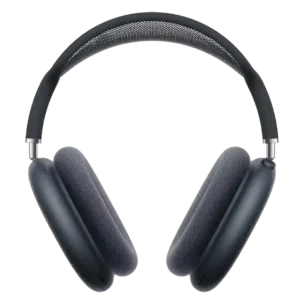
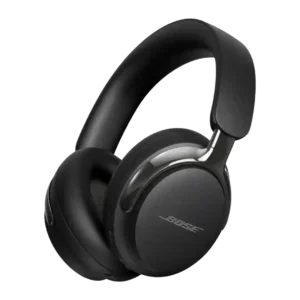
Average score
P1
Product 1: Apple AirPods Max 2
3.8
P2
Product 2: Bose QuietComfort Ultra Bluetooth Headphones...
4.0
3.5mm analog input availability
P1Product 1: Apple AirPods Max 2
No score yet
P2
Product 2: Bose QuietComfort Ultra Bluetooth Headphones...
4.0
Analog input is useful and dedicated, though one reviewer notes the headphone-side cable connection is less common.
Active noise cancellation
P1
Product 1: Apple AirPods Max 2
4.5
Reviewers generally found ANC substantially improved and often class-leading, though a few considered the improvement incremental versus already-strong rivals.
P2
Product 2: Bose QuietComfort Ultra Bluetooth Headphones...
4.7
Active noise cancellation is the product’s strongest consensus win, repeatedly described as elite, best-in-class, or among the best available.
Advanced software features
P1
Product 1: Apple AirPods Max 2
4.3
H2-enabled software features were widely viewed as useful modernization, with the main caveat that some users may not use every feature.
P2
Product 2: Bose QuietComfort Ultra Bluetooth Headphones...
3.7
Advanced software features are mixed: CustomTune and acoustic compensation impress some reviewers, while others complain that Bose offers little new.
Aesthetics / discreet profile
P1
Product 1: Apple AirPods Max 2
4.5
The design was praised as sleek and fashionable, especially for public use, with few cosmetic changes from earlier models.
P2
Product 2: Bose QuietComfort Ultra Bluetooth Headphones...
4.5
The profile is seen as discreet and attractive, with reviewers saying the headphones look good without standing out too much.
AI translation
P1
Product 1: Apple AirPods Max 2
3.2
Live Translation drew mixed reactions: some found it impressive and travel-ready, while others found pauses awkward or said it still needs work.
P2Product 2: Bose QuietComfort Ultra Bluetooth Headphones...
No score yetANC background noise level
P1
Product 1: Apple AirPods Max 2
3.2
ANC background artifacts were mostly praised as quiet, but lab-focused reviewers noted low-frequency rumble or added noise in specific modes.
P2
Product 2: Bose QuietComfort Ultra Bluetooth Headphones...
4.6
ANC background noise is generally improved or very low, with reviewers praising quiet operation and reduced hiss, though not every review is flawless.
ANC effect on sound signature
P1Product 1: Apple AirPods Max 2
No score yet
P2
Product 2: Bose QuietComfort Ultra Bluetooth Headphones...
3.2
ANC-off mode is a sonic caveat because one reviewer says tonality worsens with ANC disabled.
ANC sound impact on audio
P1
Product 1: Apple AirPods Max 2
4.0
ANC processing was described as natural and airy, avoiding the heavy pressure some rivals create.
P2
Product 2: Bose QuietComfort Ultra Bluetooth Headphones...
5.0
ANC is praised for not changing the headphone’s sonic character in one review’s listening.
Android compatibility
P1
Product 1: Apple AirPods Max 2
2.0
Android compatibility was repeatedly framed as limited: basic listening works, but Apple-only features and controls are missing.
P2
Product 2: Bose QuietComfort Ultra Bluetooth Headphones...
4.0
Android compatibility is positive where reviewers mention Google Fast Pair and Snapdragon/aptX Adaptive support.
App
P1
Product 1: Apple AirPods Max 2
3.0
Apple's no-standalone-app approach was treated as a tradeoff: seamless on iOS but less flexible than a dedicated app.
P2
Product 2: Bose QuietComfort Ultra Bluetooth Headphones...
3.6
The app is generally easy to use, but reviewers often describe it as limited, basic, or not as feature-rich as rivals.
Apple H2 chip support
P1
Product 1: Apple AirPods Max 2
4.8
The H2 chip was consistently credited for the meaningful upgrade, powering ANC, calls, smart features, latency and tuning improvements.
P2Product 2: Bose QuietComfort Ultra Bluetooth Headphones...
No score yetaptX
P1Product 1: Apple AirPods Max 2
No score yet
P2
Product 2: Bose QuietComfort Ultra Bluetooth Headphones...
4.5
aptX support is treated as a meaningful upside for compatible newer Android devices, even though the transcript renders it as AEX.
Audio-video sync accuracy
P1
Product 1: Apple AirPods Max 2
4.3
Latency improved enough for casual gaming and video use, especially with Game Mode or wired USB-C.
P2
Product 2: Bose QuietComfort Ultra Bluetooth Headphones...
4.2
Wired USB-C listening is credited with reducing Bluetooth latency, giving it a practical audio-video sync benefit.
Auto-play/wear detection
P1Product 1: Apple AirPods Max 2
No score yet
P2
Product 2: Bose QuietComfort Ultra Bluetooth Headphones...
4.8
Wear detection for wake/play behavior is praised for quickly waking and connecting when the headphones are put on.
Auto on/off reliability
P1
Product 1: Apple AirPods Max 2
3.0
The low-power case behavior preserves charge well, but the lack of a physical power button was criticized.
P2
Product 2: Bose QuietComfort Ultra Bluetooth Headphones...
4.7
Auto on/off behavior is praised for quick wake, sleep, and battery-saving reliability.
Award recognition
P1
Product 1: Apple AirPods Max 2
5.0
Two reviews explicitly awarded Editors' Choice recognition, reinforcing strong critical reception.
P2
Product 2: Bose QuietComfort Ultra Bluetooth Headphones...
5.0
Award recognition is strong in the RecordingNow review, which gives the headphones an Editor’s Choice-style recognition.
Bass performance
P1
Product 1: Apple AirPods Max 2
4.3
Bass was usually praised as tighter, deeper, punchier, and controlled, though some listeners found it heavy or boomy.
P2
Product 2: Bose QuietComfort Ultra Bluetooth Headphones...
4.3
Bass is frequently praised as strong, deep, and enjoyable, though a few reviewers call the default balance bass-heavy or V-shaped.
Battery
P1
Product 1: Apple AirPods Max 2
2.1
Battery life was the most consistent weakness, with 20 hours repeatedly called disappointing or behind current flagships.
P2
Product 2: Bose QuietComfort Ultra Bluetooth Headphones...
4.0
Battery life is improved and usually adequate, but reviewers commonly frame it as average, mid-pack, or not class-leading.
Bluetooth
P1
Product 1: Apple AirPods Max 2
4.5
Wireless connection reliability was strong in tested Apple setups, with no dropouts reported in key reviews.
P2
Product 2: Bose QuietComfort Ultra Bluetooth Headphones...
4.5
Bluetooth pairing is described as straightforward, supporting an easy day-to-day connection experience.
Bluetooth version
P1
Product 1: Apple AirPods Max 2
4.0
Bluetooth 5.3 was treated as a welcome stability and latency upgrade, though not cutting-edge.
P2
Product 2: Bose QuietComfort Ultra Bluetooth Headphones...
4.0
Bluetooth 5.4 is viewed mildly positively as a useful modern update rather than a major advantage.
Build quality
P1
Product 1: Apple AirPods Max 2
4.6
Build quality was a major strength, with reviewers praising the aluminum, steel and premium construction.
P2
Product 2: Bose QuietComfort Ultra Bluetooth Headphones...
3.8
Build quality is acceptable to good, but reviewers split between reassuring solidity and complaints about plasticky or less premium feel.
Built-in DAC and hi-res playback
P1
Product 1: Apple AirPods Max 2
4.3
Wired USB-C lossless playback was valued for added clarity, depth and more critical listening, even when the difference was not night-and-day.
P2
Product 2: Bose QuietComfort Ultra Bluetooth Headphones...
4.5
The built-in DAC/USB-C hi-res path is repeatedly praised for clearer, more detailed, or higher-quality wired playback.
Button control usability
P1
Product 1: Apple AirPods Max 2
5.0
The Digital Crown and physical button controls were repeatedly praised as intuitive, tactile and among the best on headphones.
P2
Product 2: Bose QuietComfort Ultra Bluetooth Headphones...
3.2
Button usability is mixed, with some reviewers liking the balance of buttons and touch and others criticizing overloaded controls.
Carry case quality
P1
Product 1: Apple AirPods Max 2
1.9
The Smart Case was widely criticized for poor protection, awkward design and poor travel practicality, despite enabling low-power mode.
P2
Product 2: Bose QuietComfort Ultra Bluetooth Headphones...
4.1
The carry case is usually praised as compact, protective, or sturdy, though a few reviewers find the fit awkward or the zip case less convenient.
Charging
P1
Product 1: Apple AirPods Max 2
4.0
Charging-related feedback was limited but charge reminders and quick top-ups were viewed as useful conveniences.
P2
Product 2: Bose QuietComfort Ultra Bluetooth Headphones...
4.2
Charging gets positive evidence from the quick-charge result and ability to recover several hours quickly.
Clamping force comfort
P1
Product 1: Apple AirPods Max 2
3.0
Clamp comfort was mixed: generally tolerable, but with some pressure concerns during longer wear.
P2
Product 2: Bose QuietComfort Ultra Bluetooth Headphones...
4.6
Clamping force is usually praised as gentle or well judged, though one reviewer found the fit snug.
Codec support
P1
Product 1: Apple AirPods Max 2
2.0
Codec support was a clear weakness because reviewers wanted LDAC, aptX, LC3 or other high-resolution wireless options.
P2
Product 2: Bose QuietComfort Ultra Bluetooth Headphones...
4.5
Codec support is viewed positively where aptX Adaptive/Snapdragon Sound support is relevant, especially for compatible Android devices.
Comfort during long use
P1
Product 1: Apple AirPods Max 2
3.8
Comfort was divisive: some called the headphones extremely comfortable, while others found long sessions uncomfortable because of weight or clamp.
P2
Product 2: Bose QuietComfort Ultra Bluetooth Headphones...
4.8
Comfort during long use is one of the most consistent strengths, with reviewers repeatedly saying the headphones can be worn for hours.
Connectivity options
P1
Product 1: Apple AirPods Max 2
5.0
Connectivity was a standout for Apple users, with automatic switching reducing the need for manual multipoint management.
P2
Product 2: Bose QuietComfort Ultra Bluetooth Headphones...
4.8
Connectivity options are a strength because reviewers say USB-C, analog, and Bluetooth make it hard to be stuck without a usable connection.
Design and Aesthetics
P1
Product 1: Apple AirPods Max 2
5.0
The design was widely praised as elegant and gorgeous, though unchanged from the original.
P2
Product 2: Bose QuietComfort Ultra Bluetooth Headphones...
4.4
Design feedback is generally positive, with reviewers liking the modern look, finish options, and refined styling.
Dongle
P1Product 1: Apple AirPods Max 2
No score yet
P2
Product 2: Bose QuietComfort Ultra Bluetooth Headphones...
2.0
The lack of a low-latency dongle is a drawback when compared with more flexible rivals.
Durability over time
P1Product 1: Apple AirPods Max 2
No score yet
P2
Product 2: Bose QuietComfort Ultra Bluetooth Headphones...
4.6
Durability evidence is positive but limited, mostly based on case wear and confidence in long-term construction.
Ear cup padding quality
P1
Product 1: Apple AirPods Max 2
3.8
Ear cup padding was generally seen as roomy, breathable and supportive, though material feel was not universally preferred.
P2
Product 2: Bose QuietComfort Ultra Bluetooth Headphones...
4.8
Earcup padding is strongly praised as plush, cushy, soft, and supportive.
Ecosystem integration
P1
Product 1: Apple AirPods Max 2
5.0
Ecosystem integration was a major strength, with reviewers praising Apple-device switching and deep iPhone, iPad and Mac behavior.
P2Product 2: Bose QuietComfort Ultra Bluetooth Headphones...
No score yetEqualizer customization
P1
Product 1: Apple AirPods Max 2
1.7
EQ customization was a repeated frustration because Apple still does not offer a full manual equalizer.
P2
Product 2: Bose QuietComfort Ultra Bluetooth Headphones...
2.8
EQ customization is one of the most repeated complaints because Bose still relies on a simple three-band EQ.
Firmware update roadmap
P1
Product 1: Apple AirPods Max 2
5.0
Firmware and software-update support was praised where it unlocked meaningful sound and spatial improvements at no added cost.
P2Product 2: Bose QuietComfort Ultra Bluetooth Headphones...
No score yetFrequency response accuracy
P1
Product 1: Apple AirPods Max 2
4.0
Frequency-response accuracy was viewed as generally balanced or accurate, with caveats around bass lift and treble shaping.
P2
Product 2: Bose QuietComfort Ultra Bluetooth Headphones...
3.9
Frequency balance is debated: some reviewers hear an impressively balanced profile after EQ, while others find the default tuning bassy, safe, or not neutral.
Headband adjustability
P1
Product 1: Apple AirPods Max 2
3.0
Headband adjustability had a minor fit caveat, with one review wishing it adjusted smaller for more head shapes.
P2Product 2: Bose QuietComfort Ultra Bluetooth Headphones...
No score yetHeadband padding quality
P1
Product 1: Apple AirPods Max 2
3.5
Headband comfort was split between high praise for pressure distribution and criticism that the canopy can feel under-padded.
P2
Product 2: Bose QuietComfort Ultra Bluetooth Headphones...
4.7
Headband padding is praised as soft and supportive, helping the headphones stay comfortable for long sessions.
Head gestures
P1
Product 1: Apple AirPods Max 2
4.0
Head gestures worked well and felt natural to reviewers who tested them, though they were not always considered essential.
P2Product 2: Bose QuietComfort Ultra Bluetooth Headphones...
No score yetHinge durability
P1Product 1: Apple AirPods Max 2
No score yet
P2
Product 2: Bose QuietComfort Ultra Bluetooth Headphones...
4.2
The hinge and moving hardware are described positively because the moving parts use high-quality metal.
Immersive audio quality
P1
Product 1: Apple AirPods Max 2
5.0
Immersive audio was praised for depth, fullness and a big presentation, especially with spatial content and USB-C playback.
P2
Product 2: Bose QuietComfort Ultra Bluetooth Headphones...
3.3
Immersive audio quality is highly split, with some reviewers loving cinema/spatial effects and others preferring normal stereo.
Included accessories
P1
Product 1: Apple AirPods Max 2
1.5
Included accessories disappointed some reviewers, especially the lack of a charging brick or proper case at this price.
P2
Product 2: Bose QuietComfort Ultra Bluetooth Headphones...
4.5
Included accessories are appreciated, especially the case plus charging and audio cables.
Instrument separation
P1
Product 1: Apple AirPods Max 2
4.7
Instrument separation improved noticeably, with reviewers hearing more distinct placement and cleaner layering.
P2
Product 2: Bose QuietComfort Ultra Bluetooth Headphones...
4.3
Instrument separation is usually seen as good to excellent, though one reviewer notes it can struggle when mixes get busy.
Integrated microphone
P1Product 1: Apple AirPods Max 2
No score yet
P2
Product 2: Bose QuietComfort Ultra Bluetooth Headphones...
3.6
The integrated microphone is serviceable to good, with clear call presence, though not always exceptional.
LDAC
P1
Product 1: Apple AirPods Max 2
2.0
LDAC absence was a downside for reviewers comparing the AirPods Max 2 with Sony and other hi-res Bluetooth rivals.
P2Product 2: Bose QuietComfort Ultra Bluetooth Headphones...
No score yetLE Audio readiness
P1Product 1: Apple AirPods Max 2
No score yet
P2
Product 2: Bose QuietComfort Ultra Bluetooth Headphones...
1.8
LE Audio readiness is weak because one reviewer specifically complains that low-energy goodies are still missing.
Maximum volume clarity
P1
Product 1: Apple AirPods Max 2
4.5
Maximum-volume clarity improved, with reviewers noting cleaner highs and less muddiness at high volume.
P2
Product 2: Bose QuietComfort Ultra Bluetooth Headphones...
3.5
Reviewers note that fine detail and micro-detail are not class-leading, even when the overall sound is enjoyable.
Microphone noise reduction
P1
Product 1: Apple AirPods Max 2
4.6
Voice Isolation and mic noise reduction performed well in many noisy call tests, although standard mode could lag behind.
P2
Product 2: Bose QuietComfort Ultra Bluetooth Headphones...
4.3
Microphone noise handling is generally positive, with reviewers saying voices stay clear and background noise is reduced well in common noisy settings.
Microphone quality for calls
P1
Product 1: Apple AirPods Max 2
4.1
Call and mic quality were generally strong, ranging from top-tier to good enough, with occasional unevenness or fuzz.
P2
Product 2: Bose QuietComfort Ultra Bluetooth Headphones...
3.9
Call microphone quality is usually good enough to excellent, but not every reviewer finds it full-bodied or exceptional.
Midrange clarity
P1
Product 1: Apple AirPods Max 2
4.6
Midrange clarity was praised for vocals, improved detail and more natural mids.
P2
Product 2: Bose QuietComfort Ultra Bluetooth Headphones...
4.0
Midrange feedback is mixed: several reviewers like vocal clarity and texture, while others hear recessed or dull low mids.
Multi-platform compatibility
P1
Product 1: Apple AirPods Max 2
1.7
Multi-platform compatibility remained weak because non-Apple devices lose many settings, updates and ecosystem features.
P2
Product 2: Bose QuietComfort Ultra Bluetooth Headphones...
4.8
Multi-platform compatibility is a strength, especially for users switching across phones, laptops, Android, iOS, and other operating systems.
Multipoint connectivity reliability
P1
Product 1: Apple AirPods Max 2
4.0
Automatic device switching worked well inside Apple's ecosystem and exceeded conventional Bluetooth multipoint for reviewers.
P2
Product 2: Bose QuietComfort Ultra Bluetooth Headphones...
4.6
Multipoint is a clear strength in the reviews, with seamless switching and reliable two-device behavior praised repeatedly.
Noise isolation (passive)
P1
Product 1: Apple AirPods Max 2
4.5
Passive isolation from the earcups helped ANC and was praised where fit fully enclosed the ears.
P2
Product 2: Bose QuietComfort Ultra Bluetooth Headphones...
4.0
Passive isolation is considered useful and fairly good, but one reviewer notes the foam is not the thickest.
Overall recommendation
P1
Product 1: Apple AirPods Max 2
4.0
Overall recommendations were positive for Apple users and first-time premium buyers, but cautious for existing owners and audio purists.
P2
Product 2: Bose QuietComfort Ultra Bluetooth Headphones...
4.3
Overall recommendations are positive for new buyers and travel users, but several reviewers temper that with Gen 1 upgrade and price caveats.
Portability/foldability
P1
Product 1: Apple AirPods Max 2
1.7
Portability was a repeated weakness because the headphones do not fold and occupy too much bag space.
P2
Product 2: Bose QuietComfort Ultra Bluetooth Headphones...
4.6
Portability is a strength because reviewers like the foldable frame and compact travel form.
Premium feel
P1
Product 1: Apple AirPods Max 2
5.0
Premium feel was one of the clearest strengths, driven by aluminum, stainless steel and luxury fit-and-finish.
P2
Product 2: Bose QuietComfort Ultra Bluetooth Headphones...
3.4
Premium feel is mixed: the Gen 2 can feel nicer than before, but multiple reviewers still call out plastic, rattling, or non-premium materials.
Preset EQ profile quality
P1Product 1: Apple AirPods Max 2
No score yet
P2
Product 2: Bose QuietComfort Ultra Bluetooth Headphones...
2.3
Preset EQ quality is weak in the evidence, with reviewers calling presets ineffective or lackluster.
Replaceable earpads
P1
Product 1: Apple AirPods Max 2
4.0
Replaceable or washable earcups were a minor positive for maintenance and longevity.
P2
Product 2: Bose QuietComfort Ultra Bluetooth Headphones...
4.5
Replaceable earpads are a practical upside for cleaning, wear, and possible third-party pad swaps.
Smart listening features
P1
Product 1: Apple AirPods Max 2
4.6
Smart listening features such as Adaptive Audio, Personalized Volume and Conversation Awareness were usually useful, but not universally preferred.
P2
Product 2: Bose QuietComfort Ultra Bluetooth Headphones...
4.1
Smart listening features such as ActiveSense and immersive audio are appreciated when they solve practical problems, but the enthusiasm is not universal.
Smart Pause performance
P1
Product 1: Apple AirPods Max 2
4.0
Conversation Awareness was mostly praised for convenience, though some reviewers preferred to switch modes manually or turn it off.
P2
Product 2: Bose QuietComfort Ultra Bluetooth Headphones...
2.8
Smart Pause works but has a caveat: folding the headphones can defeat the lay-flat pause behavior and waste battery.
Smudge resistance
P1Product 1: Apple AirPods Max 2
No score yet
P2
Product 2: Bose QuietComfort Ultra Bluetooth Headphones...
2.7
Smudge resistance is a downside because glossy accents pick up fingerprints and dust.
Software/setup simplicity
P1
Product 1: Apple AirPods Max 2
5.0
Setup simplicity was praised as extremely easy, especially for pairing and first-run setup on iPhone.
P2
Product 2: Bose QuietComfort Ultra Bluetooth Headphones...
4.2
Setup and navigation are generally easy, with reviewers praising stability, intuitive menus, and simple access to features.
Sound quality
P1
Product 1: Apple AirPods Max 2
4.5
Overall sound quality was broadly praised as rich, cleaner and more resolving, though some reviewers found the tuning less neutral or only incrementally improved.
P2
Product 2: Bose QuietComfort Ultra Bluetooth Headphones...
4.2
Reviews are broadly positive on sound quality, especially after EQ or over USB-C, but several reviewers still found the tuning less refined than top sonic rivals.
Soundstage width
P1
Product 1: Apple AirPods Max 2
4.9
Soundstage width was a strength in positive reviews, with several praising width, depth, openness and more dynamic presentation.
P2
Product 2: Bose QuietComfort Ultra Bluetooth Headphones...
4.4
Reviewers often describe the soundstage as wide, spacious, or open, especially for closed-back ANC headphones.
Spatial audio
P1
Product 1: Apple AirPods Max 2
4.4
Spatial audio was often strong for movies and immersive use, though at least one reviewer found it distracting for music.
P2
Product 2: Bose QuietComfort Ultra Bluetooth Headphones...
4.0
Spatial and cinema modes are divisive: movie use receives praise, while music-focused immersive modes are less consistently liked.
Stability
P1
Product 1: Apple AirPods Max 2
4.5
Connection stability and switching were considered better with H2 and reliable in Apple-device use.
P2
Product 2: Bose QuietComfort Ultra Bluetooth Headphones...
3.8
Stability is adequate for light movement, but not ideal for dynamic workouts or smaller heads.
Streaming service integration
P1Product 1: Apple AirPods Max 2
No score yet
P2
Product 2: Bose QuietComfort Ultra Bluetooth Headphones...
2.0
Streaming integration is a limitation because the app lacks built-in music service or internet radio integration.
Touch control responsiveness
P1Product 1: Apple AirPods Max 2
No score yet
P2
Product 2: Bose QuietComfort Ultra Bluetooth Headphones...
3.3
Touch control feedback is mixed: some reviewers find the slider responsive, while others call it imprecise or annoying.
Transparency mode quality
P1
Product 1: Apple AirPods Max 2
4.9
Transparency mode was one of the strongest consensus wins, often described as best-in-class, natural and conversation-friendly.
P2
Product 2: Bose QuietComfort Ultra Bluetooth Headphones...
4.2
Transparency mode is generally praised as natural and useful, though several reviewers note hiss, reduced level, or weaker performance than AirPods Max or Sony.
Travel friendliness
P1
Product 1: Apple AirPods Max 2
2.0
Travel friendliness suffered because the headphones are heavy, bulky and paired with a minimally protective case.
P2
Product 2: Bose QuietComfort Ultra Bluetooth Headphones...
4.7
Travel friendliness is a major strength because reviewers highlight comfort, ANC, foldability, and long-flight usefulness.
Treble clarity
P1
Product 1: Apple AirPods Max 2
3.6
Treble was praised for detail by some reviewers but criticized by others as rolled off, harsh or recessed in specific ranges.
P2
Product 2: Bose QuietComfort Ultra Bluetooth Headphones...
4.1
Treble is generally smooth or crisp enough, but reviewers do not treat it as the strongest part of the tuning.
USB-C
P1
Product 1: Apple AirPods Max 2
4.5
USB-C was welcomed for charging and wired lossless playback, especially by owners of Lightning-era AirPods Max.
P2
Product 2: Bose QuietComfort Ultra Bluetooth Headphones...
4.5
USB-C audio is one of the clearest feature upgrades, praised for lossless listening and practical wired use.
Value for money
P1
Product 1: Apple AirPods Max 2
3.1
Value depended heavily on Apple ecosystem commitment: some found the price more justified, while others saw better sound or portability for less.
P2
Product 2: Bose QuietComfort Ultra Bluetooth Headphones...
3.4
Value is mixed: reviewers like the feature set and experience, but price and weak upgrade logic for Gen 1 owners are repeated caveats.
Volume output
P1Product 1: Apple AirPods Max 2
No score yet
P2
Product 2: Bose QuietComfort Ultra Bluetooth Headphones...
4.5
USB-C playback is praised for giving more output headroom for listeners who want louder playback.
Water/sweat resistance rating
P1
Product 1: Apple AirPods Max 2
1.5
Water and sweat resistance remained a limitation, with reviewers warning against gym or wet use.
P2
Product 2: Bose QuietComfort Ultra Bluetooth Headphones...
1.8
Water and sweat resistance is a weakness because reviewers call out the lack of an ingress protection rating.
Wear detection auto-pause
P1Product 1: Apple AirPods Max 2
No score yet
P2
Product 2: Bose QuietComfort Ultra Bluetooth Headphones...
4.3
Auto-pause is generally positive, with reviewers noting automatic pause and power-up behavior when the headphones are removed or worn.
Wear detection performance
P1Product 1: Apple AirPods Max 2
No score yet
P2
Product 2: Bose QuietComfort Ultra Bluetooth Headphones...
4.8
Wear detection performance is praised as excellent in daily use.
Weight comfort
P1
Product 1: Apple AirPods Max 2
2.2
Weight comfort was the most persistent ergonomic drawback, with several reviewers saying the heavy earcups become noticeable over time.
P2
Product 2: Bose QuietComfort Ultra Bluetooth Headphones...
4.8
Reviewers repeatedly connect the low weight to comfort, calling the headphones light and easy to wear.