Reviewers noted that the AirPods Max 2 lack a built-in 3.5mm analog input, so analog listening requires separate cable handling rather than a native jack.
Across lab-style and real-world reviews, ANC is one of the strongest upgrades. Most reviewers heard better suppression of drones, traffic, office noise, and transit noise, though one review found the improvement more incremental.
The H2 chip brings a fuller feature set, including Adaptive Audio, Conversation Awareness, Voice Isolation, Live Translation, Personalized Volume, and related AirPods Pro-style software tools.
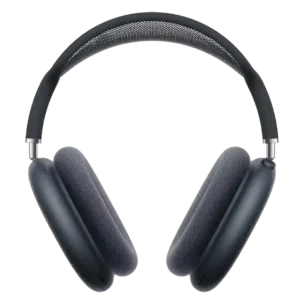
The design remains visually premium and distinct, with clean Apple styling, a recognizable silhouette, and a look that several reviewers still considered elegant or attractive.
Reviewers generally found the ANC background very quiet, with little hiss or distracting processing noise, though some midrange sounds could still leak through in difficult environments.
ANC was often described as natural or comfortable rather than oppressive, though one review noted that Adaptive Audio can shift the perceived level unexpectedly.
The reviewed ANC usually improved listening by reducing outside distractions without making music sound worse; some reviews tied better clarity to the reduced noise floor.
Android support is basic. Reviewers said Android users can listen over Bluetooth or USB-C, but lose most of the setup, adjustment, and ecosystem features.
There is no standalone companion app. Reviewers described Apple’s OS-level settings integration as convenient for Apple users but limiting outside Apple devices.
The H2 chip is the central upgrade. Reviewers consistently connected it to better ANC, improved transparency, voice features, smart listening tools, and reliability improvements.
Reviews explicitly identify no aptX support for AirPods Max 2, making aptX a weakness compared with some rivals.
Latency improved through Bluetooth 5.3, Game Mode, and wired USB-C use. Reviewers found it useful for video, casual gaming, and editing, though not a dedicated gaming-headset replacement.
Wear and auto behavior are present through sensors and settings, but reviewers mentioned them mostly as part of the familiar AirPods Max feature set rather than a standout upgrade.
Auto power behavior remains mixed: the Smart Case triggers low-power mode and preserves charge, but reviewers repeatedly criticized the lack of a physical off button.
Two editorial reviews explicitly awarded Editors’ Choice recognition, reinforcing the product’s premium-category standing despite practical caveats.
Bass drew mixed but generally positive notes: several reviewers praised deeper, tighter, more controlled bass, while others found the tuning bass-heavy or slightly boomy.
Bass is generally controlled and textured, with some listeners hearing a fuller, pillowy low end and others calling it restrained or dry compared with bassier alternatives. Sub-bass is present but not the main emphasis, so slam-heads may want more weight.
Battery life was the clearest repeated weakness. Reviewers consistently cited 20 hours with ANC as usable but behind competitors and unchanged from earlier models.
Bluetooth performance is solid, with Bluetooth 5.3, quick pairing, and stable playback reported in reviews, especially inside the Apple ecosystem.
Bluetooth 5.3 is an upgrade over the original model’s Bluetooth 5.0, but reviewers noted it is not the newest Bluetooth generation.
Build quality remains a strength. Reviewers praised the aluminum earcups, stainless steel structure, precise parts, and premium materials.
Build quality is consistently described as excellent, with premium materials, tight assembly, and a refined feel. Several reviews highlight serviceability and long-term durability as part of the value proposition.
Wired USB-C lossless playback up to 24-bit/48kHz is widely supported in the reviews and often described as a useful sound-quality and latency benefit.
Physical controls are a highlight. Reviewers repeatedly praised the Digital Crown and mode button for tactile, simple, reliable operation.
The included USB-C cable was noted, including braided USB-C-to-USB-C packaging, but accessories overall remained limited for the price.
Cable impressions are mixed: many find the stock cable sturdy and functional, but some report microphonics or less-than-ideal ergonomics, and several note the lack of a balanced stock option.
The Smart Case was widely criticized. Reviewers said it offers limited protection, is not travel-friendly, and leaves the headband or canopy exposed.
The included hard/semi-hard case is widely praised as well-made and protective, with room for cables/adapters and a secure zipper. It supports storage and occasional transport effectively.
Charging is acceptable, with reviewers noting the five-minute quick-charge claim for about 1.5 hours of listening and USB-C charging convenience.
Clamping comfort is mixed. Some reviewers found the clamp gentle or nicely judged, while others found the force strong during long sessions.
Clamp force is generally described as moderate and well-distributed, supporting stability without obvious pain. A handful of impressions mention the clamp feeling a bit tight out of the box, with minor adjustment/break-in helping.
Codec support is limited. Reviews repeatedly noted AAC/SBC only, no LDAC or aptX, and no hi-res Bluetooth codec support.
Comfort depends heavily on fit tolerance. The earcups and canopy can feel comfortable, but weight and clamp make long sessions harder for some reviewers.
Comfort is a consistent strength: the self-adjusting suspension design and soft pads enable long listening sessions for most people. A few note fit quirks (small cups for some ears or clamp that starts slightly tight).
Connectivity is strong for Apple users through seamless pairing, automatic switching, Bluetooth, and USB-C wired listening, but less flexible for non-Apple users.
The external design remains largely unchanged and premium, which pleased reviewers who liked the original look but disappointed those wanting a redesign.
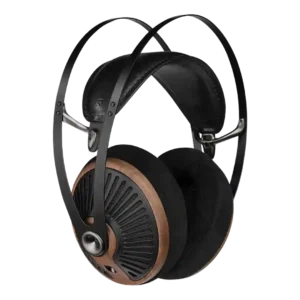
Design is a standout, with walnut accents and Meze’s mid-century styling repeatedly called premium-looking and distinctive. Even critics of the tuning tend to praise the aesthetics and finish quality.
The USB-C cable can be plugged in for wired lossless listening, but reviewers did not describe a traditional detachable analog cable system.
The detachable dual 3.5mm system is convenient for replacement, yet recessed/narrow connector sizing can limit third-party cable compatibility compared with more universal designs. Connection security itself is generally praised.
Spatial audio with dynamic head tracking and Dolby Atmos support was described as immersive and especially useful for movies or Apple TV-style listening.
The included USB-C DAC dongle/adapter is viewed as a nice convenience for modern devices, generally adequate for casual listening. Enthusiast reviewers still expect better performance from dedicated DAC/amps.
Durability evidence was mixed: premium metal parts were praised, but long-term canopy concerns and exposed case protection kept confidence from being perfect.
Ear cushions were generally praised for roominess, breathable material, support, and replaceability.
Velour/suede pads are commonly described as plush, breathable, and comfortable, helping distribute pressure and avoid hotspots. Some users wish for a touch more ear room, but pad comfort is still rated highly.
Swiveling earcups and pivoting fit were mentioned positively as helping the headphones conform to the head.
Cup articulation is generally sufficient for a good seal/fit, with tilt helping the pads conform, though some describe movement as limited compared with more freely articulating designs.
Ecosystem integration is one of the strongest reasons to buy. Reviewers repeatedly praised seamless Apple pairing, automatic device switching, native settings, and Apple-device optimization.
EQ customization is a consistent weakness. Reviewers noted no true custom EQ, only Apple’s limited presets or accessibility-style tuning options.
The feature set is much more current because of H2, but several reviewers said the launch still felt more like modernization than a full second-generation overhaul.
Firmware/software updates were cited as meaningful for USB-C lossless, latency, spatiality, and ANC improvements, though this evidence came mainly from one review.
Frequency balance was polarizing: some called it neutral or accurate, while others heard bass emphasis, rolled-off treble, or V-shaped tuning.
Tonality is often described as balanced or smooth rather than strictly neutral, with a coherent frequency integration that avoids obvious bloat. Some characterize it as tastefully colored (warm-bright/W-shaped) rather than reference-flat.
The telescoping or adjustable headband arms were described as sturdy, premium, and easy to adjust.
The auto/self-adjusting headband system is repeatedly singled out as one of the best parts of the design, requiring little to no fiddling while spreading pressure evenly. It also helps with consistent fit and comfort over time.
Headband comfort is split. The canopy can distribute weight well, but at least one reviewer found the mesh insufficient for the headphone’s weight.
Head gestures are supported through Siri interactions, letting users nod or shake to answer prompts; reviewers generally found the feature functional but not essential.
Hinges, arms, and metal hardware were praised for precision and premium construction.
Build discussions suggest robust hinges and a durable chassis, with spring-steel structures and solid joints expected to hold up well over years of use.
Immersive audio was a strength in subjective listening, especially when reviews discussed spatial audio, depth, width, and movie listening.
Included accessories are sparse for a $549 product: reviewers noted the USB-C cable, papers, Smart Case, and lack of a charging brick or stronger case.
Accessories are generally seen as generous for the price: a protective case, cables, and adapters (often including USB-C). The main recurring complaint is the absence of a balanced cable in the box.
Instrument separation improved slightly or clearly depending on the reviewer, with repeated praise for more space between instruments and layers.
Instrument separation and imaging are widely regarded as excellent for the price, helping complex mixes stay organized and making positional cues easy to track. Even reviewers who nitpick tuning tend to credit the Silva’s placement and delineation.
The integrated microphone array is substantial and frequently tied to call quality, voice isolation, recording, and ANC.
Reviews explicitly identify no LDAC support for AirPods Max 2, so LDAC performance is unsupported rather than merely untested.
Reviews explicitly noted missing Bluetooth LE and LC3 support, so LE Audio readiness is weak based on the supplied evidence.
Maximum-volume clarity appears improved, with reviewers noting less muddiness, cleaner highs, or lower distortion at louder playback.
When pushed louder, reviewers who mention it report the presentation staying composed, with bass and treble control holding together without obvious strain.
Microphone noise reduction improved through Voice Isolation, though results varied by environment and whether the feature was active.
Call and microphone quality are generally strong, with several reviewers reporting clear calls or improved mic performance, though some heard occasional unevenness or fuzz.
Midrange clarity is generally good, especially for vocals, though some measurements-based criticism noted upper-vocal recession.
Midrange is a highlight for many, with clear, forward vocals/instruments and an overall transparent character. A few note that certain vocal ranges can sound a bit thin, scooped, or pushed depending on recording and pairing.
Multi-platform use is possible through Bluetooth and USB-C, but reviews frame the product as much stronger for Apple users than for Android or Windows users.
Reviewers frequently describe good compatibility across sources (phones with dongles, laptops, DAPs, and desktop amps), helped by easy drivability. Some note it scales with source quality and can reveal harshness from poor gear.
Multipoint-style reliability is excellent inside Apple’s ecosystem through automatic switching, though reviewers noted true feature access is Apple-limited.
Passive isolation benefits from the large earcups and seal, supporting ANC performance, though the physical isolation profile did not radically change.
As open-backs, passive isolation is low and sound leakage is expected; a couple of reviewers note mild attenuation compared to very open designs, but these are still best for quiet rooms.
Most reviews recommended the AirPods Max 2 for Apple-focused buyers who can accept the price, weight, case, and battery compromises.
Portability is poor for the class because the headphones do not fold and the case is not very protective or compact.
Portability is mixed: they’re easy to drive and include a protective case, but the open-back design and size make them better suited to home or quiet environments than true travel/commute use.
Premium feel remains a standout, with reviewers praising metal materials, luxury presentation, and the physical feel versus plastic competitors.
Preset tuning exists through Apple’s preset EQ curves or balance/vocal/brightness options, but reviewers considered it limited compared with Sony or Bose apps.
Replaceable magnetic ear cushions are a practical plus; reviewers noted they snap off, can be replaced, and in some cases can be washed.
Where discussed, earpads are replaceable and intended for long-term ownership, with guides or documentation supporting pad swaps and maintenance.
Pads are replaceable, but reviewers did not provide strong evidence that the headband/canopy is similarly user-replaceable.
Sensor evidence was limited but present through optical wear detection and H2-enabled computational features.
Smart listening features are a major H2 benefit. Adaptive Audio, Conversation Awareness, Personalized Volume, and Loud Sound Reduction were commonly described as useful.
Setup is extremely simple on Apple devices, with near-instant pairing, native settings, and automatic account-based connection.
Sound quality is widely praised, with reviewers calling it cleaner, more detailed, wider, and more refined than before, though not always a major leap.
Across reviews, the 105 Silva is described as an engaging open-back with a premium “Meze” presentation: natural timbre, strong technicalities for the price, and a tuning that favors musical enjoyment over strict neutrality. A minority find the voicing less competitive on pure sound-per-dollar versus cheaper rivals without EQ.
Soundstage and spatial width were commonly praised, with reviewers noting depth, width, openness, and stronger spatial presentation.
Soundstage impressions vary: some describe it as expansive, airy, and three-dimensional, while others find it only moderately wide or a touch narrow with limited depth/layering. Imaging is commonly cited as more consistent than sheer stage size.
Spatial audio remains a strong Apple feature, especially with dynamic head tracking and Apple Music or Dolby Atmos material.
Connection stability improved or stayed strong, with reviewers reporting faster switching, fewer dropouts, and smoother transitions.
Fit stability is usually strong thanks to moderate clamp and the suspension design, with reports of little slippage and secure positioning. One review flags potential fit issues for smaller heads due to the frame geometry.
Streaming integration centers on Apple Music, lossless playback, and spatial audio catalogs; some reviewers also tested Spotify or YouTube with less platform-specific benefit.
Sustainability is repeatedly tied to Meze’s serviceable approach: parts can be replaced rather than discarding the headphone, supporting longevity and repairability over time.
Transparency mode is one of the most consistently praised features, often described as natural, class-leading, or like not wearing headphones.
Travel friendliness is mixed to poor: ANC is useful for flights and commuting, but weight, non-folding design, and the case hurt travel use.
Treble is mostly clear and detailed, but reviewers split on whether it is crisp, rolled off, or occasionally sharp.
Treble is typically praised for clarity and refinement, but several reviews note peaks/extra air that can sound a little spicy, sizzly, or less forgiving on bright or compressed tracks. Others hear it as smooth and well-balanced for long sessions.
USB-C is now central for charging and wired lossless playback, and multiple reviewers welcomed it over Lightning.
USB-C support comes via an included adapter/dongle, enabling plug-and-play use with phones and computers lacking a headphone jack. It’s positioned as convenience rather than a high-end solution.
Value is conditional. Reviewers found the price easier to justify for Apple users, but many pointed to cheaper or better-sounding alternatives.
Siri integration improves through H2, hands-free interactions, and head gestures, but it is mainly valuable inside Apple’s ecosystem.
Voice feedback is tied to Siri prompts and announcements, including nod/shake responses, but reviews did not treat it as a major buying reason.
Volume handling is praised mainly through the Digital Crown and improved high-volume cleanliness, not through unusually high output claims.
Multiple reviews call the 105 Silva very easy to drive (high sensitivity, modest impedance) and capable of reaching loud listening levels from phones, dongles, laptops, and DAPs. Higher-quality sources can still improve refinement and control.
Water and sweat resistance remain absent. Reviews repeatedly noted no IP rating and warned against gym or wet use.
Wear detection is present through optical sensors and auto behavior settings, but reviewers did not emphasize major performance changes.
Wear detection performance evidence is limited to mentions of sensors and automatic wear settings rather than detailed testing.
Weight comfort is one of the biggest tradeoffs. The headphones feel premium but heavy, and several reviewers said long sessions reveal the 385-386g mass.
At roughly mid-300g, the Silva isn’t ultra-light, but reviewers frequently say it feels lighter on-head due to excellent weight distribution. Most report minimal fatigue from weight during extended sessions.
Wind handling evidence mainly comes from call and microphone tests, where voice isolation and mic processing helped but did not eliminate all artifacts.