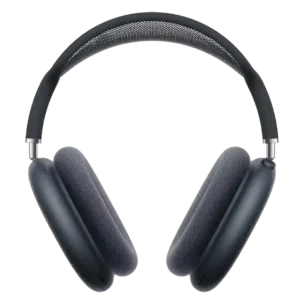
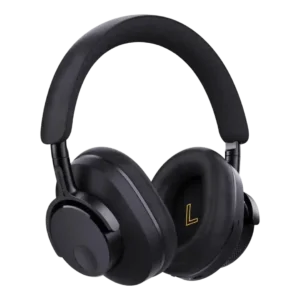
Reviewers noted that the AirPods Max 2 lack a built-in 3.5mm analog input, so analog listening requires separate cable handling rather than a native jack.
Across lab-style and real-world reviews, ANC is one of the strongest upgrades. Most reviewers heard better suppression of drones, traffic, office noise, and transit noise, though one review found the improvement more incremental.
ANC performance is considered effective for commuting and travel but not the category leader, and several reviews mention occasional artifacts or movement-related issues in certain situations. Reviews consistently note multiple ANC levels plus a transparency option, with controls available via button and the companion app.
The H2 chip brings a fuller feature set, including Adaptive Audio, Conversation Awareness, Voice Isolation, Live Translation, Personalized Volume, and related AirPods Pro-style software tools.
The design remains visually premium and distinct, with clean Apple styling, a recognizable silhouette, and a look that several reviewers still considered elegant or attractive.
Reviewers generally found the ANC background very quiet, with little hiss or distracting processing noise, though some midrange sounds could still leak through in difficult environments.
ANC was often described as natural or comfortable rather than oppressive, though one review noted that Adaptive Audio can shift the perceived level unexpectedly.
The reviewed ANC usually improved listening by reducing outside distractions without making music sound worse; some reviews tied better clarity to the reduced noise floor.
Android support is basic. Reviewers said Android users can listen over Bluetooth or USB-C, but lose most of the setup, adjustment, and ecosystem features.
Android compatibility is strong, especially when paired with aptX features and one-tap pairing options on supporting devices.
There is no standalone companion app. Reviewers described Apple’s OS-level settings integration as convenient for Apple users but limiting outside Apple devices.
The Melomania companion app is considered functional with key settings, though a few reviews mention UI quirks such as confusing store listings or limited customization depth.
The H2 chip is the central upgrade. Reviewers consistently connected it to better ANC, improved transparency, voice features, smart listening tools, and reliability improvements.
Reviews explicitly identify no aptX support for AirPods Max 2, making aptX a weakness compared with some rivals.
aptX support, including Adaptive and Lossless where compatible, is frequently highlighted as a major advantage for Android users and hi-res streaming.
Latency improved through Bluetooth 5.3, Game Mode, and wired USB-C use. Reviewers found it useful for video, casual gaming, and editing, though not a dedicated gaming-headset replacement.
Low-latency or gaming mode is commonly mentioned and helps A/V sync, though some testers still notice remaining latency in the most timing-sensitive use cases.
Wear and auto behavior are present through sensors and settings, but reviewers mentioned them mostly as part of the familiar AirPods Max feature set rather than a standout upgrade.
Auto power behavior remains mixed: the Smart Case triggers low-power mode and preserves charge, but reviewers repeatedly criticized the lack of a physical off button.
Two editorial reviews explicitly awarded Editors’ Choice recognition, reinforcing the product’s premium-category standing despite practical caveats.
Bass drew mixed but generally positive notes: several reviewers praised deeper, tighter, more controlled bass, while others found the tuning bass-heavy or slightly boomy.
Bass is generally described as punchy and well-controlled, elevated enough for impact without smothering the mix; a few note it is not the hardest-hitting choice for bass-heavy electronic tracks.
Battery life was the clearest repeated weakness. Reviewers consistently cited 20 hours with ANC as usable but behind competitors and unchanged from earlier models.
Battery life is repeatedly called class-leading, commonly cited around 60 hours with ANC on and up to 100 hours with ANC off. A user-replaceable battery option is a key differentiator and is repeatedly framed as a way to extend long-term ownership.
Bluetooth performance is solid, with Bluetooth 5.3, quick pairing, and stable playback reported in reviews, especially inside the Apple ecosystem.
Bluetooth connection is widely described as stable with good range, including reliable pairing in everyday use.
Bluetooth 5.3 is an upgrade over the original model’s Bluetooth 5.0, but reviewers noted it is not the newest Bluetooth generation.
Build quality remains a strength. Reviewers praised the aluminum earcups, stainless steel structure, precise parts, and premium materials.
Build quality is consistently praised as sturdy with tight tolerances and durable materials for the price.
Wired USB-C lossless playback up to 24-bit/48kHz is widely supported in the reviews and often described as a useful sound-quality and latency benefit.
Physical controls are a highlight. Reviewers repeatedly praised the Digital Crown and mode button for tactile, simple, reliable operation.
Physical buttons are appreciated for reliability and tactile feedback, but some reviewers find certain buttons small or not optimally placed.
The included USB-C cable was noted, including braided USB-C-to-USB-C packaging, but accessories overall remained limited for the price.
Included cables are generally viewed as good quality and durable, with multiple outlets noting thoughtful bundling for USB-C and 3.5mm sources.
The Smart Case was widely criticized. Reviewers said it offers limited protection, is not travel-friendly, and leaves the headband or canopy exposed.
The supplied hard case is widely considered protective and well-made, often with clever storage, but several reviews say it is larger than ideal.
Charging is acceptable, with reviewers noting the five-minute quick-charge claim for about 1.5 hours of listening and USB-C charging convenience.
Charging is generally praised thanks to USB-C and strong quick-charge behavior that can add several hours from a short top-up.
Clamping comfort is mixed. Some reviewers found the clamp gentle or nicely judged, while others found the force strong during long sessions.
Clamp is described as secure and well-judged by some, but too tight for others, especially during longer sessions or with glasses.
Codec support is limited. Reviews repeatedly noted AAC/SBC only, no LDAC or aptX, and no hi-res Bluetooth codec support.
Codec support is a standout, with broad support including AAC and Qualcomm options that many reviewers cite as a key value point.
Comfort depends heavily on fit tolerance. The earcups and canopy can feel comfortable, but weight and clamp make long sessions harder for some reviewers.
Comfort varies by listener: many can wear it for hours with minimal fatigue, while others cite weight, clamp, or headband stiffness creating pressure over time.
Connectivity is strong for Apple users through seamless pairing, automatic switching, Bluetooth, and USB-C wired listening, but less flexible for non-Apple users.
The external design remains largely unchanged and premium, which pleased reviewers who liked the original look but disappointed those wanting a redesign.
Design is broadly seen as premium and tasteful with quality materials, though a few mention minor aesthetic nitpicks such as bulk or how it sits on the head.
The USB-C cable can be plugged in for wired lossless listening, but reviewers did not describe a traditional detachable analog cable system.
Spatial audio with dynamic head tracking and Dolby Atmos support was described as immersive and especially useful for movies or Apple TV-style listening.
Durability evidence was mixed: premium metal parts were praised, but long-term canopy concerns and exposed case protection kept confidence from being perfect.
Ear cushions were generally praised for roominess, breathable material, support, and replaceability.
Earpad comfort is commonly praised as plush and well-cushioned, contributing to isolation and long-wear comfort.
Swiveling earcups and pivoting fit were mentioned positively as helping the headphones conform to the head.
Swivel and rotation range is typically considered adequate to achieve a seal, and several reviews note broad rotation for laying flat.
Ecosystem integration is one of the strongest reasons to buy. Reviewers repeatedly praised seamless Apple pairing, automatic device switching, native settings, and Apple-device optimization.
EQ customization is a consistent weakness. Reviewers noted no true custom EQ, only Apple’s limited presets or accessibility-style tuning options.
The 7-band EQ is a consistent highlight, offering meaningful tuning control and the ability to save custom curves, though at least one review notes limited labeling or guidance.
The feature set is much more current because of H2, but several reviewers said the launch still felt more like modernization than a full second-generation overhaul.
A find-my style locating feature is mentioned in at least one review, positioned as a helpful extra rather than a core differentiator.
Firmware/software updates were cited as meaningful for USB-C lossless, latency, spatiality, and ANC improvements, though this evidence came mainly from one review.
Frequency balance was polarizing: some called it neutral or accurate, while others heard bass emphasis, rolled-off treble, or V-shaped tuning.
Tuning is usually characterized as close to neutral with a touch of warmth or bass lift; a couple of reviews suggest the default EQ can feel a bit restrained until adjusted.
The telescoping or adjustable headband arms were described as sturdy, premium, and easy to adjust.
Adjustability is generally good, with easy headband sizing to fit a range of head shapes.
Headband comfort is split. The canopy can distribute weight well, but at least one reviewer found the mesh insufficient for the headphone’s weight.
Head gestures are supported through Siri interactions, letting users nod or shake to answer prompts; reviewers generally found the feature functional but not essential.
Hinges, arms, and metal hardware were praised for precision and premium construction.
Hinges and moving parts are generally described as smooth and sturdy, with strong overall structural integrity in most reviews.
Immersive audio was a strength in subjective listening, especially when reviews discussed spatial audio, depth, width, and movie listening.
Included accessories are sparse for a $549 product: reviewers noted the USB-C cable, papers, Smart Case, and lack of a charging brick or stronger case.
Included accessories are considered generous, typically including a protective case and both USB-C and 3.5mm-capable cables.
Instrument separation improved slightly or clearly depending on the reviewer, with repeated praise for more space between instruments and layers.
Instrument separation and imaging are frequently highlighted as a strength, helping dense mixes stay intelligible and layered.
The integrated microphone array is substantial and frequently tied to call quality, voice isolation, recording, and ANC.
Reviews explicitly identify no LDAC support for AirPods Max 2, so LDAC performance is unsupported rather than merely untested.
At least one review calls out the lack of LDAC, so Android users who prefer LDAC may see this as a limitation compared with Sony models.
Reviews explicitly noted missing Bluetooth LE and LC3 support, so LE Audio readiness is weak based on the supplied evidence.
Maximum-volume clarity appears improved, with reviewers noting less muddiness, cleaner highs, or lower distortion at louder playback.
Microphone noise reduction improved through Voice Isolation, though results varied by environment and whether the feature was active.
Noise reduction for calls is generally decent and helps intelligibility, though performance varies by environment and at least one review notes weaker suppression of background sounds.
Call and microphone quality are generally strong, with several reviewers reporting clear calls or improved mic performance, though some heard occasional unevenness or fuzz.
Call quality is often rated highly with clear voice pickup, but a few testers report the mic can sound distant or let in more background noise than expected.
Midrange clarity is generally good, especially for vocals, though some measurements-based criticism noted upper-vocal recession.
Midrange reproduction is typically clear and natural with strong vocal presence, but some critics find it slightly thin compared with more dynamic rivals.
Multi-platform use is possible through Bluetooth and USB-C, but reviews frame the product as much stronger for Apple users than for Android or Windows users.
Multi-platform performance is generally good across phones and computers, but at least one review reports less smooth behavior with certain Apple devices compared with Android or Windows.
Multipoint-style reliability is excellent inside Apple’s ecosystem through automatic switching, though reviewers noted true feature access is Apple-limited.
Multipoint pairing is repeatedly reported to work smoothly and switch between two devices reliably.
Passive isolation benefits from the large earcups and seal, supporting ANC performance, though the physical isolation profile did not radically change.
Passive isolation is strong thanks to large pads and a solid seal, with some users noting it can block a lot of ambient noise even before ANC is enabled.
Most reviews recommended the AirPods Max 2 for Apple-focused buyers who can accept the price, weight, case, and battery compromises.
Portability is poor for the class because the headphones do not fold and the case is not very protective or compact.
Portability is a common drawback: it does not fold down small, and the travel case can be bulky for minimal bags.
Premium feel remains a standout, with reviewers praising metal materials, luxury presentation, and the physical feel versus plastic competitors.
Preset tuning exists through Apple’s preset EQ curves or balance/vocal/brightness options, but reviewers considered it limited compared with Sony or Bose apps.
Preset EQ profiles are useful for quick changes and cover common genres, but some listeners still prefer manual EQ to add extra energy or brightness.
Replaceable magnetic ear cushions are a practical plus; reviewers noted they snap off, can be replaced, and in some cases can be washed.
Replaceable earpads are repeatedly highlighted as a practical, longevity-focused feature and are easy to swap in most accounts.
Pads are replaceable, but reviewers did not provide strong evidence that the headband/canopy is similarly user-replaceable.
Sensor evidence was limited but present through optical wear detection and H2-enabled computational features.
Wear detection sensors are supported but get mixed reliability notes, ranging from convenient auto-pause to occasional delays or overly sensitive behavior.
Sidetone behavior is mentioned as present to some extent for calls, but not a heavily featured or widely adjustable system in the reviews.
Smart listening features are a major H2 benefit. Adaptive Audio, Conversation Awareness, Personalized Volume, and Loud Sound Reduction were commonly described as useful.
Setup is extremely simple on Apple devices, with near-instant pairing, native settings, and automatic account-based connection.
Setup and day-to-day operation are usually described as straightforward, aided by physical buttons, simple pairing, and an app that covers the essentials without forcing account creation in at least one review.
Sound quality is widely praised, with reviewers calling it cleaner, more detailed, wider, and more refined than before, though not always a major leap.
Most reviews praise an energetic, detailed presentation that competes above its price, though a minority find it a bit polite or less exciting without EQ tweaks. Wired playback over USB-C is often praised for improving fidelity and consistency versus Bluetooth; analog connection via the included adapter cable is also supported.
Soundstage and spatial width were commonly praised, with reviewers noting depth, width, openness, and stronger spatial presentation.
Soundstage is often described as open and spacious for a closed-back wireless model, with a few noting it is more compact than deliberately wide-sounding competitors.
Spatial audio remains a strong Apple feature, especially with dynamic head tracking and Apple Music or Dolby Atmos material.
Multiple reviews flag the absence of spatial audio features, so it relies on conventional stereo presentation and EQ rather than 3D modes.
Connection stability improved or stayed strong, with reviewers reporting faster switching, fewer dropouts, and smoother transitions.
Stability on the head varies: some find it secure, while others say it can sit loosely for sport or slip during certain movements.
Streaming integration centers on Apple Music, lossless playback, and spatial audio catalogs; some reviewers also tested Spotify or YouTube with less platform-specific benefit.
Sustainability is a consistent theme: recyclable packaging, recycled materials, and serviceable parts are cited as meaningful positives.
Multiple reviews note the lack of touch controls, so this model effectively scores by omission: it prioritizes physical buttons over touch gestures.
Transparency mode is one of the most consistently praised features, often described as natural, class-leading, or like not wearing headphones.
Transparency mode gets mixed feedback: some find it useful and fairly natural, while others say it lacks clarity or fails to let all external sounds through.
Travel friendliness is mixed to poor: ANC is useful for flights and commuting, but weight, non-folding design, and the case hurt travel use.
Treble is mostly clear and detailed, but reviewers split on whether it is crisp, rolled off, or occasionally sharp.
Treble is widely reported as crisp and articulate with good sparkle; it tends to avoid harshness, though some listeners want more bite or energy depending on the default EQ.
USB-C is now central for charging and wired lossless playback, and multiple reviewers welcomed it over Lightning.
USB-C is a strong point, supporting charging and wired digital audio on compatible devices.
Value is conditional. Reviewers found the price easier to justify for Apple users, but many pointed to cheaper or better-sounding alternatives.
Siri integration improves through H2, hands-free interactions, and head gestures, but it is mainly valuable inside Apple’s ecosystem.
Voice assistant activation is supported and generally works as expected, with no major complaints beyond it being a standard feature.
Voice feedback is tied to Siri prompts and announcements, including nod/shake responses, but reviews did not treat it as a major buying reason.
Volume handling is praised mainly through the Digital Crown and improved high-volume cleanliness, not through unusually high output claims.
Volume output is generally ample, reaching comfortable listening levels well below max, with enough headroom for louder tracks.
Water and sweat resistance remain absent. Reviews repeatedly noted no IP rating and warned against gym or wet use.
At least one reviewer notes there is no stated water or sweat rating, so it is not ideal for workouts or wet conditions.
Wear detection is present through optical sensors and auto behavior settings, but reviewers did not emphasize major performance changes.
Wear detection performance evidence is limited to mentions of sensors and automatic wear settings rather than detailed testing.
Weight comfort is one of the biggest tradeoffs. The headphones feel premium but heavy, and several reviewers said long sessions reveal the 385-386g mass.
At roughly 330g, weight is acceptable to some but heavy to others, and it can feel cumbersome around the neck or in a bag compared with lighter rivals.
Wind handling evidence mainly comes from call and microphone tests, where voice isolation and mic processing helped but did not eliminate all artifacts.