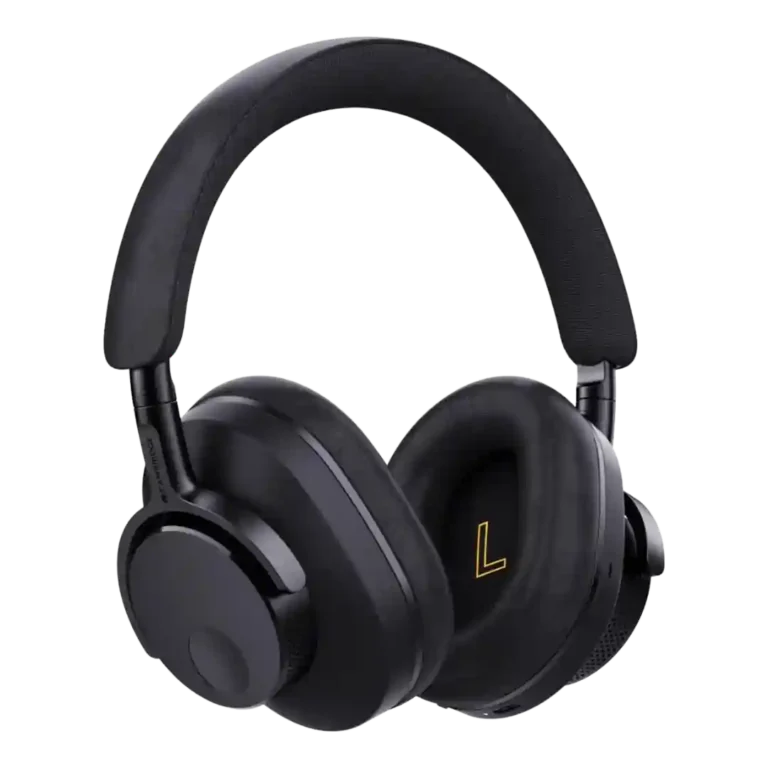
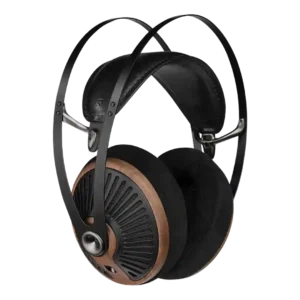
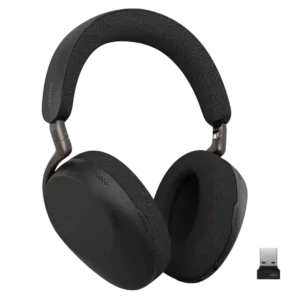
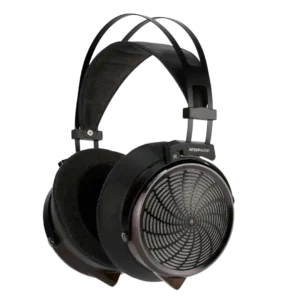
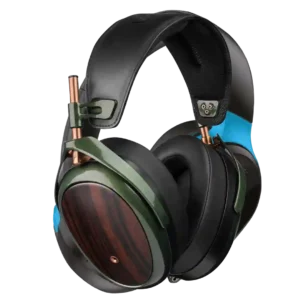
- Better: noise cancellation Crutchfield places P100 noise cancellation a notch below Sony WH-1000XM5.
- Better: LDAC support PCMag prefers Sony WH-1000XM5 for LDAC support because the P100 lacks LDAC.
- More expensive: price What Hi-Fi says the P100 undercuts the official Sony WH-1000XM5 benchmark price.
Cambridge Audio Melomania P100 Headphones Review
Bottom Line
Choose the Melomania P100 for audiophile-leaning sound, marathon battery life, strong value, and repairable parts. Skip it if you need class-leading ANC, lightweight comfort, compact travel, or a polished transparency mode.
Best for listeners who prioritize sound quality, long battery life, wired and Bluetooth flexibility, physical buttons, EQ control, and repairable parts over the strongest possible ANC.
Not for buyers who need the lightest over-ear fit, compact folding travel design, top-tier Bose/Sony-style noise cancellation, spatial audio, touch controls, or polished wear detection.
The Cambridge Audio Melomania P100 lands as a value-focused over-ear with unusually strong reviewer consensus around sound quality, battery life, build and repairability. Most reviewers heard clean, detailed, spacious audio with controlled bass and strong codec support, and the battery life repeatedly stood out as class-leading. The tradeoff is that its ANC is good rather than best-in-class, and comfort depends on fit: some reviewers loved the long-wear feel, while others found the clamp, weight or headband tiring. The software and EQ are useful, but missing or imperfect extras such as spatial audio, touch controls, wear detection behavior and transparency clarity keep it from feeling fully premium.
Compared in Reviews
Products reviewers directly compared with this model, grouped into quick takeaways.
- More expensive: sound quality and price Techaeris says AirPods Max can match the sound, but the P100 costs much less.
- Compared: updated tuning and comfort What Hi-Fi says the P100 SE appears to target the original P100's comfort and sound limitations.
Feature Scorecards
Summary
85 reviewed features- Very positive 4.5-5.0 39% 33 features
- Positive 3.5-4.4 46% 39 features
- Neutral 2.5-3.4 15% 13 features
- Negative 1.5-2.4 0% 0 features
- Very negative below 1.5 0% 0 features
Pros
-
Award recognition was strong because PCMag awarded the P100 an Editors’ Choice.
-
Battery life was the strongest consensus feature, repeatedly described as epic, class-leading, insane, benchmark-setting or outstanding.
-
Voice prompts were a standout novelty, especially the Matt Berry/Southwark option that reviewers found unusually enjoyable.
-
Sound leakage was praised by one reviewer, who found the closed-back design useful for recording because it did not leak externally.
-
Replaceable earpads were a recurring repairability strength, with reviewers praising easy replacement and longer-term ownership.
-
Durability evidence was very positive, with reviewers noting no creaks, groans or visible wear after handling and travel.
-
The integrated microphones were praised by Tom’s Guide for superb speech recognition and accurate vocal capture.
-
Smart listening features were praised in one review as part of a broad feature set intended to elevate the listening experience.
-
Value for money was one of the strongest themes, with reviewers repeatedly saying the P100 competes above its price.
-
Repairability and sustainability were major strengths, especially user-replaceable batteries and earpads plus longevity-focused design.
-
Build quality was consistently strong, with reviewers calling the headphones premium, robust, top-notch or substantial.
-
Codec support was praised as broad and high-end, centered on aptX Lossless and aptX Adaptive, though PCMag still preferred LDAC availability.
-
Immersive audio quality was praised through spatiality, cohesive presentation and a sense of being pulled into the music.
-
Fast charging was praised across reviews, with five-minute top-ups repeatedly described as useful, powerful or impressive.
-
Connectivity options were a strength, with reviewers valuing Bluetooth, USB-C digital audio, 3.5mm support and included cables.
-
Hi-res wired and DAC-related playback were viewed positively, especially USB-C lossless playback and direct wired listening quality.
-
Sustainable materials were praised, especially recycled content, plastic-free packaging and an eco-conscious design approach.
-
Cable quality was praised in Tom’s Guide, which described the bundled audio cables as durable woven fabric.
-
Replaceable pads and battery support were a strong repairability advantage and helped reviewers view the headphones as longer-lasting.
-
Overall recommendations were strongly positive, with most reviewers calling the P100 high-value, competitive or easy to recommend, despite some caveats.
-
aptX support was repeatedly treated as a premium strength, especially aptX Lossless and Adaptive for higher-quality Bluetooth playback.
-
USB-C was a strength, especially for charging and wired digital playback, with reviewers praising hi-res wired output and easy computer connection.
-
Reviewers broadly praised the P100’s sound as detailed, clean, spacious and high-value, though What Hi-Fi and PCMag wanted more energy or EQ help.
-
Soundstage evidence was positive overall, with reviewers describing wide, expansive, spacious or plausible imaging for a closed-back ANC headphone.
-
Premium feel was generally strong, with praise for materials, style and finish, though What Hi-Fi noted cheap-feeling earcups.
-
Android compatibility was positive, with Android USB recognition and Google Fast Pair both described favorably.
-
Firmware support was viewed positively where discussed, with the app framed as a path to future features and tweaks.
-
One reviewer praised high-volume clarity by noting zero distortion while highs remained retained clearly.
-
Sensors were praised in one review as a cool wear-detection feature, though other wear-detection attributes show reliability caveats.
-
Ear cup padding was widely praised as soft, plush, well-cushioned or snug without suffocating the ears.
-
EQ customization was one of the clearest software strengths, with reviewers praising the seven-band EQ and how well the sound responds to tuning.
-
Multipoint was a consistent strength, with reviewers reporting smooth dual-device pairing, hitch-free operation or fast switching.
-
Bluetooth performance was generally reliable, with reviewers citing stable pairing, good range, basement roaming and compatibility across devices.
-
Bass was usually described as punchy, controlled and substantial without overwhelming other frequencies, with only one What Hi-Fi comparison finding it short on kick.
-
Treble was generally praised for bite, sparkle and articulation without harshness, while PCMag noted some upper-register energy was missing by default.
-
Headband adjustment was positively described as stable, seamless or cleanly integrated into the design.
-
Volume and dynamic output were rated highly, with reviewers describing strong headroom, loud maximum levels and excellent dynamic range.
-
Instrument separation was a recurring strength, with reviewers noting clear detail retrieval, distinct vocals and instruments, and strong layering.
-
Bluetooth 5.3 was treated positively where evaluated, especially as newer, stronger and more reliable.
-
Auto power-off was praised as useful for forgetful users and battery conservation.
-
What Hi-Fi praised the smoothly rotating hinges as part of the headphones’ assured style and construction.
-
The app was generally viewed as useful, simple or feature-rich, though some reviewers saw it mainly as a firmware and EQ utility.
-
Physical button controls were mostly praised as simple, tactile and preferable to touch, despite Tom’s Guide finding the control layout imperfect.
-
Frequency balance was generally praised as natural, flat or properly balanced, though PCMag and What Hi-Fi wanted more default liveliness.
-
Included accessories were well received, especially the case, storage pouch and USB-C or 3.5mm cabling.
-
Setup and software simplicity were generally strong, with reviewers calling setup child’s play, the interface simple, and controls straightforward.
-
Design was generally praised as attractive, stylish and well put together, though a few reviewers found the headband shape or bulk less flattering.
-
Most reviewers found vocals and mids clear, expressive and well placed, although What Hi-Fi and one YouTube reviewer heard a thinner or less forward midrange.
-
Travel friendliness was strong because of battery life and isolation, but softened by the relatively bulky case and non-folding design.
-
Sidetone was praised by one reviewer who liked hearing some of their own voice during calls.
-
Passive isolation was viewed positively, with reviewers saying the fit and earcups blocked or reduced outside sound effectively even before ANC.
-
Discreet aesthetics were mostly positive, with praise for subtle branding and finishes, though one reviewer disliked the headband silhouette.
-
ANC’s effect on the sound signature was mostly positive, with no tonal shift in one review and a bass boost in another.
-
The case was usually praised for protection, storage and fit, but several reviewers still noted its larger or chunkier footprint.
-
Audio-video sync was generally strong thanks to gaming or low-latency modes, though PCMag said latency was reduced rather than eliminated.
-
Ecosystem integration evidence was limited but positive, with Google Fast Pair enabling one-tap pairing.
-
3.5mm analog support was positive overall because reviewers valued wired flexibility, though one reviewer noted the port requires the supplied USB-C adapter.
-
Call quality was mixed but mostly favorable, with strong speech intelligibility in some reviews and weaker, distant mic capture in PCMag.
-
Multi-platform support was generally positive across Android, iOS, macOS and Windows, though Apple wired behavior was less smooth in one review.
-
Voice assistant integration was rated adequate, with Tom’s Guide calling hands-free commands fine and speech capture accurate.
-
Long-use comfort was mixed: many found the P100 comfortable for hours, but Tom’s Guide and PCMag reported discomfort, weight or pressure points.
-
Transparency mode drew mixed-to-positive reactions: several found it useful or natural, while others said clarity and ambient audibility needed work.
-
Preset EQ reactions were mixed: some liked Flat or broader presets, while PCMag said presets did not restore enough energy.
-
Ear cup swivel and rotation were generally useful, though PCMag felt the rotation would matter more if the case supported flat storage.
-
ANC was seen as good to very good for the price, especially for low-frequency noise, but reviewers repeatedly said Bose, Sony or AirPods Max still do better.
-
Weight comfort was mixed: some reviewers felt the weight was distributed well, while others called the headphones heavy, bulky or heavier than rivals.
-
Advanced software features were adequate rather than class-leading, with useful app functions but fewer modern extras than some rivals.
-
Microphone noise handling was split: some reviewers heard reduced echo and clear calls, while PCMag found background noise still came through.
-
Launch features were viewed as adequate to good, but reviewers wanted more modern extras such as spatial audio or more polished software features.
-
Clamping force was divisive, with some calling it well judged or Goldilocks-approved and others finding the fit tight or pressure-inducing.
-
ANC’s audio impact was mixed: some heard no tonal shift or a useful bass boost, while others heard crackle or distracting movement artifacts.
-
Headband padding was mixed: one review wanted it softer, while others praised the soft lining or found pressure points after long wear.
Cons
-
ANC background noise was a concern in quieter use, with static or clicking mentioned by multiple reviewers.
-
Auto-play/wear detection was mixed in PCMag because it resumed playback even when the user had paused manually.
-
Wind and movement noise handling was a recurring concern, with several reviewers hearing wind, popping, footstep or left/right ANC artifacts.
-
Stability was weak for active use: reviewers reported looseness, popping with movement, slipping, or suitability mainly for stationary listening.
-
Portability was a limitation, with reviewers noting the P100 does not fold small and is not among the sleekest or most compact over-ears.
-
Smart Pause performance was weak to mixed, with reviewers reporting delayed, context-insensitive or inconsistent auto-pause behavior.
-
Wear detection performance was mixed-to-weak, with reviewers noting delays, context issues or oversensitivity before firmware updates.
-
LDAC was a weakness in the one review that discussed it, because the reviewer preferred LDAC over aptX Lossless for Android hi-res listening.
-
Spatial audio was a clear limitation, with reviewers noting no spatial audio and steering head-tracking seekers toward other brands.
-
Head-tracked 3D audio was a weak area because Stereo Guide recommended Sony, Apple or Bose for that feature set.
-
Touch controls were not implemented, and Tom’s Guide treated that absence as a missed opportunity for the earcup design.
-
Water resistance was a weakness in the one review that discussed it, noting there was no water-resistant rating.
-
Wear detection auto-pause was criticized by Tom’s Guide for not always initiating and sometimes delaying.
Compared With Category Average
Compared with other Over-Ear Headphones, this product is above average in Cable quality, aptX, Voice prompts/feedback, below average in Touch control responsiveness, Spatial audio.
Summary
8 compared features- Above average 0.4+ pts higher 75% 6 features
- Same as average within 0.3 pts 0% 0 features
- Below average 0.4+ pts lower 25% 2 features
| Attribute | This product | Category average | Difference |
|---|---|---|---|
| Cable quality | 4.6 | 3.0 | +1.6 |
| aptX | 4.6 | 3.4 | +1.2 |
| Touch control responsiveness | 2.5 | 3.9 | -1.4 |
| Voice prompts/feedback | 4.9 | 3.6 | +1.3 |
| Sustainability and repairability | 4.7 | 3.6 | +1.1 |
| Sensors | 4.5 | 3.2 | +1.3 |
| Spatial audio | 2.5 | 3.7 | -1.2 |
| Codec support | 4.6 | 3.7 | +0.9 |
FAQ
How good does the Melomania P100 sound?
Reviewers mostly praised the sound as clean, detailed, spacious and balanced, with controlled bass and clear vocals. The main caveat is that What Hi-Fi and PCMag wanted more default punch or energy.
Is the ANC class-leading?
No. Reviewers generally found ANC good or very effective for the price, especially for low-frequency noise, but several said Bose, Sony or AirPods Max still cancel noise better.
How strong is battery life?
Battery life is the strongest consensus point. Reviews repeatedly highlighted up to 60 hours with ANC and up to 100 hours without ANC as class-leading or benchmark-level.
Are the headphones comfortable for long sessions?
Comfort is mixed. Some reviewers wore them for hours comfortably, while others found the clamp, weight, headband or pressure points tiring.
Can they be used wired?
Yes. Reviews mention USB-C digital audio and USB-C-to-3.5mm analog support, with several praising the flexibility and hi-res wired playback quality.
Is the app useful?
Yes, mainly for EQ, ANC settings, firmware updates and wear detection toggles. Reviewers especially liked the seven-band EQ, though the broader feature set was not as advanced as some premium rivals.
Are they good for travel?
They suit travel because of battery life, passive isolation and solid ANC, but the large case and non-folding design make them less ideal for packing light.
Sample Expert Reviews We Analyzed
These are a few of the reviews included in our analysis.

Video Reviews
Article Reviews
- Review score
- 4.0/5
Consider This Instead
If you want better Wear detection auto-pause
Choose Soundcore Space 2. It scores 4.8 vs 2.5 for Wear detection auto-pause, with a 4.0 overall score.
If you want better Smart Pause performance
Choose SONY WH-1000XM6 Headphones. It scores 5.0 vs 2.8 for Smart Pause performance, with a 3.9 overall score.
If you want better Touch control responsiveness
Choose JLab Epic Lux Lab Edition Wireless Headphones. It scores 4.6 vs 2.5 for Touch control responsiveness, with a 3.9 overall score.
If you want better Wear detection performance
Choose Bose QuietComfort Ultra Bluetooth Headphones (2nd Gen). It scores 4.8 vs 2.8 for Wear detection performance, with a 4.0 overall score.
Overall Top Over-Ear Headphones Alternatives
Choose the 105 Silva for premium comfort, repairable build, musical mids, and immersive home listening. Skip it if you need ANC, Bluetooth, strong isolation, or the most neutral sound at...
Pros: Sustainability and repairability, Replaceable pads/headband
Cons: Noise isolation (passive), Travel friendliness
Choose the Px7 S3 if sound quality, premium build, and a slim stylish design matter most. Skip it if you need the strongest ANC, fold-flat travel compactness, LDAC, or feature-heavy...
Pros: Frequency response accuracy, Multipoint connectivity reliability
Cons: LDAC, Wear detection performance
Choose the P100 SE for huge battery life, strong sound, useful EQ, and standout value. Skip it if you need class-leading ANC, the lightest comfort, spatial audio, or a compact...
Pros: Codec support, aptX
Cons: LDAC, Water/sweat resistance rating
Choose the WH950NB Gen 2 for strong value, long battery life, comfortable padding, useful app control and effective everyday ANC. Skip it if heavy-bass clarity, simple onboard controls or guaranteed...
Pros: Instrument separation, USB-C
Cons: Button control usability, Maximum volume clarity