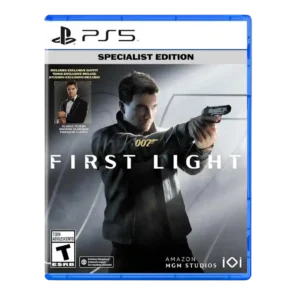

A content creator mode that reduces extreme deaths is the clearest supported accessibility-style option. The reviews do not provide a broad accessibility menu breakdown beyond that.
Age appropriateness is low for younger players because the preview describes exploding heads, decimated bodies, and blood everywhere. The evidence supports mature-audience suitability rather than broad age accessibility.
Enemy AI is a concern in the ScreenHub preview, where guards were described as staring too long at distractions and not reacting realistically.
Aiming evidence centers on Focus or instinct systems that slow time, allow perfect shots, incapacitate legs, disarm enemies, and support marksman-style shooting.
Animation evidence is limited but positive, with melee combat described as fluid in a previewed action sequence.
Animation is mostly praised for action sequences, smoothness, and show-like movement, but one technical impression notes stiffness in some neutral states and locomotion.
Art direction is praised through lighting, Bond-style fashion, visual style, opening-credit imagery, and a strong sense of sartorial Bond identity.
Art direction is consistently praised for being unique, stylized, and faithful to the source identity. Some sources prefer its coherence over photorealistic technical showmanship.
Atmosphere is praised for Bond film chic, style, cinematography, classic opening-credit imagery, and music that feels quintessentially Bond.
Atmosphere is built around gore, brutality, chaos, and destruction. Sources consistently frame the tone as unmistakably Invincible rather than sanitized.
Bug frequency was a beta concern, with reports of glitches, exploits, and goofy issues. Later patch discussion suggests the developers acknowledged problems and were tuning them.
Camera-related evidence is limited and mixed, with one preview saying busy third-person action caused some of the shootout to get lost in the midground.
Camera behavior is positively supported through dynamic camera work in cinematic moments. The evidence relates mostly to supers and overkills, not normal match readability.
Character development is a core focus, with reviews emphasizing Bond as a young agent who matures, shapes MI6, learns his role, and gradually becomes the familiar 007.
Character development evidence is limited but present through story stakes around Mark and the Guardians and Powerplex’s emotional framing. This supports character motivation more than broad arc depth.
Character roster evidence confirms familiar franchise figures and named cast members, including M, Q, Moneypenny, Greenway, and other supporting roles.
Checkpoint evidence is limited to one demo mention showing the system and many checkpoints in a mission menu.
Class balance is supported by archetypes, range roles, zoners, and distinct character designs. The balance picture is mixed because some beta impressions also describe major jank.
Combat is repeatedly described as cinematic and improvised, mixing melee, gunplay, parries, environmental takedowns, thrown empty weapons, license-to-kill escalation, and set-piece chaos; one preview found the shootout less clean than driving.
Combat receives strong praise for impact, tactics, spectacle, and weight. Several sources call out satisfying hits and deep defensive mechanics, while the more critical coverage still treats the fighting system as the main attraction.
Community features are lightly supported through cross-platform play, matchmaking, rollback netcode, and global leaderboards. No deeper clan, guild, or in-game community tools are described.
Competitive balance is one of the biggest caveats. Sources praise counterplay, but beta-focused reviews call out character-strength gaps, excessive damage, and later tuning to reduce solo touch-of-death routes.
Content variety is supported through stealth, social infiltration, gadgets, car sequences, gunfights, hand-to-hand combat, set pieces, and more than one style of play.
Content variety is a strength across previews, with a large roster, different fighting types, team-building, and multiple characters to experiment with. Several sources specifically point to launch roster size or roster expansion.
Evidence emphasizes seamless transitions into gunfights, responsive-feeling combat goals, and the need for quick, fast decision-making during difficult encounters.
Controls are mixed. Some sources praise simplified inputs and auto-combo teaching tools, but one negative beta impression says the game fails to explain buttons clearly and feels harder to control than it should.
The core loop is framed as forward-moving spycraft: plan, improvise, infiltrate, adapt when stealth breaks, and move between systemic objectives and cinematic spectacle.
The core loop centers on 3v3 tag fighting, active swaps, and combo extension. Most sources frame that loop as the heart of the game, though one beta review says its tag guessing can feel like rock paper scissors.
Crash stability is supported only by patch-focused coverage saying most crash-causing issues were fixed. The evidence suggests improvement, but not enough to claim perfect stability.
Cross-play support is directly mentioned alongside online multiplayer and leaderboards. The evidence supports a strong score for this specific feature.
Dialogue evidence is generally positive but playful, with Bond quips, puns, conversation choices, clues from dialogue, and one preview noting some puns can be excruciating while still funny.
Dialogue gets positive mentions for character-specific intros and unique exchanges before fights. The quoted evidence supports flavor and fan-service dialogue rather than a full script evaluation.
Difficulty evidence shows attempts to balance stealth, combat, resources, armor, and enemy resistance, including limits on gadget use and enemies that cannot always be bluffed.
Difficulty balance is split. Multiple hands-ons praise the low barrier and high ceiling, but beta criticism says casual players can fail quickly and touch-of-death pressure can feel harsh.
DLC value is supported by planned Year 1 characters, quarterly support, and deluxe/season-pass references. The evidence is based on announced content rather than final character quality.
Driving receives generally positive preview evidence for Bond-style chases, drifting, shortcuts, rubber-on-road feel, and cinematic speed, though one early chase was described as long and somewhat overextended.
Resource balance evidence focuses on gadget resources found in the environment and meters that limit gadget or charm use so players cannot spam powerful options.
Resource systems add strategic weight through power bars, recoverable health, boost use, and meter management. The evidence frames resource decisions as central to both offense and defense.
Emotional impact evidence is aspirational but present, with developers hoping players laugh, almost tear up, and remember the experience; one writer also found the young-Bond theme relatable.
The story is expected to lean into emotional intensity and psychological consequences. Sources tie this directly to Invincible’s broader themes rather than only fight spectacle.
Enemy variety evidence is limited to harder enemies, armored soldiers, tenacious leaders, and opponents who cannot always be bluffed or charmed.
Environmental detail is praised through carved tire tracks, active NPC scenes, living spaces, and small visual details that make the world feel busy.
Environmental detail is strong in the evidence, especially city destruction, snow and rock reactions, arena crumbling, and ruined structures. Sources tie the stages directly to superhero-scale impact.
Exploration evidence points to scouting, surveying, secrets, multiple pathways, and environments that reward looking for resources, clues, routes, and opportunities.
Facial animation evidence is mixed. One early build lacked proper lip syncing, while Powerplex coverage praises exaggerated facial features that match his emotional state.
Faithfulness is one of the strongest areas, with repeated praise for Bond charm, gadgets, cars, music, cinematic set pieces, franchise iconography, and the sense that the game feels distinctly Bond.
Faithfulness to the franchise is one of the strongest areas. Many sources say the game nails the show’s vibe, preserves the visual language, reflects character demeanor, and feels like an episode of Invincible.
Family friendliness is low because the same review emphasizes unapologetic brutality. No supplied review frames the game as family-oriented.
Flying-related evidence focuses on a plane sequence where Bond banks the aircraft left and right or tilts it in real time to shift cargo and enemies.
Flying and aerial movement are repeatedly highlighted through characters such as Atom Eve, Invincible, and Powerplex. Sources praise hovering, air dashes, and aerial attacks as meaningful parts of positioning and character identity.
Frame-rate stability is a direct concern in one preview, which reported severe drops during explosion-heavy action scenes.
Frame rate stability is directly praised in local play, with one source reporting a locked 60 frames per second without noticeable drops. The evidence does not prove every platform or online condition.
Fun factor evidence is limited but enthusiastic, with one gameplay reaction describing the chaos as silly in the best way.
Fun factor is broadly positive but not universal. Many sources say it is fast, fun, joyful, or must-play, while one negative beta impression says many players may not have fun because of complexity.
Evidence describes a systems-heavy spy game built around gadgets, social stealth, improvisation, multiple approaches, and Hitman-like problem solving expanded into Bond-style action.
The game is described as systems-heavy, with assists, projectiles, meter use, defensive options, and universal mechanics. Positive hands-ons praise the depth, while beta-focused impressions note that jank and complexity can dominate.
Graphics are repeatedly praised as cinematic, film-like, beautiful, highly polished, ray-traced, and possibly IO Interactive’s prettiest work, though this remains preview footage.
Graphics are generally positive, with praise for character models, gorgeous visuals, show-matched visual language, and a stylized look. One review notes the visuals are not trying to compete on photorealism.
HUD clarity is supported by the Q-watch/Q-lens integration and praise for the watch being cleanly integrated into the HUD.
HUD clarity has direct post-beta support, with coverage noting improved clarity for Wi-Fi and wired indicators. The evidence is focused on a specific HUD fix rather than the whole interface.
Immersion is a clear strength in previews that describe feeling transported into a Bond movie and reacting strongly to the Bond tone during gameplay footage.
Immersion is a clear strength, with sources describing authentic universe feel, full-episode energy, superhero power fantasy, and living out character fantasies.
Innovation evidence is limited but strong in one deep dive, which argues IO’s approach could change how Bond games and spy games are perceived.
Innovation is supported by the combo meter reset concept and Powerplex’s just-frame mechanic. The evidence points to some distinctive system ideas inside a familiar tag-fighter format.
The learning curve is a major tradeoff. Several reviewers describe quick early pickup and satisfying basic combos, but others call the game encyclopedic or overloaded with information.
Level design evidence highlights systemic, environment-driven spaces with multiple pathways, NPC conversations, opportunities, security weaknesses, and player-driven routes.
Stages include recognizable locations and environmental touches, but one hands-on notes the arenas are relatively flat. The evidence supports solid presentation more than highly varied stage geometry.
Live-service evidence is limited to Tac Sim updates and new post-launch challenge content, not a full live-service campaign structure.
Live-service support appears planned and active through roster reveals, DLC, post-launch support, beta cleanup, and patch notes. The evidence supports intent, not long-term execution yet.
Loot evidence is limited but present, with drawers, cabinets, containers, and environmental supplies described as sources of resources, ammunition, or situational tools.
Lore evidence focuses on the Bond universe being updated through technology, AI, espionage threats, and source-material details rather than only nostalgia.
Lore depth is lightly supported by character design discussion that says the team looked at Powerplex’s lore. The evidence is specific rather than broad.
Navigation evidence centers on building a mental map of pathways, scouting routes, and understanding available tactical options without drawing attention.
Matchmaking quality is mixed. One preview found opponents quickly and informational coverage lists skill-based matchmaking, while beta coverage reports rage quitters, ranked placement problems, and player-base concerns.
Menu usability is mixed. Sources mention arcade, training, multiplayer, and launch modes, but one negative impression says the player had to pause repeatedly to find controller information.
Mission design is praised for open-ended infiltration, multiple paths to objectives, spyplay mixed with action, and story-driven objectives, especially the hotel, gala, and airfield sequences.
Mission variety evidence includes several global levels, a mix of linear and open missions, spyplay, car chases, airfield combat, plane action, and gala infiltration.
Monetization fairness is generally positive because the base price is repeatedly described as cheaper or reasonable. The season pass and deluxe pricing are mentioned, but no review frames them as predatory.
Bond is described as more nimble and forward-moving than Agent 47, with smooth cover movement and momentum even when plans fall apart.
Movement is a recurring strength, especially air dashes, boost movement, and character-specific mobility. One technical preview still notes that ground movement can feel slower than the overall pace suggests.
Multiplayer design is central and heavily covered, with active tags, assists, local versus, online play, combo breakers, and casual lobbies. The main caveat is that some beta players found tag guessing and breaker interactions frustrating.
Narrative evidence emphasizes a modern Bond origin story, a young reckless recruit, the shaping of Bond into 007, and themes of technology, trust, risk, and identity.
Narrative coverage is positive and focused on originality. Sources describe a story mode, a wholly original story, and a non-retelling approach connected to the show’s universe.
Onboarding has real strengths through auto-combos, simple inputs, and newcomer-friendly entry points. However, the more critical coverage argues that the tutorial and complexity can still overwhelm first-time players.
Online stability is unsettled. One preview had no connection issues, but beta and alpha impressions report bad connections, rollback inconsistency, and matches swinging from excellent to terrible.
The review evidence explicitly says the game is not open world; its structure is mission-based rather than a continuous open-world design.
Originality is supported by the game being an original Bond canon story, not simply Uncharted with Bond or a Hitman reskin, though some preview caveats remain.
Originality is supported by an original story and presentation that sets itself apart from other 2D hero fighters. The evidence is strongest on narrative and adaptation choices.
Pacing is mixed: previews describe slow, methodical infiltration followed by major action spikes, while some coverage says the car chase lasts too long or becomes personally frustrating.
The game is repeatedly described as fast and direct. Story-mode coverage also frames the narrative as episode-length rather than padded, supporting a brisker pacing profile.
Performance evidence is mixed: some sources mention DLSS, PSSR, 60 fps goals, and polish time, while preview footage also showed frame drops and hitches.
Performance optimization is promising but not fully settled. One review reports locked 60 FPS locally, while post-beta coverage mentions balance and launch updates still underway.
Platform evidence includes DLSS4, multi-frame generation, PS5 Pro optimization, and broad launch-platform support in the reviewed material.
Polish is a major caveat, with coverage noting rough edges and also pointing to remaining optimization time before release.
Polish is mixed. Early builds lacked some lip syncing, beta issues could still need fixing, and one source says neutral animation and locomotion still needed polish.
Progression evidence comes from Tac Sim-style rewards, where XP can be earned and spent on gadget upgrades, firearms, and outfits.
Patrick Gibson’s younger Bond is repeatedly framed as charming, witty, reckless, dynamic, and compelling enough to make several previews more interested in playing.
Protagonist appeal is supported by a GamesRadar hands-on centered on the Omni-Man fantasy and commanding Viltrumite power. The evidence is narrow but positive.
Puzzle-style play appears in environmental problem solving, planning routes, adapting when plans fail, and using gadgets or tactical options to avoid direct combat.
Replay value is supported by mission modifiers, Tac Sim challenges, leaderboards, XP rewards, replaying missions, and post-launch challenge updates.
Replay value is supported mainly by the roster and playstyle experimentation. The evidence points to character variety as a reason to keep trying new teams.
Sandbox freedom is supported by repeated mentions of multiple solutions, several routes, player choice, creative infiltration, and objectives that can be approached in different ways.
Server reliability has limited support from post-beta discussion of ranked data bottlenecks. The evidence indicates backend problems were identified rather than fully proven solved.
Side character depth is supported by roster discussion and playstyle breakdowns. Sources emphasize many characters to choose from and detailed roles across the cast.
Social-feature evidence is limited to Tac Sim performance comparison against other agents around the world, functioning more like leaderboards than broad community tools.
Social features have limited support from one hands-on describing the game as a bonding experience. The evidence points more to local or party appeal than built-in social systems.
Sound design evidence is narrower, with one preview saying the gunplay sounds amazing.
Soundtrack evidence is strong for Bond-style music, opening-credit music, classic score cues, and a moody theme-song presentation.
Soundtrack quality has only light support from one reaction that calls out the music. The evidence is positive but too limited for a broad audio judgment.
Stealth is strongly supported across the review set, with blending into crowds, eavesdropping, social stealth, bluffing, distractions, gadgets, silent takedowns, and alternate infiltration routes.
Tutorial quality is mixed to negative overall. One informational source describes tutorials and training, while beta impressions complain the game has too much to learn and that the tutorial fails to explain inputs well.
Upgrade evidence is tied to XP spending on gadget upgrades, firearms, and outfits, with repeated trailer coverage of gadget development and post-mission growth.
UI evidence centers on the watch and scan systems highlighting options, distractions, and misdirection during stealth or infiltration.
User interface design has limited mixed evidence. One technical impression says interface parts still seemed in development, so the score stays cautious.
Value for money is generally favorable because multiple sources point to the lower $49.99 price or recommend launch for fans. The main caveat is that uncertain online longevity may make competitive players wait.
Vehicle evidence includes Jaguar, Aston Martin cars, iconic Bond vehicles, numerous Aston Martins, and broader vehicle gameplay mentions.
Visual effects are mixed: opening-credit imagery, smoke, damage, and car effects are praised, while one preview criticizes distracting motion blur.
Visual effects are a major strength, from blood and battle damage to 2D impact effects, cinematic overkills, particle effects, and screen spectacle. This is one of the most consistently supported praise areas.
Voice and performance evidence is positive, with praise for acting, superb voice work, and Patrick Gibson’s energy as Bond.
Voice acting is a noted strength. Sources mention returning actors, close voice matches, a popular cast, and show-linked creative involvement, though not every original actor appears to return.
World-building evidence centers on a modern MI6, a risk-averse data-driven era, Bond’s origin, and the spy world he is entering.
World-building is supported by the franchise’s explosive source material and an alternate Nolan-led Viltrumite invasion premise. The evidence points to a familiar universe with new scenario framing.
World interactivity is one of the clearest strengths, with destructible elements, gadgets, guard distractions, environmental weapons, explosive objects, surfaces, panels, and objects that can change combat or infiltration outcomes.
Stage interaction is one of the clearest spectacle strengths. Reviews describe orbit-breaking hits, destructible arenas, and environments that shatter or transition as fights escalate.
Writing quality is supported mainly by coverage of believable thematic depth and the attempt to give young Bond a modern, character-driven story.
Writing quality is supported by comments about the story’s different spin, cinematic mode, witty dialogue, high-stakes melodrama, and denser themes. The evidence is promising but mostly preview-based.