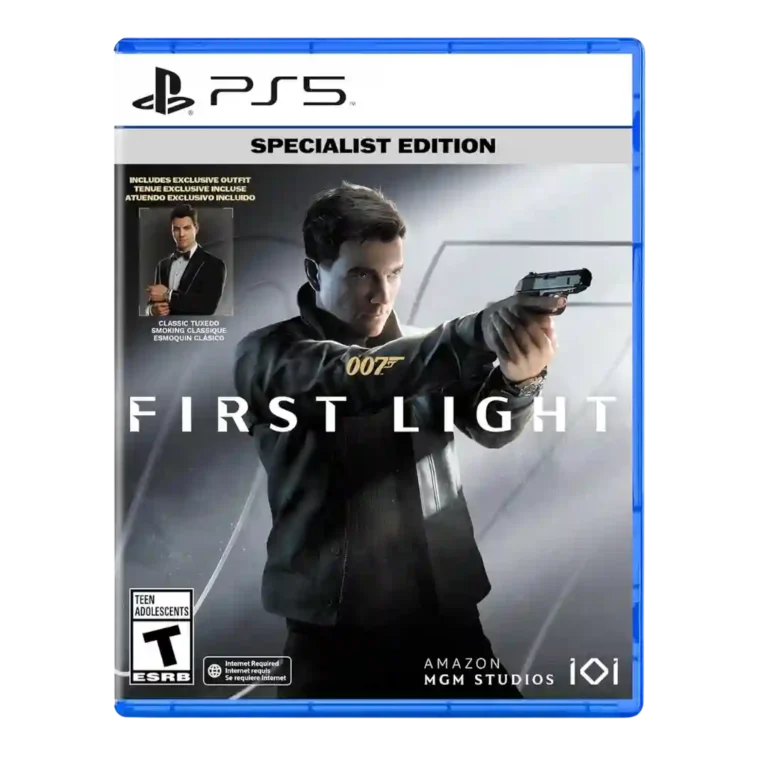
Review: 007 First Light

Updated: 5 hours ago
4.1
Based on methodology below
229
Insights analyzed
62
Grouped by key features
22
From expert reviews
Scores below reflect consolidated expert coverage across these features.
Bottom Line

Choose 007 First Light if you want Bond-flavored stealth, gadgets, driving, and cinematic brawls. Skip if early AI, frame-rate drops, or hands-off gunplay concerns matter more than previewed potential.

Best for

Best for players who want a cinematic Bond origin story built around flexible stealth, gadgets, driving, and improvised action rather than a pure shooter. It should especially appeal to Hitman fans who also want bigger set pieces.

Not for

Not for players who need final hands-on proof of gun feel, AI polish, and stable performance before getting interested. It also may disappoint anyone expecting a full open-world Bond game.

Verdict

007 First Light looks strongest when it combines IO Interactive-style infiltration with Bond spectacle. The review set repeatedly points to flexible missions, social stealth, gadgets, driving, and improvised combat as the main appeal, with Patrick Gibson’s younger Bond giving the origin story a distinct personality. The tradeoff is that this is still preview evidence: one hands-off demo noted weak enemy reactions, distracting motion blur, severe frame drops in action scenes, and a car chase that ran long. Even so, the core idea appears promising because the game is not treated as a simple Hitman reskin; it uses that systemic foundation while adding brawls, set pieces, vehicles, and a more cinematic Bond rhythm.

What Reviewers Agree On

Across the preview set, the most consistent praise centers on how 007 First Light blends IO Interactive’s systemic stealth background with the wider Bond fantasy. The strongest evidence points to missions with multiple routes, social stealth, eavesdropping, bluffing, gadgets, environmental distractions, and improvisation when a plan breaks. Several previews frame the hotel and gala sequences as the clearest expression of that design, where Bond can observe the room, use his charm, pick up clues, create diversions, or push into direct action when needed.

The action side is also a major point of agreement. Reviewers repeatedly call out cinematic brawls, thrown weapons, improvised takedowns, explosive environmental interactions, car chases, and large set pieces involving an airfield and plane. The younger Bond is generally presented as a good fit for this structure: reckless, charming, still learning, and more impulsive than the polished 007 from the films. The game’s Bond identity also comes through in the cast, gadgets, vehicles, music, opening-credit style, and the sense that the experience is trying to feel like playing through a Bond movie rather than simply wearing the license as decoration.

The main caution is polish. The same coverage that praises the concept also notes rough AI reactions, distracting motion blur, visible frame drops, and some uneven pacing, especially around a long car chase and busy action scenes. Gunplay is still harder to judge because several impressions were hands-off, and at least one preview felt the shootout looked less clean than the driving. The most satisfied players are likely to be those who want flexible spy missions with bursts of blockbuster action and are willing to accept that the final feel depends on IO tightening performance, AI behavior, and combat clarity before launch.

Pros

  • 4.9
    based on 2 reviews
    atmosphere: 4.9, based on 2 reviews
    Atmosphere is praised for Bond film chic, style, cinematography, classic opening-credit imagery, and music that feels quintessentially Bond.
  • 4.9
    based on 2 reviews
    immersion: 4.9, based on 2 reviews
    Immersion is a clear strength in previews that describe feeling transported into a Bond movie and reacting strongly to the Bond tone during gameplay footage.
  • 4.8
    based on 1 review
    fun factor: 4.8, based on 1 review
    Fun factor evidence is limited but enthusiastic, with one gameplay reaction describing the chaos as silly in the best way.
  • 4.6
    based on 5 reviews
    graphics quality: 4.6, based on 5 reviews
    Graphics are repeatedly praised as cinematic, film-like, beautiful, highly polished, ray-traced, and possibly IO Interactive’s prettiest work, though this remains preview footage.
  • 4.6
    based on 3 reviews
    level design: 4.6, based on 3 reviews
    Level design evidence highlights systemic, environment-driven spaces with multiple pathways, NPC conversations, opportunities, security weaknesses, and player-driven routes.
  • 4.6
    based on 3 reviews
    soundtrack quality: 4.6, based on 3 reviews
    Soundtrack evidence is strong for Bond-style music, opening-credit music, classic score cues, and a moody theme-song presentation.
  • 4.5
    based on 8 reviews
    faithfulness to franchise: 4.5, based on 8 reviews
    Faithfulness is one of the strongest areas, with repeated praise for Bond charm, gadgets, cars, music, cinematic set pieces, franchise iconography, and the sense that the game feels distinctly Bond.
  • 4.5
    based on 5 reviews
    sandbox freedom: 4.5, based on 5 reviews
    Sandbox freedom is supported by repeated mentions of multiple solutions, several routes, player choice, creative infiltration, and objectives that can be approached in different ways.
  • 4.5
    based on 3 reviews
    art direction: 4.5, based on 3 reviews
    Art direction is praised through lighting, Bond-style fashion, visual style, opening-credit imagery, and a strong sense of sartorial Bond identity.
  • 4.5
    based on 2 reviews
    voice acting: 4.5, based on 2 reviews
    Voice and performance evidence is positive, with praise for acting, superb voice work, and Patrick Gibson’s energy as Bond.
  • 4.5
    based on 1 review
    innovation: 4.5, based on 1 review
    Innovation evidence is limited but strong in one deep dive, which argues IO’s approach could change how Bond games and spy games are perceived.
  • 4.5
    based on 10 reviews
    gameplay mechanics: 4.5, based on 10 reviews
    Evidence describes a systems-heavy spy game built around gadgets, social stealth, improvisation, multiple approaches, and Hitman-like problem solving expanded into Bond-style action.
  • 4.4
    based on 10 reviews
    world interactivity: 4.4, based on 10 reviews
    World interactivity is one of the clearest strengths, with destructible elements, gadgets, guard distractions, environmental weapons, explosive objects, surfaces, panels, and objects that can change combat or infiltration outcomes.
  • 4.4
    based on 8 reviews
    replay value: 4.4, based on 8 reviews
    Replay value is supported by mission modifiers, Tac Sim challenges, leaderboards, XP rewards, replaying missions, and post-launch challenge updates.
  • 4.4
    based on 3 reviews
    mission variety: 4.4, based on 3 reviews
    Mission variety evidence includes several global levels, a mix of linear and open missions, spyplay, car chases, airfield combat, plane action, and gala infiltration.
  • 4.4
    based on 3 reviews
    originality: 4.4, based on 3 reviews
    Originality is supported by the game being an original Bond canon story, not simply Uncharted with Bond or a Hitman reskin, though some preview caveats remain.
  • 4.4
    based on 8 reviews
    mission design: 4.4, based on 8 reviews
    Mission design is praised for open-ended infiltration, multiple paths to objectives, spyplay mixed with action, and story-driven objectives, especially the hotel, gala, and airfield sequences.
  • 4.4
    based on 2 reviews
    core gameplay loop: 4.4, based on 2 reviews
    The core loop is framed as forward-moving spycraft: plan, improvise, infiltrate, adapt when stealth breaks, and move between systemic objectives and cinematic spectacle.
  • 4.4
    based on 2 reviews
    environmental detail: 4.4, based on 2 reviews
    Environmental detail is praised through carved tire tracks, active NPC scenes, living spaces, and small visual details that make the world feel busy.
  • 4.4
    based on 2 reviews
    flying mechanics: 4.4, based on 2 reviews
    Flying-related evidence focuses on a plane sequence where Bond banks the aircraft left and right or tilts it in real time to shift cargo and enemies.
  • 4.4
    based on 2 reviews
    movement feel: 4.4, based on 2 reviews
    Bond is described as more nimble and forward-moving than Agent 47, with smooth cover movement and momentum even when plans fall apart.
  • 4.4
    based on 2 reviews
    platform-specific feature support: 4.4, based on 2 reviews
    Platform evidence includes DLSS4, multi-frame generation, PS5 Pro optimization, and broad launch-platform support in the reviewed material.
  • 4.4
    based on 2 reviews
    puzzle design: 4.4, based on 2 reviews
    Puzzle-style play appears in environmental problem solving, planning routes, adapting when plans fail, and using gadgets or tactical options to avoid direct combat.
  • 4.3
    based on 16 reviews
    stealth mechanics: 4.3, based on 16 reviews
    Stealth is strongly supported across the review set, with blending into crowds, eavesdropping, social stealth, bluffing, distractions, gadgets, silent takedowns, and alternate infiltration routes.
  • 4.3
    based on 5 reviews
    vehicle roster: 4.3, based on 5 reviews
    Vehicle evidence includes Jaguar, Aston Martin cars, iconic Bond vehicles, numerous Aston Martins, and broader vehicle gameplay mentions.
  • 4.3
    based on 15 reviews
    combat system: 4.3, based on 15 reviews
    Combat is repeatedly described as cinematic and improvised, mixing melee, gunplay, parries, environmental takedowns, thrown empty weapons, license-to-kill escalation, and set-piece chaos; one preview found the shootout less clean than driving.
  • 4.3
    based on 7 reviews
    protagonist appeal: 4.3, based on 7 reviews
    Patrick Gibson’s younger Bond is repeatedly framed as charming, witty, reckless, dynamic, and compelling enough to make several previews more interested in playing.
  • 4.3
    based on 6 reviews
    character development: 4.3, based on 6 reviews
    Character development is a core focus, with reviews emphasizing Bond as a young agent who matures, shapes MI6, learns his role, and gradually becomes the familiar 007.
  • 4.2
    based on 7 reviews
    aiming precision: 4.2, based on 7 reviews
    Aiming evidence centers on Focus or instinct systems that slow time, allow perfect shots, incapacitate legs, disarm enemies, and support marksman-style shooting.
  • 4.2
    based on 3 reviews
    live-service support: 4.2, based on 3 reviews
    Live-service evidence is limited to Tac Sim updates and new post-launch challenge content, not a full live-service campaign structure.
  • 4.2
    based on 2 reviews
    character roster: 4.2, based on 2 reviews
    Character roster evidence confirms familiar franchise figures and named cast members, including M, Q, Moneypenny, Greenway, and other supporting roles.
  • 4.2
    based on 2 reviews
    exploration quality: 4.2, based on 2 reviews
    Exploration evidence points to scouting, surveying, secrets, multiple pathways, and environments that reward looking for resources, clues, routes, and opportunities.
  • 4.2
    based on 1 review
    animation quality: 4.2, based on 1 review
    Animation evidence is limited but positive, with melee combat described as fluid in a previewed action sequence.
  • 4.2
    based on 1 review
    map and navigation design: 4.2, based on 1 review
    Navigation evidence centers on building a mental map of pathways, scouting routes, and understanding available tactical options without drawing attention.
  • 4.2
    based on 1 review
    sound design: 4.2, based on 1 review
    Sound design evidence is narrower, with one preview saying the gunplay sounds amazing.
  • 4.2
    based on 6 reviews
    narrative quality: 4.2, based on 6 reviews
    Narrative evidence emphasizes a modern Bond origin story, a young reckless recruit, the shaping of Bond into 007, and themes of technology, trust, risk, and identity.
  • 4.2
    based on 8 reviews
    driving mechanics: 4.2, based on 8 reviews
    Driving receives generally positive preview evidence for Bond-style chases, drifting, shortcuts, rubber-on-road feel, and cinematic speed, though one early chase was described as long and somewhat overextended.
  • 4.1
    based on 5 reviews
    HUD clarity: 4.1, based on 5 reviews
    HUD clarity is supported by the Q-watch/Q-lens integration and praise for the watch being cleanly integrated into the HUD.
  • 4.1
    based on 3 reviews
    controls responsiveness: 4.1, based on 3 reviews
    Evidence emphasizes seamless transitions into gunfights, responsive-feeling combat goals, and the need for quick, fast decision-making during difficult encounters.
  • 4.1
    based on 4 reviews
    content variety: 4.1, based on 4 reviews
    Content variety is supported through stealth, social infiltration, gadgets, car sequences, gunfights, hand-to-hand combat, set pieces, and more than one style of play.
  • 4.1
    based on 2 reviews
    emotional impact: 4.1, based on 2 reviews
    Emotional impact evidence is aspirational but present, with developers hoping players laugh, almost tear up, and remember the experience; one writer also found the young-Bond theme relatable.
  • 4.1
    based on 2 reviews
    world-building: 4.1, based on 2 reviews
    World-building evidence centers on a modern MI6, a risk-averse data-driven era, Bond’s origin, and the spy world he is entering.
  • 4.1
    based on 4 reviews
    enemy variety: 4.1, based on 4 reviews
    Enemy variety evidence is limited to harder enemies, armored soldiers, tenacious leaders, and opponents who cannot always be bluffed or charmed.
  • 4.0
    based on 4 reviews
    upgrade system: 4.0, based on 4 reviews
    Upgrade evidence is tied to XP spending on gadget upgrades, firearms, and outfits, with repeated trailer coverage of gadget development and post-mission growth.
  • 4.0
    based on 3 reviews
    difficulty balance: 4.0, based on 3 reviews
    Difficulty evidence shows attempts to balance stealth, combat, resources, armor, and enemy resistance, including limits on gadget use and enemies that cannot always be bluffed.
  • 4.0
    based on 3 reviews
    social features: 4.0, based on 3 reviews
    Social-feature evidence is limited to Tac Sim performance comparison against other agents around the world, functioning more like leaderboards than broad community tools.
  • 4.0
    based on 1 review
    checkpoint system: 4.0, based on 1 review
    Checkpoint evidence is limited to one demo mention showing the system and many checkpoints in a mission menu.
  • 4.0
    based on 1 review
    economy and resource balance: 4.0, based on 1 review
    Resource balance evidence focuses on gadget resources found in the environment and meters that limit gadget or charm use so players cannot spam powerful options.
  • 4.0
    based on 1 review
    lore depth: 4.0, based on 1 review
    Lore evidence focuses on the Bond universe being updated through technology, AI, espionage threats, and source-material details rather than only nostalgia.
  • 4.0
    based on 1 review
    progression system: 4.0, based on 1 review
    Progression evidence comes from Tac Sim-style rewards, where XP can be earned and spent on gadget upgrades, firearms, and outfits.
  • 4.0
    based on 1 review
    user interface design: 4.0, based on 1 review
    UI evidence centers on the watch and scan systems highlighting options, distractions, and misdirection during stealth or infiltration.
  • 4.0
    based on 1 review
    writing quality: 4.0, based on 1 review
    Writing quality is supported mainly by coverage of believable thematic depth and the attempt to give young Bond a modern, character-driven story.
  • 4.0
    based on 5 reviews
    visual effects quality: 4.0, based on 5 reviews
    Visual effects are mixed: opening-credit imagery, smoke, damage, and car effects are praised, while one preview criticizes distracting motion blur.
  • 4.0
    based on 5 reviews
    dialogue quality: 4.0, based on 5 reviews
    Dialogue evidence is generally positive but playful, with Bond quips, puns, conversation choices, clues from dialogue, and one preview noting some puns can be excruciating while still funny.
  • 3.8
    based on 1 review
    loot system: 3.8, based on 1 review
    Loot evidence is limited but present, with drawers, cabinets, containers, and environmental supplies described as sources of resources, ammunition, or situational tools.
  • 3.7
    based on 3 reviews
    pacing: 3.7, based on 3 reviews
    Pacing is mixed: previews describe slow, methodical infiltration followed by major action spikes, while some coverage says the car chase lasts too long or becomes personally frustrating.
  • 3.6
    based on 4 reviews
    performance optimization: 3.6, based on 4 reviews
    Performance evidence is mixed: some sources mention DLSS, PSSR, 60 fps goals, and polish time, while preview footage also showed frame drops and hitches.

Cons

  • 3.3
    based on 2 reviews
    polish: 3.3, based on 2 reviews
    Polish is a major caveat, with coverage noting rough edges and also pointing to remaining optimization time before release.
  • 3.2
    based on 1 review
    camera behavior: 3.2, based on 1 review
    Camera-related evidence is limited and mixed, with one preview saying busy third-person action caused some of the shootout to get lost in the midground.
  • 2.0
    based on 1 review
    AI behavior: 2.0, based on 1 review
    Enemy AI is a concern in the ScreenHub preview, where guards were described as staring too long at distractions and not reacting realistically.
  • 2.0
    based on 1 review
    frame rate stability: 2.0, based on 1 review
    Frame-rate stability is a direct concern in one preview, which reported severe drops during explosion-heavy action scenes.
  • 1.5
    based on 1 review
    open-world design: 1.5, based on 1 review
    The review evidence explicitly says the game is not open world; its structure is mission-based rather than a continuous open-world design.

FAQ

Is 007 First Light worth watching for Bond fans?

Based on the preview evidence, yes for players who want stealth, gadgets, cars, quips, and cinematic Bond set pieces. The main caveat is that final judgment depends on polish, AI, and performance improving before release.

What is the main strength of 007 First Light?

The strongest pattern is flexible spycraft. Reviews and trailers repeatedly show multiple mission routes, social stealth, bluffing, environmental distractions, gadgets, and improvised action.

What is the biggest concern from the reviews?

The biggest concern is polish. One preview noted weak enemy reactions, distracting motion blur, and severe frame drops, while other coverage also mentioned hitches or optimization questions.

Is 007 First Light just Hitman with James Bond?

The reviews do not frame it as a simple reskin. Hitman-style sandbox infiltration is present, but previews also emphasize Bond-specific driving, cinematic brawls, gadgets, plane stunts, and a young Bond origin story.

How does combat look in 007 First Light?

Combat looks improvised and cinematic, with melee, firearms, parries, thrown weapons, environmental takedowns, and license-to-kill moments. Some preview coverage still wanted hands-on confirmation of how gunplay feels.

Does 007 First Light have replay value?

Yes, the review evidence points to mission modifiers, Tac Sim challenges, XP rewards, leaderboards, and post-launch challenge updates as reasons to revisit missions.

Reviews we analyzed

Video Reviews

Article Reviews

#1
4.3
Choose it for inventive turn-based combat, a powerful story, and standout presentation. Skip it if you dislike parry-heavy encounters or want cleaner navigation...
Pros: combat system, boss design, narrative quality, soundtrack quality, monetization fairness, microtransaction impact, atmosphere
Cons: platforming precision, puzzle design, bug frequency, menu usability, HUD clarity, animation quality, map and navigation design
#2
4.3
Choose if you want Horizon’s best-looking open world and freer exploration. Skip if twitchy handling and a city that can still feel sparse...
Pros: exploration quality, open-world design, graphics quality, sandbox freedom, social features, immersion, replay value
Cons: world interactivity, learning curve, originality
#3
4.3
Choose Saros if you want elite bullet-hell shooting with smoother roguelite progression. Skip it if abstract storytelling, repetition, or lighter buildcrafting will frustrate...
Pros: load times, visual effects quality, character development, fast travel convenience, platform-specific feature support, sound design, voice acting
Cons: side character depth, map and navigation design, endgame content, facial animations, menu usability, grind level, user interface design
#4
4.3
Choose it for the inventive hack-and-shoot combat and strong Hugh-Diana chemistry. Skip it if you want a flawless story or cleaner navigation.
Pros: combat system, graphics quality, environmental detail, bug frequency, crash stability, originality, innovation
Cons: map and navigation design, mission design, HUD clarity, handheld play suitability, grind level