The transcript support for this attribute points to the mouse using low-latency 2.4GHz wireless plus wired USB-C rather than Bluetooth.
Wireless connectivity relies on a 2.4 GHz dongle, with one review clearly identifying that as the primary wireless mode.
Multiple reviews describe Dynamic Sensitivity, mouse rotation, sensitivity matching, or acceleration-style tuning as useful pro controls, though a few note that these tools require practice or may not suit every player.
One review directly highlights the sensor’s 50G acceleration capability, positioning it as high-end on paper.
Reviewers consistently describe the mouse as precise, lag-free, and trustworthy, with several tying that accuracy to smooth cursor movement, clean inputs, and reliable tracking in games.
Reviews describe the Sabre V2 Pro as accurate and precise in actual play, especially for fast cursor movement and steady tracking in games.
The mouse is described as well balanced despite its low weight, with reviewers noting that its balance helps it avoid feeling dense, front-heavy, or awkward in hand.
Battery life is one of the strongest recurring positives: reviews repeatedly cite or validate long endurance at 1,000Hz, while also noting the sharp drop when 8,000Hz polling is used.
Battery life is acceptable at 1,000 Hz but often criticized as mediocre to poor once reviewers move beyond marketing claims or use higher polling rates.
Reviews consistently state that Bluetooth is absent, so this scores poorly for Bluetooth support even though reviewers often accept the omission for an esports-focused mouse.
Bluetooth is not supported, and multiple reviews frame that omission as a meaningful tradeoff for the extreme weight target.
Build quality is broadly praised, with reviewers noting sturdier sidewalls, little to no creaking or flex, solid construction, and a lightweight shell that does not feel fragile.
Build quality is divisive but generally solid for the weight: many reviews call it sturdy, while others still note flex or a flimsy impression.
The mouse supports button remapping and related Synapse controls, but customization is limited by the simple physical button layout and bottom-mounted DPI control.
Button remapping is available through the Web Hub, giving the mouse basic but useful customization for its limited control set.
Button responsiveness is rated highly because reviewers repeatedly describe clicks as snappy, quick, instantly registered, and suitable for fast gameplay.
Button response is strong in normal gameplay, with reviewers noting reliable click registration and easy rapid clicking.
Cable feedback is mixed but generally acceptable: one review praises the included braided cable, while another frames the braided cable mainly as part of the dongle and charging setup.
Cable flexibility is a recurring negative, with reviewers repeatedly describing the included charging cable as stiff and poorly matched to such a light mouse.
Charging is reasonably convenient through USB-C and wired-use support, but reviews note that there is no dock-based charging option.
The mouse is described as workable for claw grip by reviewers who also emphasize its right-handed ergonomic shape and adaptable grip feel.
Claw-grip comfort is mixed: some shape-focused reviews think it suits claw well, while at least one large-hand reviewer had to adapt to it.
The supported reviews describe click latency as extremely low or essentially absent, reinforcing its competitive-gaming focus.
Click latency is the clearest technical weakness in the review set, with technical reviewers explicitly flagging it as unusually high for a competitive mouse.
Click sound is the clearest recurring complaint: several reviewers describe the main clicks as loud, hollow, pingy, metallic, or divisive even when they like the feel.
Click noise varies by reviewer and component, with some calling the mouse louder and others describing the buttons as relatively quiet.
Connection stability is a major strength, with reviews highlighting reliable wireless transmission, no drops, solid signal behavior, and useful dongle feedback.
One review explicitly reports stable wireless behavior even at longer range, supporting dependable connection stability.
Cross-platform use is helped by the browser-based setup flow, but at least one review notes that firmware updating is restricted to Windows.
Reviewers mention debounce delay improvements or debounce-related settings, usually in the context of optical switches and Synapse configuration.
Debounce customization is missing in the current software, and one technical review specifically flags that lack of control as a drawback.
The mouse scores poorly here because reviews explicitly say it lacks charging-dock support or removed prior dock-style conveniences.
The 45K DPI ceiling and fine DPI adjustment appear throughout the reviews, making DPI range one of the most heavily supported strengths.
The mouse offers a very high advertised DPI ceiling, with reviews repeatedly highlighting the 33,000 DPI sensor and flexible sensitivity presets.
Long-term durability support is positive but narrower, based mainly on optical internals, low-wear design choices, and comments that failures seem unlikely.
Razer ecosystem support comes through Synapse and Razer Exchange, with reviewers treating software integration as useful for tuning and workflow features.
Corsair ecosystem integration is weak because this mouse uses Web Hub instead of iCUE, creating friction for users with other Corsair devices.
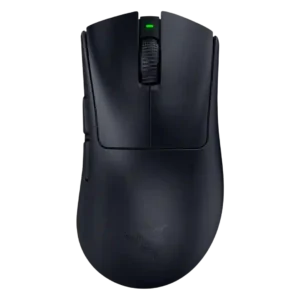
Ergonomics are a core strength: reviewers repeatedly praise the familiar right-handed DeathAdder shape, palm support, and comfortable sculpting.
Ergonomics are generally good for a lightweight competitive mouse, but not every reviewer found it naturally comfortable, especially with larger hands.
Fingertip comfort is more mixed than palm or claw grip because at least one reviewer found the larger ergonomic body less ideal for a fingertip-focused style.
Fingertip grip support is a relative strength, especially for users who prefer smaller mice or more nimble control.
Firmware support is directly mentioned in one review as part of unlocking or improving battery-life behavior, but this attribute has limited evidence.
FPS suitability is one of the strongest areas, with many reviews connecting the mouse to CS2, shooters, esports, precision aiming, fast clicks, and competitive play.
FPS gaming is the mouse’s clearest use case, with multiple reviewers framing it as an especially strong fit for competitive shooters.
Glide is consistently praised through comments about PTFE feet, larger skates, fluid movement, smooth desk or mousepad travel, and effortless swipes.
Glide is a consistent strength, though skate feel varies slightly by surface and reviewer preference.
The surface texture and included grip tape are usually praised for providing secure control, though a few reviews note oil marks or differing coating preferences.
Grip texture is a net positive, with several reviews calling the shell grippy or usable, even if some users may still prefer the included grip tape.
Handedness scores low because reviewers repeatedly describe the mouse as right-handed only and not suitable for left-handed users.
Primary click feel is generally strong and well balanced, with reviewers praising responsiveness and actuation even when click noise is criticized.
Primary click quality lands in a good-but-not-perfect range, with several reviews praising the main buttons even when they note mild softness or mushiness.
Lift-off and landing-distance controls are supported through Synapse calibration, asymmetric cut-off, and Smart Tracking features.
Long-session comfort is supported by reviews describing comfort over extended use, pressure, sweat, fatigue, and long-term gaming or navigation sessions.
Long-session comfort is a notable benefit, with reviewers specifically saying the mouse feels less tiring or fatigue-free over extended play.
Macro and secondary-function support is present through HyperShift, Synapse, and Razer Exchange, although the limited button count constrains how much users can assign.
Macro support is present in software, and reviews confirm that users can create and store macros despite the mouse’s minimalist design.
Material quality is mostly positive due to recycled plastic, bio-based materials, rigidity, and texture, but one review notes the plastic can feel less premium.
Material quality gets specific praise in one technical review, which calls the materials excellent and easy to keep clean.
MMO suitability is weak because the simple two-side-button layout is repeatedly described as insufficient for MMO players who want many commands.
MMO suitability is limited by the very low button count, which one review directly calls out as a compromise versus heavier, more feature-rich mice.
MOBA support is limited but positive where mentioned, with the mouse positioned as suitable for competitive play including League of Legends.
Motion consistency is strongly supported by comments about smooth movement, accurate hand-to-cursor translation, stable tracking, and responsive motion.
Tracking consistency is strong overall, with reviewers reporting stable tracking and no meaningful motion issues in normal use.
Onboard memory is limited, with reviews repeatedly noting that only one profile can be stored on the mouse itself.
Palm grip comfort is generally strong, especially for users who like the DeathAdder shape, though one reviewer with larger hands found full palm use less ideal.
Palm-grip comfort is better than the size suggests for some users, but it is not universally ideal for every hand size.
Polling-rate support is one of the headline strengths, with many reviews citing 8K wired or wireless polling, Smart Polling switching, and high-performance modes.
Polling-rate support is a clear strength, with multiple reviews calling out 8,000 Hz support as a standout competitive feature.
Portability is a weakness because reviews often describe the large dongle, lack of Bluetooth, and travel inconvenience as compromises.
Portability is limited by the lack of Bluetooth and the unusual dongle/cable setup, which several reviewers say makes travel or multi-device use less convenient.
Premium feel is supported by reviewers who describe the mouse as slick, technically impressive, and premium, even while noting its plain appearance or high price.
Premium feel depends heavily on perspective: some reviewers say it feels surprisingly premium, while others think the extreme lightness makes it feel cheap.
Profile and polling-switching support is well documented through Synapse profiles, game-linked settings, Smart Polling Rate switching, and per-game behavior.
Profile switching is a weak spot because there is no dedicated profile button and changing profiles feels awkward or slow.
Programmable-button support exists, but reviewers frame the mouse as simple and sparse rather than button-rich.
Programmable button support exists, but the limited button count means the mouse offers only modest flexibility compared with more feature-heavy models.
RGB scores very low because reviews repeatedly state that the mouse lacks RGB lighting or customizable lighting, often by design to save weight and power.
RGB is essentially absent, aside from brief indicator lighting, which reviewers consistently frame as a deliberate sacrifice for lower weight.
The optical scroll wheel is a major upgrade across reviews, with praise for precision, tactile steps, durability, anti-ghosting, and better reliability than older wheels.
Scroll wheel quality is mostly positive, though opinions vary on stiffness, noise, and tactility depending on reviewer preference.
Sensor performance is one of the highest-confidence strengths, with reviewers praising the Focus Pro 45K sensor, smoothness, speed, tracking, and high-end accuracy.
Sensor performance is consistently praised, with multiple reviews calling the sensor flawless, stable, or issue-free in real use.
Shape comfort is broadly positive because the familiar DeathAdder shell is repeatedly described as comfortable, safe, and well suited to many right-handed users.
The shape is widely seen as safe and comfortable, though its smaller size fits some hand sizes and grip styles better than others.
Side-button quality is a recurring strength thanks to better spacing, easier identification, responsive feel, and reduced accidental presses.
Side buttons are usable and often well placed, but several reviews also mention excess post-travel or a cheaper feel than the main clicks.
The stock UPE/UHMWPE feet are positioned as longer-wearing than typical PTFE options, even if they trade some speed or friction characteristics.
Software stability is mixed: reviewers value Synapse features, but several mention bugs, bloat, firmware friction, or resource use.
Software stability looks good in practice, with reviews describing the Web Hub as working reliably and applying changes without lag.
Software usability is mostly positive because Synapse exposes deep tuning for DPI, polling, lift-off, rotation, macros, and profiles, though some reviews still find it imperfect.
Software usability is mixed but workable: reviewers like the clean, minimal Web Hub, yet often criticize browser dependence and slower mid-game adjustments.
Surface compatibility is well supported by testing across mousepads, desks, glass, and calibration features, with most reviews reporting reliable tracking.
Surface compatibility is decent overall, with support across cloth and even desk use, though glass-pad performance is rougher than cloth-pad use.
Switch durability is strong thanks to optical Gen-4 switches, 100-million-click ratings, and comments about debounce or durability benefits.
Switch durability is supported by repeated mention of the 100 million click rating on the main switches.
Switch feel is generally positive because reviewers praise lighter, crisp, firm, and consistent actuation, though this is separate from the louder click sound.
Switch feel is generally good but not class-leading; some reviewers like the tactile feel, while others find the clicks a bit soft or less crisp.
Value is mixed: reviewers generally respect the performance, but many question the high price, especially for casual users or V3 Pro owners.
Value is mixed but generally favorable at $100: several reviews see strong value for the specs, while one technical review thinks rivals make a better case.
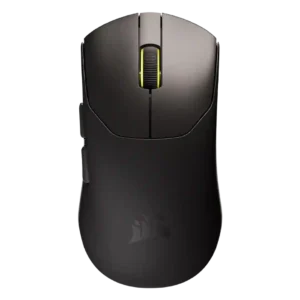
Weight is an overwhelming strength, with reviews repeatedly citing the 56g class body and praising how light it feels for a full-size ergonomic mouse.
Weight is the defining feature of the Sabre V2 Pro, with many reviews emphasizing just how extreme the 36 g design feels in hand.
Wireless latency is consistently praised through 0.291ms claims, 37% lower latency references, low-latency observations, and high-end competitive wireless performance.
Wireless latency is generally strong on paper and in testing, though one technical review also notes some instability at the highest wireless polling rates.
Wireless performance is a major strength, with reviews praising HyperSpeed Gen-2, the redesigned dongle, stable signal behavior, and fast wireless response.
Wireless performance is strong in practice, with reviews reporting stable gameplay, no dropouts, and accurate behavior during fast movement.