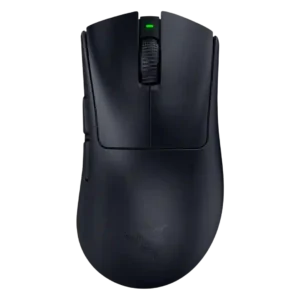
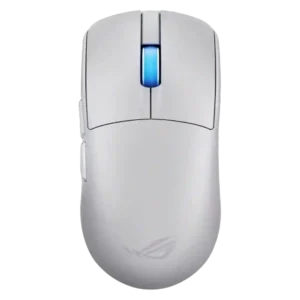
Compare Razer DeathAdder V4 Pro vs ASUS ROG Harpe II Ace

P1 Razer DeathAdder V4 Pro
P2 ASUS ROG Harpe II Ace

Comparison Takeaways

Razer DeathAdder V4 Pro

Where It Has the Edge

  • palm grip comfort is 4.4 vs 3.3. Palm grip comfort is one of the clearest strengths, with the shape repeatedly described as palm-friendly and relaxed.
  • battery life is 4.8 vs 4.4. Battery life earns broad praise at 1,000Hz, commonly cited around 150 hours, though reviewers warn 8,000Hz heavily reduces...
  • macro support is rated 4.0 while the other product has no score yet. Macro support exists through Synapse/Razer Exchange, with reviewers mentioning macros, HyperShift, and downloadable macro workflows.
  • MOBA gaming suitability is rated 4.0 while the other product has no score yet. MOBA suitability has limited direct evidence but is supported by a reviewer citing League of Legends as a...

ASUS ROG Harpe II Ace

Where It Has the Edge

  • Bluetooth support is 4.6 vs 1.0. Bluetooth support is confirmed by many reviews and is useful for productivity or multi-device use, even though competitive...
  • RGB features is 4.2 vs 1.0. RGB support is present but modest, focused mostly on lighting adjustment and the RGB scroll wheel rather than...
  • portability is 4.6 vs 2.2. Portability is supported by the light shell and dongle storage, with reviewers calling it easy to travel with.
  • cable flexibility is 4.5 vs 2.5. The included cable is viewed positively where discussed, with reviewers calling it flexible or useful as a wired...
Average score
Product 1: Razer DeathAdder V4 Pro
4.0
Product 2: ASUS ROG Harpe II Ace
4.4
2.4GHz connectivity
Product 1: Razer DeathAdder V4 Pro
5.0

Reviewers describe the wireless setup as low-latency 2.4GHz plus wired USB-C, with the included 8K dongle positioned as the main competitive connection path.

Product 2: ASUS ROG Harpe II Ace
4.8

2.4GHz connectivity is a major strength because reviewers consistently describe the dongle, 2.4GHz mode, and wireless 8K as core competitive features.

acceleration control
Product 1: Razer DeathAdder V4 Pro
4.4

Dynamic Sensitivity and mouse-acceleration-style controls are repeatedly described as advanced tuning tools for shifting DPI or sensitivity based on hand speed.

Product 2: ASUS ROG Harpe II Ace
5.0

Acceleration control is supported by reviews noting 50G capability and no odd acceleration during exaggerated swipes.

Accuracy and tracking precision
Product 1: Razer DeathAdder V4 Pro
5.0

Tracking precision is a major strength, with reviewers citing 1:1 tracking, clean signal behavior, 99.8% accuracy claims, and accurate on-screen response.

Product 2: ASUS ROG Harpe II Ace
4.9

Reviewers praise the mouse for spot-on fine corrections, stable aim, and reliable precision in practical gaming and tracking tests.

balance and weight distribution
Product 1: Razer DeathAdder V4 Pro
4.5

Reviewers who mention balance say the lighter shell still feels well distributed and does not tip forward or back when lifted.

Product 2: ASUS ROG Harpe II Ace
4.8

Balance is rated highly where discussed, with reviewers noting better hand balance and spot-on weight distribution.

battery life
Product 1: Razer DeathAdder V4 Pro
4.8

Battery life earns broad praise at 1,000Hz, commonly cited around 150 hours, though reviewers warn 8,000Hz heavily reduces runtime.

Product 2: ASUS ROG Harpe II Ace
4.4

Battery life is good at standard polling but mixed at 8K; reviewers cite long 1K runtimes while warning that high polling drains faster.

Bluetooth support
Product 1: Razer DeathAdder V4 Pro
1.0

Bluetooth support is consistently absent; several reviewers explicitly note there is no Bluetooth connection on this esports-focused mouse.

Product 2: ASUS ROG Harpe II Ace
4.6

Bluetooth support is confirmed by many reviews and is useful for productivity or multi-device use, even though competitive play favors 2.4GHz.

build quality
Product 1: Razer DeathAdder V4 Pro
4.7

Build quality is generally praised as solid, stiff, and creak-free despite the very low weight.

Product 2: ASUS ROG Harpe II Ace
4.6

Build quality is praised as solid, rigid, creak-free, and not hollow despite the very low weight.

button customization
Product 1: Razer DeathAdder V4 Pro
4.4

Button and input customization is strong through Synapse, including remapping, DPI settings, dynamic sensitivity, and dongle LED options.

Product 2: ASUS ROG Harpe II Ace
4.7

Button customization is repeatedly praised through Gear Link, including key assignment, button remapping, DPI, lighting, and other mouse settings.

button responsiveness
Product 1: Razer DeathAdder V4 Pro
4.6

Button responsiveness is praised for snappy, clean, immediate actuation suited to competitive play.

Product 2: ASUS ROG Harpe II Ace
4.8

Button responsiveness is strong, with reviewers describing immediate main-key response, quick optical triggering, and consistent clicks.

cable flexibility
Product 1: Razer DeathAdder V4 Pro
2.5

The included cable is considered durable, but one reviewer found it stiff and not ideal for wired play.

Product 2: ASUS ROG Harpe II Ace
4.5

The included cable is viewed positively where discussed, with reviewers calling it flexible or useful as a wired fallback.

charging convenience
Product 1: Razer DeathAdder V4 Pro
4.3

Charging is convenient through USB-C and the mouse can continue operating while plugged in, though there is no charging dock support.

Product 2: ASUS ROG Harpe II Ace
4.5

Charging convenience is positive because reviews mention quick top-ups, play-while-charging, and USB-C fallback use.

claw grip comfort
Product 1: Razer DeathAdder V4 Pro
4.3

Claw grip support is generally positive for users who like the DeathAdder size, though the large ergonomic shape may not suit everyone.

Product 2: ASUS ROG Harpe II Ace
4.6

Claw grip comfort is strongly supported, with many reviewers describing the shape as well suited or easy to use for claw grip.

click latency
Product 1: Razer DeathAdder V4 Pro
5.0

Click latency is treated as excellent, with optical switches, no perceived lag, and virtually no debounce delay.

Product 2: ASUS ROG Harpe II Ace
5.0

Click latency is rated highly because reviewers describe immediate key response, quick optical triggering, and no debounce delay.

click noise
Product 1: Razer DeathAdder V4 Pro
2.4

Click noise is the most repeated tactile complaint, with several reviewers calling the primary clicks loud, hollow, or high-pitched.

Product 2: ASUS ROG Harpe II Ace
3.8

Click noise is only lightly covered; one review says the primary clicks are slightly louder than the predecessor but still quieter than some rivals.

connection stability
Product 1: Razer DeathAdder V4 Pro
4.6

Connection stability is a consistent strength, helped by the redesigned weighted dongle and stronger signal path.

Product 2: ASUS ROG Harpe II Ace
4.8

Connection stability is strong, with stable Bluetooth, lag-free connection, no desyncs, no dropouts, minimal interference, and reliable wireless signal evidence.

cross-platform compatibility
Product 1: Razer DeathAdder V4 Pro
No score yet
Product 2: ASUS ROG Harpe II Ace
4.7

Cross-platform compatibility is positive where discussed, especially browser-based settings and Bluetooth pairing to a MacBook or shared PCs.

debounce customization
Product 1: Razer DeathAdder V4 Pro
4.5

Debounce customization appears in one review via Synapse settings, while other reviews emphasize optical switches that virtually remove debounce delay.

Product 2: ASUS ROG Harpe II Ace
4.7

Debounce customization and behavior are supported through Gear Link's debounce settings and the optical switches' no-debounce-delay design.

dock compatibility
Product 1: Razer DeathAdder V4 Pro
1.0

Dock compatibility is weak because reviewers explicitly say the mouse is not battery-dock compatible and does not support charging or docking.

Product 2: ASUS ROG Harpe II Ace
No score yet
DPI range
Product 1: Razer DeathAdder V4 Pro
5.0

The 45K sensor gives the mouse an extremely high DPI ceiling repeatedly cited as cutting-edge, even if most reviewers call it overkill for normal use.

Product 2: ASUS ROG Harpe II Ace
5.0

The 42K DPI/CPI ceiling is repeatedly cited as very high, often more than most users need but still part of the mouse's pro-grade specification.

durability over time
Product 1: Razer DeathAdder V4 Pro
4.3

Durability evidence is strongest for optical switches, optical scroll wheel, solid internals, and reinforced construction rather than long-term field testing.

Product 2: ASUS ROG Harpe II Ace
4.5

Durability over time is positive where tested, including consistent clicks after days and a pristine shell after weeks.

ecosystem integration
Product 1: Razer DeathAdder V4 Pro
4.0

Ecosystem integration centers on Razer Synapse, HyperShift, Razer Exchange, and dongle controls, though the mouse remains performance-focused rather than feature-rich.

Product 2: ASUS ROG Harpe II Ace
4.2

Ecosystem integration has limited but positive evidence from Gear Link support extending across ROG input devices.

ergonomic design
Product 1: Razer DeathAdder V4 Pro
4.8

The ergonomic right-handed DeathAdder shape is repeatedly praised as natural, comfortable, and palm-friendly.

Product 2: ASUS ROG Harpe II Ace
4.5

The ergonomic design is effective for many players because the flat, tapered, easy-to-lift shape helps the mouse avoid fighting the user's hand.

fingertip grip comfort
Product 1: Razer DeathAdder V4 Pro
3.3

Fingertip grip evidence is mixed: some reviewers found it workable, while others said the large ergonomic body limits fingertip freedom.

Product 2: ASUS ROG Harpe II Ace
4.6

Fingertip grip comfort is also strong because the low hump, lighter shape, and fingertip micro-adjustment support are repeatedly praised.

firmware reliability
Product 1: Razer DeathAdder V4 Pro
2.7

Firmware reliability is mixed: updates can improve battery life, but some reviewers disliked firmware update friction or saw indicator bugs.

Product 2: ASUS ROG Harpe II Ace
No score yet
FPS gaming suitability
Product 1: Razer DeathAdder V4 Pro
4.9

FPS suitability is excellent, with repeated references to CS2, Valorant, Apex, and other shooters benefiting from fast tracking and low latency.

Product 2: ASUS ROG Harpe II Ace
4.9

FPS gaming suitability is very strong, with repeated shooter-focused evidence and praise for competitive, twitchy, or tournament play.

glide smoothness
Product 1: Razer DeathAdder V4 Pro
4.6

Glide smoothness is a major positive, with larger PTFE feet and light weight producing smooth, fluid movement.

Product 2: ASUS ROG Harpe II Ace
4.7

Glide smoothness is consistently praised, with PTFE feet, larger skates, rounded edges, and low-friction movement repeatedly mentioned.

grip texture
Product 1: Razer DeathAdder V4 Pro
4.4

Grip texture is mostly praised for smooth but secure material and included tape, though a few reviewers noted oil marks or residue.

Product 2: ASUS ROG Harpe II Ace
4.3

Grip texture is generally positive thanks to a grippy matte or rubberized feel, but some reviewers mention smoothness, slipperiness, or fingerprinting.

handedness options
Product 1: Razer DeathAdder V4 Pro
1.5

Handedness is a limitation: the mouse is repeatedly described as right-handed only, leaving left-handed users out.

Product 2: ASUS ROG Harpe II Ace
3.5

Handedness is mixed: some reviews call the shape ambidextrous or left-hander usable, while others note left-side buttons make it more right-handed.

left and right click quality
Product 1: Razer DeathAdder V4 Pro
4.5

Left and right clicks feel responsive, light, firm, and accurate, though some reviewers dislike the louder sound.

Product 2: ASUS ROG Harpe II Ace
4.7

Left and right click quality is positive, with precise feedback and consistent main-button implementation noted in reviews.

lift-off distance
Product 1: Razer DeathAdder V4 Pro
4.6

Lift-off controls are strong in Synapse, with separate lift-off/landing distance, asymmetric cut-off, and surface calibration mentioned.

Product 2: ASUS ROG Harpe II Ace
4.3

Lift-off distance is configurable or measured as low, with Gear Link support for lift-off settings and manual calibration contexts.

long-session comfort
Product 1: Razer DeathAdder V4 Pro
4.7

Long-session comfort is a strength thanks to the ergonomic shape, low weight, and familiar DeathAdder contour.

Product 2: ASUS ROG Harpe II Ace
4.8

Long-session comfort is positive for wrist and fatigue reduction, though broader comfort still depends on grip style and hand size.

macro support
Product 1: Razer DeathAdder V4 Pro
4.0

Macro support exists through Synapse/Razer Exchange, with reviewers mentioning macros, HyperShift, and downloadable macro workflows.

Product 2: ASUS ROG Harpe II Ace
No score yet
materials quality
Product 1: Razer DeathAdder V4 Pro
4.3

Materials quality is generally positive, with recycled materials and soft matte plastic noted, though plastic can feel less premium to some.

Product 2: ASUS ROG Harpe II Ace
4.5

Materials quality is strong, with repeated mentions of the bio-based nylon shell feeling solid, rigid, premium, and weight-efficient.

MMO gaming suitability
Product 1: Razer DeathAdder V4 Pro
2.0

MMO suitability is limited because reviewers point out the mouse lacks the many buttons MMO players often want.

Product 2: ASUS ROG Harpe II Ace
2.0

MMO suitability is weak because the limited button count is explicitly described as restrictive for MMO gamers.

MOBA gaming suitability
Product 1: Razer DeathAdder V4 Pro
4.0

MOBA suitability has limited direct evidence but is supported by a reviewer citing League of Legends as a target competitive use case.

Product 2: ASUS ROG Harpe II Ace
No score yet
motion consistency
Product 1: Razer DeathAdder V4 Pro
4.7

Motion consistency is praised through faultless tracking, clean signal, consistent wireless behavior, and smooth cursor response.

Product 2: ASUS ROG Harpe II Ace
4.9

Motion consistency is a major positive, with evidence of stable flicks, steady tracking, limited jitter, motion sync, and reliable wireless signal behavior.

onboard memory
Product 1: Razer DeathAdder V4 Pro
No score yet
Product 2: ASUS ROG Harpe II Ace
1.5

Onboard memory is a weakness because one review explicitly says profiles are not stored permanently on the mouse.

palm grip comfort
Product 1: Razer DeathAdder V4 Pro
4.4

Palm grip comfort is one of the clearest strengths, with the shape repeatedly described as palm-friendly and relaxed.

Product 2: ASUS ROG Harpe II Ace
3.3

Palm grip comfort is mixed: some users can palm it, but large-hand palm reviewers often prefer fuller ergonomic alternatives.

polling rate
Product 1: Razer DeathAdder V4 Pro
4.8

Polling-rate support is flagship level, with 8,000Hz wired/wireless repeatedly cited, though reviewers debate whether most users can feel the benefit.

Product 2: ASUS ROG Harpe II Ace
5.0

Reviewers strongly confirm 8K polling support, including wireless 8K without an external booster, making polling rate one of the clearest upgrades.

portability
Product 1: Razer DeathAdder V4 Pro
2.2

Portability is a weakness because the large wired dongle, lack of Bluetooth, and large shape make travel or laptop use less convenient.

Product 2: ASUS ROG Harpe II Ace
4.6

Portability is supported by the light shell and dongle storage, with reviewers calling it easy to travel with.

premium feel
Product 1: Razer DeathAdder V4 Pro
3.8

Premium feel is mixed: some reviewers praised the smooth coating as premium, while another found the plastic chassis less premium.

Product 2: ASUS ROG Harpe II Ace
4.6

Premium feel is strongly positive, with reviewers noting high-quality impressions, polish, top-tier build quality, and a premium rigid shell.

profile switching
Product 1: Razer DeathAdder V4 Pro
4.0

Profile switching support is present through Synapse game profiles and power-saving profiles, but it is not a major physical-control focus.

Product 2: ASUS ROG Harpe II Ace
4.6

Profile and mode switching is a strength through Zone Mode and performance profiles that can shift DPI, polling, lighting, and active-state behavior.

programmable buttons
Product 1: Razer DeathAdder V4 Pro
4.0

Programmable button support is adequate for an esports mouse, with six programmable buttons/eight inputs, but it lacks abundant extra controls.

Product 2: ASUS ROG Harpe II Ace
4.6

Programmable button support is good, with freely assignable buttons and remapping through Gear Link, though the button count remains modest.

RGB features
Product 1: Razer DeathAdder V4 Pro
1.0

RGB features are essentially absent on the mouse, which helps battery life but disappoints users who want lighting.

Product 2: ASUS ROG Harpe II Ace
4.2

RGB support is present but modest, focused mostly on lighting adjustment and the RGB scroll wheel rather than elaborate lighting effects.

scroll wheel quality
Product 1: Razer DeathAdder V4 Pro
4.4

Scroll-wheel quality is broadly praised for optical precision, anti-ghosting, tighter feel, and better durability than prior wheels.

Product 2: ASUS ROG Harpe II Ace
4.3

The scroll wheel is generally precise, tactile, smooth, and quiet, but it lacks extra productivity features such as horizontal tilt.

sensor performance
Product 1: Razer DeathAdder V4 Pro
5.0

Sensor performance is a standout strength, with reviewers repeatedly calling the Focus Pro 45K smooth, accurate, fast, and faultless.

Product 2: ASUS ROG Harpe II Ace
4.9

The AimPoint Pro sensor is consistently treated as a flagship strength, with reviewers describing excellent tracking, high precision, and no meaningful sensor complaints.

shape comfort
Product 1: Razer DeathAdder V4 Pro
4.8

Shape comfort is very strong for right-handed ergonomic preferences, though the large DeathAdder shape is not universal.

Product 2: ASUS ROG Harpe II Ace
4.5

Shape comfort is broadly positive for its low, neutral, refined shell, though several reviews stress that shape preference remains personal.

side button quality
Product 1: Razer DeathAdder V4 Pro
4.6

Side button quality is a consistent improvement, with separated, accessible, responsive buttons that reduce accidental presses.

Product 2: ASUS ROG Harpe II Ace
4.5

Side button quality is generally strong, with praise for spacing, crispness, placement, and low travel, though one reviewer found them small for long fingers.

skate durability
Product 1: Razer DeathAdder V4 Pro
No score yet
Product 2: ASUS ROG Harpe II Ace
4.5

Skate durability evidence is limited but positive, mainly from the reviewer describing the stock feet as super thick.

software stability
Product 1: Razer DeathAdder V4 Pro
2.3

Software stability is mixed to weak, with reports of Synapse not recognizing the mouse and heavy background memory use.

Product 2: ASUS ROG Harpe II Ace
3.2

Software stability is mixed because Gear Link is responsive, but one reviewer worries about settings depending on an online service.

software usability
Product 1: Razer DeathAdder V4 Pro
3.9

Software usability is mixed but mostly useful: Synapse offers deep controls and explanations, while bloat and update friction remain concerns.

Product 2: ASUS ROG Harpe II Ace
4.7

Software usability is a major positive because Gear Link is described as web-based, clear, intuitive, responsive, resource-saving, and easier than Armoury Crate.

surface compatibility
Product 1: Razer DeathAdder V4 Pro
4.7

Surface compatibility is strong, with reviewers reporting successful tracking across mousepads, desks, glass, paper, foil, and other surfaces.

Product 2: ASUS ROG Harpe II Ace
4.8

Surface compatibility is strong, with track-on-glass, surface calibration, and good tracking across glass, cloth, hard, wood, and other surfaces.

switch durability
Product 1: Razer DeathAdder V4 Pro
4.7

Switch durability is strong on paper, with Gen-4 optical switches repeatedly rated for 100 million clicks.

Product 2: ASUS ROG Harpe II Ace
4.9

Switch durability is strongly supported by the repeated 100-million-click rating and durable optical switch references.

switch feel
Product 1: Razer DeathAdder V4 Pro
4.2

Switch feel is generally crisp and tactile, but some reviewers dislike the loud or metallic sound.

Product 2: ASUS ROG Harpe II Ace
4.5

Switch feel is broadly praised as crisp, clicky, consistent, and better implemented than some optical-switch rivals.

tilt gesture controls
Product 1: Razer DeathAdder V4 Pro
No score yet
Product 2: ASUS ROG Harpe II Ace
1.5

Tilt gesture controls are weak because one review explicitly says the wheel does not tilt horizontally or spin freely.

value for money
Product 1: Razer DeathAdder V4 Pro
3.2

Value for money is mixed: the performance is often considered worth it for serious players, while casual buyers may not need the expensive tech.

Product 2: ASUS ROG Harpe II Ace
4.0

Value for money is mixed: reviewers call it premium or not cheap, but several also say it is competitive against flagship rivals.

weight
Product 1: Razer DeathAdder V4 Pro
4.9

Weight is a major strength, with the mouse repeatedly measured around 56g and praised as light for a large ergonomic shape.

Product 2: ASUS ROG Harpe II Ace
5.0

Weight is one of the strongest advantages, with most reviewers citing roughly 48 grams and some measuring around 46 to 47.5 grams.

wireless latency
Product 1: Razer DeathAdder V4 Pro
5.0

Wireless latency is a flagship strength, with reviewers citing 0.291ms claims, no perceived lag, and improved Gen-2 HyperSpeed latency.

Product 2: ASUS ROG Harpe II Ace
5.0

Wireless latency is one of the product's core strengths, with reviewers describing low-latency or instant wireless response.

wireless performance
Product 1: Razer DeathAdder V4 Pro
4.9

Wireless performance is excellent overall, with reviewers praising HyperSpeed Gen-2 efficiency, responsiveness, and competitive-grade signal behavior.

Product 2: ASUS ROG Harpe II Ace
5.0

Wireless performance is excellent across reviews, with 8K wireless, strong 2.4GHz behavior, and no meaningful in-game wireless issues reported.