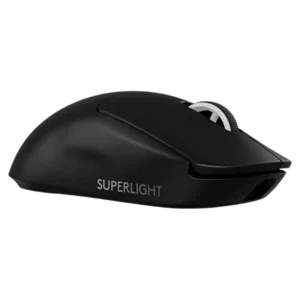
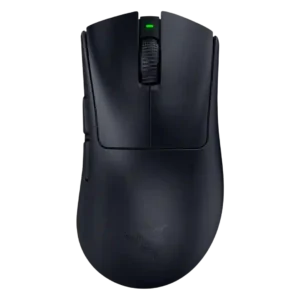
The reviews that mention the radio link describe standard low-latency 2.4GHz wireless through a USB dongle or receiver. No review raised a 2.4GHz-specific connection problem.
The transcript support for this attribute points to the mouse using low-latency 2.4GHz wireless plus wired USB-C rather than Bluetooth.
Acceleration-related evidence is mostly specification and sensor behavior evidence: reviews cite 40G capability, smooth acceleration in play, and zero smoothing, acceleration, and filtering. This supports strong motion control rather than a user-facing acceleration adjustment.
Multiple reviews describe Dynamic Sensitivity, mouse rotation, sensitivity matching, or acceleration-style tuning as useful pro controls, though a few note that these tools require practice or may not suit every player.
Tracking accuracy is one of the clearest strengths. Reviewers repeatedly described accurate aiming, perfect tracking, precise high-DPI control, and snappy responsiveness in FPS and general gaming.
Reviewers consistently describe the mouse as precise, lag-free, and trustworthy, with several tying that accuracy to smooth cursor movement, clean inputs, and reliable tracking in games.
The mouse is repeatedly described as light yet controlled, with reviewers noting a substantial feel, good weight balance, and a balanced 60g body for its size.
The mouse is described as well balanced despite its low weight, with reviewers noting that its balance helps it avoid feeling dense, front-heavy, or awkward in hand.
Battery life is generally strong, with several reviews citing roughly 90-95 hours at lower polling rates. Higher polling rates reduce runtime substantially, but reviewers still found battery life acceptable to excellent.
Battery life is one of the strongest recurring positives: reviews repeatedly cite or validate long endurance at 1,000Hz, while also noting the sharp drop when 8,000Hz polling is used.
Bluetooth support is a clear weakness. Reviews explicitly say the mouse lacks Bluetooth and relies on low-latency 2.4GHz wireless instead.
Reviews consistently state that Bluetooth is absent, so this scores poorly for Bluetooth support even though reviewers often accept the omission for an esports-focused mouse.
Build quality is consistently praised. Reviewers describe a solid shell with no rattling, creaking, flexing, or squeaking, and several note that the lightweight body still feels sturdy.
Build quality is broadly praised, with reviewers noting sturdier sidewalls, little to no creaking or flex, solid construction, and a lightweight shell that does not feel fragile.
Button customization is strong through G Hub. Reviews mention remapping all buttons and assigning one of the five buttons to DPI or other functions, though the lack of a dedicated DPI button creates friction.
The mouse supports button remapping and related Synapse controls, but customization is limited by the simple physical button layout and bottom-mounted DPI control.
Button responsiveness is a strength, especially for the primary clicks. Reviews praise crisp, tactile, responsive clicks, though some reviewers disliked the heavier actuation feel.
Button responsiveness is rated highly because reviewers repeatedly describe clicks as snappy, quick, instantly registered, and suitable for fast gameplay.
The included cable is a recurring drawback. Multiple reviews describe it as rubberized, draggy, or inferior to modern braided/paracord-style cables, especially for wired play.
Cable feedback is mixed but generally acceptable: one review praises the included braided cable, while another frames the braided cable mainly as part of the dongle and charging setup.
Charging convenience is much improved by USB-C. Reviewers repeatedly call out the move from Micro USB to USB-C, and one review notes fast 0-100% charging.
Charging is reasonably convenient through USB-C and wired-use support, but reviews note that there is no dock-based charging option.
Claw grip comfort is broadly positive. Reviews say the familiar Superlight shape works well for claw grip, though a few users with stronger shape preferences found the rounded body less ideal.
The mouse is described as workable for claw grip by reviewers who also emphasize its right-handed ergonomic shape and adaptable grip feel.
Click latency is generally viewed as low and competitive, helped by optical or optical-only switch modes. One technical review found the result less impressive than some competitors, so the score is strong but not flawless.
The supported reviews describe click latency as extremely low or essentially absent, reinforcing its competitive-gaming focus.
Click noise is mixed. Some reviewers liked the satisfying tactile sound, while others found the clicks louder, bassier, or high-pitched compared with lighter gaming mouse clicks.
Click sound is the clearest recurring complaint: several reviewers describe the main clicks as loud, hollow, pingy, metallic, or divisive even when they like the feel.
Connection stability is excellent in the reviews that directly address it. Reviewers reported no connectivity issues and stable performance even in a difficult RF environment.
Connection stability is a major strength, with reviews highlighting reliable wireless transmission, no drops, solid signal behavior, and useful dongle feedback.
Cross-platform compatibility is supported by macOS and Windows references. The evidence is limited but positive.
Reviewers mention debounce delay improvements or debounce-related settings, usually in the context of optical switches and Synapse configuration.
PowerPlay compatibility is a notable ecosystem perk. Reviews mention compatibility with PowerPlay mats or wireless charging pucks, although some note the accessory adds cost or weight.
The mouse scores poorly here because reviews explicitly say it lacks charging-dock support or removed prior dock-style conveniences.
DPI range is very high. Reviews cite 32,000 DPI on most units and 44,000 CPI/DPI on updated-firmware coverage, while often noting that most players will not need such extreme values.
The 45K DPI ceiling and fine DPI adjustment appear throughout the reviews, making DPI range one of the most heavily supported strengths.
Drag click support receives only one direct mention, where the reviewer says the coating is grippy enough to drag click. The evidence is positive but narrow.
Durability evidence centers on the optical-mechanical switches and solid shell. Reviews expect fewer double-click problems and report sturdy construction, while a few mention possible long-term skate or creak concerns.
Long-term durability support is positive but narrower, based mainly on optical internals, low-wear design choices, and comments that failures seem unlikely.
Ecosystem integration is good through G Hub, PowerPlay, onboard profiles, and Logitech community profiles. Reviewers highlight the software-hardware connection more than any broader device ecosystem.
Razer ecosystem support comes through Synapse and Razer Exchange, with reviewers treating software integration as useful for tuning and workflow features.
Ergonomics are broadly safe and comfortable, especially for small-to-medium or general hand sizes. Some reviews note the shape is not deeply ergonomic or ideal for large hands.
Ergonomics are a core strength: reviewers repeatedly praise the familiar right-handed DeathAdder shape, palm support, and comfortable sculpting.
Fingertip grip comfort is generally positive, with several reviewers using or recommending it for fingertip grip. A few shape-focused reviewers still prefer flatter or more contoured alternatives.
Fingertip comfort is more mixed than palm or claw grip because at least one reviewer found the larger ergonomic body less ideal for a fingertip-focused style.
Firmware support is directly mentioned in one review as part of unlocking or improving battery-life behavior, but this attribute has limited evidence.
FPS suitability is one of the product’s strongest areas. Reviews repeatedly frame it as a competitive FPS mouse with fast tracking, low weight, low latency, and a proven shape.
FPS suitability is one of the strongest areas, with many reviews connecting the mouse to CS2, shooters, esports, precision aiming, fast clicks, and competitive play.
Glide smoothness is mixed. Many reviews praise PTFE feet and smooth movement, but several enthusiast reviewers criticize the stock skates as thin, slow, or draggy on softer pads.
Glide is consistently praised through comments about PTFE feet, larger skates, fluid movement, smooth desk or mousepad travel, and effortless swipes.
Grip texture is a strength. Reviewers praise the matte coating, grippier surface, optional grip tape, and secure hand feel, especially for sweaty or clammy hands.
The surface texture and included grip tape are usually praised for providing secure control, though a few reviews note oil marks or differing coating preferences.
Handedness options are limited. The symmetrical or ambidextrous shape helps left-handed use, but the side buttons remain on the left side only, reducing true left-handed functionality.
Handedness scores low because reviewers repeatedly describe the mouse as right-handed only and not suitable for left-handed users.
Left and right click quality is strong overall, with reviewers praising tactile, crisp, and responsive main clicks. The heavier click feel can be divisive for spam-heavy games.
Primary click feel is generally strong and well balanced, with reviewers praising responsiveness and actuation even when click noise is criticized.
Lift-off distance control is well supported through G Hub, with reviewers mentioning low, medium, high, per-DPI, or general lift-off adjustment options.
Lift-off and landing-distance controls are supported through Synapse calibration, asymmetric cut-off, and Smart Tracking features.
Long-session comfort is strong thanks to the low weight and familiar shape. Reviewers mention extended-session comfort and reduced hand fatigue.
Long-session comfort is supported by reviews describing comfort over extended use, pressure, sweat, fatigue, and long-term gaming or navigation sessions.
Macro support is supported through G Hub’s macro tool. The evidence is positive but mostly from one detailed software review.
Macro and secondary-function support is present through HyperShift, Synapse, and Razer Exchange, although the limited button count constrains how much users can assign.
Materials quality is positive overall. Reviews praise the matte plastic, solid shell, and premium-feeling casing, while noting the cable and stock skates feel less premium.
Material quality is mostly positive due to recycled plastic, bio-based materials, rigidity, and texture, but one review notes the plastic can feel less premium.
MMO suitability is weak because the mouse has few buttons. The clearest review evidence says users who need double-digit peripheral buttons will not be satisfied.
MMO suitability is weak because the simple two-side-button layout is repeatedly described as insufficient for MMO players who want many commands.
MOBA suitability is mixed. Some reviews liked it across multiple genres, while others found the heavier clicks less ideal for rapid spam-clicking in RTS/MOBA-style play.
MOBA support is limited but positive where mentioned, with the mouse positioned as suitable for competitive play including League of Legends.
Motion consistency is strong. Reviews cite no smoothing or filtering, smooth implementation, sharp motion, and even PTFE movement that improves aiming consistency.
Motion consistency is strongly supported by comments about smooth movement, accurate hand-to-cursor translation, stable tracking, and responsive motion.
Onboard memory is a useful strength. Reviews confirm profiles and settings can be saved to the mouse, with up to five profiles mentioned.
Palm grip comfort is good for many users but not universal. Some reviews found the shape comfortable for palm grip, while one noted palm players may be better served elsewhere.
Palm grip comfort is generally strong, especially for users who like the DeathAdder shape, though one reviewer with larger hands found full palm use less ideal.
Polling rate is a major spec upgrade, ranging from 2,000Hz in many reviews to 4,000Hz or 8,000Hz in updated coverage. Some reviewers still wished Logitech had pushed higher earlier.
Polling-rate support is one of the headline strengths, with many reviews citing 8K wired or wireless polling, Smart Polling switching, and high-performance modes.
Portability is helped by low weight and dongle storage. Evidence is positive but limited to a few reviews.
Portability is a weakness because reviews often describe the large dongle, lack of Bluetooth, and travel inconvenience as compromises.
Premium feel is strong. Reviewers describe sturdy, premium, luxury-like construction and a high-quality coating, even if the minimalist design is visually plain.
Premium feel is supported by reviewers who describe the mouse as slick, technically impressive, and premium, even while noting its plain appearance or high price.
Profile switching is supported through program-based profiles, app-linked settings, G-Shift, and software profile controls. The lack of onboard DPI/profile buttons keeps it from being perfect.
Profile and polling-switching support is well documented through Synapse profiles, game-linked settings, Smart Polling Rate switching, and per-game behavior.
Programmable buttons are supported, with reviews noting five programmable buttons and full remapping. The total button count is intentionally minimal.
Programmable-button support exists, but reviewers frame the mouse as simple and sparse rather than button-rich.
RGB features are absent by design. Reviews repeatedly state there is no RGB lighting, often framing it as a tradeoff for lower weight and longer battery life.
RGB scores very low because reviews repeatedly state that the mouse lacks RGB lighting or customizable lighting, often by design to save weight and power.
Scroll wheel quality is mixed. Some reviewers found it precise or smoother, while others criticized it as stiff, flimsy, mushy, or less tactile than the original.
The optical scroll wheel is a major upgrade across reviews, with praise for precision, tactile steps, durability, anti-ghosting, and better reliability than older wheels.
Sensor performance is excellent across the review set. Reviewers praise HERO 2 speed, accuracy, responsiveness, and high-end implementation for competitive gaming.
Sensor performance is one of the highest-confidence strengths, with reviewers praising the Focus Pro 45K sensor, smoothness, speed, tracking, and high-end accuracy.
Shape comfort is one of the mouse’s defining strengths. Reviews call the shape safe, familiar, and comfortable across many hand sizes and grip styles, though not exciting to everyone.
Shape comfort is broadly positive because the familiar DeathAdder shell is repeatedly described as comfortable, safe, and well suited to many right-handed users.
Side button quality is one of the more common complaints. Some reviews find them well placed or improved, but many describe them as mushy or unchanged from the prior model.
Side-button quality is a recurring strength thanks to better spacing, easier identification, responsive feel, and reduced accidental presses.
Skate durability is a concern. Enthusiast reviews often describe the PTFE feet as thin, paper-like, or potentially short-lived, even when glide remains usable.
Software stability receives limited direct evidence, but the available review text says G Hub is stable and clean. Other reviews complain more about usability than stability.
Software stability is mixed: reviewers value Synapse features, but several mention bugs, bloat, firmware friction, or resource use.
Software usability is mixed. Some reviews call G Hub intuitive, powerful, and easy to navigate; others find it convoluted, hidden behind obscure menus, or frustrating for DPI changes.
Software usability is mostly positive because Synapse exposes deep tuning for DPI, polling, lift-off, rotation, macros, and profiles, though some reviews still find it imperfect.
Surface compatibility is good where tested or configurable. Reviews mention surface modes, smooth movement across varied surfaces, and lift-off/surface tuning.
Surface compatibility is well supported by testing across mousepads, desks, glass, and calibration features, with most reviews reporting reliable tracking.
Switch durability is a strong upgrade. Reviews repeatedly connect the Lightforce optical-mechanical design with reduced double-click risk, wear resistance, and long rated actuation life.
Switch durability is strong thanks to optical Gen-4 switches, 100-million-click ratings, and comments about debounce or durability benefits.
Switch feel is divisive but generally positive. Reviewers praise tactile, satisfying, crisp clicks, while some dislike the heavier actuation for fast tapping.
Switch feel is generally positive because reviewers praise lighter, crisp, firm, and consistent actuation, though this is separate from the louder click sound.
Value is mixed. Reviewers often call the mouse expensive and a modest upgrade over the original, but many still justify it for competitive players who want the latest Superlight performance.
Value is mixed: reviewers generally respect the performance, but many question the high price, especially for casual users or V3 Pro owners.
Weight is a major strength. Reviews consistently place the mouse around 58-60g or 2.1oz and praise how light it feels for its size and solid shell.
Weight is an overwhelming strength, with reviews repeatedly citing the 56g class body and praising how light it feels for a full-size ergonomic mouse.
Weight tuning is limited but present through the removable puck or PowerPlay puck area. The adjustment is small, usually about a gram or so.
Wireless latency is excellent in most hands-on reviews, with reviewers reporting no lag, no latency issues, or improved responsiveness. A few found the difference between polling rates hard to perceive.
Wireless latency is consistently praised through 0.291ms claims, 37% lower latency references, low-latency observations, and high-end competitive wireless performance.
Wireless performance is excellent overall. Reviewers praise seamless wireless play, no faltering, no connectivity issues, and reliable 2.4GHz operation.
Wireless performance is a major strength, with reviews praising HyperSpeed Gen-2, the redesigned dongle, stable signal behavior, and fast wireless response.