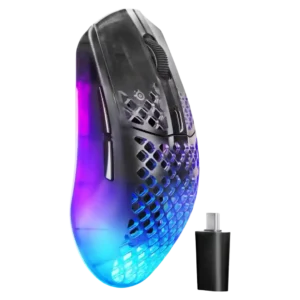
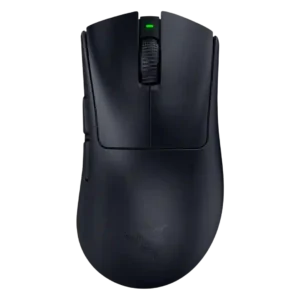
acceleration control
P1
Product 1: SteelSeries Aerox 3 Wireless Gen...
4.3
Acceleration and precision controls were viewed as useful advanced tuning options, especially for players who want movement behavior matched to their style.
P2
Product 2: Razer DeathAdder V4 Pro
4.4
Dynamic sensitivity and acceleration-style controls were often praised as powerful or useful, although some reviewers found them hard to explain or practice-dependent.
Accuracy and tracking precision
P1
Product 1: SteelSeries Aerox 3 Wireless Gen...
4.7
Reviewers repeatedly praised accurate tracking, precise headshots, and clean fast-flick behavior, with only high-DPI settings sometimes needing adjustment.
P2
Product 2: Razer DeathAdder V4 Pro
5.0
Reviewers consistently praised the mouse's accurate 1:1 tracking, with aim, flicks, and fine movement described as precise and trustworthy.
balance and weight distribution
P1
Product 1: SteelSeries Aerox 3 Wireless Gen...
3.4
Balance impressions were split: one reviewer found it spot-on, while another felt the internals made the mouse rear-weighted.
P2
Product 2: Razer DeathAdder V4 Pro
4.8
Balance and weight distribution were praised where reviewers said the mouse felt well balanced and easy to control despite its size.
battery life
P1
Product 1: SteelSeries Aerox 3 Wireless Gen...
4.2
Battery life was broadly strong at 1K/Bluetooth, but reviewers consistently noted the 4K polling and RGB tradeoff.
P2
Product 2: Razer DeathAdder V4 Pro
4.6
Battery life was a major strength at 1,000Hz, with repeated praise for long endurance, while 8,000Hz drain was the main caveat.
Bluetooth support
P1
Product 1: SteelSeries Aerox 3 Wireless Gen...
4.3
Bluetooth support was valued for versatility and travel, but reviewers noted advanced performance settings are limited outside 2.4GHz or wired mode.
P2
Product 2: Razer DeathAdder V4 Pro
2.4
Bluetooth support was a recurring limitation; some reviewers did not mind, but others called the omission disappointing for versatility.
build quality
P1
Product 1: SteelSeries Aerox 3 Wireless Gen...
4.5
Build quality was generally praised for fit, finish, solid shell feel, no creaking, and improved construction.
P2
Product 2: Razer DeathAdder V4 Pro
4.7
Build quality was widely praised for rigidity, lack of creaking, and a solid shell despite low weight.
button customization
P1
Product 1: SteelSeries Aerox 3 Wireless Gen...
4.6
Button customization was praised through GG software, free configuration, remapping options, and practical use of side buttons in daily workflows.
P2
Product 2: Razer DeathAdder V4 Pro
4.5
Button customization was praised through Synapse and Hypershift options, especially for users willing to configure the mouse.
button responsiveness
P1
Product 1: SteelSeries Aerox 3 Wireless Gen...
4.6
Button responsiveness was generally strong, with reviewers describing the buttons as clicky, responsive, crisp, and easy to press.
P2
Product 2: Razer DeathAdder V4 Pro
4.9
Button responsiveness was consistently strong, with reviewers reporting snappy clicks, instant registration, and responsive side buttons.
cable flexibility
P1
Product 1: SteelSeries Aerox 3 Wireless Gen...
4.6
Cable flexibility was praised for the Super Mesh or braided cable, with reviewers finding it smooth, flexible, and useful on the desk.
P2
Product 2: Razer DeathAdder V4 Pro
3.8
Cable feedback was mixed: reviewers liked the braided included cable, but some found it stiff or not ideal for wired play.
charging convenience
P1
Product 1: SteelSeries Aerox 3 Wireless Gen...
4.2
Charging convenience was positive overall thanks to wired-use charging and long cables, though peak-performance polling requires more frequent charging.
P2
Product 2: Razer DeathAdder V4 Pro
4.0
Charging convenience was positive where reviewers noted cable charging was easy and the mouse could continue working while plugged in.
claw grip comfort
P1
Product 1: SteelSeries Aerox 3 Wireless Gen...
4.1
Claw grip comfort was the strongest grip-style fit, with several reviewers saying the shape comes alive or works best in claw grip.
P2
Product 2: Razer DeathAdder V4 Pro
4.1
Claw-grip comfort was generally positive but more context-dependent than palm grip because the larger ergonomic shape does not suit everyone equally.
click latency
P1
Product 1: SteelSeries Aerox 3 Wireless Gen...
4.8
One reviewer specifically praised the click response as hair-trigger fast, supporting a strong click-latency score.
P2
Product 2: Razer DeathAdder V4 Pro
5.0
Click latency evidence was strongly positive where reviewers described instant registration and no lag in button inputs.
click noise
P1
Product 1: SteelSeries Aerox 3 Wireless Gen...
4.1
Click noise drew mixed but mostly positive comments: one reviewer loved the sound, another found switches loud, and one noted a quieter scroll wheel.
P2
Product 2: Razer DeathAdder V4 Pro
2.4
Click noise was the most common tactile complaint, with many reviewers describing the main clicks as loud, hollow, pingy, or annoying.
connection stability
P1
Product 1: SteelSeries Aerox 3 Wireless Gen...
4.8
Connection stability was positive in the limited direct evidence, with reviewers reporting stable modes and reliable connection behavior.
P2
Product 2: Razer DeathAdder V4 Pro
4.7
Connection stability was strongly praised through no-drop testing, stable dongle behavior, and reliable transmission.
cross-platform compatibility
P1
Product 1: SteelSeries Aerox 3 Wireless Gen...
4.5
Cross-platform evidence was positive but limited, tied to easy device connectivity and onboard profiles that simplify software-free use.
P2Product 2: Razer DeathAdder V4 Pro
No score yetDPI range
P1
Product 1: SteelSeries Aerox 3 Wireless Gen...
4.0
The 26K DPI range was valued for flexibility and on-the-fly tuning, though several reviewers said extreme DPI levels could feel jumpy or unnecessary.
P2
Product 2: Razer DeathAdder V4 Pro
5.0
The extreme DPI ceiling was valued by reviewers who cared about surgical tuning and peak sensor headroom.
durability over time
P1
Product 1: SteelSeries Aerox 3 Wireless Gen...
4.5
Durability was praised through drop resistance, rugged shell impressions, travel toughness, and confidence in daily abuse.
P2
Product 2: Razer DeathAdder V4 Pro
4.3
Durability over time was cautiously positive where reviewers cited optical-wheel longevity and internals unlikely to fail prematurely.
ergonomic design
P1
Product 1: SteelSeries Aerox 3 Wireless Gen...
4.4
Ergonomic design was praised by reviewers with smaller hands and those who liked the flat symmetrical shape, but it is not universal.
P2
Product 2: Razer DeathAdder V4 Pro
4.9
Ergonomic design drew strong praise for comfort, palm support, and competitive-friendly shaping.
fingertip grip comfort
P1
Product 1: SteelSeries Aerox 3 Wireless Gen...
3.2
Fingertip comfort was divisive, with some reviewers grouping it with claw-friendly use and others finding the flared rear awkward.
P2
Product 2: Razer DeathAdder V4 Pro
3.4
Fingertip comfort was mixed: some reviewers said it worked, while others found the large body limiting or intrusive.
FPS gaming suitability
P1
Product 1: SteelSeries Aerox 3 Wireless Gen...
4.7
FPS suitability was a standout strength, with reviewers repeatedly praising shooter responsiveness, tracking, and competitive capability.
P2
Product 2: Razer DeathAdder V4 Pro
4.9
FPS gaming suitability was extremely strong, with reviewers praising CS2, Fortnite, Valorant-style precision, and esports-focused responsiveness.
glide smoothness
P1
Product 1: SteelSeries Aerox 3 Wireless Gen...
4.5
Glide smoothness was consistently praised on mousepads and desks, with PTFE feet described as smooth, snag-free, and reliable.
P2
Product 2: Razer DeathAdder V4 Pro
4.6
Glide smoothness was heavily praised, with reviewers describing liquid, effortless, or very smooth movement across pads and surfaces.
grip texture
P1
Product 1: SteelSeries Aerox 3 Wireless Gen...
3.6
Grip texture was split: some found the rougher texture grippy and improved, while others found the sides slippery or not grippy enough.
P2
Product 2: Razer DeathAdder V4 Pro
4.8
Grip texture was praised for secure control without abrasion, though some reviewers relied on included grip tape or noted surface marks.
left and right click quality
P1
Product 1: SteelSeries Aerox 3 Wireless Gen...
4.5
Main click quality was praised by reviewers who found the left/right clicks satisfying, solid, and consistent.
P2
Product 2: Razer DeathAdder V4 Pro
4.3
Left and right click quality was mostly positive for crisp, responsive clicks, with some caveats around hollow sound.
long-session comfort
P1
Product 1: SteelSeries Aerox 3 Wireless Gen...
4.3
Long-session comfort was generally positive due to low weight and comfort, though at least one reviewer reported hand or pinky discomfort.
P2
Product 2: Razer DeathAdder V4 Pro
4.8
Long-session comfort was praised for extended play and fatigue management.
macro support
P1
Product 1: SteelSeries Aerox 3 Wireless Gen...
4.4
Macro support was only clearly evaluated in one review, where automatic game profiles applying macros was treated as useful.
P2
Product 2: Razer DeathAdder V4 Pro
4.5
Macro support received positive evidence where reviewers found assigning downloadable or preset macros straightforward.
materials quality
P1
Product 1: SteelSeries Aerox 3 Wireless Gen...
4.6
Materials quality was positive where discussed, with reviewers calling out quality plastics and carefully assembled elements.
P2
Product 2: Razer DeathAdder V4 Pro
3.0
Materials quality was mixed, combining praise for soft matte recycled plastic with complaints about oil marks or less-premium impressions.
motion consistency
P1
Product 1: SteelSeries Aerox 3 Wireless Gen...
4.8
Motion consistency was praised in gaming and daily use, with reviewers reporting smooth movement and no missed tracking.
P2
Product 2: Razer DeathAdder V4 Pro
5.0
Motion consistency was praised for sleek, smooth swipes and a cursor feel that tracked hand motion cleanly.
onboard memory
P1
Product 1: SteelSeries Aerox 3 Wireless Gen...
4.3
Onboard memory was seen as practical because saved profiles can make settings easier to carry across systems without software.
P2
Product 2: Razer DeathAdder V4 Pro
2.0
Onboard memory drew a negative review because one reviewer found the single profile disappointing for the price.
palm grip comfort
P1
Product 1: SteelSeries Aerox 3 Wireless Gen...
3.0
Palm grip comfort was mixed-to-negative overall; smaller-hand palm use worked for one reviewer, but several said larger palm-grip users should look elsewhere.
P2
Product 2: Razer DeathAdder V4 Pro
4.1
Palm-grip comfort was generally strong, though one reviewer with large hands found scroll-wheel reach awkward in full palm grip.
polling rate
P1
Product 1: SteelSeries Aerox 3 Wireless Gen...
4.5
The 4K polling rate was widely treated as a major performance upgrade, especially for competitive play, though a few reviewers called it a nice-to-have for casual use.
P2
Product 2: Razer DeathAdder V4 Pro
4.3
8,000Hz polling was viewed as cutting-edge and useful for esports, but several reviewers said many casual players may barely notice it and it hurts battery life.
portability
P1
Product 1: SteelSeries Aerox 3 Wireless Gen...
4.1
Portability was strong for travel durability and Bluetooth use, but lack of onboard dongle storage hurt tournament/travel convenience.
P2
Product 2: Razer DeathAdder V4 Pro
2.1
Portability was one of the clearest weaknesses because the larger dongle and lack of Bluetooth make travel and laptop use less convenient.
premium feel
P1
Product 1: SteelSeries Aerox 3 Wireless Gen...
4.2
Premium feel was mostly positive, with reviewers citing excellent updates, solid feel, and a premium impression, while one called it only decent.
P2
Product 2: Razer DeathAdder V4 Pro
4.8
Premium feel was praised when reviewers focused on the smoother coating and refined construction.
profile switching
P1
Product 1: SteelSeries Aerox 3 Wireless Gen...
4.5
Profile switching was praised for game-specific saved settings and automatic profile changes that adjust DPI, macros, and polling behavior.
P2
Product 2: Razer DeathAdder V4 Pro
2.9
Profile and DPI switching divided reviewers: some liked the underside placement, while others found it annoying or tedious during use.
programmable buttons
P1
Product 1: SteelSeries Aerox 3 Wireless Gen...
4.4
Programmable-button evidence was limited but positive, tied to useful side-button configuration for daily workflows.
P2
Product 2: Razer DeathAdder V4 Pro
2.5
Programmable-button feedback was mixed because the mouse is intentionally minimal and lacks the extra physical buttons some users expect.
RGB features
P1
Product 1: SteelSeries Aerox 3 Wireless Gen...
4.4
RGB impressions were mostly positive for brightness, zones, style, and customization, though one reviewer found active lighting distracting.
P2
Product 2: Razer DeathAdder V4 Pro
2.5
RGB feedback was mostly negative or conditional because the mouse lacks lighting, which disappointed reviewers who like RGB aesthetics.
scroll wheel quality
P1
Product 1: SteelSeries Aerox 3 Wireless Gen...
4.4
Scroll wheel feedback was broadly positive, with reviewers praising tactile bumps, grippier texture, responsiveness, and quieter operation.
P2
Product 2: Razer DeathAdder V4 Pro
4.5
The optical scroll wheel was one of the most praised upgrades, with reviewers calling it precise, durable, tactile, and a clear improvement over prior wheels.
sensor performance
P1
Product 1: SteelSeries Aerox 3 Wireless Gen...
4.7
Sensor feedback was strongly positive: reviewers described the TrueMove 26K as precise, snappy, reliable, and consistently strong in games.
P2
Product 2: Razer DeathAdder V4 Pro
5.0
The Focus Pro 45K sensor drew very strong praise for smoothness, precision, and faultless tracking, though several reviewers noted its headline DPI is overkill.
shape comfort
P1
Product 1: SteelSeries Aerox 3 Wireless Gen...
4.2
Shape comfort was polarizing, ranging from favorite-shape praise to criticism of the flared rear and grip-specific comfort issues.
P2
Product 2: Razer DeathAdder V4 Pro
4.7
Shape comfort was one of the strongest areas, with many reviewers praising the familiar ergonomic DeathAdder shape and in-hand comfort.
side button quality
P1
Product 1: SteelSeries Aerox 3 Wireless Gen...
3.9
Side button feedback was mixed: several reviewers liked the improved feel and reach, while others found them too long or easy to hit accidentally.
P2
Product 2: Razer DeathAdder V4 Pro
4.7
Side buttons were widely praised for better spacing, tactile response, and easier identification in fast gameplay.
software usability
P1
Product 1: SteelSeries Aerox 3 Wireless Gen...
4.5
SteelSeries GG software was strongly praised for clean usability, sensitivity tools, customization depth, and practical profile/game tuning.
P2
Product 2: Razer DeathAdder V4 Pro
4.3
Software usability was mixed-to-positive: Synapse offers deep control and helpful explanations, but bloat, external tools, and confusing descriptions hurt it.
surface compatibility
P1
Product 1: SteelSeries Aerox 3 Wireless Gen...
4.1
Surface compatibility was mostly good across mousepads, desks, and mats, but one reviewer noted possible edge scratching under hard pressure.
P2
Product 2: Razer DeathAdder V4 Pro
5.0
Surface compatibility was praised where reviewers tested multiple surfaces and reported clean tracking.
switch feel
P1
Product 1: SteelSeries Aerox 3 Wireless Gen...
4.4
Switch feel was mostly praised as tactile, crisp, clicky, and satisfying, although some reviewers noted a louder or heavier mechanical character.
P2
Product 2: Razer DeathAdder V4 Pro
4.2
Switch feel was generally praised for crispness, tactility, and speed, but some reviewers disliked hollow or loud acoustics.
value for money
P1
Product 1: SteelSeries Aerox 3 Wireless Gen...
4.1
Value was mixed-positive: many reviewers saw competitive mid-range pricing, while a few thought cheaper or lighter rivals make it harder to recommend.
P2
Product 2: Razer DeathAdder V4 Pro
3.2
Value was sharply context-dependent: reviewers often justified the price for esports users but warned casual buyers or V3 owners may find cheaper options smarter.
water and dust resistance
P1
Product 1: SteelSeries Aerox 3 Wireless Gen...
4.5
Water and dust resistance was praised as genuinely useful, especially for spill protection, IP54 protection, and the dunk-test survival evidence.
P2Product 2: Razer DeathAdder V4 Pro
No score yetweight
P1
Product 1: SteelSeries Aerox 3 Wireless Gen...
4.2
Most reviewers liked the light 68g-class weight, but a few considered it heavier or less competitive by current ultralight standards.
P2
Product 2: Razer DeathAdder V4 Pro
4.6
The low 56-57g weight was praised across reviews as light, nimble, and especially good for competitive play.
wireless latency
P1
Product 1: SteelSeries Aerox 3 Wireless Gen...
4.6
Wireless latency was praised as low or unnoticeable at 2.4GHz/4K, although one reviewer personally could not feel the difference from 1K.
P2
Product 2: Razer DeathAdder V4 Pro
4.6
Wireless latency was praised as extremely low or fast, though a few reviewers said real-world differences are difficult to perceive.
wireless performance
P1
Product 1: SteelSeries Aerox 3 Wireless Gen...
4.7
Wireless performance was one of the strongest areas, with reviewers describing fast, responsive, reliable, smooth, and stutter-free behavior.
P2
Product 2: Razer DeathAdder V4 Pro
5.0
Wireless performance received very strong praise for speed, reliability, and flagship-class signal quality.