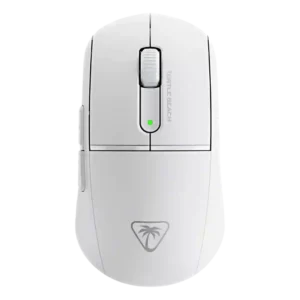
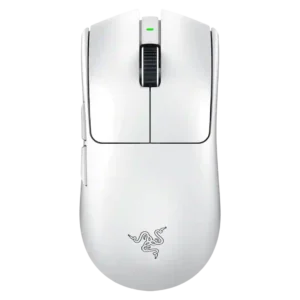
2.4GHz connectivity
P1
Product 1: Turtle Beach Burst II Air
4.5
2.4GHz connectivity was praised for easy setup, low-latency use, and stronger gaming-oriented signal behavior.
P2
Product 2: Razer Viper V3 Pro
2.0
The HyperPolling receiver supports elite wireless performance, but lack of a simpler 2.4GHz USB dongle was criticized as inconvenient.
Accuracy and tracking precision
P1
Product 1: Turtle Beach Burst II Air
4.8
Reviewers consistently described tracking as precise, accurate, and dependable in games and testing, with no faltering or lag noted in the strongest reports.
P2
Product 2: Razer Viper V3 Pro
4.8
Reviewers repeatedly described tracking and aim translation as precise, reliable, or noticeably confidence-building in shooters and aim trainers.
balance and weight distribution
P1
Product 1: Turtle Beach Burst II Air
4.9
Balance and weight distribution received limited but very strong praise, with reviewers calling the mouse well balanced and perfectly centered.
P2
Product 2: Razer Viper V3 Pro
5.0
Balance was praised by several video reviewers, who found the light body planted and evenly balanced without front or rear tipping.
battery life
P1
Product 1: Turtle Beach Burst II Air
4.4
Battery life was broadly liked, especially over Bluetooth, though several reviewers noted 2.4GHz endurance was shorter than some competitors.
P2
Product 2: Razer Viper V3 Pro
3.6
Battery life was context-dependent: strong at 1K polling, acceptable at mid polling, and repeatedly criticized at 8K polling.
Bluetooth support
P1
Product 1: Turtle Beach Burst II Air
4.3
Bluetooth support was appreciated for flexibility, portability, and device switching, though it was not always preferred for peak gaming.
P2
Product 2: Razer Viper V3 Pro
2.2
Bluetooth support was a clear limitation; reviewers repeatedly noted its absence reduces versatility outside dedicated esports setups.
build quality
P1
Product 1: Turtle Beach Burst II Air
3.8
Build quality split reviewers: some praised solidity despite the low weight, while others noticed flex, rattle, or fall concerns.
P2
Product 2: Razer Viper V3 Pro
4.5
Build quality drew strong agreement, with most reviewers reporting a solid shell, little flex, no creaking, and high-quality construction.
button customization
P1
Product 1: Turtle Beach Burst II Air
4.3
Button customization was considered useful and easy in Swarm II, though one review called the limited remappable options a constraint.
P2
Product 2: Razer Viper V3 Pro
4.0
Button customization was considered strong because Synapse supports remapping, HyperShift layers, and profile-specific setup.
button responsiveness
P1
Product 1: Turtle Beach Burst II Air
4.6
Button responsiveness was widely praised, with reviewers calling clicks precise, satisfying, light, and responsive during use.
P2
Product 2: Razer Viper V3 Pro
4.7
Button responsiveness was widely praised, with clicks described as fast, immediate, smooth, and dependable in competitive play.
cable flexibility
P1
Product 1: Turtle Beach Burst II Air
4.5
Cable flexibility was a consistent positive, with reviewers calling the included cable flexible, soft, light, and low-drag.
P2
Product 2: Razer Viper V3 Pro
2.4
Cable feedback was negative to mixed because wired use felt stiff, draggy, or less flexible than expected for such a light wireless mouse.
charging convenience
P1
Product 1: Turtle Beach Burst II Air
4.7
Charging convenience was positive thanks to quick charging, rapid USB-C top-ups, and the ability to charge without much disruption.
P2
Product 2: Razer Viper V3 Pro
3.0
Charging convenience was only lightly covered, but reviewers appreciated fast or usable charging while wishing for a dock or stand.
claw grip comfort
P1
Product 1: Turtle Beach Burst II Air
4.7
Claw grip comfort was a strong fit, with reviewers praising the rear arch and overall shape for claw-style control.
P2
Product 2: Razer Viper V3 Pro
4.6
Claw grip support was a major strength, with multiple reviewers calling the shape ideal or especially comfortable for claw variants.
click latency
P1
Product 1: Turtle Beach Burst II Air
4.5
Click-speed evidence was favorable, with reviewers tying the optical switches to quick response, optical speed, and minimal pre-travel.
P2
Product 2: Razer Viper V3 Pro
5.0
Latency feedback was extremely positive, with reviewers describing the mouse as class-leading, delay-free, or nearly predictive in competitive play.
click noise
P1
Product 1: Turtle Beach Burst II Air
3.7
Click noise evidence was limited and mixed, with one reviewer noting the clicks were a bit loud but not worse than some alternatives.
P2
Product 2: Razer Viper V3 Pro
3.0
Click noise was mixed; reviewers liked the click feel but some found the optical clicks loud or potentially distracting.
connection stability
P1
Product 1: Turtle Beach Burst II Air
4.7
Connection stability was praised in the reviews that tested it, with no random disconnects and seamless switching reported.
P2
Product 2: Razer Viper V3 Pro
4.3
Connection stability was mostly strong, with no drops in several tests, but a few reviewers reported slow wake or brief connection behavior.
cross-platform compatibility
P1
Product 1: Turtle Beach Burst II Air
4.5
Cross-platform compatibility was positive at the basic mouse level, with one review reporting issue-free Windows, Mac, and Android use.
P2Product 2: Razer Viper V3 Pro
No score yetDPI range
P1
Product 1: Turtle Beach Burst II Air
4.3
The DPI range was seen as broad and flexible, though one reviewer found the very high settings excessive for normal use.
P2
Product 2: Razer Viper V3 Pro
3.7
Reviewers treated the 35K DPI ceiling and single-step adjustment as technically impressive, though often more than most players need.
durability over time
P1
Product 1: Turtle Beach Burst II Air
3.8
Durability over time was mixed: one reviewer was unconcerned, another expected normal-care longevity, and another worried about abuse.
P2
Product 2: Razer Viper V3 Pro
4.5
Durability over time had limited but positive long-term evidence, with a year-later reviewer reporting few issues across units.
ergonomic design
P1
Product 1: Turtle Beach Burst II Air
4.6
Ergonomics were praised for comfort, hand fit, and a speedy full-size feel, with only minor shape reservations.
P2
Product 2: Razer Viper V3 Pro
4.7
Ergonomics were broadly praised for comfort and hand support, with reviewers highlighting long-session usability and a safe symmetrical design.
fingertip grip comfort
P1
Product 1: Turtle Beach Burst II Air
4.6
Fingertip grip comfort was also strong, with reviewers calling it a good alternative and enjoying it more with use.
P2
Product 2: Razer Viper V3 Pro
3.8
Fingertip comfort was positive for some reviewers but less consistent, as the larger, taller V3 Pro was not ideal for all fingertip users.
FPS gaming suitability
P1
Product 1: Turtle Beach Burst II Air
4.7
FPS suitability was a clear strength, with reviewers praising shooter performance, competitive use, and flick-shot benefits.
P2
Product 2: Razer Viper V3 Pro
4.7
FPS and esports suitability was the strongest consensus: reviewers repeatedly called it a top-tier competitive shooter mouse.
glide smoothness
P1
Product 1: Turtle Beach Burst II Air
4.7
Glide smoothness was one of the strongest positives, with repeated praise for effortless movement, smooth skates, and easy desktop control.
P2
Product 2: Razer Viper V3 Pro
4.6
Glide was one of the strongest areas, with large PTFE feet repeatedly praised for smooth, effortless movement on many pads and surfaces.
grip texture
P1
Product 1: Turtle Beach Burst II Air
4.1
Grip texture was mixed: tape and satin texture helped many users, while some found the untextured shell slippery.
P2
Product 2: Razer Viper V3 Pro
4.1
Grip texture was a common strength, praised for secure smooth-touch traction, though a few reviewers found it slippery or prone to grime and fingerprints.
handedness options
P1
Product 1: Turtle Beach Burst II Air
3.6
Handedness evidence was mixed: the shell is symmetrical, but right-side button absence makes it more right-hand oriented.
P2
Product 2: Razer Viper V3 Pro
3.8
Handedness was mixed: the symmetrical shell helped left-handed use, but left-side-only thumb buttons limited true ambidextrous comfort.
left and right click quality
P1
Product 1: Turtle Beach Burst II Air
4.5
Main click quality was generally strong, with praise for tactile feedback, satisfying actuation, and minimal travel, though one review sample had uneven pre-travel.
P2
Product 2: Razer Viper V3 Pro
4.6
Primary clicks were praised for speed, low travel, tactility, and reduced misclick risk, with several reviewers preferring their feel to rivals.
long-session comfort
P1
Product 1: Turtle Beach Burst II Air
4.6
Long-session comfort evidence was positive but limited, with reviewers citing pleasant sessions and easy daily computing use.
P2
Product 2: Razer Viper V3 Pro
4.6
Long-session comfort was praised thanks to low weight, supportive shape, smooth glide, and reduced fatigue in long work or gaming sessions.
macro support
P1
Product 1: Turtle Beach Burst II Air
4.3
Macro support was present and useful for games or device control, with Easy Shift adding utility beyond basic commands.
P2
Product 2: Razer Viper V3 Pro
4.5
Macro and custom action support was described as useful for assigning extra in-game controls to the side buttons.
materials quality
P1
Product 1: Turtle Beach Burst II Air
3.3
Materials quality was mixed, ranging from satisfying satin plastic to criticism that the shell felt cheap and hollow.
P2
Product 2: Razer Viper V3 Pro
2.8
Materials were mixed: the lightweight shell and coating helped performance, but some reviewers found it cheap-feeling, grimy, or fingerprint-prone.
motion consistency
P1
Product 1: Turtle Beach Burst II Air
4.7
Motion consistency evidence was limited but positive, with one reviewer reporting consistent tracking and no spin-out.
P2
Product 2: Razer Viper V3 Pro
4.3
Motion was usually described as buttery, smooth, and accurate, though one reviewer found micro-adjustments jerky with certain large feet and pads.
onboard memory
P1
Product 1: Turtle Beach Burst II Air
4.5
Onboard memory was viewed positively because stored profiles supported extra use cases and game/task-specific setups.
P2
Product 2: Razer Viper V3 Pro
3.3
Onboard memory was valued for carrying settings between PCs, but the single-profile limitation drew criticism.
palm grip comfort
P1
Product 1: Turtle Beach Burst II Air
4.2
Palm grip comfort was viable and supported for some hands, though evidence suggested it was not the mouse's strongest grip style.
P2
Product 2: Razer Viper V3 Pro
4.3
Palm support received some positive notes thanks to the rear hump and larger shell, though the mouse is primarily tuned for claw and fingertip users.
polling rate
P1
Product 1: Turtle Beach Burst II Air
3.0
Polling rate was the clearest performance limitation: some reviewers accepted the 1,000Hz cap, but many called it a drawback versus higher-end gaming mice.
P2
Product 2: Razer Viper V3 Pro
3.4
The 8K polling capability impressed reviewers technically, but many found its real-world benefit subtle, hardware-dependent, or not worth constant use.
portability
P1
Product 1: Turtle Beach Burst II Air
4.6
Portability was praised through dongle storage, device switching, Bluetooth, and battery life suitable for travel.
P2
Product 2: Razer Viper V3 Pro
2.0
Portability suffered because the required receiver-and-cable setup was considered awkward for travel despite the light mouse body.
premium feel
P1
Product 1: Turtle Beach Burst II Air
3.3
Premium feel was mixed, with some satisfying build impressions offset by multiple comments that the shell felt cheap or hollow.
P2
Product 2: Razer Viper V3 Pro
3.0
Premium feel was mostly positive, but a few reviewers felt the featherlight plastic made it seem less premium than its price suggests.
profile switching
P1
Product 1: Turtle Beach Burst II Air
4.6
Profile switching evidence was limited but positive, with one reviewer saying profiles made it easy to change settings by game.
P2
Product 2: Razer Viper V3 Pro
3.0
Profile switching was mixed because software profiles are useful, but bottom-mounted DPI/profile control felt awkward or finicky to some reviewers.
programmable buttons
P1
Product 1: Turtle Beach Burst II Air
4.6
Programmable-button evidence was positive where Easy Shift, reassignment, and layered functions added utility despite the limited physical button count.
P2
Product 2: Razer Viper V3 Pro
4.0
Programmable controls and remapping were seen as useful through Synapse, though the esports-focused button count limits broader genre flexibility.
RGB features
P1
Product 1: Turtle Beach Burst II Air
2.7
RGB sentiment was mixed to negative: some accepted the omission for weight savings, while others treated the lack of lighting as a style or feature loss.
P2
Product 2: Razer Viper V3 Pro
4.0
The lack of RGB was often treated as an esports-minded tradeoff that saves weight and battery, though some users may miss the flash.
scroll wheel quality
P1
Product 1: Turtle Beach Burst II Air
4.0
Scroll wheel opinions were mixed-positive: reviewers liked its feel and control, while some wished for smoother or larger wheel behavior.
P2
Product 2: Razer Viper V3 Pro
3.2
Scroll wheel feedback was split: reviewers liked its tactility for gaming, but several found it stiff or uncomfortable for heavy everyday scrolling.
sensor performance
P1
Product 1: Turtle Beach Burst II Air
4.7
Sensor impressions were strongly positive: reviewers praised the Owl-Eye sensor for clean tracking, swift movement handling, and flawless general performance.
P2
Product 2: Razer Viper V3 Pro
4.8
The Focus Pro sensor was consistently praised as accurate, smooth, and high-end, with several reviewers calling it among the best or flawless in use.
shape comfort
P1
Product 1: Turtle Beach Burst II Air
4.3
Shape comfort was mostly positive across reviews, especially for the stubby rear-hump form, though some hands found the sides or size less comfortable.
P2
Product 2: Razer Viper V3 Pro
3.9
Shape comfort was mostly positive for medium-to-large hands, but not universal; some reviewers preferred earlier shapes or found sizing narrow or specialized.
side button quality
P1
Product 1: Turtle Beach Burst II Air
4.4
Side buttons were usually easy to reach and press, but one reviewer found them a little mushier than the rest of the mouse.
P2
Product 2: Razer Viper V3 Pro
4.6
Side buttons were generally a strength, often called well placed, firm, separated, and easy to identify, though one review found tactility only decent.
software stability
P1
Product 1: Turtle Beach Burst II Air
2.8
Software stability was a concern in a few reviews, including bugs, glitches, and app detection issues.
P2
Product 2: Razer Viper V3 Pro
2.0
Software stability was inconsistent, with a few reviewers reporting Synapse loading issues, crashes, or slow wake behavior.
software usability
P1
Product 1: Turtle Beach Burst II Air
4.2
Software usability was mixed: several reviewers found Swarm II clear or simple, while others called it clunky or Windows-limited.
P2
Product 2: Razer Viper V3 Pro
4.0
Software usability was mixed: Synapse offers deep, useful tuning, but some reviewers disliked its bloat, ads, crashes, or general feel.
surface compatibility
P1
Product 1: Turtle Beach Burst II Air
4.8
Surface compatibility evidence was positive but limited, with reviewers saying it glided well on almost any surface.
P2
Product 2: Razer Viper V3 Pro
4.5
Surface compatibility was praised where tested, including cloth, wood, glass, leather, concrete, and other mousepad surfaces.
switch durability
P1
Product 1: Turtle Beach Burst II Air
4.4
Switch durability evidence was favorable but mostly tied to confidence in the rated lifecycle and expected long-term switch life.
P2
Product 2: Razer Viper V3 Pro
4.0
Switch durability was mainly supported by praise around optical switches avoiding double-click risk and long click life, though long-term proof was limited.
switch feel
P1
Product 1: Turtle Beach Burst II Air
4.6
Switch feel drew strong praise for tactility, snappiness, satisfying sound, and solid implementation, with only one reviewer noting a slightly heavier feel.
P2
Product 2: Razer Viper V3 Pro
4.4
Switch feel was mostly praised as firm, crisp, snappy, and satisfying, with a few reviewers noting softness or loudness preferences.
value for money
P1
Product 1: Turtle Beach Burst II Air
4.2
Value was divided: several reviewers called the price fair or a strong deal, while others questioned it due to missing premium features.
P2
Product 2: Razer Viper V3 Pro
3.3
Value was the main tradeoff: reviewers loved the performance but often questioned the high price and bundled dongle for non-elite users.
water and dust resistance
P1
Product 1: Turtle Beach Burst II Air
2.4
Dust-resistance evidence was limited and negative, with one reviewer disliking exposed bottom openings where dust could enter.
P2Product 2: Razer Viper V3 Pro
No score yetweight
P1
Product 1: Turtle Beach Burst II Air
4.9
Weight was the strongest consensus strength, with reviewers repeatedly emphasizing the 47g body as exceptionally, even surprisingly, light.
P2
Product 2: Razer Viper V3 Pro
4.7
Weight was one of the clearest strengths: reviewers repeatedly called the 54g body featherlight, fatigue-reducing, and easy to move.
wireless latency
P1
Product 1: Turtle Beach Burst II Air
4.9
Wireless latency evidence was positive, especially over 2.4GHz, where reviewers reported no perceivable latency or delivered performance.
P2
Product 2: Razer Viper V3 Pro
4.8
Wireless latency was widely praised as near-zero or virtually lag-free, though reviewers often framed 8K gains as only relevant to elite players.
wireless performance
P1
Product 1: Turtle Beach Burst II Air
4.6
Wireless performance was generally praised as reliable, fast, flexible, and minimally compromised.
P2
Product 2: Razer Viper V3 Pro
4.7
Wireless performance was a major strength, with reviewers describing it as stellar, flawless, snappy, and effectively wired-like.