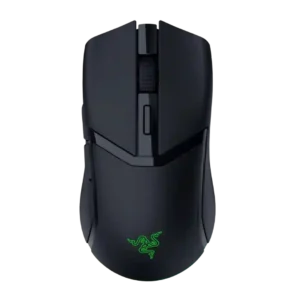
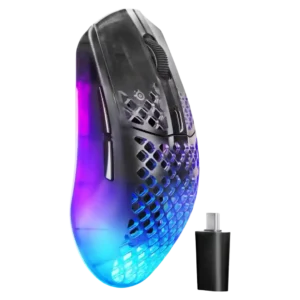
2.4 GHz support is widely documented through HyperSpeed wireless, included receivers, and low-latency 2.4 GHz connectivity, making it the main gaming wireless mode.
2.4 GHz connectivity is well supported through the bundled dongle or receiver, with reviewers tying it to full 4K polling and better gaming performance.
Acceleration-related evidence is limited but positive. One review cited 500 IPS and another said speed and acceleration are at a good level, though below Razer's top models.
Acceleration control is supported mainly through software-level acceleration and precision settings plus the sensor specification of 40G acceleration.
Tracking accuracy was a clear strength. Reviewers described the mouse as accurate, precise, consistent for aiming, and backed by a 26,000 DPI sensor with high stated accuracy.
Tracking precision is repeatedly described as accurate, one-to-one, and reliable, with several reviews tying that precision to flicks, aiming, and high-speed movement.
AI Prompt Master appears as a distinct productivity feature. Reviewers described software integration and AI-launcher assignment, while one video reviewer dismissed it as basically a ChatGPT shortcut rather than meaningful gaming value.
Balance is mostly positive but somewhat split. Some reviewers described controlled, balanced handling, while one criticized weight sitting toward the back of the mouse.
Balance feedback is mixed and limited: one reviewer found the balance spot-on, while another felt weight was biased toward the middle and rear.
Battery life is one of the clearest wins, with repeated claims around 110 hours on 2.4 GHz and up to 170 hours over Bluetooth, plus hands-on impressions of long real-world use.
Battery life is generally strong at Bluetooth or 1,000 Hz 2.4 GHz settings, but several reviews note a sharp drop at 4,000 Hz and high RGB brightness.
Bluetooth support is widely documented, often as part of tri-mode connectivity or PC/work-laptop switching. Reviewers generally treated it as useful for everyday or cross-device use.
Bluetooth support is widely documented and valued for laptops, tablets, travel, and non-competitive use, though some advanced features require 2.4 GHz or wired mode.
Build quality is repeatedly praised, with reviewers calling the mouse durable, solid, well-built, buttoned up, or premium-feeling despite its lighter shell.
Build quality is mostly strong, with praise for fit, finish, shell integrity, lack of flex, and improved creaking or mushiness concerns.
Button customization is well supported through remapping, command assignment, Synapse controls, and the ability to change the default AI/DPI button behavior.
Button customization is supported through freely configurable side buttons, remapping, app controls, and profile-based settings changes.
Button responsiveness was praised across reviews, with fast, clean clicks, snappy buttons, lighter actuation, rapid response, and quick rebound all appearing in hands-on impressions.
Button responsiveness is generally strong, with reviewers describing clicky, snappy, responsive buttons and few complaints about missed inputs.
Cable flexibility is supported by repeated praise for the included mesh, braided, or fabric USB-C cable and its smooth movement on a desk.
Charging convenience is strong when using Razer's charging ecosystem, especially HyperFlux, and the long battery life reduces urgency. One review still wished wired charging were faster.
Charging convenience is supported by USB-C charging, wired-while-charging use, quick charging comments, and included adapters or cables.
Claw grip comfort is supported by broad grip-style praise and direct small-claw comments, but one enthusiast framed it as a heavier small claw mouse rather than a pure ultralight option.
Claw grip comfort is one of the clearest ergonomic strengths, with multiple reviewers saying the rear flare and compact shape suit claw grip users.
Click latency is well supported by the optical hardware comments. Reviewers cited zero debounce delay, barely any latency, and optical switch precision as practical strengths.
Click latency evidence is limited but positive, with two reviews citing the 1.2 ms response figure tied to the higher-performance internals.
Click noise is the most consistent drawback. Multiple reviewers called the switches loud, noisy, hollow, cheap-sounding, tinnier, or pingy, even when they liked the switch feel.
Click noise is mixed: some reviewers liked the click sound or quieter scroll wheel, while others found the switches loud.
Connection stability is a strength in the available reviews. Reviewers reported immediate recognition, reliable Bluetooth and 2.4 GHz connectivity, and no stuttering or disconnections.
Connection stability is mostly positive, with stable Bluetooth and 2.4 GHz experiences plus dongle placement or hub evidence for stronger signal.
Cross-platform compatibility is supported by MacBook-to-gaming-PC switching, work laptop use, travel rigs, Bluetooth use, and everyday-task coverage beyond gaming.
Cross-platform compatibility is supported by Bluetooth, multi-device use, smartphone or MacBook mentions, and settings saved for use across different systems.
Dock compatibility is well supported through references to the Mouse Dock Pro, HyperFlux V2, wireless charging puck, and Razer charging dock, though several reviewers note extra purchases are required.
DPI coverage is strong for most users, with repeated references to 26,000 DPI and software sensitivity adjustment. The main caveat is that some comparisons place it below flagship Razer sensors.
The 26,000 DPI ceiling is widely documented, with reviewers treating it as more range than most users need but useful for sensitivity flexibility.
Durability over time is supported by durable build comments, normal day-to-day robustness, 100-million-click components, and expectations of years of gaming use.
Durability evidence is strong, covering IP54 protection, tough shell behavior, drop or spill resistance, and general resistance to daily travel abuse.
Ecosystem integration is strong for Razer users, with HyperFlux, Razer keyboard dongle pairing, automatic Synapse syncing, and wireless keyboard or mouse receiver support appearing in reviews.
Ecosystem integration is supported through SteelSeries GG, SteelSeries accessory integration, and coordinated setups with other SteelSeries gear.
Ergonomic comfort is a repeated strength. Multiple reviews call it comfortable, easy to hold, suited to different grip styles, and suitable for gaming or general productivity.
Ergonomic design is praised by some for the flat symmetrical shape and small-hand fit, but one review criticizes the overall comfort compared with alternatives.
Fingertip grip comfort is generally positive, especially in PC Gamer and Wired, though one Viper Mini comparison said the older shape was easier to fingertip.
Fingertip grip comfort is mixed: some reviews include fingertip users in the target audience, while others found the flared rear awkward for fingertip control.
FPS suitability is generally positive because reviewers used it in shooters, praised headshot feel, and described competitive play use; one enthusiast still would not make it a top Fortnite recommendation.
FPS suitability is strongly supported, with repeated Counter-Strike, shooter, and competitive gaming evidence tied to low latency, tracking, and 4K polling.
Glide smoothness is generally good, with praise for smooth skates and mousepad glide, but some reviewers describe the feet as more controlled or less smooth than Razer's higher-end options.
Glide smoothness is mostly positive, with PTFE feet described as smooth across mouse pads, desks, and cloth surfaces.
Grip texture is mostly positive. Reviewers described matte or textured surfaces that were stable and not abrasive, though the finish is smoother than some rubberized alternatives.
Grip texture is polarizing, with some reviewers finding the texture grippy and others saying the sides or plastic finish feel slippery.
Handedness evidence is limited to Windows Central, which described an ambidextrous design that still favors right-handed users because of the side-button layout.
Handedness evidence points to a right-handed practical layout despite the symmetrical shell, because the side buttons are only on one side.
Left and right click quality has limited but direct support from one hands-on review, which found little pre-travel or post-travel and no major side-to-side looseness.
Main click quality is mostly praised for satisfying, clicky feedback, with evidence focused on left/right click feel rather than unusual customization.
Lift-off distance support is directly mentioned in software coverage, with high and low calibration options or a lift-off adjustment tab available through Synapse.
Lift-off distance is repeatedly supported as an adjustable software setting, usually mentioned alongside DPI, polling, and other advanced tuning controls.
Long-session comfort is directly supported by reviewers calling the mouse comfortable and balanced for long gaming sessions or suitable as a daily driver.
Long-session comfort is generally positive for smaller hands, light use, and fatigue reduction, though one reviewer reported hand cramps with the smaller shape.
Macro support appears in the software and button-remapping evidence, including direct references to macros and custom macros for the nine buttons.
Macro support appears in software-focused reviews, with explicit evidence that custom macros and game profile macros can be configured.
Materials quality is supported by premium matte coating, matte finish, smooth contours, and mildly textured surfaces, though some shiny plastic appears in less-contacted gaps.
Materials quality trends positive for plastics and shell construction, though one review criticizes the finish for lacking grip.
Motion consistency was described positively through predictable twitch reactions and added friction for mouse control, suggesting stable, controllable movement rather than floaty glide.
Motion consistency is described positively through smooth aiming, reliable tracking, fluid movement, and the lack of missed tracking during gameplay.
Onboard memory support is directly supported by the launch coverage noting five on-board profiles.
Onboard memory is supported by references to storable profiles and settings saved directly to the mouse for use beyond one system.
Palm grip comfort is mixed. Some reviewers said common grip styles work, while others warned palm grip can be difficult for large hands or felt unsupported on the smaller body.
Palm grip comfort is mixed to weak overall, with smaller-hand praise offset by repeated comments that larger palm-grip users may prefer the Aerox 5 or another shape.
Polling support is mixed. The standard setup is repeatedly described as 1,000 Hz, while higher 8,000 Hz polling is possible only with compatible Razer accessories or dongles.
The move from 1,000 Hz to 4,000 Hz polling is a major upgrade across the reviews, improving responsiveness most clearly in competitive and high-refresh-rate play.
Portability is supported by the compact body, travel-rig use, lightweight design, and one source explicitly calling the Cobra line portable.
Portability is mostly favorable because of durability, Bluetooth, compact size, and travel use, but one review criticizes the lack of onboard dongle storage.
Premium feel is generally positive, with reviewers citing premium coating, refined aesthetics, premium look and feel, and Razer-like packaging or materials.
Premium feel is supported by solid construction, low-weight feel that does not seem compromised, and descriptions of a more premium mouse experience.
Profile switching is directly supported by profile buttons and preset gaming profiles, with reviewers noting that profiles can be switched from the mouse or configured in software.
Profile switching evidence is narrower but clear, with game-based saved settings and automatic profile switching described in the reviews.
Programmable control support is strong. Reviews mention six or nine programmable/customizable controls and extra programmable buttons, giving the mouse more flexibility than basic gaming mice.
Programmable button support is well supported through evidence for remapping, six programmable buttons, and software-controlled button behavior.
RGB is present but restrained. Reviews mention Chroma zones, logo lighting, and underglow, while several also note reduced, limited, or duller lighting versus more RGB-heavy Razer products.
RGB support is broad, with reviews mentioning three-zone lighting, Prism controls, presets, effects, and the battery impact of brighter lighting.
The optical scroll wheel was one of the better-supported strengths, described as smooth, precise, tactile, resistant to accidental scrolls, and useful for weapon switching.
Scroll wheel quality is generally positive, with reviewers noting responsive scrolling, tactile feedback, and in some cases quieter or grippier revisions.
The Focus X 26K sensor was consistently treated as capable for normal gaming. Several reviewers praised its precision, while a few noted it is not Razer's absolute top-tier sensor.
The TrueMove 26K sensor is one of the most consistently supported strengths, with reviews describing smooth tracking, no missed beats, and strong gaming performance.
Shape comfort is broadly positive, especially for users who like the Cobra or compact Viper Mini-style shape. Some larger-hand or Viper Mini-focused reviewers found the shape cramped or less ideal.
Shape comfort is divisive: many reviewers liked the familiar Aerox shape, while others found the flared rear uncomfortable or polarizing.
Side button quality is mostly favorable, with praise for placement and solid feel, but one reviewer criticized the side buttons as loud and budget-feeling.
Side button feedback is mixed: several reviewers found them easier to reach or improved, while others found the long shape easy to hit accidentally.
Software stability has limited but direct evidence: Wired called the software intuitive while also saying it can be finicky at times.
Software usability is mostly strong. Synapse is described as useful, coherent, easy to customize, and feature-rich, though one review says it can be finicky at times.
Software usability is one of the strongest repeated positives, especially SteelSeries GG, sensitivity tools, aim trainer features, live previews, and accessible customization.
Surface compatibility has direct evidence from one review, which said the mouse worked equally well across mouse mat, glass, wood, and plastic surfaces.
Surface compatibility evidence is positive but narrower, with reviews noting smooth movement on pads and usable performance on desks or different surfaces.
Switch durability is strongly supported by repeated 100-million-click ratings, with several reviews tying the Gen-4 optical switches to long service life.
Switch durability is mostly supported by the 80 million click rating, with one review also noting consistent clicks after extended testing.
Switch feel is generally strong but not universally loved. Reviewers praised tactile, satisfying, lighter optical switches, while some noted pingy or only modestly changed click character.
Switch feel trends positive, with tactile, crisp, clicky feedback noted by several reviewers, though the feel remains more traditional mechanical than optical.
Value for money is mixed. Several reviewers call it good value or budget-friendly for its performance, while others criticize the $100 price, optional extras, or competing mice.
Value is mixed-to-positive: reviewers often call the price competitive or reasonable, but several note strong competition around the same or lower price.
Weight is a major theme. Most sources describe the mouse as light at roughly 60 to 62 grams, though a few competitive-mouse reviewers still wanted it lighter for its size.
The 68 g weight is often praised as light and agile, though a few reviewers note it is heavier or less competitive by current ultralight standards.
Weight tuning has only narrow support. One reviewer weighed the mouse with and without the removable puck, suggesting only a minor puck-related weight change rather than full tuning.
Wireless latency evidence is positive but tied to context. Reviews cite low-latency 2.4 GHz and good practical response, while standard 1,000 Hz polling limits out-of-box peak performance.
Wireless latency is consistently favorable where tested, with low latency, no noticeable lag, and near-zero delay tied to 2.4 GHz or 4K operation.
Wireless performance is consistently positive, with reviewers calling the mouse well-performing, reliable, responsive, and consistent as a daily or gaming wireless device.
Wireless performance is a major strength, with reviews praising 4K wireless, reliable tracking, stable use, and no stutters or delays in several tests.