handedness options
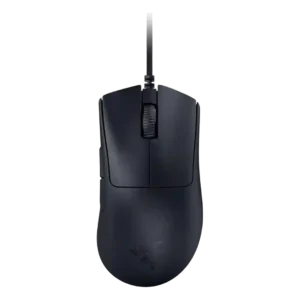
Razer DeathAdder V3
2.0
Handedness options were a limitation because reviewers repeatedly emphasized the right-handed-only shape.
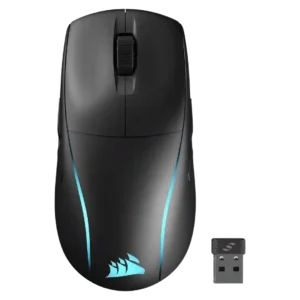
Corsair M75 Wireless
4.7
Handedness options were a core strength, with reviewers repeatedly praising true ambidextrous support and left-handed usefulness.
software stability
Razer DeathAdder V3
4.5
Software stability evidence was limited but positive, with one reviewer reporting no issues with settings being forgotten.
Corsair M75 Wireless
2.0
Software stability had one clear negative report: iCUE reset Windows mouse settings when launched.
portability
Razer DeathAdder V3
2.2
Portability was a weakness because reviewers cited the large body, fixed cable, and wired setup as inconvenient for travel.
Corsair M75 Wireless
4.4
Portability was helped by the dongle storage slot, which one reviewer called a nice touch.
click noise
Razer DeathAdder V3
5.0
Click noise evidence was limited but positive, with one reviewer saying the clicks were quieter than a comparable Razer mouse.
Corsair M75 Wireless
2.9
Click noise was a drawback in multiple reviews, with louder or noisier clicks than expected.
weight
Razer DeathAdder V3
5.0
Weight was one of the clearest strengths, with reviewers repeatedly praising the sub-60g build as light, fast, and fatigue-reducing.
Corsair M75 Wireless
3.2
Weight was polarizing, with some calling it lightweight enough and others finding it chunky, sluggish, or too heavy for FPS-first play.
premium feel
Razer DeathAdder V3
4.8
Premium feel was praised in limited evidence, particularly for the logo finish and improved coating feel.
Corsair M75 Wireless
3.1
Premium feel was divided between an elegant, measured design and complaints that the mouse felt cheap.
value for money
Razer DeathAdder V3
4.8
Value for money was strong overall, especially at lower prices, though one reviewer thought the feature set made the price a little high.
Corsair M75 Wireless
3.3
Value for money was sharply split, with praise at discounted prices or for lefties but criticism at full premium pricing.
balance and weight distribution
Razer DeathAdder V3
4.0
Balance was slightly front-heavy in two reviews, but reviewers generally described the imbalance as minor and not disruptive.
Corsair M75 Wireless
2.6
Weight distribution was a concern for some reviewers, especially imbalance toward the front or back, though one liked the added control for sniping.
side button quality
Razer DeathAdder V3
4.7
Side button quality was mostly praised for placement, tactile feel, and low accidental-press risk, though one reviewer struggled with reach.
Corsair M75 Wireless
3.4
Side button quality was the most divided area: some praised easy swapping and placement, while many criticized looseness, low profiles, and fiddly use.
grip texture
Razer DeathAdder V3
4.3
Grip texture was mostly praised as smooth, grippy, or improved, though a few reviewers found it slippery or requiring extra force.
Corsair M75 Wireless
3.1
Grip texture was mixed: the coating handled marks well, but the smooth sides caused grip problems or finger discomfort for some.
FPS gaming suitability
Razer DeathAdder V3
5.0
FPS gaming suitability was one of the strongest areas, with repeated praise for speed, weight, clicks, tracking, and esports focus.
Corsair M75 Wireless
3.8
FPS gaming suitability was mixed: casual and general FPS play worked well, but pure competitive or solo FPS users may prefer lighter/faster mice.
DPI range
Razer DeathAdder V3
5.0
DPI range evidence was positive, with reviewers treating the 30K ceiling and wider adjustment range as a precision benefit.
Corsair M75 Wireless
3.9
The DPI ceiling was considered strong for most players, though one reviewer noted it is not the highest available.
surface compatibility
Razer DeathAdder V3
5.0
Surface compatibility evidence was limited but positive, with one reviewer praising gliding on different surfaces.
Corsair M75 Wireless
3.9
Surface compatibility was mostly positive across varied surfaces, but one reviewer noticed hitching on imperfect surfaces.
build quality
Razer DeathAdder V3
5.0
Build quality was strongly praised, with reviewers repeatedly reporting no creaking, flex, rattling, or quality-control issues.
Corsair M75 Wireless
3.9
Build quality leaned positive for solidity and finish, but several reviewers noted looseness, cheap feel, or disappointment.
durability over time
Razer DeathAdder V3
5.0
Durability over time evidence was positive but limited, with reviewers expecting stable construction to last through years of gaming.
Corsair M75 Wireless
4.1
Durability over time had limited but positive short-term evidence from one reviewer saying it still looked new after days of use.
onboard memory
Razer DeathAdder V3
3.3
Onboard memory was mixed because profiles exist, but one reviewer criticized internal memory limitations for button assignments.
Corsair M75 Wireless
4.1
Onboard memory was appreciated because settings could be saved and iCUE avoided after setup, though only one profile was noted.
macro support
Razer DeathAdder V3
3.5
Macro support was adequate but limited: Hypershift helped, while the small number of extra macro inputs held it back.
Corsair M75 Wireless
4.3
Macro support was viewed positively where mentioned, with iCUE allowing shortcuts, media controls, app launches, and macros.
charging convenience
Razer DeathAdder V3
5.0
Charging convenience was praised because the wired design avoids charging and battery maintenance entirely.
Corsair M75 Wireless
4.3
Charging convenience was positive thanks to fast recharge and easy USB-C top-ups.
materials quality
Razer DeathAdder V3
3.0
Materials quality was mixed, with criticism of cable fit or cheap-looking underside balanced against otherwise solid construction.
Corsair M75 Wireless
3.8
Materials quality was mixed, with plastic feeling sturdy in one review but RGB-frame gaps and dust concerns in another.
software usability
Razer DeathAdder V3
3.5
Software usability was mixed: Synapse was useful and intuitive for settings, but one reviewer called it bloated and frustrating.
Corsair M75 Wireless
4.2
Software usability was generally positive for iCUE customization and layout, though Bluetooth limitations and learning curve were noted.
acceleration control
Razer DeathAdder V3
5.0
Acceleration-related performance was praised in the broader performance package, with reviewers reporting no concerns and strong online-game responsiveness.
Corsair M75 Wireless
4.4
Acceleration handling was judged more than sufficient, with reviewers saying rapid movements were tracked accurately.
profile switching
Razer DeathAdder V3
3.3
Profile switching was mixed, with convenient profile toggling offset by complaints about the underside DPI/profile button placement.
Corsair M75 Wireless
2.7
Profile and DPI switching drew mixed reactions: one reviewer liked on-device tuning, but several disliked the underside DPI control or missing automatic profile switching.
click latency
Razer DeathAdder V3
5.0
Click latency was strongly praised, with reviewers describing the wired optical-switch setup as very fast and responsive.
Corsair M75 Wireless
4.5
Click latency was usually praised as essentially instant, although one reviewer felt longer travel slightly slowed actuation.
button responsiveness
Razer DeathAdder V3
5.0
Button responsiveness was praised across reviews, especially for fast feedback and tight repeated clicking during games.
Corsair M75 Wireless
4.5
Button responsiveness was a strength, with reviewers reporting responsive switches, solid performance, and no missed clicks.
programmable buttons
Razer DeathAdder V3
3.5
Programmable-button feedback was mixed because the buttons are useful and remappable, but reviewers also saw the mouse as basic with few extra inputs.
Corsair M75 Wireless
3.0
Reviewers found the programmable button count limiting for a gaming mouse, especially at the price.
claw grip comfort
Razer DeathAdder V3
4.0
Claw grip comfort was mixed-to-positive, working well for some larger-hand users but less naturally for others.
Corsair M75 Wireless
4.5
Claw grip comfort was praised by reviewers who found the hump and control well-suited to that grip.
tilt gesture controls
Razer DeathAdder V3
2.0
Tilt gesture control support was a weakness because one reviewer specifically wished the scroll wheel had tilt functionality.
Corsair M75 Wireless
1.5
Tilt gesture controls were a weakness because one reviewer specifically expressed disappointment that tilt controls were absent.
fingertip grip comfort
Razer DeathAdder V3
2.6
Fingertip grip comfort was mixed-to-negative because the large hump and body often limited fingertip control for smaller hands.
Corsair M75 Wireless
2.1
Fingertip grip comfort was weak, with reviewers describing the mouse as unwieldy or stiff in fingertip use.
palm grip comfort
Razer DeathAdder V3
4.8
Palm grip comfort was strongly praised, with reviewers repeatedly identifying palm grip and medium-to-large hands as the best fit.
Corsair M75 Wireless
4.3
Palm grip support was mostly strong thanks to the high back and hand-filling body, with one reviewer finding it less natural than claw grip.
button customization
Razer DeathAdder V3
4.1
Button customization was positive overall through Synapse remapping and Hypershift, but reviewers still considered overall customization limited.
Corsair M75 Wireless
4.6
Button customization was consistently praised for flexible remapping and personalized layouts.
sensor performance
Razer DeathAdder V3
5.0
Sensor performance was a major strength, with reviewers repeatedly calling the Focus Pro 30K implementation accurate, responsive, stable, or flawless.
Corsair M75 Wireless
4.6
The Marksman sensor was broadly described as reliable, responsive, and precise, with only isolated surface-related reservations.
polling rate
Razer DeathAdder V3
4.1
Polling-rate feedback was positive overall, but mixed in practice: reviewers liked 8,000Hz support while some saw little benefit or stuttering.
Corsair M75 Wireless
3.6
Polling rate was viewed as adequate for most gamers, but several reviewers criticized it for lagging behind 4,000Hz and 8,000Hz rivals.
cable flexibility
Razer DeathAdder V3
4.0
Cable flexibility was highly divisive, ranging from light and unobtrusive to stiff, heavy, or merely passable.
Corsair M75 Wireless
3.6
Cable flexibility was mixed: one reviewer liked the braided cable, while another reported cable drag during charging.
motion consistency
Razer DeathAdder V3
5.0
Motion consistency evidence was limited but very positive, with one reviewer reporting no stutters, missed movements, or unexpected shifts.
Corsair M75 Wireless
4.6
Motion consistency was praised for responding naturally to hand movement and keeping up with both micro-movements and frantic play.
long-session comfort
Razer DeathAdder V3
4.8
Long-session comfort was praised, especially for large-hand users who benefit from the low weight and ergonomic shape.
Corsair M75 Wireless
4.5
Long-session comfort was positive, with reviewers citing low fatigue and extended-session comfort.
Accuracy and tracking precision
Razer DeathAdder V3
5.0
Reviewers consistently praised tracking accuracy and in-game precision, with no meaningful complaints about aim or cursor accuracy.
Corsair M75 Wireless
4.7
Reviewers repeatedly praised accurate tracking and precise aiming, including smooth shot lining and strong control over 2.4GHz and Bluetooth.
ergonomic design
Razer DeathAdder V3
4.9
Ergonomic design was a standout strength, repeatedly described as comfortable, hand-friendly, and effective for longer gaming sessions.
Corsair M75 Wireless
4.7
Ergonomic design was praised for comfort, control, and avoiding awkward wrist or hand angles.
RGB features
Razer DeathAdder V3
3.0
RGB feedback was context-dependent: some reviewers missed RGB, while esports-focused reviewers liked or accepted the no-RGB design.
Corsair M75 Wireless
3.3
RGB features were highly mixed: customization and desktop style were praised, but hidden zones, weak underglow, and battery drain drew criticism.
glide smoothness
Razer DeathAdder V3
4.4
Glide smoothness was generally strong thanks to PTFE feet and smooth movement, though a few reviewers disliked or replaced the stock skates.
Corsair M75 Wireless
4.2
Glide smoothness was broadly praised due to PTFE feet, though some reviewers felt weight or skate slipperiness held it back.
scroll wheel quality
Razer DeathAdder V3
3.6
Scroll wheel quality was one of the more mixed areas, ranging from smooth and reliable to soft, indistinct, loose, or insufficiently clicky.
Corsair M75 Wireless
3.7
Scroll wheel quality was mixed, ranging from tactile and pleasant to too stiff, sluggish, or loud.
left and right click quality
Razer DeathAdder V3
4.1
Main click quality was mixed: several reviewers liked the left and right clicks, while one found them floaty with too much movement.
Corsair M75 Wireless
4.0
Main click quality was mostly praised for tactile feedback and responsiveness, though one reviewer found the feel cheap or off.
lift-off distance
Razer DeathAdder V3
4.4
Lift-off distance was viewed as a useful tuning feature, though some reviewers framed it as niche or only useful for advanced users.
Corsair M75 Wireless
4.5
Lift-off behavior received positive remarks, with reviewers noting strong lift and a nice low-distance feel.
switch feel
Razer DeathAdder V3
4.6
Switch feel was generally positive thanks to crisp or satisfying optical clicks, though a few reviewers found them hollow, mushy, or less pleasant than mechanical switches.
Corsair M75 Wireless
4.6
Switch feel was praised for tactile, premium, crisp, and fast feedback.
shape comfort
Razer DeathAdder V3
4.0
Shape comfort was strong for the right user but divisive, praised for large or palm-oriented hands and criticized by some smaller-hand or fingertip users.
Corsair M75 Wireless
4.0
Shape comfort was generally positive for palm/claw and larger hands, but a few reviewers found the shape generic, uncomfortable, or not ideal.
2.4GHz connectivity
Razer DeathAdder V3No score yet
Corsair M75 Wireless
4.4
2.4GHz connectivity was praised for speed, responsiveness, and practical wireless switching.
battery life
Razer DeathAdder V3No score yet
Corsair M75 Wireless
4.4
Battery life was one of the strongest consensus positives, with many reviewers reporting impressive or accurate endurance.
Bluetooth support
Razer DeathAdder V3No score yet
Corsair M75 Wireless
4.0
Bluetooth support was useful for battery life and device switching, but it was also described as slower than 2.4GHz.
connection stability
Razer DeathAdder V3No score yet
Corsair M75 Wireless
4.0
Connection stability was mostly reliable, but one review reported update-time spikes that undercut confidence.
ecosystem integration
Razer DeathAdder V3No score yet
Corsair M75 Wireless
4.2
Ecosystem integration was supported by Corsair lighting-link syncing across multiple Corsair devices.
firmware reliability
Razer DeathAdder V3No score yet
Corsair M75 Wireless
4.2
Firmware reliability received a positive mention for seamless firmware updates.
MMO gaming suitability
Razer DeathAdder V3No score yet
Corsair M75 Wireless
3.0
MMO gaming suitability was limited by button count, despite one reviewer saying it could work across varied titles.
MOBA gaming suitability
Razer DeathAdder V3No score yet
Corsair M75 Wireless
4.6
MOBA gaming suitability was positive in one review, which found it delightful and responsive for League of Legends.
skate durability
Razer DeathAdder V3No score yet
Corsair M75 Wireless
4.2
Skate durability received one positive mention for resisting dust and fluff on mouse mats.
switch durability
Razer DeathAdder V3
5.0
Switch durability evidence was limited but positive, with the high click-life rating treated as a strong durability point.
Corsair M75 WirelessNo score yet
wireless latency
Razer DeathAdder V3No score yet
Corsair M75 Wireless
4.6
Wireless latency was praised where tested, especially the sub-millisecond 2.4GHz response.
wireless performance
Razer DeathAdder V3No score yet
Corsair M75 Wireless
4.2
Wireless performance was usually praised as responsive and dependable, though one reviewer found Corsair's connection less flawless than Razer's.