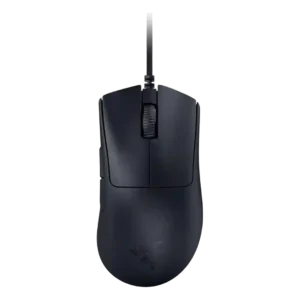

Compare Razer DeathAdder V3 vs Cherry M68 Pro

P1 Razer DeathAdder V3
P2 Cherry M68 Pro

Comparison Takeaways

Razer DeathAdder V3

Where It Has the Edge

  • durability over time is 5.0 vs 2.8. Durability over time evidence was positive but limited, with reviewers expecting stable construction to last through years of...
  • palm grip comfort is 4.8 vs 2.5. Palm grip comfort was strongly praised, with reviewers repeatedly identifying palm grip and medium-to-large hands as the best...
  • button customization is 4.1 vs 2.0. Button customization was positive overall through Synapse remapping and Hypershift, but reviewers still considered overall customization limited.
  • charging convenience is 5.0 vs 2.9. Charging convenience was praised because the wired design avoids charging and battery maintenance entirely.

Cherry M68 Pro

Where It Has the Edge

  • balance and weight distribution is 4.8 vs 4.0. The mouse was described as well-balanced by reviewers who focused on weight distribution and in-hand balance.
  • fingertip grip comfort is 3.0 vs 2.6. Fingertip grip support was less certain, with one reviewer saying a G Pro X was probably the safer...
  • scroll wheel quality is 4.0 vs 3.6. The scroll wheel was generally smooth, controlled, and pleasant, with a few reviewers describing it as merely okay...
  • materials quality is 3.4 vs 3.0. Materials quality was good but imperfect, combining useful traction and durable plastic with residue and fingerprint concerns.
Average score
Product 1: Razer DeathAdder V3
4.2
Product 2: Cherry M68 Pro
3.9
2.4GHz connectivity
Product 1: Razer DeathAdder V3
No score yet
Product 2: Cherry M68 Pro
5.0

The 2.4GHz connection was praised directly as fast and reliable in competitive use.

acceleration control
Product 1: Razer DeathAdder V3
5.0

Acceleration-related performance was praised in the broader performance package, with reviewers reporting no concerns and strong online-game responsiveness.

Product 2: Cherry M68 Pro
No score yet
Accuracy and tracking precision
Product 1: Razer DeathAdder V3
5.0

Reviewers consistently praised tracking accuracy and in-game precision, with no meaningful complaints about aim or cursor accuracy.

Product 2: Cherry M68 Pro
4.6

Reviewers consistently found tracking precise and confidence-inspiring, from accurate desktop movement to flawless aim adjustments in games.

balance and weight distribution
Product 1: Razer DeathAdder V3
4.0

Balance was slightly front-heavy in two reviews, but reviewers generally described the imbalance as minor and not disruptive.

Product 2: Cherry M68 Pro
4.8

The mouse was described as well-balanced by reviewers who focused on weight distribution and in-hand balance.

battery life
Product 1: Razer DeathAdder V3
No score yet
Product 2: Cherry M68 Pro
4.0

Battery life was good in standard or lower polling modes, but 8K/Pro modes shortened runtime and battery warnings were a recurring weakness.

build quality
Product 1: Razer DeathAdder V3
5.0

Build quality was strongly praised, with reviewers repeatedly reporting no creaking, flex, rattling, or quality-control issues.

Product 2: Cherry M68 Pro
4.3

Build quality was consistently strong, with reviewers describing the shell as sturdy, solid, well-constructed, or tank-like.

button customization
Product 1: Razer DeathAdder V3
4.1

Button customization was positive overall through Synapse remapping and Hypershift, but reviewers still considered overall customization limited.

Product 2: Cherry M68 Pro
2.0

Button customization was limited by the software-free design, especially for remapping and fine adjustments.

button responsiveness
Product 1: Razer DeathAdder V3
5.0

Button responsiveness was praised across reviews, especially for fast feedback and tight repeated clicking during games.

Product 2: Cherry M68 Pro
4.2

Button responsiveness was usually praised for quick actuation and reset, though one reviewer treated the buttons as merely fine in-game.

cable flexibility
Product 1: Razer DeathAdder V3
4.0

Cable flexibility was highly divisive, ranging from light and unobtrusive to stiff, heavy, or merely passable.

Product 2: Cherry M68 Pro
3.9

Cable impressions were mixed: reviewers liked the flexible braided/EZcord cables, but side-cable movement could feel encumbered.

charging convenience
Product 1: Razer DeathAdder V3
5.0

Charging convenience was praised because the wired design avoids charging and battery maintenance entirely.

Product 2: Cherry M68 Pro
2.9

Charging convenience was sharply mixed: quick charging and flexible cables helped, but the side USB-C placement annoyed many reviewers.

claw grip comfort
Product 1: Razer DeathAdder V3
4.0

Claw grip comfort was mixed-to-positive, working well for some larger-hand users but less naturally for others.

Product 2: Cherry M68 Pro
4.4

Claw grip support was a clear strength, with multiple reviewers saying the low-front shape suits relaxed or claw-style control.

click latency
Product 1: Razer DeathAdder V3
5.0

Click latency was strongly praised, with reviewers describing the wired optical-switch setup as very fast and responsive.

Product 2: Cherry M68 Pro
4.5

Primary clicks were described as quick, responsive, and swift to reset, supporting low-latency-feeling inputs in the reviewed units.

click noise
Product 1: Razer DeathAdder V3
5.0

Click noise evidence was limited but positive, with one reviewer saying the clicks were quieter than a comparable Razer mouse.

Product 2: Cherry M68 Pro
3.8

Click noise was acceptable to positive for some reviewers, but another found the buttons pretty loud.

connection stability
Product 1: Razer DeathAdder V3
No score yet
Product 2: Cherry M68 Pro
4.8

Connection stability was strong, especially over 2.4GHz, with repeated reports of no hiccups, lag, or stuttering.

debounce customization
Product 1: Razer DeathAdder V3
No score yet
Product 2: Cherry M68 Pro
4.0

Debounce customization had enough increments for preferences in one review, but broader setup friction remained tied to no software.

DPI range
Product 1: Razer DeathAdder V3
5.0

DPI range evidence was positive, with reviewers treating the 30K ceiling and wider adjustment range as a precision benefit.

Product 2: Cherry M68 Pro
3.5

DPI/CPI coverage was useful for preset users, but reviewers criticized the lack of granular software tuning for non-preset sensitivities.

durability over time
Product 1: Razer DeathAdder V3
5.0

Durability over time evidence was positive but limited, with reviewers expecting stable construction to last through years of gaming.

Product 2: Cherry M68 Pro
2.8

Durability-over-time evidence was mixed-negative, centered on coating residue and concern about click wobble rather than failures.

ergonomic design
Product 1: Razer DeathAdder V3
4.9

Ergonomic design was a standout strength, repeatedly described as comfortable, hand-friendly, and effective for longer gaming sessions.

Product 2: Cherry M68 Pro
4.5

The low-front ergonomic design was widely credited with improving control, grip security, and comfort.

fingertip grip comfort
Product 1: Razer DeathAdder V3
2.6

Fingertip grip comfort was mixed-to-negative because the large hump and body often limited fingertip control for smaller hands.

Product 2: Cherry M68 Pro
3.0

Fingertip grip support was less certain, with one reviewer saying a G Pro X was probably the safer fingertip option.

firmware reliability
Product 1: Razer DeathAdder V3
No score yet
Product 2: Cherry M68 Pro
4.5

Firmware reliability had limited evidence, but one reviewer found the dongle and mouse firmware update easy.

FPS gaming suitability
Product 1: Razer DeathAdder V3
5.0

FPS gaming suitability was one of the strongest areas, with repeated praise for speed, weight, clicks, tracking, and esports focus.

Product 2: Cherry M68 Pro
4.6

FPS suitability was a major strength, with reviewers praising precise, responsive performance in shooters such as Counter-Strike, Valorant, and CS:GO.

glide smoothness
Product 1: Razer DeathAdder V3
4.4

Glide smoothness was generally strong thanks to PTFE feet and smooth movement, though a few reviewers disliked or replaced the stock skates.

Product 2: Cherry M68 Pro
4.1

Glide was usually smooth and easy, though reviewers noted skates, hard surfaces, or the missing center foot could affect feel.

grip texture
Product 1: Razer DeathAdder V3
4.3

Grip texture was mostly praised as smooth, grippy, or improved, though a few reviewers found it slippery or requiring extra force.

Product 2: Cherry M68 Pro
3.6

Grip texture was mixed: several reviewers liked the traction or rubber grip, while the black coating drew fingerprint complaints.

handedness options
Product 1: Razer DeathAdder V3
2.0

Handedness options were a limitation because reviewers repeatedly emphasized the right-handed-only shape.

Product 2: Cherry M68 Pro
No score yet
left and right click quality
Product 1: Razer DeathAdder V3
4.1

Main click quality was mixed: several reviewers liked the left and right clicks, while one found them floaty with too much movement.

Product 2: Cherry M68 Pro
4.3

Left and right clicks were generally solid, easy, and satisfying, though one reviewer noted the M68 felt a little stiffer than the M64.

lift-off distance
Product 1: Razer DeathAdder V3
4.4

Lift-off distance was viewed as a useful tuning feature, though some reviewers framed it as niche or only useful for advanced users.

Product 2: Cherry M68 Pro
3.3

Lift-off options were adequate but not standout, and one reviewer had to raise LOD on hard surfaces.

long-session comfort
Product 1: Razer DeathAdder V3
4.8

Long-session comfort was praised, especially for large-hand users who benefit from the low weight and ergonomic shape.

Product 2: Cherry M68 Pro
5.0

Long-session comfort had limited but strong support, with one reviewer reporting no hand fatigue over extended gaming.

macro support
Product 1: Razer DeathAdder V3
3.5

Macro support was adequate but limited: Hypershift helped, while the small number of extra macro inputs held it back.

Product 2: Cherry M68 Pro
No score yet
materials quality
Product 1: Razer DeathAdder V3
3.0

Materials quality was mixed, with criticism of cable fit or cheap-looking underside balanced against otherwise solid construction.

Product 2: Cherry M68 Pro
3.4

Materials quality was good but imperfect, combining useful traction and durable plastic with residue and fingerprint concerns.

motion consistency
Product 1: Razer DeathAdder V3
5.0

Motion consistency evidence was limited but very positive, with one reviewer reporting no stutters, missed movements, or unexpected shifts.

Product 2: Cherry M68 Pro
4.8

Motion consistency was a major strength, with reviewers reporting no inconsistencies, no hiccups, and flawless wireless tracking.

onboard memory
Product 1: Razer DeathAdder V3
3.3

Onboard memory was mixed because profiles exist, but one reviewer criticized internal memory limitations for button assignments.

Product 2: Cherry M68 Pro
No score yet
palm grip comfort
Product 1: Razer DeathAdder V3
4.8

Palm grip comfort was strongly praised, with reviewers repeatedly identifying palm grip and medium-to-large hands as the best fit.

Product 2: Cherry M68 Pro
2.5

Palm grip comfort was limited for larger hands, with one reviewer specifically calling it cramped in palm grips.

polling rate
Product 1: Razer DeathAdder V3
4.1

Polling-rate feedback was positive overall, but mixed in practice: reviewers liked 8,000Hz support while some saw little benefit or stuttering.

Product 2: Cherry M68 Pro
4.2

The 8K polling rate impressed some reviewers with smooth responsiveness, while others found little detectable difference and noted battery tradeoffs.

portability
Product 1: Razer DeathAdder V3
2.2

Portability was a weakness because reviewers cited the large body, fixed cable, and wired setup as inconvenient for travel.

Product 2: Cherry M68 Pro
No score yet
premium feel
Product 1: Razer DeathAdder V3
4.8

Premium feel was praised in limited evidence, particularly for the logo finish and improved coating feel.

Product 2: Cherry M68 Pro
4.0

Premium feel was mostly positive due to a solid, non-hollow shell, though one reviewer felt some details were not top-tier.

profile switching
Product 1: Razer DeathAdder V3
3.3

Profile switching was mixed, with convenient profile toggling offset by complaints about the underside DPI/profile button placement.

Product 2: Cherry M68 Pro
No score yet
programmable buttons
Product 1: Razer DeathAdder V3
3.5

Programmable-button feedback was mixed because the buttons are useful and remappable, but reviewers also saw the mouse as basic with few extra inputs.

Product 2: Cherry M68 Pro
2.0

Programmable-button support was weak because reviewers noted that buttons could not be reprogrammed without software.

RGB features
Product 1: Razer DeathAdder V3
3.0

RGB feedback was context-dependent: some reviewers missed RGB, while esports-focused reviewers liked or accepted the no-RGB design.

Product 2: Cherry M68 Pro
No score yet
scroll wheel quality
Product 1: Razer DeathAdder V3
3.6

Scroll wheel quality was one of the more mixed areas, ranging from smooth and reliable to soft, indistinct, loose, or insufficiently clicky.

Product 2: Cherry M68 Pro
4.0

The scroll wheel was generally smooth, controlled, and pleasant, with a few reviewers describing it as merely okay or not ideal for repeated clicks.

sensor performance
Product 1: Razer DeathAdder V3
5.0

Sensor performance was a major strength, with reviewers repeatedly calling the Focus Pro 30K implementation accurate, responsive, stable, or flawless.

Product 2: Cherry M68 Pro
4.7

The Pixart sensor drew broad praise for responsive, accurate tracking, with several reviewers calling it wonderful, snappy, or beautiful in use.

shape comfort
Product 1: Razer DeathAdder V3
4.0

Shape comfort was strong for the right user but divisive, praised for large or palm-oriented hands and criticized by some smaller-hand or fingertip users.

Product 2: Cherry M68 Pro
4.1

Shape comfort was the most polarizing area: several reviewers loved the low, controlled feel, while others found it cramped, wide, or odd.

side button quality
Product 1: Razer DeathAdder V3
4.7

Side button quality was mostly praised for placement, tactile feel, and low accidental-press risk, though one reviewer struggled with reach.

Product 2: Cherry M68 Pro
4.0

Side buttons received positive notes for feedback and positioning, but some criticism appeared around travel and feel.

software stability
Product 1: Razer DeathAdder V3
4.5

Software stability evidence was limited but positive, with one reviewer reporting no issues with settings being forgotten.

Product 2: Cherry M68 Pro
No score yet
software usability
Product 1: Razer DeathAdder V3
3.5

Software usability was mixed: Synapse was useful and intuitive for settings, but one reviewer called it bloated and frustrating.

Product 2: Cherry M68 Pro
2.4

Software usability was the most repeated complaint: no software meant awkward manuals, color LEDs, and button-combo setup.

surface compatibility
Product 1: Razer DeathAdder V3
5.0

Surface compatibility evidence was limited but positive, with one reviewer praising gliding on different surfaces.

Product 2: Cherry M68 Pro
3.8

Surface compatibility was solid on pads and several non-glass surfaces, but reviewers still recommended a mouse pad or adjusted LOD on hard surfaces.

switch durability
Product 1: Razer DeathAdder V3
5.0

Switch durability evidence was limited but positive, with the high click-life rating treated as a strong durability point.

Product 2: Cherry M68 Pro
No score yet
switch feel
Product 1: Razer DeathAdder V3
4.6

Switch feel was generally positive thanks to crisp or satisfying optical clicks, though a few reviewers found them hollow, mushy, or less pleasant than mechanical switches.

Product 2: Cherry M68 Pro
4.2

Switch feel was mostly praised as excellent or snappy, with one early-look reviewer finding the implementation only okay.

tilt gesture controls
Product 1: Razer DeathAdder V3
2.0

Tilt gesture control support was a weakness because one reviewer specifically wished the scroll wheel had tilt functionality.

Product 2: Cherry M68 Pro
No score yet
value for money
Product 1: Razer DeathAdder V3
4.8

Value for money was strong overall, especially at lower prices, though one reviewer thought the feature set made the price a little high.

Product 2: Cherry M68 Pro
3.3

Value was mixed: reviewers liked the performance and shape, yet several thought the price was hard to justify against rivals.

weight
Product 1: Razer DeathAdder V3
5.0

Weight was one of the clearest strengths, with reviewers repeatedly praising the sub-60g build as light, fast, and fatigue-reducing.

Product 2: Cherry M68 Pro
4.6

Reviewers strongly agreed the mouse is impressively light and easy to move, with the 55g class weight repeatedly praised.

wireless latency
Product 1: Razer DeathAdder V3
No score yet
Product 2: Cherry M68 Pro
4.8

Wireless latency impressions were excellent, with reviewers reporting instantaneous responsiveness, no lag, and no delays.

wireless performance
Product 1: Razer DeathAdder V3
No score yet
Product 2: Cherry M68 Pro
4.6

Wireless performance was praised across reviews for smooth operation, reliable tracking, and no obvious hiccups.