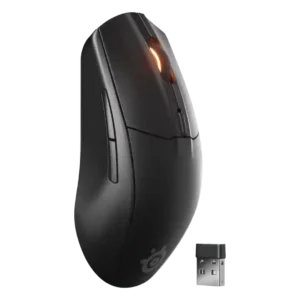
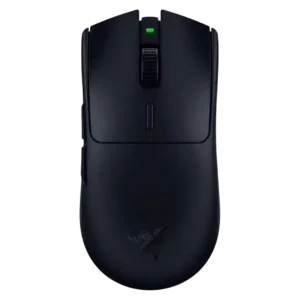
Compare SteelSeries Rival 3 Gen 2 Wireless vs Razer Viper V3 HyperSpeed

P1 SteelSeries Rival 3 Gen 2 Wireless
P2 Razer Viper V3 HyperSpeed

Comparison Takeaways

SteelSeries Rival 3 Gen 2 Wireless

Where It Has the Edge

  • Bluetooth support is 4.4 vs 1.0. Bluetooth support is widely valued for laptops, tablets, consoles, and low-stakes use, though one reviewer had trouble pairing...
  • onboard memory is 4.2 vs 2.6. Onboard memory is a plus where mentioned, allowing settings or profiles to live on the mouse for use...
  • RGB features is 2.1 vs 1.0. RGB is a clear limitation on the wireless model, usually restricted to a scroll-wheel indicator rather than customizable...
  • charging convenience is 3.1 vs 2.1. Charging convenience is a tradeoff: removable AAA batteries avoid charging cables but require spare or rechargeable batteries and...

Razer Viper V3 HyperSpeed

Where It Has the Edge

  • lift-off distance is 4.6 vs 2.4. Lift-off control is a strength through asymmetric cut-off, landing distance, and granular height adjustment options in Synapse.
  • side button quality is 4.6 vs 2.7. Side button quality is a standout strength, with several reviewers calling the buttons easier, premium, or among the...
  • palm grip comfort is 4.1 vs 3.1. Palm grip comfort improved over older Vipers for many reviewers, but remains hand-size and style dependent.
  • scroll wheel quality is 4.3 vs 3.3. Scroll wheel quality is consistently positive, described as tactile, defined, responsive, or smooth with usable steps.
Average score
Product 1: SteelSeries Rival 3 Gen 2...
3.9
Product 2: Razer Viper V3 HyperSpeed
3.9
2.4GHz connectivity
Product 1: SteelSeries Rival 3 Gen 2...
4.4

Reviewers consistently describe the 2.4GHz dongle mode as the gaming-first connection, with low-latency behavior and broad praise, though some note placement and interference can matter.

Product 2: Razer Viper V3 HyperSpeed
4.2

Reviewers describe wireless use through the included 2.4GHz USB dongle only, with no wired or Bluetooth fallback.

acceleration control
Product 1: SteelSeries Rival 3 Gen 2...
4.4

Software-level acceleration and deceleration controls are available, and at least one review highlights no artificial acceleration for one-to-one tracking.

Product 2: Razer Viper V3 HyperSpeed
5.0

The Focus Pro sensor is repeatedly cited with 70G acceleration handling, supporting high-end tracking specifications.

Accuracy and tracking precision
Product 1: SteelSeries Rival 3 Gen 2...
4.3

Accuracy is generally praised for casual and mainstream gaming, with reviewers reporting precise shots and reliable movement rather than elite esports-grade precision.

Product 2: Razer Viper V3 HyperSpeed
4.7

Reviewers consistently report accurate tracking and precise screen representation, with only some grip or sensor-position preferences affecting aim.

balance and weight distribution
Product 1: SteelSeries Rival 3 Gen 2...
2.7

Balance feedback is mixed: some reviewers find the battery placement manageable, while several report rear drag or extra effort from the AAA battery weight.

Product 2: Razer Viper V3 HyperSpeed
3.3

Weight balance is split: some find it even or predictable, while others call the AA placement rear-heavy or less balanced than rechargeable rivals.

battery life
Product 1: SteelSeries Rival 3 Gen 2...
4.5

Battery life is one of the strongest consensus positives, with reviewers repeatedly citing hundreds of hours from one or two AAA batteries.

Product 2: Razer Viper V3 HyperSpeed
4.4

Battery life is a major strength, commonly cited around 280 hours at 1,000Hz with big drops at higher polling rates.

Bluetooth support
Product 1: SteelSeries Rival 3 Gen 2...
4.4

Bluetooth support is widely valued for laptops, tablets, consoles, and low-stakes use, though one reviewer had trouble pairing over Bluetooth.

Product 2: Razer Viper V3 HyperSpeed
1.0

Bluetooth support is absent, which reviewers mention as a limitation despite strong 2.4GHz performance.

build quality
Product 1: SteelSeries Rival 3 Gen 2...
4.5

Build quality is repeatedly praised as solid, sturdy, and better than expected for the budget price.

Product 2: Razer Viper V3 HyperSpeed
3.9

Build quality is mostly praised as solid, though a few reviewers report rattles, a lopsided base, or less-than-Pro feel.

button customization
Product 1: SteelSeries Rival 3 Gen 2...
4.3

Button customization is well supported through SteelSeries GG, including remapping, DPI controls, and other settings.

Product 2: Razer Viper V3 HyperSpeed
4.2

Button customization is solid through Synapse, including remapping, scroll-wheel directions, DPI controls, and HyperShift-style second-layer options.

button responsiveness
Product 1: SteelSeries Rival 3 Gen 2...
4.2

Button responsiveness is generally strong, with reviewers describing short travel, satisfying inputs, and clicky/bouncy action.

Product 2: Razer Viper V3 HyperSpeed
4.5

Responsiveness is generally strong, with reviewers describing the mouse as snappy, consistently responsive, and competition-capable.

charging convenience
Product 1: SteelSeries Rival 3 Gen 2...
3.1

Charging convenience is a tradeoff: removable AAA batteries avoid charging cables but require spare or rechargeable batteries and offer no USB-C wired fallback.

Product 2: Razer Viper V3 HyperSpeed
2.1

Charging convenience is the main compromise: the AA battery lasts long but requires battery swaps, with no USB-C or rechargeable fallback.

claw grip comfort
Product 1: SteelSeries Rival 3 Gen 2...
4.2

The low, symmetrical shape works especially well for claw grip users across multiple reviews.

Product 2: Razer Viper V3 HyperSpeed
4.2

Claw grip comfort is widely praised, especially with the higher rear hump and more supportive shell shape.

click latency
Product 1: SteelSeries Rival 3 Gen 2...
4.4

Click latency is repeatedly described as low enough or improved at 1.9 ms, with no meaningful delay noticed in normal gaming.

Product 2: Razer Viper V3 HyperSpeed
3.8

Click latency is mostly acceptable for gaming, though several reviewers note mechanical switches feel slightly slower than optical alternatives.

click noise
Product 1: SteelSeries Rival 3 Gen 2...
3.7

Click noise opinions vary from very low and pleasant to loud, echoey, cheap, or dampened depending on reviewer and usage.

Product 2: Razer Viper V3 HyperSpeed
3.5

Click noise is mixed: Tom’s Hardware found the clicks louder, while Trusted Reviews found them muted enough for regular use.

connection stability
Product 1: SteelSeries Rival 3 Gen 2...
4.0

Connection stability is mostly good in 2.4GHz use, but reviewers mention wake delays, Bluetooth-switch fussiness, interference, and occasional dropouts.

Product 2: Razer Viper V3 HyperSpeed
4.7

Connection stability is praised where tested, with no lag, delay, jitter, or signal loss reported in one review.

cross-platform compatibility
Product 1: SteelSeries Rival 3 Gen 2...
4.5

Cross-platform compatibility is a strength, with reviews citing PC, Mac, consoles, Android, iOS, tablets, and mobile-device use.

Product 2: Razer Viper V3 HyperSpeed
4.0

Cross-platform support has limited but direct evidence, with one review saying it works on both Macs and PCs.

debounce customization
Product 1: SteelSeries Rival 3 Gen 2...
No score yet
Product 2: Razer Viper V3 HyperSpeed
1.0

Debounce customization is weak or absent, with one reviewer explicitly finding no debounce delay setting.

dock compatibility
Product 1: SteelSeries Rival 3 Gen 2...
No score yet
Product 2: Razer Viper V3 HyperSpeed
1.5

Dock compatibility is poor because the mouse is AA-powered and reviewers note it lacks Mouse Dock Pro or rechargeable dock convenience.

DPI range
Product 1: SteelSeries Rival 3 Gen 2...
4.2

The 18,000 DPI ceiling is viewed as sufficient for most users, even if it is not a flagship-level spec.

Product 2: Razer Viper V3 HyperSpeed
5.0

DPI range is a clear strength, repeatedly tied to the 30,000 DPI Focus Pro optical sensor.

durability over time
Product 1: SteelSeries Rival 3 Gen 2...
3.6

Durability impressions are generally positive for the shell and switches, but wake delay and scroll-wheel squeak concerns lower confidence in long-term refinement.

Product 2: Razer Viper V3 HyperSpeed
3.3

Durability over time is mixed, with switch lifecycle claims but at least one long-term user reporting click grinding after use.

ecosystem integration
Product 1: SteelSeries Rival 3 Gen 2...
4.4

SteelSeries ecosystem integration is supported through GG on Windows and macOS, with settings, profiles, power modes, and device controls.

Product 2: Razer Viper V3 HyperSpeed
4.1

Ecosystem integration is useful through HyperSpeed multi-device pairing and shared dongle support with compatible Razer peripherals.

ergonomic design
Product 1: SteelSeries Rival 3 Gen 2...
4.1

Ergonomic feedback is positive for a low-profile right-handed shape, though it is not a deeply sculpted ergonomic mouse.

Product 2: Razer Viper V3 HyperSpeed
4.6

Ergonomics are improved versus prior Viper shapes, with better palm support, flatter sides, and more comfortable button grooves.

fingertip grip comfort
Product 1: SteelSeries Rival 3 Gen 2...
4.2

Fingertip grip comfort is repeatedly supported by reviewers who call the shape suitable for fingertip use and extended sessions.

Product 2: Razer Viper V3 HyperSpeed
3.9

Fingertip comfort is more divided than claw comfort; several reviewers say it works, while others prefer the older/lighter V2 Pro for fingertip play.

FPS gaming suitability
Product 1: SteelSeries Rival 3 Gen 2...
3.8

The mouse is broadly suitable for casual FPS play, but multiple reviewers caution that competitive or pro-level FPS players may want lighter, faster alternatives.

Product 2: Razer Viper V3 HyperSpeed
4.3

FPS suitability is strong thanks to the sensor, polling options, low-latency wireless, and repeated testing in shooters, though weight may deter min-maxers.

glide smoothness
Product 1: SteelSeries Rival 3 Gen 2...
4.4

Glide is a strong point thanks to PTFE feet, with reviewers describing smooth movement across pads, desks, and other surfaces.

Product 2: Razer Viper V3 HyperSpeed
4.5

Glide is broadly praised, with PTFE feet and smooth movement on mousepads or multiple surfaces.

grip texture
Product 1: SteelSeries Rival 3 Gen 2...
4.3

Grip texture is praised for matte, lightly textured, non-slip plastic that feels secure during use.

Product 2: Razer Viper V3 HyperSpeed
4.4

Grip texture is one of the most praised features, often described as grippy, smooth-touch, or premium-feeling despite fingerprints.

handedness options
Product 1: SteelSeries Rival 3 Gen 2...
2.4

Handedness is a limitation: the shape is symmetrical, but side-button placement makes it right-handed in practice and there is no left-handed version.

Product 2: Razer Viper V3 HyperSpeed
2.0

Handedness options are limited because the mouse is effectively right-hand focused with left-side thumb buttons only.

left and right click quality
Product 1: SteelSeries Rival 3 Gen 2...
4.4

Primary click quality is generally praised as snappy, responsive, tactile, and satisfying.

Product 2: Razer Viper V3 HyperSpeed
4.2

Left and right click quality ranges from crisp and snappy to somewhat mushy depending on reviewer grip and unit.

lift-off distance
Product 1: SteelSeries Rival 3 Gen 2...
2.4

Lift-off distance is a recurring limitation because it is fixed and not individually adjustable like newer competing sensors.

Product 2: Razer Viper V3 HyperSpeed
4.6

Lift-off control is a strength through asymmetric cut-off, landing distance, and granular height adjustment options in Synapse.

long-session comfort
Product 1: SteelSeries Rival 3 Gen 2...
4.2

Long-session comfort is generally good for claw/fingertip or casual use, but heavy weight can be tiring for some extended gaming sessions.

Product 2: Razer Viper V3 HyperSpeed
4.2

Long-session comfort is generally good for supported grips and hand sizes, though one reviewer reported cramping with some smaller/narrower shapes.

macro support
Product 1: SteelSeries Rival 3 Gen 2...
4.4

Macro support is available through SteelSeries GG and is repeatedly described as easy or powerful.

Product 2: Razer Viper V3 HyperSpeed
4.2

Macro support is present through programmable controls and HyperShift, though this is still a simple FPS-leaning mouse.

materials quality
Product 1: SteelSeries Rival 3 Gen 2...
4.2

Materials are usually praised as matte ABS or polymer plastic that feels solid, grippy, and above its price.

Product 2: Razer Viper V3 HyperSpeed
4.4

Materials quality is praised mainly through the smooth-touch, luxurious, grippy finish.

MMO gaming suitability
Product 1: SteelSeries Rival 3 Gen 2...
2.8

MMO suitability is limited because reviewers describe the mouse as basic and lacking enough extra buttons for serious MMO players.

Product 2: Razer Viper V3 HyperSpeed
No score yet
MOBA gaming suitability
Product 1: SteelSeries Rival 3 Gen 2...
2.8

MOBA suitability is limited for players who want more buttons and deeper customization, though it can work for beginners or casual use.

Product 2: Razer Viper V3 HyperSpeed
No score yet
motion consistency
Product 1: SteelSeries Rival 3 Gen 2...
3.7

Motion consistency is mostly reliable, but a few reviewers measured or noticed tracking deviation, jitter at higher DPI, or below-average sensor consistency.

Product 2: Razer Viper V3 HyperSpeed
4.4

Motion consistency benefits from smart tracking, motion sync, and landing/lift-off compensation, though front sensor placement divides opinion.

onboard memory
Product 1: SteelSeries Rival 3 Gen 2...
4.2

Onboard memory is a plus where mentioned, allowing settings or profiles to live on the mouse for use on other devices.

Product 2: Razer Viper V3 HyperSpeed
2.6

Onboard memory is limited, with reviewers noting only one profile or preset slot.

palm grip comfort
Product 1: SteelSeries Rival 3 Gen 2...
3.1

Palm grip comfort is mixed to weak because the low, short body can feel awkward or insufficiently supportive for palm users.

Product 2: Razer Viper V3 HyperSpeed
4.1

Palm grip comfort improved over older Vipers for many reviewers, but remains hand-size and style dependent.

polling rate
Product 1: SteelSeries Rival 3 Gen 2...
4.0

The 1,000Hz polling rate is considered standard and fine for casual gaming, while Bluetooth drops lower and esports-focused rivals go higher.

Product 2: Razer Viper V3 HyperSpeed
4.5

Polling-rate support is a major feature, with 1,000Hz out of the box and optional 4,000Hz or higher HyperPolling depending on review setup.

portability
Product 1: SteelSeries Rival 3 Gen 2...
4.4

Portability is strong because the mouse is compact, has dongle storage, supports Bluetooth, and can travel without a charging cable.

Product 2: Razer Viper V3 HyperSpeed
4.2

Portability is helped by internal dongle storage, though the AA battery system means carrying spare batteries is prudent.

premium feel
Product 1: SteelSeries Rival 3 Gen 2...
4.1

Premium feel is mixed: several reviewers say the finish and price feel surprisingly premium, while weight, scroll wheel, or buttons undercut that feel.

Product 2: Razer Viper V3 HyperSpeed
3.9

Premium feel is mixed: the mouse has premium sensor, coating, and controls, but the AA system and occasional rattle keep it below Pro models.

profile switching
Product 1: SteelSeries Rival 3 Gen 2...
3.5

Profile switching is available but imperfect because some switching requires GG software or lacks a dedicated hardware profile button.

Product 2: Razer Viper V3 HyperSpeed
4.1

Profile switching exists through DPI stages, game-specific profiles, and top-mounted DPI/profile controls, though onboard storage is limited.

programmable buttons
Product 1: SteelSeries Rival 3 Gen 2...
4.4

Programmable buttons are a strength, with six buttons and often the scroll wheel available for customization.

Product 2: Razer Viper V3 HyperSpeed
4.2

Programmable controls are adequate for FPS and everyday gaming, typically described as six buttons or eight controls including wheel directions.

RGB features
Product 1: SteelSeries Rival 3 Gen 2...
2.1

RGB is a clear limitation on the wireless model, usually restricted to a scroll-wheel indicator rather than customizable lighting.

Product 2: Razer Viper V3 HyperSpeed
1.0

RGB features are essentially absent, which keeps the mouse simple and battery-focused but removes lighting customization.

scroll wheel quality
Product 1: SteelSeries Rival 3 Gen 2...
3.3

Scroll wheel quality is one of the most mixed areas, ranging from fantastic and responsive to loose, mushy, squeaky, or cheap-feeling.

Product 2: Razer Viper V3 HyperSpeed
4.3

Scroll wheel quality is consistently positive, described as tactile, defined, responsive, or smooth with usable steps.

sensor performance
Product 1: SteelSeries Rival 3 Gen 2...
4.0

Sensor performance is good for mainstream and casual play, though some reviewers call the TrueMove Air older or below top-tier alternatives.

Product 2: Razer Viper V3 HyperSpeed
4.8

Sensor performance is the product’s strongest consensus point, with the Focus Pro 30K repeatedly praised as fast, accurate, and premium-class.

shape comfort
Product 1: SteelSeries Rival 3 Gen 2...
4.2

Shape comfort is generally positive for a compact, symmetrical, low-profile shell, especially outside full palm-grip use.

Product 2: Razer Viper V3 HyperSpeed
4.3

Shape comfort is improved for many hands due to the higher rear hump and fuller shell, though it is a major preference point.

side button quality
Product 1: SteelSeries Rival 3 Gen 2...
2.7

Side buttons are a common concern because many reviewers find them thin, pointy, finicky, or hard to hit quickly.

Product 2: Razer Viper V3 HyperSpeed
4.6

Side button quality is a standout strength, with several reviewers calling the buttons easier, premium, or among the best they have used.

skate durability
Product 1: SteelSeries Rival 3 Gen 2...
4.0

Skate durability has limited but positive evidence, with PTFE feet described as durable and removable with less damage risk.

Product 2: Razer Viper V3 HyperSpeed
4.4

Skate durability and quality are positive where discussed, with reviewers noting thick, smooth PTFE feet that should last well.

software stability
Product 1: SteelSeries Rival 3 Gen 2...
4.0

Software stability evidence is limited but acceptable, with reviews saying GG is not resource-heavy and works at its core.

Product 2: Razer Viper V3 HyperSpeed
3.2

Software stability has limited mixed evidence, with one reviewer saying Synapse improved but still caused occasional hiccups.

software usability
Product 1: SteelSeries Rival 3 Gen 2...
4.1

Software usability is mostly positive for basic mouse settings, though some reviewers find GG cluttered, antiquated, or less intuitive than rivals.

Product 2: Razer Viper V3 HyperSpeed
4.0

Software usability is generally straightforward, with Synapse exposing DPI, polling, lift-off, profiles, power settings, and remapping.

surface compatibility
Product 1: SteelSeries Rival 3 Gen 2...
4.0

Surface compatibility is generally good across pads, desks, wood, plastic, and glass, with one beginner review noting faux leather problems.

Product 2: Razer Viper V3 HyperSpeed
4.8

Surface compatibility is strong, with reviewers reporting accurate tracking across mousepads, wood, glass, desks, and other surfaces.

switch durability
Product 1: SteelSeries Rival 3 Gen 2...
4.2

Switch durability is strong on paper and in reviewer impressions, with frequent references to 60 million clicks or actuations.

Product 2: Razer Viper V3 HyperSpeed
3.9

Switch durability is acceptable for the price through 60-million-click mechanical switches, though below higher-end optical claims.

switch feel
Product 1: SteelSeries Rival 3 Gen 2...
4.0

Switch feel is mostly positive, described as crisp, clicky, responsive, or satisfying, though a few reviewers note dampened feel.

Product 2: Razer Viper V3 HyperSpeed
4.0

Switch feel is generally good, with light, snappy, crisp mechanical clicks, but some reviewers find them softer or mushier than premium opticals.

value for money
Product 1: SteelSeries Rival 3 Gen 2...
4.3

Value for money is a major strength, especially for budget shoppers who want dual wireless and solid gaming fundamentals.

Product 2: Razer Viper V3 HyperSpeed
4.4

Value for money is a major strength, as reviewers repeatedly call it affordable, budget-friendly, or excellent price-to-performance.

weight
Product 1: SteelSeries Rival 3 Gen 2...
2.7

Weight is the most repeated drawback: the mouse can reach roughly 106 to 110 g with two AAA batteries and remains heavy by modern gaming standards.

Product 2: Razer Viper V3 HyperSpeed
3.3

Weight is the biggest tradeoff: 82g is acceptable for some, but heavy versus modern ultralight FPS mice.

weight tuning
Product 1: SteelSeries Rival 3 Gen 2...
4.5

Weight tuning is unusually useful because the mouse can run on one AAA battery to reduce weight at the cost of battery life.

Product 2: Razer Viper V3 HyperSpeed
4.4

Weight tuning is possible through AAA lithium battery mods, which several reviewers say can reduce weight substantially.

wireless latency
Product 1: SteelSeries Rival 3 Gen 2...
4.5

Wireless latency is viewed positively, with 1.9 ms and low-latency mode repeatedly described as adequate or better than expected.

Product 2: Razer Viper V3 HyperSpeed
4.7

Wireless latency is praised through low-latency 2.4GHz, HyperPolling support, and reviewer reports of no lag or very low input latency.

wireless performance
Product 1: SteelSeries Rival 3 Gen 2...
4.3

Wireless performance is generally strong in 2.4GHz mode, with reviewers calling it solid, reliable, and good for casual gaming.

Product 2: Razer Viper V3 HyperSpeed
4.6

Wireless performance is broadly positive, with reviewers describing reliable, fast wireless use and strong gaming performance.