acceleration control
P1
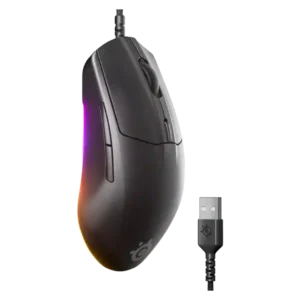
Product 1: SteelSeries Rival 3 Gen 2...
4.0
Acceleration settings were considered easy to understand in SteelSeries GG, with clear graphs and sliders.
P2
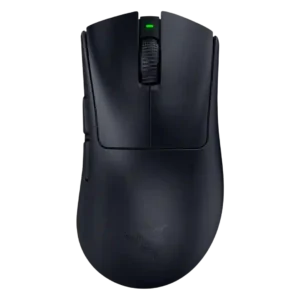
Product 2: Razer DeathAdder V4 Pro
4.4
Dynamic sensitivity and acceleration-style controls were often praised as powerful or useful, although some reviewers found them hard to explain or practice-dependent.
Accuracy and tracking precision
P1
Product 1: SteelSeries Rival 3 Gen 2...
4.4
Accuracy was a major strength: reviewers reported precise swipes, strong aim-trainer results, and little practical impact from the modest sensor ceiling.
P2
Product 2: Razer DeathAdder V4 Pro
5.0
Reviewers consistently praised the mouse's accurate 1:1 tracking, with aim, flicks, and fine movement described as precise and trustworthy.
balance and weight distribution
P1Product 1: SteelSeries Rival 3 Gen 2...
No score yet
P2
Product 2: Razer DeathAdder V4 Pro
4.8
Balance and weight distribution were praised where reviewers said the mouse felt well balanced and easy to control despite its size.
battery life
P1Product 1: SteelSeries Rival 3 Gen 2...
No score yet
P2
Product 2: Razer DeathAdder V4 Pro
4.6
Battery life was a major strength at 1,000Hz, with repeated praise for long endurance, while 8,000Hz drain was the main caveat.
build quality
P1
Product 1: SteelSeries Rival 3 Gen 2...
4.8
Build quality was praised as sturdy and solid, including zero flex or creaking in one hands-on teardown-oriented review.
P2
Product 2: Razer DeathAdder V4 Pro
4.7
Build quality was widely praised for rigidity, lack of creaking, and a solid shell despite low weight.
button customization
P1
Product 1: SteelSeries Rival 3 Gen 2...
4.0
Button customization was seen as giving useful flexibility and control over play style through software adjustments.
P2
Product 2: Razer DeathAdder V4 Pro
4.5
Button customization was praised through Synapse and Hypershift options, especially for users willing to configure the mouse.
button responsiveness
P1
Product 1: SteelSeries Rival 3 Gen 2...
4.3
Buttons were generally satisfying and responsive, with reviewers praising rapid tapping, quick rebound, and a lack of accidental presses.
P2
Product 2: Razer DeathAdder V4 Pro
4.9
Button responsiveness was consistently strong, with reviewers reporting snappy clicks, instant registration, and responsive side buttons.
cable flexibility
P1
Product 1: SteelSeries Rival 3 Gen 2...
4.6
The braided/paracord-style cable drew consistent praise for staying unobtrusive, avoiding friction, and feeling almost unnoticeable in fast play.
P2
Product 2: Razer DeathAdder V4 Pro
3.8
Cable feedback was mixed: reviewers liked the braided included cable, but some found it stiff or not ideal for wired play.
claw grip comfort
P1
Product 1: SteelSeries Rival 3 Gen 2...
4.5
Claw grip users were well served, with multiple reviewers calling the shape comfortable or ideal for claw-style handling.
P2
Product 2: Razer DeathAdder V4 Pro
4.1
Claw-grip comfort was generally positive but more context-dependent than palm grip because the larger ergonomic shape does not suit everyone equally.
click latency
P1
Product 1: SteelSeries Rival 3 Gen 2...
4.5
Latency impressions were positive, with reviewers reporting no lag or missed inputs and direct, delay-free movement response.
P2
Product 2: Razer DeathAdder V4 Pro
5.0
Click latency evidence was strongly positive where reviewers described instant registration and no lag in button inputs.
click noise
P1
Product 1: SteelSeries Rival 3 Gen 2...
4.0
Click noise was acceptable: the switches were described as crisp without being overly loud or heavy.
P2
Product 2: Razer DeathAdder V4 Pro
2.4
Click noise was the most common tactile complaint, with many reviewers describing the main clicks as loud, hollow, pingy, or annoying.
connection stability
P1
Product 1: SteelSeries Rival 3 Gen 2...
5.0
The wired setup was praised for stable, consistent performance without connection drops or battery-related interruptions.
P2
Product 2: Razer DeathAdder V4 Pro
4.7
Connection stability was strongly praised through no-drop testing, stable dongle behavior, and reliable transmission.
cross-platform compatibility
P1
Product 1: SteelSeries Rival 3 Gen 2...
4.5
Cross-system use was supported by onboard settings, with one review calling personal settings seamless across different computers.
P2Product 2: Razer DeathAdder V4 Pro
No score yetDPI range
P1
Product 1: SteelSeries Rival 3 Gen 2...
3.8
The 8,500 DPI ceiling was usually considered enough for gaming, though one reviewer warned the lower peak sensitivity could matter to some users.
P2
Product 2: Razer DeathAdder V4 Pro
5.0
The extreme DPI ceiling was valued by reviewers who cared about surgical tuning and peak sensor headroom.
durability over time
P1
Product 1: SteelSeries Rival 3 Gen 2...
4.5
Durability over time was supported by comments about consistent switch performance in long-term use.
P2
Product 2: Razer DeathAdder V4 Pro
4.3
Durability over time was cautiously positive where reviewers cited optical-wheel longevity and internals unlikely to fail prematurely.
ergonomic design
P1
Product 1: SteelSeries Rival 3 Gen 2...
4.5
Ergonomics were mostly positive, with reviewers describing the wired mouse as comfortable and improved, though not highly sculpted.
P2
Product 2: Razer DeathAdder V4 Pro
4.9
Ergonomic design drew strong praise for comfort, palm support, and competitive-friendly shaping.
fingertip grip comfort
P1
Product 1: SteelSeries Rival 3 Gen 2...
4.5
Fingertip grip comfort was strong, with the low-profile shape repeatedly described as comfortable or ideal for that style.
P2
Product 2: Razer DeathAdder V4 Pro
3.4
Fingertip comfort was mixed: some reviewers said it worked, while others found the large body limiting or intrusive.
FPS gaming suitability
P1
Product 1: SteelSeries Rival 3 Gen 2...
4.3
FPS gaming suitability was strong across reviews, with positive examples from Call of Duty, Counter-Strike 2, Valorant, and similar aim-focused testing.
P2
Product 2: Razer DeathAdder V4 Pro
4.9
FPS gaming suitability was extremely strong, with reviewers praising CS2, Fortnite, Valorant-style precision, and esports-focused responsiveness.
glide smoothness
P1
Product 1: SteelSeries Rival 3 Gen 2...
4.5
Glide was consistently praised, with PTFE feet and smooth skates keeping movement low-friction across mousepads and surfaces.
P2
Product 2: Razer DeathAdder V4 Pro
4.6
Glide smoothness was heavily praised, with reviewers describing liquid, effortless, or very smooth movement across pads and surfaces.
grip texture
P1
Product 1: SteelSeries Rival 3 Gen 2...
4.0
Grip texture was mostly positive for matte, grippy plastic, though one review wished the side grooves were deeper.
P2
Product 2: Razer DeathAdder V4 Pro
4.8
Grip texture was praised for secure control without abrasion, though some reviewers relied on included grip tape or noted surface marks.
handedness options
P1
Product 1: SteelSeries Rival 3 Gen 2...
3.0
Handedness support was mixed because the shape is symmetrical but one review said it is optimized for right-handed use.
P2
Product 2: Razer DeathAdder V4 Pro
2.0
Handedness was a clear limitation because reviewers noted the mouse is strictly right-handed.
left and right click quality
P1
Product 1: SteelSeries Rival 3 Gen 2...
4.8
Primary click quality was praised as firm, balanced, and close to best-in-class for feel and performance.
P2
Product 2: Razer DeathAdder V4 Pro
4.3
Left and right click quality was mostly positive for crisp, responsive clicks, with some caveats around hollow sound.
long-session comfort
P1
Product 1: SteelSeries Rival 3 Gen 2...
4.3
Long-session comfort was repeatedly positive for workday use, prolonged use, and reduced sweat or fatigue.
P2
Product 2: Razer DeathAdder V4 Pro
4.8
Long-session comfort was praised for extended play and fatigue management.
macro support
P1
Product 1: SteelSeries Rival 3 Gen 2...
4.0
Macro support was viewed as flexible, with side buttons able to be macroed through SteelSeries software.
P2
Product 2: Razer DeathAdder V4 Pro
4.5
Macro support received positive evidence where reviewers found assigning downloadable or preset macros straightforward.
materials quality
P1
Product 1: SteelSeries Rival 3 Gen 2...
4.5
Materials were praised as thick, textured matte plastic, with another review describing improved build materials.
P2
Product 2: Razer DeathAdder V4 Pro
3.0
Materials quality was mixed, combining praise for soft matte recycled plastic with complaints about oil marks or less-premium impressions.
motion consistency
P1
Product 1: SteelSeries Rival 3 Gen 2...
4.5
Motion consistency was strong, with easy recoil control and predictable responses in low-DPI/high-sensitivity play.
P2
Product 2: Razer DeathAdder V4 Pro
5.0
Motion consistency was praised for sleek, smooth swipes and a cursor feel that tracked hand motion cleanly.
onboard memory
P1
Product 1: SteelSeries Rival 3 Gen 2...
4.5
Onboard memory was useful for preserving settings across computers without relying on local software.
P2
Product 2: Razer DeathAdder V4 Pro
2.0
Onboard memory drew a negative review because one reviewer found the single profile disappointing for the price.
palm grip comfort
P1
Product 1: SteelSeries Rival 3 Gen 2...
2.3
Palm grip comfort was the clearest fit issue, with reviewers saying palm users may find it too small or should look elsewhere.
P2
Product 2: Razer DeathAdder V4 Pro
4.1
Palm-grip comfort was generally strong, though one reviewer with large hands found scroll-wheel reach awkward in full palm grip.
polling rate
P1
Product 1: SteelSeries Rival 3 Gen 2...
4.0
Polling-rate feedback was mixed but generally adequate: 1,000Hz was called standard or delay-free, while PCMag called it low but acceptable.
P2
Product 2: Razer DeathAdder V4 Pro
4.3
8,000Hz polling was viewed as cutting-edge and useful for esports, but several reviewers said many casual players may barely notice it and it hurts battery life.
portability
P1
Product 1: SteelSeries Rival 3 Gen 2...
4.0
Portability was a plus for users who value a smaller mouse, even if that is a performance tradeoff for some.
P2
Product 2: Razer DeathAdder V4 Pro
2.1
Portability was one of the clearest weaknesses because the larger dongle and lack of Bluetooth make travel and laptop use less convenient.
premium feel
P1
Product 1: SteelSeries Rival 3 Gen 2...
3.2
Premium feel was mixed: reviewers liked the fundamentals but said it lacked higher-end flair or felt less premium than Aerox models.
P2
Product 2: Razer DeathAdder V4 Pro
4.8
Premium feel was praised when reviewers focused on the smoother coating and refined construction.
profile switching
P1
Product 1: SteelSeries Rival 3 Gen 2...
3.0
Profile switching was somewhat limited because there is no dedicated profile button by default, though remapping is possible.
P2
Product 2: Razer DeathAdder V4 Pro
2.9
Profile and DPI switching divided reviewers: some liked the underside placement, while others found it annoying or tedious during use.
programmable buttons
P1
Product 1: SteelSeries Rival 3 Gen 2...
4.0
Programmable buttons were seen as adding practical flexibility and control when customized in software.
P2
Product 2: Razer DeathAdder V4 Pro
2.5
Programmable-button feedback was mixed because the mouse is intentionally minimal and lacks the extra physical buttons some users expect.
RGB features
P1
Product 1: SteelSeries Rival 3 Gen 2...
4.4
RGB was a consistent wired-model strength, with praise for tasteful underglow and extensive customization.
P2
Product 2: Razer DeathAdder V4 Pro
2.5
RGB feedback was mostly negative or conditional because the mouse lacks lighting, which disappointed reviewers who like RGB aesthetics.
scroll wheel quality
P1
Product 1: SteelSeries Rival 3 Gen 2...
4.0
The scroll wheel was considered simple but well suited, with distinct notches and usable firmness.
P2
Product 2: Razer DeathAdder V4 Pro
4.5
The optical scroll wheel was one of the most praised upgrades, with reviewers calling it precise, durable, tactile, and a clear improvement over prior wheels.
sensor performance
P1
Product 1: SteelSeries Rival 3 Gen 2...
4.3
Sensor performance was broadly positive for a budget mouse, with snappy response, smooth tracking, and satisfying gaming performance.
P2
Product 2: Razer DeathAdder V4 Pro
5.0
The Focus Pro 45K sensor drew very strong praise for smoothness, precision, and faultless tracking, though several reviewers noted its headline DPI is overkill.
shape comfort
P1
Product 1: SteelSeries Rival 3 Gen 2...
3.8
Shape comfort was generally good but not universal: reviewers liked the in-hand feel while noting limited contouring for some grips.
P2
Product 2: Razer DeathAdder V4 Pro
4.7
Shape comfort was one of the strongest areas, with many reviewers praising the familiar ergonomic DeathAdder shape and in-hand comfort.
side button quality
P1
Product 1: SteelSeries Rival 3 Gen 2...
3.6
Side button quality was mixed, ranging from thin and less premium to easily accessible and functional.
P2
Product 2: Razer DeathAdder V4 Pro
4.7
Side buttons were widely praised for better spacing, tactile response, and easier identification in fast gameplay.
software stability
P1
Product 1: SteelSeries Rival 3 Gen 2...
3.8
Software stability and performance were acceptable, with comments that GG was not resource-heavy and functioned well at its core.
P2
Product 2: Razer DeathAdder V4 Pro
2.3
Software stability was mixed-to-negative where reviewers encountered recognition issues or heavy resource use.
software usability
P1
Product 1: SteelSeries Rival 3 Gen 2...
3.5
Software usability was mixed: GG was praised by some, but other reviewers found it cluttered or unintuitive.
P2
Product 2: Razer DeathAdder V4 Pro
4.3
Software usability was mixed-to-positive: Synapse offers deep control and helpful explanations, but bloat, external tools, and confusing descriptions hurt it.
surface compatibility
P1
Product 1: SteelSeries Rival 3 Gen 2...
4.5
Surface compatibility was positive, with smooth feet described as gliding across most surfaces.
P2
Product 2: Razer DeathAdder V4 Pro
5.0
Surface compatibility was praised where reviewers tested multiple surfaces and reported clean tracking.
switch feel
P1
Product 1: SteelSeries Rival 3 Gen 2...
4.5
Switch feel was praised as crisp, clicky, balanced, and responsive without being too heavy.
P2
Product 2: Razer DeathAdder V4 Pro
4.2
Switch feel was generally praised for crispness, tactility, and speed, but some reviewers disliked hollow or loud acoustics.
value for money
P1
Product 1: SteelSeries Rival 3 Gen 2...
4.6
Value was the strongest consensus point, with reviewers repeatedly praising the mouse as budget-friendly, cost-effective, and a strong class option.
P2
Product 2: Razer DeathAdder V4 Pro
3.2
Value was sharply context-dependent: reviewers often justified the price for esports users but warned casual buyers or V3 owners may find cheaper options smarter.
weight
P1
Product 1: SteelSeries Rival 3 Gen 2...
4.3
Weight was generally praised for quick movements and reduced fatigue, though reviewers noted it is not ultralight compared with some rivals.
P2
Product 2: Razer DeathAdder V4 Pro
4.6
The low 56-57g weight was praised across reviews as light, nimble, and especially good for competitive play.