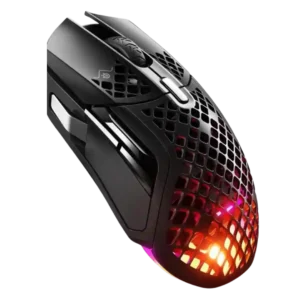
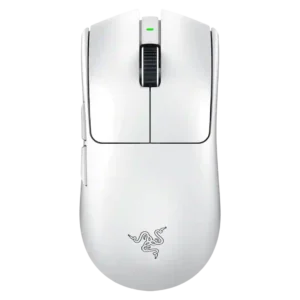
Reviews repeatedly support 2.4GHz wireless as the main gaming connection, with dongles, Quantum wireless, USB-C receiver setups, and low-latency wireless mode mentioned across many tests.
Reviews describe the mouse as using 2.4GHz-class Razer HyperSpeed or HyperPolling wireless rather than Bluetooth, with wired USB-C also available. The connection approach is performance-focused, but less versatile than a simple multi-device wireless setup.
The reviews that discuss acceleration describe adjustable acceleration or 40G capability, with one review also noting the sensor avoided unwanted acceleration or anomalies.
The reviews that mention acceleration-related control point to software-level tuning, including acceleration curves, dynamic sensitivity, and rotation adjustment. This makes movement behavior adjustable, though the feature is not the main focus of most reviews.
Tracking accuracy is consistently praised. Reviewers describe accurate sensor behavior, one-to-one movement, pixel-perfect tracking, and smooth response in gaming tests.
Reviewers consistently describe tracking as precise, accurate, smooth, or confidence-inspiring across gaming and surface tests. The evidence supports a high score for aiming precision, especially in fast shooters and aim-training contexts.
Weight balance received limited direct evidence, with one review noting the low weight is slightly concentrated toward the back and helps control, especially in palm grip.
Reviewers describe the mouse as extremely light without generally feeling flimsy, and several comments connect its size-to-weight feel with control and comfort. The balance is treated as strong overall, though the evidence is more about feel than adjustable balance.
Battery life is the most mixed theme. Some reviews confirm strong runtime or multiple sessions, while others report poor real-world results when using RGB, high polling, or heavier daily use.
Battery life is strong at 1,000Hz but drops sharply at higher polling rates, especially 8,000Hz. Reviewers repeatedly cite the 95-hour and 17-hour figures, with some practical-use comments finding the lower-rate endurance solid.
Bluetooth support is widely confirmed and useful for flexibility, pairing other devices, and saving battery, but several reviews treat it as less ideal for demanding gaming than 2.4GHz.
Bluetooth support is a clear weakness because multiple reviews explicitly say it is absent. Reviewers frame that omission as understandable for an esports mouse, but it reduces versatility for everyday or multi-device use.
Build quality is generally strong. Reviewers mention sturdy honeycomb construction, little flex, IP54 or AquaBarrier protection, and solid hardware despite the perforated shell.
Build quality is generally praised, with reviewers noting robust construction, durability, lack of flex or creaking, and strong fit despite the low weight. A few comments are more cautious about thin or lightweight materials, but the overall evidence is positive.
Button customization is one of the strongest supported features, with reviewers describing reassignment, remapping, full software configuration, and flexible controls through SteelSeries GG.
Button customization is supported through Razer Synapse, including remapping, function assignment, HyperShift, and other software controls. The reviews present this as flexible enough for a performance mouse, even if it is not button-heavy.
Button responsiveness is mostly positive. Reviewers praise crisp, tactile, precise, responsive clicks, though some side-button implementations are criticized separately.
Button responsiveness is a strength, with reviewers describing clicks as rapid, stable, snappy, responsive, and easy to actuate. The optical switch design and low-latency focus support high scores here.
The included cable is often treated as flexible and useful for charging or dongle extension, though some reviewers dislike the long adapter-cable setup on certain desks.
Cable flexibility receives mixed evidence. Some reviews criticize the cable as stiff, heavy, or cumbersome compared with the wireless experience, while one review describes the charging cable material as more flexible and easier to handle.
Charging convenience is supported by quick-charge claims and experiences, USB-C charging, and wired use while charging, though battery level reporting and charging frequency vary.
Charging convenience is mixed. Reviewers note USB-C charging, quick top-ups, and use while charging, but some wanted a charging stand or disliked needing to plug in instead of using a dock-style solution.
Claw grip comfort is generally supported for larger or suitable hands, with several reviews saying the shape works for claw grip, though a few note reach issues for some buttons.
Claw grip comfort is one of the better-supported grip strengths. Several reviews say the shape works well for claw users, with good hand support, finger positioning, and comfort during gaming.
Click latency has direct positive support from one review that found clicks and side-button inputs acted instantly without missed inputs during competitive play.
Click latency is scored highly because reviewers cite reduced delay, no debounce delay, near-instant response, optical switches, and very low measured latency. The comments align with the mouse’s esports-focused design.
Click noise has limited but positive evidence, with one review calling the button action precise and quiet.
Click noise is a mild drawback. Several reviews say the clicks can be a little loud or uneven in sound, though the same reviews often still praise the click feel and responsiveness.
Connection stability is generally strong over 2.4GHz and often good over Bluetooth, though dongle design and Bluetooth performance limitations are noted by some reviewers.
Connection stability is mostly strong, with reviewers reporting strong connection, no drops, and no issues in games. One review mentions occasional wake or connection stutters, so the overall score is positive but not flawless.
Cross-platform compatibility has limited but clear evidence from a review that tested the mouse successfully on Xbox, alongside broader wireless modes.
Debounce customization is weak because one review specifically criticized the lack of adjustable debounce as a missing high-end feature.
DPI or CPI range is well supported, with reviewers repeatedly citing 18,000 CPI/DPI and adjustable presets as sufficient or generous, though some wanted higher flagship numbers.
DPI range is very strong on paper and in software, with repeated references to the 35,000 DPI or CPI ceiling and single-step adjustment. Most reviewers note that the extreme ceiling is more headroom than most players will use.
Durability over time is supported by AquaBarrier protection, durability language, and switch or shell construction claims, but long-term wear testing is limited.
Durability over time is supported mainly by the 90-million-click switch rating, sturdy construction comments, and one long-term update that found few issues across multiple units. The evidence is positive, though long-term real-world durability is less broadly tested.
The mouse integrates with Razer’s Synapse ecosystem for profiles, remapping, sensitivity matching, power settings, and polling controls. Reviews generally accept the ecosystem requirement, though Synapse reactions vary by reviewer.
Ergonomic design is generally positive for right-handed users, with reviewers describing a comfortable, lightly ergonomic or all-round shape rather than an aggressive sculpt.
Ergonomics are broadly positive, especially for a symmetrical esports mouse. Reviewers praise the lightweight body, comfortable shape, secure hand feel, and long-session usability, though a few prefer other shapes.
Fingertip comfort is mixed. One review says fingertip grippers should avoid it, while others with small hands or broad grip claims found it usable.
Fingertip grip comfort is supported but a little more mixed than claw comfort. Several reviews say it works nicely for fingertip use, while at least one larger-handed reviewer found the V3 shape harder to fingertip than the older flatter design.
Firmware reliability evidence is mixed and limited, with one review noting settings reset after reboot and another reporting pairing trouble that persisted despite firmware updates.
FPS suitability is mixed. The mouse is light, responsive, and accurate enough for casual or fast FPS play, but some reviewers found its size, side buttons, or performance ceiling less ideal for competitive specialists.
FPS suitability is one of the strongest categories. Reviews repeatedly test or recommend it for Counter-Strike, Valorant, Overwatch, Fortnite, Rainbow Six Siege, and other shooters, emphasizing precision, speed, low weight, and responsiveness.
Glide smoothness is one of the most consistently praised areas, with PTFE skates described as effortless, smooth, floaty, and effective on desks and mousepads.
Glide smoothness is a clear strength. Reviewers repeatedly highlight large PTFE feet, smooth movement across pads or surfaces, low friction, and effortless motion, often linking glide to better fast-swipe control.
Grip texture receives mixed but mostly positive support. The rough matte or honeycomb finish can improve hold, but some reviewers found it slippery or distracting depending on hand position.
Grip texture is generally positive. Reviewers describe the smooth-touch coating or surface texture as grippy, secure, or naturally frictioned, though some note fingerprints, grime, or optional grip tape as tradeoffs.
Handedness options are weak because reviewers repeatedly identify it as a right-handed mouse and one reviewer specifically lamented the lack of a left-handed or ambidextrous model.
Handedness is mixed. The shape is symmetrical or semi-ambidextrous and some reviews say left-hand use is possible, but the side buttons are positioned mainly for right-handed use.
Left and right click quality is strongly positive where discussed, with reviewers praising crisp, tactile primary clicks and comfortable grooved button surfaces.
Left and right click quality is a strength. Reviewers describe the main clicks as firm, crisp, tactile, stable, and improved in shell tolerance, with only occasional preference-based criticism of optical feel.
Lift-off distance support is negative or limited, with reviewers pointing to missing adjustability or a higher default lift-off distance rather than praising the feature.
Lift-off distance has direct software and sensor support. Reviews mention adjustable lift-off and landing distance, smart tracking, asymmetric cut-off, and lift-off customization, supporting a strong score for tunability.
Long-session comfort is positive. Reviewers cite comfortable long-period use, no noticeable fatigue, and reduced fatigue from the light body and smooth glide.
Long-session comfort is strong for its target audience. Reviews mention reduced fatigue, no hand cramping, all-day comfort, and long gaming-session comfort, helped by the very low weight and ergonomic shape.
Macro support is well supported through SteelSeries GG, with reviewers describing macro assignment, macro recording, and gaming or productivity shortcut use.
Macro support is supported through remapping, HyperShift, and side-button actions or macros. It is present through software, but the limited button count means this is not a macro-heavy MMO-style mouse.
Materials quality is generally praised, with high-quality ABS plastic, sturdy construction, and premium-feeling components mentioned in supported reviews.
Materials quality is mostly positive but not perfect. Reviewers cite soft-touch coating, robust plastic, and solid construction, while some complain about fingerprints, oil residue, or a cheaper-feeling lightweight shell.
MMO suitability is positive for moderate MMO use thanks to extra buttons and mapping, but one reviewer says serious MMORPG players may prefer the Aerox 9.
MMO suitability is limited. One review had a positive Final Fantasy XIV experience, but the broader evidence shows only two side buttons and another review frames Razer’s Naga as the MMO-focused option.
MOBA suitability is supported by League of Legends, DOTA 2, and MOBA macro mentions, with the extra side controls viewed as useful for genre flexibility.
MOBA suitability is only lightly supported. Some reviews mention League of Legends or DOTA 2 as competitive contexts, but the mouse is more clearly reviewed and positioned around FPS performance than MOBA-specific controls.
Motion consistency is positive where tested, with reviewers describing lightning-fast responsiveness, smooth tracking, and registered rapid movements without skipping.
Motion consistency is very strong. Reviewers cite smooth smaller movements, quick flicks, micro-adjustments, consistent tracking, and sensor/wireless performance that keeps pace with fast play.
Onboard memory is supported by specification and software evidence, though one Bluetooth-mode review says some stored settings do not carry over in Bluetooth mode.
Onboard memory is mixed. Some reviews say there is only one onboard profile, while others mention onboard memory or multiple onboard DPI profiles, so the useful portability of settings is present but not uniformly described.
Palm grip comfort is broadly supported, with many reviewers saying the taller shape, palm support, and hand-filling design work well for palm grip users.
Palm grip comfort is decent but not the strongest grip category. Several reviews say the shape supports palm contact or works for palm grip, while others position claw and fingertip as the more natural fits.
Polling rate support is mixed. 1000Hz is confirmed in wired or 2.4GHz modes, while Bluetooth or efficiency modes drop to 125Hz and limit performance.
Polling rate is a headline strength, with repeated evidence for wireless polling up to 8,000Hz and selectable lower rates. Reviewers also note diminishing practical returns and battery tradeoffs at the highest settings.
Portability is mixed. One reviewer found the slippery wireless body less ideal for travel, while another liked the lightweight form for taking away from the desk.
Portability is a weakness. Reviews cite no dongle storage, awkward dongle wiring, limited multi-device use, and the lack of Bluetooth, even though the light chassis itself would otherwise travel well.
Premium feel is positive in the limited direct evidence, with reviewers describing exceptional quality, performance, and a premium look and feel.
Premium feel is supported by comments about high-end positioning, luxurious feel, strong performance, and enjoyable hand feel. Some reviewers still question value, so the premium impression is tied closely to performance rather than extras.
Profile switching is supported by two reviews that mention customized profiles, profile creation, switching, and storage through the software.
Profile switching is supported through Synapse and DPI profiles, but not without caveats. Reviews mention multiple DPI presets and software-based switching, while one review says the mouse has only one onboard profile.
Programmable buttons are a major strength. Reviews repeatedly cite the nine-button layout and extra side inputs as a core reason the mouse works across genres.
Programmable buttons are adequate rather than abundant. Reviews cite six programmable buttons or eight programmable functions, plus software remapping, but the layout remains intentionally minimal for esports.
RGB features are mixed. Several reviewers like the three zones and customization, but many say lighting is hidden under the palm, underwhelming, or less useful during play.
RGB features score low because the mouse has little or no RGB lighting. Reviews frame the omission as weight- and battery-saving, but buyers wanting lighting effects will not get them here.
Scroll wheel quality is mixed to positive. Some praise texture, resistance, or consistency, while one review finds the wheel underwhelming or less tactile than the rest of the mouse.
Scroll wheel quality is mixed. Reviewers praise tactile feedback, solid notches, and useful in-game weapon switching, but some find it stiff, uncomfortable, or less pleasant for everyday scrolling.
Sensor performance is consistently strong in most reviews, with TrueMove Air described as accurate, responsive, reliable, and problem-free in real gameplay.
Sensor performance is one of the strongest attributes. Reviewers repeatedly mention the Focus Pro 35K optical sensor, high tracking speed, accuracy, jitter improvements, surface handling, and industry-leading performance.
Shape comfort is a broad strength. Reviewers often call the mouse comfortable, pleasant, or great in the hand, though size and button reach can hurt smaller hands.
Shape comfort is generally strong, especially for claw and competitive play. Reviews praise the streamlined body and multi-grip support, though a few comments say it is not the most comfortable symmetrical mouse for every hand.
Side button quality is the most frequent ergonomic complaint. Reviewers like the extra inputs, but many criticize the front button or rocker for being hard to reach or actuate quickly.
Side button quality is strong. Reviewers praise the side buttons as well placed, separated, easy to find, firm, and low-mush, with several noting improved confidence during gameplay.
Skate durability has limited but useful evidence. Reviews praise large PTFE feet, one review expects slower wear, but another notes replacement feet are not included and aftermarket compatibility changes with the new shape.
Software stability is mixed to weak. Windows functionality is broad, but reviews mention bloated software, clunky behavior, macOS limitations, bugs, and pairing problems.
Software stability is mixed. Several reviews find Synapse workable or improved, but others mention loading issues, bloat, or reluctance tied to Synapse, so reliability depends on setup and version.
Software usability is mostly positive once inside the mouse settings, with reviewers praising clear controls, easy customization, and rich options despite some bloat or clunkiness.
Software usability is generally good once installed. Reviewers praise easy setup, clear customization, sensitivity matching, profile tools, and simple navigation, while noting that Synapse can still feel like a lot for a single mouse.
Surface compatibility is positive where discussed, with reviewers testing or describing good movement on desks, mousepads, natural wood, and rough control-focused pads.
Surface compatibility is strong. Reviews mention tracking or gliding across cloth, wood, glass, concrete, leather, mouse pads, and other surfaces, with several praising sensor or feet performance beyond standard pads.
Switch durability is supported by IP54 switch language, wear-and-tear protection, and 80-million-click durability claims, though long-term user testing is not extensive.
Switch durability is strongly supported by repeated references to Gen-3 optical switches rated for up to 90 million clicks. The evidence is mostly specification-based but repeated across reviews.
Switch feel has limited positive support through tactile, satisfying button feel in hands-on use.
Switch feel is strong overall. Reviewers describe the switches as firm, clicky, crisp, tactile, snappy, or satisfying, though one reviewer slightly preferred mechanical switch sound and feel.
Value for money is divided. Many reviews question the original wireless price, while others find value better at sale prices, current discounts, or versus similarly featured competitors.
Value for money is mixed. Many reviews call the price high or hard to justify for casual players, while others say the feature set, included dongle, or long-term quality can justify it for serious esports buyers.
Weight is a major positive but not class-leading. Reviewers repeatedly cite 74 grams, lightweight movement, and low fatigue, while some note newer rivals are lighter.
Weight is a standout strength. Reviewers repeatedly cite 54g or 1.9 ounces and describe the mouse as exceptionally light, featherweight, or easy to move, often tying that to FPS control and comfort.
Wireless latency is generally praised over 2.4GHz, with multiple reviewers reporting little, no, or irrelevant latency; Bluetooth is treated as slower for gaming.
Wireless latency is very strong in the evidence. Reviews cite near-zero delay, virtually no input lag, extremely fast response, and smooth high-polling performance, though not everyone sees 8K as practically necessary.
Wireless performance is positive overall, with reviewers describing solid, responsive, lag-free, or problem-free wireless use across gaming and productivity.
Wireless performance is a strength. Reviews praise HyperSpeed or HyperPolling wireless, stable connection, fast response, and strong in-game performance, with the main caveat being battery drain at the highest polling rates.