Compare ASUS ROG Chakram X vs Turtle Beach Burst II Air
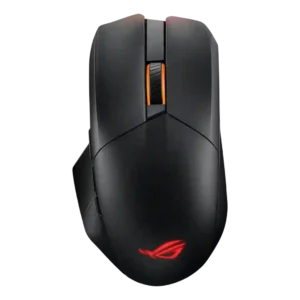
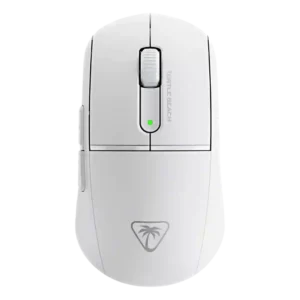
2.4GHz connectivity is broadly documented and repeatedly framed as the main gaming wireless mode alongside USB and Bluetooth.
2.4GHz is repeatedly supported as a gaming-focused wireless mode, often paired with Bluetooth and wired use. Reviews connect it to low latency, strong signal, and flexible device setup.
Reviews support strong acceleration-related performance through 50G acceleration specs and angle compensation or angle snapping features that steady movement.
The mouse is repeatedly credited with accurate, precise tracking, including high sensitivity, angle-snapping accuracy, and strong aim tracking in games.
Accuracy and tracking precision were praised across game, sensor, and surface testing. Reviewers described precise movement, impressive accuracy, no faltering, and issue-free tracking.
Balance and weight distribution are better than the raw weight suggests, with reviews noting a low center of gravity, stable glide, and nicely balanced feel.
Balance evidence was direct but limited. Reviewers who discussed it found the center of mass well placed and the mouse evenly balanced in hand.
Battery life is a strong point, with multiple reviews citing phenomenal endurance, 150-hour claims, solid real use, or long use between charges.
Battery life was generally strong, especially in Bluetooth mode. The 2.4GHz runtime around 40 hours was usable but occasionally framed as a tradeoff versus competitors.
Bluetooth support is broadly documented as part of the tri-mode connection setup, though reviews often frame it as better for productivity than fast gaming.
Bluetooth support is clearly present and useful for flexibility, portability, and longer battery life. Several reviewers treated Bluetooth as less gaming-focused than 2.4GHz.
Build quality is positive overall, with reviewers calling the mouse sturdy, properly built for the price, and solidly constructed.
Build quality is mixed. Some reviews found the shell solid for its weight, while others reported cheap feel, side flex, or durability concerns.
Button customization is one of the Chakram X's core strengths, covering switch swapping, key binding, button mapping, and broad control customization.
Button customization is strong through Swarm II, with programmable controls, custom button functions, remapping, and saved profiles. The limited button count remains a constraint.
Basic button response is generally praised, with reviewers calling the clicks responsive, easy, satisfying, or fast, though some note heavier clicks.
Button responsiveness was mostly praised through crisp, precise, and meaningful clicks. One review noted the buttons were somewhat stiffer.
Cable flexibility is mixed: one review found the paracord stiff, while others described the braided or paracord cable as flexible and snag-resistant.
The included cable was usually praised as flexible, soft, light, or malleable. One reviewer still felt wired use added some resistance compared with wireless.
Charging convenience is strong, with evidence for USB-C charging, quick charging, Qi wireless charging, and charging while playing.
Charging is convenient overall, with quick charging, play-while-charging, common USB-C charging, and wired fallback all supported in reviews.
Claw grip comfort is supported for bigger or medium-to-large hands, though the evidence is less broad than for palm grip.
Claw grip comfort is generally good, especially because of the rear hump and light body. Some reviewers found shape preferences could affect claw comfort.
Click latency evidence is positive where discussed, with reviews connecting high polling, quick response, and reaction-time-focused clicking to fast inputs.
Click latency support comes from optical switch speed and low-latency language. Reviewers described quick response, optical-speed feel, and light-speed detection.
Click noise evidence is limited but positive, with one review liking the more subtle or dampened switch sound.
Click noise is noticeable. Reviewers described clicky, lower-pitched, sharp, or loud clicks, with some users likely preferring quieter switches.
Connection stability evidence is positive where discussed, including low lag, reliable switching between systems, precise normal use, responsive movement, and dongle signal support.
Connection stability was a strength, with instant recognition, no issues, no dropouts, seamless switching, and no lag or skipping reported.
Cross-platform compatibility is supported through laptop, desktop, iPad, work-computer, and multi-Bluetooth-device usage.
Cross-platform compatibility is supported by broad connectivity and direct Windows, Mac, and Android use without driver installation in one review.
Debounce customization is well supported in Swarm II through debounce controls, sliders, and zero-millisecond testing.
Dock compatibility evidence is limited to Balteus Qi RGB mouse pad support for wireless charging.
The DPI range is a major strength, with reviewers repeatedly citing 100 to 36,000 DPI or a 36,000 DPI peak and fine sensitivity adjustment.
DPI range is broad, with repeated support for 26K DPI and several reviews confirming 50-to-26,000 DPI adjustment.
Durability over time is supported mainly through 70-million-click switch claims and replaceable switches that can be swapped when worn.
Durability over time is mixed. Switch ratings are strong, but some reviewers raised shell flex or long-term abuse concerns.
Ecosystem integration is supported by Aura Sync, Armoury Crate, and ASUS/ROG lighting or accessory integration.
Ecosystem integration centers on Swarm II, ROCCAT continuity, Turtle Beach peripherals, migrated settings, and Easy Shift-style layering.
Ergonomics are divisive, with an ergonomic right-handed shape and good general comfort offset by joystick reach, size, and awkward hand movement.
Ergonomic design was praised through palm fit, symmetrical shape, ergonomic button placement, and comfortable speedy handling.
Fingertip grip comfort is mixed: the grip style is listed, but one review says the right side gives fingertips little to hold.
Fingertip comfort was positive, with reviewers calling it a strong option and noting the lightweight smaller shape suits fingertip users.
Firmware reliability is mixed-to-weak: one review had firmware-related troubleshooting, another was forced to update and restart, while another notes update support.
Firmware reliability is mixed-positive. Updates were seamless or easy for some, while one review reported bugs resolved by firmware update.
FPS suitability is mixed: tracking and polling are praised for shooters, but misclicks, joystick awkwardness, and weight reduce competitive confidence.
FPS suitability is one of the strongest themes, with reviewers tying the light body, sensor, and flick-shot control to competitive shooters and FPS games.
Glide smoothness is a clear strength, with reviews praising PTFE feet, smooth movement, and consistently smooth gliding.
Glide smoothness was widely praised. Reviews described effortless, smooth, topnotch, and surface-friendly glide with useful skate options.
Grip texture receives positive evidence through side texturing, matte finish, and textured plastic that helps the mouse stay in hand.
Grip texture is mixed. The smooth shell and sweat/slip concerns are offset by grip tape and some positive texture comments.
Handedness is a limitation: the mouse is repeatedly described as right-handed or not ambidextrous, making it weaker for left-handed users.
Handedness is limited ambidextrous: the shape is symmetrical and usable either way, but side buttons and wording favor right-handed users.
Left and right click quality is mixed: the click feel can be crisp, but multiple reviews flag accidental or overly sensitive main-click activation.
Left and right click quality was strong overall, with tactile, deeper, snappy, and satisfying primary clicks, though one sample had uneven pre-travel.
Lift-off distance receives limited but direct support through Armoury Crate settings and adjustable LOD options.
Lift-off distance is supported through DCU and lift-off calibration, with reviewers mentioning adjustable or low/very-low settings.
Long-session comfort is divided: ergonomics can support long gaming sessions, but joystick use and heavier clicks caused discomfort in some reviews.
Long-session comfort is supported by daily-driver comments, pleasant sessions, ergonomic fit, and light weight that reduces effort.
Macro support is directly supported in reviews that mention assigning keys and macros or remapping macros through software.
Macro support is available through Swarm II, with macro adjustment, built-in macros, keyboard-command mapping, and Easy Shift-style layers.
Materials quality is positive, especially the matte finish and semi-transparent plastic that resists fingerprints or oil buildup.
Materials quality is mixed, ranging from pleasant satin plastic and solid shell comments to cheap, hollow, slippery, or thin-feeling plastic.
MMO suitability is supported mainly by the product's listed MMO game type and many programmable controls.
MMO suitability is limited because reviewers repeatedly point to few remappable buttons and a simple layout rather than button-heavy control.
MOBA suitability has limited direct support from League of Legends testing, but reviews do not deeply evaluate MOBA-specific needs.
Motion consistency is supported by angle snapping, angle compensation, and sensor calibration evidence that reviewers said helped steady or tune movement.
Motion consistency was strong, with little variation, no spin-out, no skipping, and motion sync or angle snapping options discussed.
Onboard memory evidence is limited to one review, which says the mouse can store five custom profiles.
Onboard memory is clearly supported by five onboard profiles or storage for profiles in multiple reviews.
Palm grip comfort is generally supported, especially for smaller hands in one review and bigger-hand palm users in another.
Palm grip comfort is generally good but not universal. Several reviews found palm use comfortable or viable, with some shape caveats.
Polling-rate coverage is strong, especially wired 8,000 Hz operation, while some reviews also note lower but usable wireless polling rates.
Polling rate is a repeated caveat. The mouse supports up to 1,000Hz with lower settings, but several reviewers wanted higher polling options.
Portability is helped by dongle storage, an included pouch or travel bag, and evidence that the mouse can be brought between locations.
Portability is helped by low weight, Bluetooth, dongle storage, and easy device movement.
Premium feel is positive, with reviewers describing a dream-like feel, handsome look, dense feature set, good-looking design, and premium presentation.
Premium feel is mixed: some reviews praised solid construction, while others found the shell hollow, cheap, or lacking premium extras.
Profile switching is supported by reviews that mention saved profiles, game-to-game navigation, and setting up different profiles.
Profile switching is supported through up to five DPI or saved profiles and multiple profile setup in Swarm II.
Programmable controls are a clear strength, with reviews citing 11 programmable buttons, side controls, and software-programmed button assignments.
Programmable buttons are present through six or seven configurable inputs, but the layout is not button-rich.
RGB features are widely covered, including nine-zone lighting, Aura Sync, visible lighting zones, effects, and custom logo or lighting options.
RGB features are weak by design. Reviews repeatedly state there is no RGB beyond small indicator LEDs.
The scroll wheel is usually praised for its rubberized coating, grip, satisfying scroll feel, easy click, and useful tactile steps.
Scroll wheel quality is mostly good but basic, with distinct notches and secure actuation alongside comments that it is standard or too small.
The ROG AimPoint sensor is described as fast, precise, and accurate, with several reviews tying it to strong in-game tracking and overall performance.
Sensor performance was widely praised through the Owl-Eye 26K sensor, 650 IPS tracking, accurate behavior, and flawless tests.
Shape comfort is mixed but often positive for larger or right-handed users; smaller hands and joystick reach create some comfort complaints.
Shape comfort is mostly positive but subjective, with praise for natural fit and some caveats around size, rear shape, and grip preference.
Side button quality is one of the weaker areas, with repeated complaints about tiny, crowded, awkward, far-apart, or accidentally activated side controls.
Side button quality was generally positive, with good thumb alignment, easy reach, clicky action, and clear separation.
Software stability is a major weakness in the negative reviews, including failed device settings, slow loading, and never-ending loading screens.
Software stability is mixed: Swarm II was reliable for some reviewers but buggy for another before firmware updates.
Software usability is mixed: some reviews found Armoury Crate easy or powerful, while others had difficulty accessing settings or disliked the app.
Software usability is mostly positive but not universal. Some reviews praised clear/simple controls, while others found platform or UI issues.
Surface compatibility is supported through manual calibration, preset surfaces, and mouse-pad-specific sensor tuning.
Surface compatibility was positive where tested, including any or almost any surface and multiple mousepads.
Switch durability is well supported through hot-swappable switch sockets, 3-pin and 5-pin support, spare switches, and 70-million-click claims.
Switch durability is strongly supported by the repeated 100 million click optical switch rating.
Switch feel is mostly positive, with comments about crisp tactility, tailored operating force, muted or dampened sound, and satisfying click feedback.
Switch feel was a highlight, with tactile, snappy, satisfying, optical click feel across many reviews.
Value for money is mixed-to-negative overall: some call the price high or hard to excuse, while others say the feature set can justify it for the right user.
Value for money was mixed-positive, with several reviewers seeing fair pricing or savings while others noted stripped-down features.
Weight is a recurring drawback: reviewers repeatedly cite the 126-127 g range and describe the mouse as heavy, hefty, or middle-of-the-road for weight.
Weight is the defining strength. Reviews repeatedly emphasized 47g or sub-47g weight as unusually light for a mainstream wireless mouse.
Weight tuning is mixed and limited: one review wanted interchangeable weights, while another notes the joystick can be removed or changed, but not true weight adjustment.
Wireless latency evidence is limited but positive, with one review describing higher-DPI and polling-rate use as lightning-fast with very little noticeable lag.
Wireless latency was strong on 2.4GHz, with lag-free or no-perceivable-latency comments. Bluetooth was more often treated as a convenience mode.
Wireless performance is generally strong, with multiple reviews highlighting 2.4GHz wireless, responsive gaming movement, and tri-mode wireless flexibility.
Wireless performance was reliable overall, with strong connection, flexible dual connectivity, device switching, and no dropouts.