Compare Corsair Scimitar Elite Wireless SE vs ASUS ROG Gladius III Wired
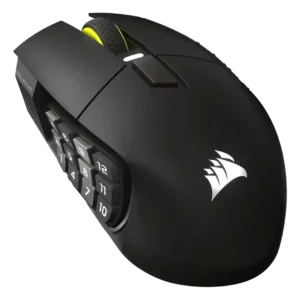
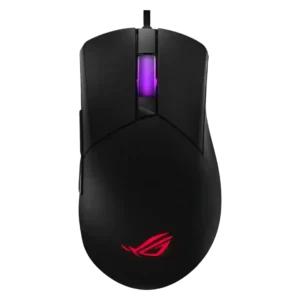
Reviewers consistently supported the wireless mode set: 2.4GHz is treated as the primary gaming connection, often paired with Bluetooth and wired operation as alternate modes.
2.4GHz support appears mainly in wireless or tri-mode variant coverage. The reviews mention a wireless version, a later wireless model with 2.4GHz, and tri-mode Bluetooth, 2.4GHz RF, and wired connectivity.
The reviews that discussed acceleration focused on the high 50G rating, 750 IPS tracking, and ability to handle sharp movements rather than any user-facing acceleration tuning.
The supported evidence is specification-based: the standard model is described with 50 G acceleration, while the Core coverage lists a lower 35 G acceleration figure.
Tracking precision was repeatedly praised, with reviewers reporting accurate, consistent sensor behavior across games, fast inputs, and multiple surfaces.
Tracking precision is generally praised. Reviewers describe the sensor as steady, accurate, capable for gaming, and effective in Apex Legends, while one test notes jitter at peak flick speed.
Weight balance was mostly positive for an MMO mouse, with several reviewers saying the 113-114g body felt balanced or appropriate despite being heavier than FPS mice.
Weight balance is supported by two reviews: the Core model's lighter weight improves maneuverability, and the wired model is described as having middle-biased weight that makes swipes easier.
Battery life was one of the clearest strengths: reviewers cited 150-hour 2.4GHz claims, very long real-world runtime, and 500-hour Bluetooth figures, with only RGB reducing endurance.
Battery life is only supported in the TechBroll review, which describes wireless-mode endurance of about 55 hours on 2.4GHz and 85 hours on Bluetooth.
Bluetooth support is repeatedly mentioned as a secondary mode for productivity, travel, or long battery life, while 2.4GHz remains the gaming-focused connection.
Bluetooth is supported in variant-focused passages. One review says the coming wireless version would include Bluetooth 5.1, while another lists Bluetooth LE 5.2 as part of tri-mode connectivity.
Build quality was usually described as premium, sturdy, or excellent, though one review raised longer-term concerns around exterior plastic wear.
Build quality is consistently positive across the reviews, with praise for ROG quality, sturdy hard plastic, excellent construction, and a solid feel, though one review notes minor button wobble elsewhere.
Button customization is a core strength, with iCUE and Stream Deck support enabling remaps, shortcuts, macros, and app-specific assignments across the side buttons and other inputs.
Button customization is one of the strongest themes. Reviews cite hot-swappable switches, physical switch changes, software reassignment, programmable buttons, and the ability to customize click feel.
Button responsiveness was generally praised, especially the side buttons and main inputs, though some reviewers preferred a crisper or less mushy feel.
Button responsiveness is rated strongly. The reviews describe instant registration, precise tactile clicks, responsive switches, tactile side buttons, and fast-feeling main clicks.
Cable feedback was mixed: several reviews described a braided or durable cable, but Tom’s Hardware noted it was fairly stiff and not ideal as a drag-free gaming cable.
Cable feedback is positive overall. The ROG Paracord is described as smooth, flexible, light, or easy-gliding, with one review noting it can tangle at times.
Charging convenience was favorable thanks to USB-C, use-while-charging support, quick recharge comments, and long runtime that reduces charging frequency.
Claw grip support was mixed to weak: one reviewer found the shape restrictive for claw use, while another said the body can support claw grips for some hands.
Claw grip support is generally favorable for medium to larger hands. The shape is described as suited to palm and claw grips, though chunkier dimensions may require adjustment.
Click latency and input delay were viewed positively, with reviewers reporting no noticeable delay and responsive behavior in wireless use.
Click and input latency are treated favorably. Reviews cite no lag or stuttering, no wired latency issues, physical cable connection, and no significant input lag in real-world play.
Click noise was mixed: one review liked the audible click, another found the switches somewhat loud, and others focused more on quiet or satisfying control feel.
Click and wheel noise feedback is mixed. One review praises quiet, crisp clicks, another says Omron switches are louder, and another notes squeaking from the scroll wheel.
Connection stability was consistently strong, with reviews reporting no lag, no drops, quick wake behavior, and reliable 2.4GHz operation.
Connection stability is strong where tested or discussed. Reviewers mention no lag or stuttering, no wired latency issues, cable-backed connection, and no significant input lag.
Cross-platform compatibility was supported by mentions of PC, Mac, tablet/laptop use, and MacOS support for the software ecosystem.
Cross-platform usefulness is only directly supported by the Core review, which says stored settings can work on another PC after configuration.
Dock compatibility is a weak point because one review explicitly says there is no wireless charging option or dock.
The DPI range is heavily supported, with multiple reviews citing the 33,000 DPI ceiling and software control over DPI stages.
DPI support is a major strength on the original model, with 19,000 DPI tunable to 26,000. Core coverage drops to 12,000 DPI, and one review notes 50-DPI preset increments.
Durability over time is mixed: switch ratings are strong, but some reviews raised uncertainty around long-term plastic, scroll-wheel, or click durability.
Durability evidence centers on long-life switches, spare parts, and hot-swap repairability. Reviews cite 70 million and 100 million click ratings, future-proofing, and included accessories.
Ecosystem integration is a standout strength, especially the link between Corsair iCUE, Elgato Stream Deck, Virtual Stream Deck, and broader creator workflows.
Ecosystem integration is supported through Aura Sync, Armoury Crate, Gear Link, and ROG ecosystem language. The Core review presents Gear Link as a browser-based alternative to Armoury Crate.
Ergonomics depend on hand size and grip: many reviews praised comfort and the adjustable side panel, while others found the large body or inward curve clunky.
Ergonomics are mostly praised, with reviewers calling the mouse beautifully shaped, sleek, praiseworthy, comfortable, and ergonomic. The largest caveat is its tall, chunky right-handed shape.
Fingertip support is usable but not the central strength. Reviews say fingertip grip is possible or listed as supported, while the shape favors larger hands and palm or claw use more clearly.
Firmware reliability is mixed to negative because one reviewer could not complete a firmware update, though another noted the adapter can be updated through iCUE.
FPS suitability is limited: the sensor can handle FPS use, but reviewers repeatedly describe the mouse as too large or button-heavy for quick swipes and competitive shooters.
FPS suitability is good but not perfect. Reviews cite casual and competitive suitability, eSports readiness, Apex or Valorant play, and capable gaming performance, while weight and shape can limit speed.
Glide quality was mostly positive, with reviewers saying the feet glide evenly, move smoothly across surfaces, and feel good for an MMO mouse.
Glide smoothness is consistently praised. Reviewers cite smooth PTFE feet, rounded feet, unobstructed gliding, sublime glide, and effortless movement across mouse mats or surfaces.
Grip texture was praised, especially the rubberized right-side panel and textured side-button columns that improve control and tactile navigation.
Grip texture feedback is mixed. Some reviews praise grippy matte plastic or functional side texture, while others note oil-prone shiny plastic or the absence of rubberized grips.
Handedness support appears limited to right-handed use; reviews describe it as right-handed or shaped for palm use rather than ambidextrous.
Handedness support is limited. The mouse is repeatedly described as right-handed or asymmetrical, and one review finds the side buttons difficult to use left-handed.
Left and right click quality was generally good, with crisp or snappy feel in some reviews, but a few found the switches inconsistent or slightly mushy.
Main click quality is mostly strong. Reviews praise balanced, clicky, tactile, responsive, crisp, and snappy clicks, although one wired review reports side-to-side main button wobble.
Lift-off related evidence is sparse and mixed, limited to one review mentioning liftoff-distance settings in software and another warning about thumb lift-off causing misclick risk.
Lift-off distance is directly supported by the PCWorld review, which notes high and low lift-off distance choices in software.
Long-session comfort was generally favorable for palm-oriented MMO use, with support points for palm and ring-finger rests, though the large shape may not suit everyone.
Long-session comfort is generally favorable. Reviewers cite snug button grooves, comfort after hours, fatigue-free gaming, extended swipes, and the need for grip adjustment on the chunkier shell.
Macro support is a major strength, with reviews describing iCUE macros, Stream Deck actions, hotkeys, and multi-step productivity or gaming commands.
Macro support is widely supported in software coverage. Reviews mention command and macro assignment, macro recording, software-driven customization, and Gear Link extension requirements for macros.
Materials quality is mostly solid, with matte plastic and rubber grips praised, though at least one review questioned how the body plastic may wear.
Materials quality is solid overall. Reviews mention sturdy or hard plastic shells, monolithic construction, no creak or flex, and good overall build, with some oil and grip caveats.
MMO suitability is the product’s strongest use case, with reviews repeatedly calling it an excellent or favorite MMO mouse thanks to its buttons, comfort, and customization.
MMO suitability is only directly supported by the Core review, which recommends the mouse for MMO players because of SpeedShift.
MOBA suitability is also supported because reviewers repeatedly mention MMO/MOBA targeting and ability-heavy games benefiting from the side-button layout.
Motion consistency was praised through reports of smooth, consistent tracking and reliable movement handling across slow and fast motions.
Motion consistency is mostly favorable but not flawless. Some reviews describe no lag, perfect play, consistent tracking, and no velocity drops, while one test reports polling jitter.
Onboard memory is well supported, with reviews mentioning stored settings, three to five onboard profiles, and saved DPI/macros.
Onboard memory is supported by multiple reviews, usually as five profiles or five-profile memory that can store settings and support on-the-fly use.
Palm grip comfort is strong, with many reviewers describing the body as palm-oriented and supportive, especially for larger hands.
Palm grip support is strong. Reviews repeatedly say the shape is suited to palm grip, listed for palm use, or ideal for palm users, especially with medium-to-large hands.
Polling-rate evidence is positive, with reviews citing 1000Hz and 2000Hz modes depending on connection and source.
Polling rate support is generally strong at 1000Hz. Several reviews cite 1000Hz polling, while one wired test reports average polling with jitter.
Portability is helped by the storable dongle and multi-device modes, though the mouse remains large for travel.
Premium feel was a common positive, with reviewers describing polish, premium construction, and high-quality feel.
Premium feel is mostly positive, with ROG styling, strong quality, premium-line positioning, and excellent build. TrustedReviews is less enthusiastic about visual distinctiveness.
Profile switching is well supported through onboard profiles, game profiles, DPI/macro memory, and Stream Deck smart profile switching.
Profile switching is supported by several reviews through five onboard profiles or a profile button, although one review disliked the lack of a conveniently placed profile-switching button.
Programmable buttons are the central feature, with many reviews citing the 16-button design and 12-button thumb grid.
Programmable buttons are broadly supported. Reviews describe configurable buttons, button reassignment, remapping, six programmable buttons, and seven customizable buttons depending on the version.
RGB features are present and customizable in two main zones, but reviewers often treat lighting as secondary to productivity, battery life, and button utility.
RGB features are consistently covered, including three-zone lighting on the original model, Aura Sync support, configurable zones, and subtler lighting on Core or wired coverage.
Scroll wheel quality was mixed: some liked its precision and tactile feel, while others disliked stiffness, lack of smooth scrolling, or softer notches.
Scroll wheel quality is mixed. The Core review praises distinct detents and a responsive click, while other reviews note wobble or squeaking despite tactile feedback.
Sensor performance is a clear strength, centered on the Marksman S 33K optical sensor and its high DPI, speed, and reliable tracking.
Sensor performance is mostly strong. Reviews cite steady tracking, fine-tuned optical sensors, sensitive or reliable sensors, and a known PAW3370, while one wired review calls its sensor performance lower.
Shape comfort is divisive: the palm-oriented, wide body gives support, but several reviews found it bulky, clunky, or specialized.
Shape comfort depends heavily on hand size and grip. Reviews praise medium-hand fit and large-hand comfort, but also warn about width, tall buttons, and a shape that is not for everyone.
Side button quality is generally strong thanks to adjustability, tactile texture, and clear actuation, but some reviewers found the grid hard to learn, mushy, or jittery.
Side button quality is generally positive when discussed. Reviews mention side buttons, thumb placement, crisp quiet presses, tactile feedback, and easy reach, with one left-hand usability caveat.
Skate durability and feet evidence is limited but positive, with reviews noting PTFE feet, smooth glide, no scratching, and good-feeling skates.
Skate durability is supported through PTFE spares and accessory coverage. Reviews mention generous PTFE feet, extra ROG feet, and bundled PTFE feet for future-proofing.
Software stability is mixed: iCUE and Stream Deck can work well, but multiple reviews criticized iCUE bugs, setup issues, or confusing behavior.
Software stability is generally acceptable but mixed. Gear Link is described as quick and reliable, ROG Armoury as simple, while one reviewer has mixed-bag thoughts about Armoury Crate.
Software usability is mixed: powerful customization is clear, but reviewers often describe learning curves, awkward menus, or slow update workflows.
Software usability is a strength overall. Reviews mention helpful visual diagrams, convenient Gear Link use, simple Armoury setup, programmable functions, and button customization.
Surface compatibility is strong, with several reviews reporting tracking across multiple surfaces and iCUE surface calibration.
Surface compatibility is well supported through calibration. Reviews cite manual surface calibration, Gear Link sensor calibration, Armoury calibration, and calibration with any deskmat.
Switch durability is supported by 90-million and 100-million click ratings, though one review still expressed concern about long-term feel.
Switch durability is strongly supported. Reviews cite 70 million and 100 million click ratings, hot-swappable replacement, and switches that can be replaced if they wear out.
Switch feel is mixed-positive: several reviews liked the quick or crisp action, while others called the clicks mushy or inconsistent.
Switch feel is strongly praised. Reviewers mention better actuation and click force, tactile and responsive switches, crisp feedback, and defined clicks.
Value for money is mixed: the $139-$140 price is high for casual users, but reviewers who value Stream Deck integration or MMO controls saw it as fair or reasonable.
Value is consistently favorable. Reviews cite reasonable pricing, a lot of mouse for the money, accessible entry points, savings versus alternatives, and getting money's worth through durability.
Weight is divisive: 113-114g is light for an MMO mouse but heavy next to FPS-focused ultralights, which reviewers repeatedly noted.
Weight is a tradeoff. Several reviews praise the lighter 71g to 79g wired/Core figures, while others say it is still too heavy or not ultralight compared with newer rivals.
Wireless latency is a strength, with reviewers reporting instantaneous, delay-free, or lag-free wireless use.
Wireless latency is only directly supported in TechBroll's mixed connectivity coverage, where the reviewer says they did not feel significant input lag.
Wireless performance is broadly positive, with stable 2.4GHz connectivity, reliable inputs, and strong battery life supporting wireless use.
Wireless performance is limited to variant coverage. Reviews mention a wireless version, a later wireless model, and one review with tri-mode connectivity and strong broad connectivity comments.