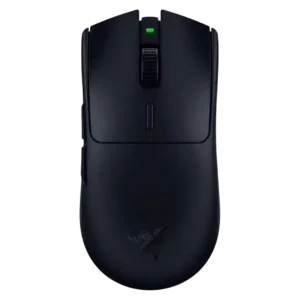
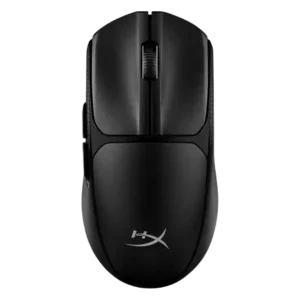
2.4GHz connectivity
P1
Product 1: Razer Viper V3 HyperSpeed
4.0
2.4GHz connectivity was seen as simple and effective, with limited but positive opinionated evidence.
P2
Product 2: HyperX Pulsefire Fuse
4.4
2.4GHz connectivity was praised for smooth, stable, responsive gaming performance and no noticeable lag in testing.
Accuracy and tracking precision
P1
Product 1: Razer Viper V3 HyperSpeed
4.7
Reviewers repeatedly praised tracking accuracy, with only a few preference-based caveats around the forward sensor placement.
P2
Product 2: HyperX Pulsefire Fuse
4.7
Reviewers who evaluated tracking described it as consistent and precise across game types, including fine cursor movement and fast gameplay.
balance and weight distribution
P1
Product 1: Razer Viper V3 HyperSpeed
3.3
Balance evidence was mixed, ranging from even and predictable to rear-heavy, unbalanced, or affected by battery inertia.
P2
Product 2: HyperX Pulsefire Fuse
4.0
One reviewer noticed a rear weight bias but said it did not hurt handling during extended use.
battery life
P1
Product 1: Razer Viper V3 HyperSpeed
4.1
Battery life was generally praised as long, sometimes mindblowing, but higher polling rates and AA dependence created caveats.
P2
Product 2: HyperX Pulsefire Fuse
4.4
Battery life was consistently praised as realistic, long-lasting, and competitive against similar budget wireless mice.
Bluetooth support
P1
Product 1: Razer Viper V3 HyperSpeed
2.5
Bluetooth support was weak because reviewers noted its absence, though at least one said it was unlikely to be a dealbreaker.
P2
Product 2: HyperX Pulsefire Fuse
4.1
Bluetooth support was valued for versatility and device switching, though one reviewer warned its latency is noticeable in fast games.
build quality
P1
Product 1: Razer Viper V3 HyperSpeed
3.9
Build quality was mostly solid, but several reviewers reported rattles, a lopsided base, or less-than-Pro feel.
P2
Product 2: HyperX Pulsefire Fuse
3.1
Build quality was sharply divided, praised as solid or practical by some and criticized as cheap or wobbly by others.
button customization
P1
Product 1: Razer Viper V3 HyperSpeed
4.3
Button customization through Synapse was seen as useful and accessible, including remapping and DPI-related controls.
P2
Product 2: HyperX Pulsefire Fuse
3.5
Button customization was useful for some reviewers, but one reviewer felt the customization pitch was too limited to matter.
button responsiveness
P1
Product 1: Razer Viper V3 HyperSpeed
4.6
Button response was typically praised as snappy, responsive, satisfying, and reliable in play.
P2
Product 2: HyperX Pulsefire Fuse
4.3
Primary button response was mostly praised as tactile, reliable, and responsive enough for gaming, including fast shooters.
charging convenience
P1
Product 1: Razer Viper V3 HyperSpeed
2.5
Charging and power convenience was a major tradeoff: reviewers disliked AA dependence and no wired fallback, though some liked quick battery swaps.
P2
Product 2: HyperX Pulsefire Fuse
4.1
Charging convenience is really battery-swap convenience: reviewers liked the quick removable cover and fast AAA replacement despite no rechargeable battery.
claw grip comfort
P1
Product 1: Razer Viper V3 HyperSpeed
4.2
Claw grip comfort was usually positive, with the revised hump and shell fitting relaxed claw users well.
P2
Product 2: HyperX Pulsefire Fuse
2.0
Claw grip comfort was criticized in the one review that said even claw use forced awkward wrist dragging.
click noise
P1
Product 1: Razer Viper V3 HyperSpeed
3.5
Click noise was mixed but generally acceptable: one reviewer found the click louder, while another said the mouse kept noise muted.
P2
Product 2: HyperX Pulsefire Fuse
3.4
Click noise was mixed, with one reviewer saying the clicks were not quiet and another saying they were not overly loud.
connection stability
P1
Product 1: Razer Viper V3 HyperSpeed
5.0
Connection stability was a strong positive, with reviewers reporting no lag, jitter, signal loss, or testing issues.
P2
Product 2: HyperX Pulsefire Fuse
4.4
Connection stability was positive where tested, with reviewers reporting issue-free wireless use and no dropped signals.
cross-platform compatibility
P1Product 1: Razer Viper V3 HyperSpeed
No score yet
P2
Product 2: HyperX Pulsefire Fuse
4.5
Cross-platform compatibility was praised in the review that tested it as useful across PCs, laptops, consoles, and productivity setups.
DPI range
P1
Product 1: Razer Viper V3 HyperSpeed
4.0
The 30K DPI ceiling was considered powerful for FPS use, though one reviewer viewed extreme DPI as more buzzword than necessity.
P2
Product 2: HyperX Pulsefire Fuse
4.0
The 12,000 DPI ceiling was generally considered ample, though one reviewer felt the top end was too sensitive for most users.
durability over time
P1
Product 1: Razer Viper V3 HyperSpeed
2.5
Durability over time evidence was limited and slightly negative, focused on click grinding after some use.
P2
Product 2: HyperX Pulsefire Fuse
2.2
Durability over time was a concern in the one review that saw dust buildup become apparent after only a few weeks.
ergonomic design
P1
Product 1: Razer Viper V3 HyperSpeed
4.5
Ergonomic design was generally praised for the revised hump, curves, and hand support, with some caveats around side support.
P2
Product 2: HyperX Pulsefire Fuse
3.5
Ergonomics were mixed: several reviewers found the shape comfortable or versatile, while others found it too low-profile for larger hands.
fingertip grip comfort
P1
Product 1: Razer Viper V3 HyperSpeed
3.6
Fingertip grip comfort was more mixed: some found it workable or comfortable, while others preferred smaller/lighter Viper-style shapes.
P2
Product 2: HyperX Pulsefire Fuse
4.2
Fingertip grip comfort was positive in the review that found the hybrid fingertip and palm grip easy to adapt to.
FPS gaming suitability
P1
Product 1: Razer Viper V3 HyperSpeed
4.5
FPS gaming suitability was strong overall, especially for competitive shooters, though weight and click speed were caveats for elite players.
P2
Product 2: HyperX Pulsefire Fuse
4.5
FPS suitability was strong in the reviews that evaluated it, citing natural flick shots and reliable fast-game responsiveness.
glide smoothness
P1
Product 1: Razer Viper V3 HyperSpeed
4.6
Glide smoothness was consistently praised, with reviewers noting smooth motion, strong feet/skates, and effortless movement.
P2
Product 2: HyperX Pulsefire Fuse
3.2
Glide smoothness was mixed, from smooth PTFE movement to small skates creating friction or feeling less smooth than pricier mice.
grip texture
P1
Product 1: Razer Viper V3 HyperSpeed
4.5
Grip texture/coating was strongly praised for grippiness, though reviewers often noted fingerprints, sweat marks, or preference for rubber sides.
P2
Product 2: HyperX Pulsefire Fuse
3.3
Grip texture split reviewers: positive reviews liked the added traction, while negative ones called the texture rough, cheap, or minimally different.
handedness options
P1
Product 1: Razer Viper V3 HyperSpeed
2.0
Handedness was a negative where discussed because the design is effectively right-handed and could be a problem for left-handed players.
P2
Product 2: HyperX Pulsefire Fuse
2.9
Handedness options were a recurring caveat because the symmetrical shell was undercut by left-side buttons; one review found left-handed use good, but others disagreed.
left and right click quality
P1
Product 1: Razer Viper V3 HyperSpeed
4.3
Left and right clicks were often praised for crispness and solidity, though a few units or grip positions felt mushy or merely average.
P2
Product 2: HyperX Pulsefire Fuse
4.1
Left and right clicks were usually praised as crisp, tactile, and satisfying, with one first impression noting heavier actuation.
long-session comfort
P1
Product 1: Razer Viper V3 HyperSpeed
4.5
Long-session comfort was supported by praise for palm support and comfort over extended play, though it overlapped with shape and grip evidence.
P2
Product 2: HyperX Pulsefire Fuse
3.7
Long-session comfort was mixed, with positive reviewers reporting no fatigue and one negative reviewer saying wrist friction counteracted the light weight.
macro support
P1
Product 1: Razer Viper V3 HyperSpeed
3.3
Macro support was limited by the simple button layout, but HyperShift expanded options for reviewers who wanted extra commands.
P2
Product 2: HyperX Pulsefire Fuse
4.0
Macro support was positively tied to straightforward customization in the one review that evaluated it beyond a factual mention.
materials quality
P1
Product 1: Razer Viper V3 HyperSpeed
4.1
Materials and finish felt premium to many reviewers, though the coating could show marks or smudges.
P2
Product 2: HyperX Pulsefire Fuse
1.9
Materials quality was weak in the reviews that discussed it directly, with complaints about cheap-feeling glossy plastic and rough side texture.
motion consistency
P1
Product 1: Razer Viper V3 HyperSpeed
5.0
Motion consistency was praised where reviewed, especially consistent tracking and stable performance during play.
P2
Product 2: HyperX Pulsefire Fuse
4.5
Motion consistency was strong in the positive reviews, with tracking described as precise and free of noticeable jitter or lag.
palm grip comfort
P1
Product 1: Razer Viper V3 HyperSpeed
4.2
Palm grip comfort improved versus flatter Viper shapes and suited many reviewers, though not every hand size or palm style was ideal.
P2
Product 2: HyperX Pulsefire Fuse
4.2
Palm grip comfort was positive in the review that used a hybrid palm/fingertip grip and reported long-session comfort.
polling rate
P1
Product 1: Razer Viper V3 HyperSpeed
4.3
Polling was generally viewed positively: 1,000Hz was enough for most, while 4K/8K support was valuable but battery-hungry or dongle-dependent.
P2
Product 2: HyperX Pulsefire Fuse
4.0
The 1000Hz polling rate was viewed as sufficient or industry-standard, with one reviewer saying higher rates would add little benefit.
portability
P1
Product 1: Razer Viper V3 HyperSpeed
4.0
Portability evidence was limited but positive, mainly that the receiver can be stored safely in the mouse.
P2
Product 2: HyperX Pulsefire Fuse
4.4
Portability was consistently positive thanks to dongle storage, a pouch, Bluetooth fallback, and easy travel use.
premium feel
P1
Product 1: Razer Viper V3 HyperSpeed
3.7
Premium feel was mixed: several reviewers said it felt high-end or more expensive than it was, while others said it lacked true Pro feel.
P2
Product 2: HyperX Pulsefire Fuse
2.5
Premium feel was weak because reviews explicitly said it lacked premium refinement and emphasized its budget nature.
programmable buttons
P1
Product 1: Razer Viper V3 HyperSpeed
4.3
Programmable controls were easy to reach and sufficient for most reviewers, reinforcing the mouse's simple FPS-first layout.
P2
Product 2: HyperX Pulsefire Fuse
3.4
Programmable button evidence was mixed, with one reviewer dismissing limited options and another praising complete button mapping.
RGB features
P1
Product 1: Razer Viper V3 HyperSpeed
3.1
RGB opinions were mostly neutral: reviewers noted the no-RGB design as minimalist or acceptable, not a major functional loss.
P2
Product 2: HyperX Pulsefire Fuse
2.8
RGB was one of the most divided areas: some found it acceptable or customizable, while others called it minimal, unimpressive, or a battery drain.
scroll wheel quality
P1
Product 1: Razer Viper V3 HyperSpeed
4.4
The scroll wheel drew mostly positive notes for tactile steps, grip, and control, with a few reviewers calling it merely fine or muted.
P2
Product 2: HyperX Pulsefire Fuse
3.7
Scroll wheel impressions were split: two reviewers liked its tactile smoothness, while one found the small wheel uncomfortable.
sensor performance
P1
Product 1: Razer Viper V3 HyperSpeed
4.9
The Focus Pro 30K sensor was one of the strongest consensus positives, described as accurate, reliable, snappy, and premium-grade.
P2
Product 2: HyperX Pulsefire Fuse
4.5
Sensor performance was praised as solid and reliable, with reviewers tying the Pixart sensor to dependable gaming behavior.
shape comfort
P1
Product 1: Razer Viper V3 HyperSpeed
4.3
Shape comfort was broadly praised for the redesigned hump and fuller support, though a few reviewers disliked it for their grip or game style.
P2
Product 2: HyperX Pulsefire Fuse
3.4
Shape comfort was polarized, ranging from perfect hand fit to too small and low-profile for medium or larger hands.
side button quality
P1
Product 1: Razer Viper V3 HyperSpeed
4.7
Side buttons were one of the most consistent positives, with reviewers calling them easier to reach, premium, and among Razer's best.
P2
Product 2: HyperX Pulsefire Fuse
1.5
Side buttons were a major complaint in the one detailed negative review, which found them uncomfortable, stiff, and poorly suited to quick reactions.
skate durability
P1
Product 1: Razer Viper V3 HyperSpeed
4.5
Skate durability/quality evidence was limited but positive, with reviewers saying the PTFE feet felt smooth, great, or long-lasting.
P2
Product 2: HyperX Pulsefire Fuse
2.0
Skate durability and quality drew complaints, including dust buildup and wobbling that hurt confidence in the hardware.
software stability
P1
Product 1: Razer Viper V3 HyperSpeed
3.5
Software stability evidence was limited and mixed, with one reviewer saying Synapse improved but still had hiccups.
P2
Product 2: HyperX Pulsefire Fuse
4.0
Software stability was positive in the one review that separated the app from limited customization, calling NGENUITY solid.
software usability
P1
Product 1: Razer Viper V3 HyperSpeed
3.3
Software usability was mixed: Synapse enabled useful customization and was often straightforward, but battery readings and setup requirements frustrated some reviewers.
P2
Product 2: HyperX Pulsefire Fuse
3.7
Software usability was mixed: positive reviews found it straightforward or beginner-friendly, while a negative review said the limited options were barely worth downloading.
surface compatibility
P1
Product 1: Razer Viper V3 HyperSpeed
4.6
Surface compatibility was a strong positive where tested, including smooth tracking across desks, mats, wood, and glass.
P2
Product 2: HyperX Pulsefire Fuse
4.4
Surface compatibility was favorable, with reviewers noting smooth movement across most surfaces and even glass.
switch feel
P1
Product 1: Razer Viper V3 HyperSpeed
3.9
Switch feel split reviewers: many liked the crisp or snappy Gen-2 mechanical feel, while others found it mushy or less sharp than premium opticals.
P2
Product 2: HyperX Pulsefire Fuse
4.2
Switch feel was broadly positive thanks to clicky, satisfying, tactile feedback, although one reviewer noted a heavier press than expected.
value for money
P1
Product 1: Razer Viper V3 HyperSpeed
4.5
Value for money was one of the strongest positives, with reviewers repeatedly calling the mouse affordable, budget-friendly, or outstanding for its specs.
P2
Product 2: HyperX Pulsefire Fuse
3.7
Value was divided but generally leaned practical: several reviewers saw strong budget value, while others felt it lacked distinction or made the wrong compromises.
weight
P1
Product 1: Razer Viper V3 HyperSpeed
3.0
Weight was the most divisive physical trait: some liked the controlled mid-weight feel, while others found the AA-battery weight heavy or brick-like.
P2
Product 2: HyperX Pulsefire Fuse
4.2
Weight was consistently favorable, described as light, agile, or well-balanced even when not considered truly ultralight.
wireless latency
P1
Product 1: Razer Viper V3 HyperSpeed
5.0
Wireless latency received limited but strong praise, especially around low-latency 2.4GHz use.
P2
Product 2: HyperX Pulsefire Fuse
4.8
Wireless latency received strong praise, with reviewers saying it felt wired-like or showed no noticeable input lag in 2.4GHz mode.
wireless performance
P1
Product 1: Razer Viper V3 HyperSpeed
4.7
Wireless performance was widely praised for cable-free use, reliability, and professional-level responsiveness.
P2
Product 2: HyperX Pulsefire Fuse
4.4
Wireless performance was one of the strongest areas, with reviewers describing smooth, stable, wired-like behavior in 2.4GHz use.