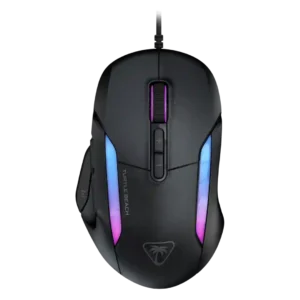
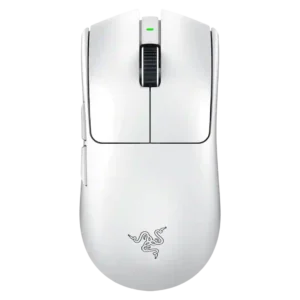
Compare Turtle Beach Kone II vs Razer Viper V3 Pro

P1 Turtle Beach Kone II
P2 Razer Viper V3 Pro

Comparison Takeaways

Turtle Beach Kone II

Where It Has the Edge

  • RGB features is 4.5 vs 1.0. RGB is widely covered and generally positive, with multi-zone lighting, AIMO effects, color controls, and functional DPI color...
  • tilt gesture controls is 4.6 vs 1.3. Tilt gesture controls are a clear feature strength, with the 4D wheel repeatedly described as side-clicking or tilting...
  • cable flexibility is 4.4 vs 2.1. Cable comments are mostly positive, especially around PhantomFlex softness and low drag, with one minor complaint about fuzzy...
  • software stability is 4.2 vs 2.5. Software stability has limited but positive evidence, with one review saying the mouse works well even without using...

Razer Viper V3 Pro

Where It Has the Edge

  • handedness options is 3.8 vs 2.3. Handedness is mixed: the body is symmetrical or semi-ambidextrous, but left-side thumb buttons and right-handed targeting limit true...
  • FPS gaming suitability is 4.8 vs 3.3. FPS suitability is one of the strongest attributes, with reviewers repeatedly calling it elite for shooters, esports, and...
  • weight is 4.8 vs 3.8. Weight is one of the strongest points, with near-universal praise for the 54g class body and its effect...
  • polling rate is 4.7 vs 4.0. The 8K wireless polling capability is a major differentiator, but reviewers split on practical value because the gains...
Average score
Product 1: Turtle Beach Kone II
4.2
Product 2: Razer Viper V3 Pro
4.0
2.4GHz connectivity
Product 1: Turtle Beach Kone II
No score yet
Product 2: Razer Viper V3 Pro
4.5

2.4GHz-style wireless connectivity is strong through Razer HyperSpeed or HyperPolling dongle use, with reviewers highlighting the included dongle and wireless receiver setup.

acceleration control
Product 1: Turtle Beach Kone II
4.2

Software controls such as angle snapping, motion sync, smoothing, and acceleration-related settings give users some control over motion behavior.

Product 2: Razer Viper V3 Pro
4.4

Acceleration-related controls are supported through Synapse features such as acceleration curves and Dynamic Sensitivity, giving advanced users more ways to tune mouse movement.

Accuracy and tracking precision
Product 1: Turtle Beach Kone II
4.5

Reviewers mostly found tracking accurate and precise, though one review noted a subtle issue in very fine pixel-perfect movements.

Product 2: Razer Viper V3 Pro
4.7

Reviewers consistently describe the Viper V3 Pro as highly accurate, with precise tracking, strong sensitivity matching, and confidence in shooters and aim trainers.

balance and weight distribution
Product 1: Turtle Beach Kone II
No score yet
Product 2: Razer Viper V3 Pro
4.7

Balance and weight distribution are positively described in the reviews that discuss them, with reviewers calling the mouse planted, well-balanced, and stable.

battery life
Product 1: Turtle Beach Kone II
No score yet
Product 2: Razer Viper V3 Pro
3.7

Battery life is context-dependent: 1K polling is repeatedly described as strong, while 8K polling sharply reduces runtime to around 17 hours.

Bluetooth support
Product 1: Turtle Beach Kone II
No score yet
Product 2: Razer Viper V3 Pro
1.0

Bluetooth support is a clear omission; reviewers repeatedly note that Bluetooth is absent and that this limits versatility for office, travel, or multi-device use.

build quality
Product 1: Turtle Beach Kone II
4.2

Build quality is generally strong, with solid feel and robust construction, though one reviewer noticed creaking around the wheel area.

Product 2: Razer Viper V3 Pro
4.6

Build quality is widely praised despite the low weight, with many reviewers reporting solid construction, no flex, and strong button or shell structure.

button customization
Product 1: Turtle Beach Kone II
4.6

Customization is a major consensus strength thanks to Easy-Shift, remapping, button assignments, and extensive Swarm II controls.

Product 2: Razer Viper V3 Pro
4.4

Button customization is strong through Synapse, with remapping, HyperShift, and lift-off or DPI-related assignments available, though the physical button count stays minimal.

button responsiveness
Product 1: Turtle Beach Kone II
4.5

Button responsiveness is a strength, with reviewers repeatedly calling clicks fast, responsive, satisfying, or well balanced.

Product 2: Razer Viper V3 Pro
4.7

Button responsiveness is rated highly, with reviewers describing the main buttons as fast, smooth, tactile, and easy to use during gameplay.

cable flexibility
Product 1: Turtle Beach Kone II
4.4

Cable comments are mostly positive, especially around PhantomFlex softness and low drag, with one minor complaint about fuzzy braiding.

Product 2: Razer Viper V3 Pro
2.1

Cable flexibility is a recurring weakness, with multiple reviewers calling the cable stiff, less flexible, or disruptive to the mouse's light wireless feel.

charging convenience
Product 1: Turtle Beach Kone II
No score yet
Product 2: Razer Viper V3 Pro
3.4

Charging convenience is mixed: fast charging and use-while-charging help, but reviewers miss a charging dock or stand and note more frequent charging at 8K.

claw grip comfort
Product 1: Turtle Beach Kone II
4.3

Claw grip is also well supported, though some reviewers frame the mouse as more relaxed claw than aggressive claw.

Product 2: Razer Viper V3 Pro
4.6

Claw grip comfort is one of the best-supported ergonomic strengths, with multiple reviewers calling it ideal, natural, or especially well suited to claw users.

click latency
Product 1: Turtle Beach Kone II
4.6

Click latency evidence is positive overall, with fast actuation, wired latency advantages, and responsive switch behavior.

Product 2: Razer Viper V3 Pro
4.6

Click latency impressions are excellent overall, with optical switches and high polling producing near-instant response, though at least one reviewer questioned whether 8K gains are human-noticeable.

click noise
Product 1: Turtle Beach Kone II
3.3

Click noise is mixed: clicks can sound hollow or louder, which some users may like and others may not.

Product 2: Razer Viper V3 Pro
3.2

Click noise is mixed: some reviewers call the clicks loud or potentially noticeable, while one says the soft click is not too loud.

connection stability
Product 1: Turtle Beach Kone II
No score yet
Product 2: Razer Viper V3 Pro
4.4

Connection stability is generally good, with several reviewers reporting no drops or issues, but sleep/wake behavior and small stutters appear in isolated reports.

cross-platform compatibility
Product 1: Turtle Beach Kone II
3.6

Cross-platform compatibility is mixed: Windows support is clear and Xbox plug-and-play is noted, but macOS and non-Windows support are limited.

Product 2: Razer Viper V3 Pro
2.2

Cross-platform compatibility is limited by the lack of Bluetooth and broader non-gaming versatility, even though the mouse works well in its intended PC esports setup.

debounce customization
Product 1: Turtle Beach Kone II
4.2

Debounce customization is repeatedly visible in Swarm II controls, though the reviews mostly mention it as a setting rather than test it deeply.

Product 2: Razer Viper V3 Pro
No score yet
DPI range
Product 1: Turtle Beach Kone II
4.5

Multiple reviews confirm a 26K DPI ceiling and software-adjustable DPI steps, giving the Kone II a wide sensitivity range.

Product 2: Razer Viper V3 Pro
4.8

The DPI ceiling and single-step DPI control are repeatedly described as extreme and highly granular, though several reviewers note most players will not use the full 35K range.

durability over time
Product 1: Turtle Beach Kone II
4.7

Durability over time is supported mainly by the optical switch rating and a review claim that it should survive many gaming sessions.

Product 2: Razer Viper V3 Pro
4.5

Durability over time has limited but positive support, including two-week no-flex impressions and a one-year update with little to report beyond one creaky unit.

ecosystem integration
Product 1: Turtle Beach Kone II
4.5

Ecosystem integration is supported through AIMO, Swarm II, and syncing or managing other Turtle Beach devices.

Product 2: Razer Viper V3 Pro
4.0

Ecosystem integration is lightly supported through Razer Synapse pairing broadly with Razer products, but the mouse itself remains minimal and non-RGB.

ergonomic design
Product 1: Turtle Beach Kone II
4.6

Ergonomic design is a central strength, repeatedly praised through the thumb rest, grooves, large shape, and comfort-first shell.

Product 2: Razer Viper V3 Pro
4.2

Ergonomics are mostly praised for comfort and grip-style flexibility, though a few reviewers found the shape less comfortable or too broad for their use.

fingertip grip comfort
Product 1: Turtle Beach Kone II
3.8

Fingertip grip evidence is mixed, with some comfort reports but also concern that the mouse is too bulky and heavy for fingertip use.

Product 2: Razer Viper V3 Pro
4.2

Fingertip comfort is positive for some reviewers but less universal than claw comfort, with at least one reviewer saying the V3 Pro is harder to fingertip than the flatter V2.

firmware reliability
Product 1: Turtle Beach Kone II
4.2

Firmware reliability evidence focuses on update handling and firmware setup rather than long-term failures; the signal is useful but not deep.

Product 2: Razer Viper V3 Pro
4.0

Firmware reliability has limited support, with one reviewer reporting that updating firmware was easy and issue-free.

FPS gaming suitability
Product 1: Turtle Beach Kone II
3.3

FPS suitability is mixed: the sensor and buttons work, but size and weight make it less ideal for serious competitive shooters.

Product 2: Razer Viper V3 Pro
4.8

FPS suitability is one of the strongest attributes, with reviewers repeatedly calling it elite for shooters, esports, and competitive FPS play.

glide smoothness
Product 1: Turtle Beach Kone II
4.6

Glide smoothness is strongly supported by PTFE feet and repeated reports of smooth, low-friction movement.

Product 2: Razer Viper V3 Pro
4.6

Glide smoothness is one of the strongest consensus positives, with large PTFE feet repeatedly praised for smooth, effortless movement across surfaces.

grip texture
Product 1: Turtle Beach Kone II
4.0

Grip texture is mixed: the shell has some stickiness and grip tape helps, but smooth or hard grip surfaces can feel slippery to some reviewers.

Product 2: Razer Viper V3 Pro
4.3

Grip texture is mostly praised for secure, smooth-touch traction, though some reviewers mention fingerprints, oil, slipperiness, or the need for included grip tape.

handedness options
Product 1: Turtle Beach Kone II
2.3

Handedness is a weakness because the body and controls are repeatedly described as right-handed and unsuitable for left-handed users.

Product 2: Razer Viper V3 Pro
3.8

Handedness is mixed: the body is symmetrical or semi-ambidextrous, but left-side thumb buttons and right-handed targeting limit true left-handed parity.

left and right click quality
Product 1: Turtle Beach Kone II
4.6

Left and right clicks are described as strong, snappy, uniform, and responsive in the reviews that discuss them directly.

Product 2: Razer Viper V3 Pro
4.6

Left and right click quality is a major positive, with reviewers citing crisp action, no double-clicking, minimal travel, and dependable click feel.

lift-off distance
Product 1: Turtle Beach Kone II
4.5

Lift-off distance appears as a software-adjustable sensor setting in the TweakTown review.

Product 2: Razer Viper V3 Pro
4.6

Lift-off and landing distance control is well covered through Razer's calibration options, and reviewers value the ability to tune tracking behavior for different surfaces.

long-session comfort
Product 1: Turtle Beach Kone II
4.4

Long-session comfort is mostly strong because the ergonomic shape reduces strain, though one reviewer with medium hands noticed fatigue.

Product 2: Razer Viper V3 Pro
4.7

Long-session comfort is a major positive, with reviewers connecting the low weight, smooth glide, and shape to less fatigue during extended play.

macro support
Product 1: Turtle Beach Kone II
4.4

Macro support is clearly available through Swarm II, including game-specific and productivity-oriented macro assignments.

Product 2: Razer Viper V3 Pro
4.2

Macro support is only lightly evidenced, but one review explicitly ties the side buttons to customized actions or macros.

materials quality
Product 1: Turtle Beach Kone II
3.9

Materials are acceptable to good, with matte plastic and a clean finish, but cable braiding and plastic feel drew some minor caveats.

Product 2: Razer Viper V3 Pro
3.9

Materials quality is mixed-positive: reviewers like the smooth-touch finish and premium materials, but several mention fingerprints, oil residue, or a cheaper-feeling shell.

MMO gaming suitability
Product 1: Turtle Beach Kone II
4.7

MMO suitability is strong in the reviews that discuss it, especially because Easy-Shift and extra commands suit games like Final Fantasy XIV and WoW.

Product 2: Razer Viper V3 Pro
3.5

MMO suitability is mixed-limited: one reviewer used it successfully in FFXIV, while another says MMO-style games benefit from more buttons.

MOBA gaming suitability
Product 1: Turtle Beach Kone II
4.1

MOBA suitability has limited but relevant support through game-profile and programmable-function references for League of Legends.

Product 2: Razer Viper V3 Pro
3.5

MOBA suitability is mixed-limited: reviewers mention DOTA/League-level competitive use, but also note MOBAs can benefit from more buttons than this mouse provides.

motion consistency
Product 1: Turtle Beach Kone II
4.5

Most reviewers found motion consistent, smooth, and issue-free, although competitive FPS movement was not always considered nimble.

Product 2: Razer Viper V3 Pro
4.7

Motion consistency is a clear strength, with reviewers reporting smooth tracking, stable response, and reliable performance through flicks, swipes, and long-term use.

onboard memory
Product 1: Turtle Beach Kone II
4.7

Onboard memory is directly supported by PCMag and IGN through profile or onboard-profile references.

Product 2: Razer Viper V3 Pro
3.5

Onboard memory is mixed: some reviewers note settings can be saved to the mouse, while others criticize the single onboard profile limitation.

palm grip comfort
Product 1: Turtle Beach Kone II
4.4

Palm grip comfort is well supported, with several reviewers saying palm grip works well or is the most natural fit.

Product 2: Razer Viper V3 Pro
4.1

Palm grip comfort is broadly acceptable and sometimes strong, but several reviewers suggest claw grip is the better match and palm comfort can depend on hand size.

polling rate
Product 1: Turtle Beach Kone II
4.0

The Kone II is consistently described around a 1,000Hz polling ceiling, with software controls for polling adjustments.

Product 2: Razer Viper V3 Pro
4.7

The 8K wireless polling capability is a major differentiator, but reviewers split on practical value because the gains above 2K or 4K are subtle for many players.

portability
Product 1: Turtle Beach Kone II
2.8

Portability is a weakness because the large wired design was specifically described as not ideal for laptop users.

Product 2: Razer Viper V3 Pro
2.3

Portability is compromised because the mouse lacks Bluetooth and uses a separate receiver/cable arrangement, despite its light chassis.

premium feel
Product 1: Turtle Beach Kone II
4.1

Premium feel is limited but supported by robust build quality and ample RGB, placing it more mid-range than luxury.

Product 2: Razer Viper V3 Pro
4.6

Premium feel is strong overall, with reviewers describing the mouse as premium, luxurious, impressive, and a serious high-end esports product.

profile switching
Product 1: Turtle Beach Kone II
4.5

Profile switching evidence is present but narrower, mainly around different profiles and Photoshop-oriented profile use.

Product 2: Razer Viper V3 Pro
4.4

Profile switching is useful through Synapse and polling/DPI profiles, but reviewers disagree on convenience because some settings depend on software and profile setup.

programmable buttons
Product 1: Turtle Beach Kone II
4.7

Programmable button coverage is very strong, with reviews repeatedly citing 7 buttons, 10 programmable inputs, or up to 23 functions.

Product 2: Razer Viper V3 Pro
4.3

Programmable controls are present but limited by esports minimalism; reviewers cite six buttons or eight programmable controls depending on whether wheel and software functions are counted.

RGB features
Product 1: Turtle Beach Kone II
4.5

RGB is widely covered and generally positive, with multi-zone lighting, AIMO effects, color controls, and functional DPI color cues.

Product 2: Razer Viper V3 Pro
1.0

RGB features are intentionally minimal or absent; reviewers repeatedly note there is no RGB lighting beyond simple status indicators.

scroll wheel quality
Product 1: Turtle Beach Kone II
4.1

The scroll wheel earns praise for tactile feedback and 4D functionality, though one review disliked the lack of dual-mode scrolling.

Product 2: Razer Viper V3 Pro
3.9

Scroll wheel feedback is mixed-positive: many reviewers like the tactile steps and click, while some find it stiff or uncomfortable for heavy scrolling.

sensor performance
Product 1: Turtle Beach Kone II
4.5

The 26K Owl-Eye sensor was generally praised as responsive, dependable, and competitive, with one dissenting review finding it less smooth than expected.

Product 2: Razer Viper V3 Pro
4.8

Sensor feedback is strongly positive: reviewers praise the Focus Pro 35K class sensor for precise tracking, fast response, and reliable performance across demanding games.

shape comfort
Product 1: Turtle Beach Kone II
4.2

Shape comfort is one of the strongest themes, especially for large hands, while small-hand fit remains the main limitation.

Product 2: Razer Viper V3 Pro
4.5

Shape comfort is generally strong and safe for many users, though reviewers frame it as a larger, conservative shape rather than a perfect fit for every hand.

side button quality
Product 1: Turtle Beach Kone II
4.5

Side buttons and thumb controls are mostly praised for placement and access, with a few caveats about accidental presses or average-sized thumbs.

Product 2: Razer Viper V3 Pro
4.5

Side button quality earns broad praise for placement, spacing, firmness, and reduced mushiness, though the mouse still only offers the standard two left-side buttons.

skate durability
Product 1: Turtle Beach Kone II
No score yet
Product 2: Razer Viper V3 Pro
3.5

Skate durability has limited but relevant support: one reviewer expects the large PTFE feet to wear slower, while another notes missing replacement feet as a drawback.

software stability
Product 1: Turtle Beach Kone II
4.2

Software stability has limited but positive evidence, with one review saying the mouse works well even without using Swarm II.

Product 2: Razer Viper V3 Pro
2.5

Software stability is mixed: reviewers report Synapse Beta working well in one case, but others cite Synapse loading, sleep behavior, or crash issues.

software usability
Product 1: Turtle Beach Kone II
4.4

Swarm II usability is mostly positive because it is clean, modern, and easy to customize, although one review disliked parts of the interface.

Product 2: Razer Viper V3 Pro
4.1

Software usability is mixed-positive: Synapse offers deep and often manageable customization, but some reviewers dislike the app or find it unnecessary for a single mouse.

surface compatibility
Product 1: Turtle Beach Kone II
4.7

Surface compatibility is positive where tested, with reviewers reporting smooth use on cloth, hard, wooden, marble, couch-arm, and mouse-pad surfaces.

Product 2: Razer Viper V3 Pro
4.7

Surface compatibility is very strong, with reviewers citing reliable tracking or glide on glass, wood, mouse pads, and other surfaces.

switch durability
Product 1: Turtle Beach Kone II
4.8

Switch durability is supported by repeated references to TITAN optical switches rated for 100 million clicks.

Product 2: Razer Viper V3 Pro
4.7

Switch durability is strongly supported by repeated references to 90-million-click optical switches and the durability advantages of optical actuation.

switch feel
Product 1: Turtle Beach Kone II
4.5

Switch feel is generally crisp, tactile, and satisfying, although one review found the Kone II slightly mushier than the Burst II Air.

Product 2: Razer Viper V3 Pro
4.4

Switch feel is mostly praised as crisp, firm, and satisfying, though a few reviewers still prefer the sound or feel of mechanical switches.

tilt gesture controls
Product 1: Turtle Beach Kone II
4.6

Tilt gesture controls are a clear feature strength, with the 4D wheel repeatedly described as side-clicking or tilting for extra inputs.

Product 2: Razer Viper V3 Pro
1.3

Tilt gesture controls are effectively absent, with reviewers noting the scroll wheel cannot tilt or that tilt would have added extra inputs.

value for money
Product 1: Turtle Beach Kone II
4.2

Value is broadly positive at the wired model’s price, though some reviewers still wanted a lower price or saw cheaper alternatives.

Product 2: Razer Viper V3 Pro
3.5

Value is highly context-dependent: reviewers praise the performance and sale pricing but repeatedly caution that the mouse is expensive and overkill for casual users.

weight
Product 1: Turtle Beach Kone II
3.8

Weight impressions are mixed: the wired Kone II is around 90g and sometimes called light for its size, but not ultralight.

Product 2: Razer Viper V3 Pro
4.8

Weight is one of the strongest points, with near-universal praise for the 54g class body and its effect on speed, fatigue, and handling.

wireless latency
Product 1: Turtle Beach Kone II
No score yet
Product 2: Razer Viper V3 Pro
4.7

Wireless latency is a clear strength in practical play, though reviewers differ on whether the highest polling rates add meaningful real-world benefit over lower settings.

wireless performance
Product 1: Turtle Beach Kone II
No score yet
Product 2: Razer Viper V3 Pro
4.6

Wireless performance is very strong, with reviewers repeatedly describing the HyperSpeed or HyperPolling wireless experience as smooth, responsive, and reliable in games.