2.4GHz connectivity
P1
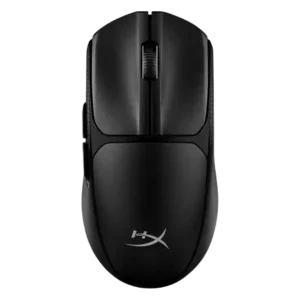
Product 1: HyperX Pulsefire Fuse
4.2
2.4GHz performance was widely treated as reliable and responsive, with reviewers repeatedly noting dongle support and standard 1000Hz operation.
P2
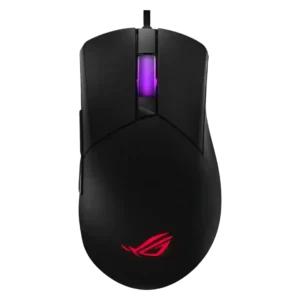
Product 2: ASUS ROG Gladius III Wired
4.1
Reviewers mention 2.4GHz support mainly in the wireless/tri-mode context, with the wired model retaining USB as the core experience.
Accuracy and tracking precision
P1
Product 1: HyperX Pulsefire Fuse
4.5
The strongest tracking evidence is positive, with precise tracking reported across fast FPS and broader game genres.
P2
Product 2: ASUS ROG Gladius III Wired
4.2
Tracking precision is generally praised, with one review noting more modest MouseTester behavior while others report accurate gaming performance.
balance and weight distribution
P1
Product 1: HyperX Pulsefire Fuse
4.0
Weight balance is lightly covered: one review noted a rear battery bias without handling harm, while another called the mouse well-balanced.
P2
Product 2: ASUS ROG Gladius III Wired
4.3
Weight balance is described favorably where tested, especially the centered balance and improved maneuverability on the Core variant.
battery life
P1
Product 1: HyperX Pulsefire Fuse
4.2
Battery life is a consistent strength, with multiple reviewers citing up to 85 hours and practical multi-session or multi-week use.
P2
Product 2: ASUS ROG Gladius III Wired
4.1
Battery life appears only in the wireless-oriented review evidence, which reports usable 2.4GHz and Bluetooth runtime figures.
Bluetooth support
P1
Product 1: HyperX Pulsefire Fuse
4.0
Bluetooth adds useful device flexibility, though one review found its latency unsuitable for fast-paced games.
P2
Product 2: ASUS ROG Gladius III Wired
4.1
Bluetooth support is consistently mentioned for the wireless or tri-mode versions rather than the wired-only setup.
build quality
P1
Product 1: HyperX Pulsefire Fuse
3.1
Build quality is divisive: some reviewers found a solid shell or practical design, while others criticized cheap components and one sample’s wobble.
P2
Product 2: ASUS ROG Gladius III Wired
4.4
Build quality is a clear strength across several reviews, with repeated comments about excellent construction and few creaks or flex issues.
button customization
P1
Product 1: HyperX Pulsefire Fuse
3.6
Button customization is present through NGENUITY, but opinions range from straightforward remapping to too few options to justify the app.
P2
Product 2: ASUS ROG Gladius III Wired
4.5
Button customization is one of the strongest themes, driven by hot-swappable switches, remapping, macros, and software controls.
button responsiveness
P1
Product 1: HyperX Pulsefire Fuse
4.1
Button response is generally positive, with several reviewers calling the clicks tactile, reliable, responsive, or satisfying.
P2
Product 2: ASUS ROG Gladius III Wired
4.5
Button responsiveness is rated highly overall, with reviewers citing instant registration, tactile feedback, and easy activation.
claw grip comfort
P1
Product 1: HyperX Pulsefire Fuse
2.0
Claw grip evidence is negative and limited to one reviewer, who found the low-profile shape caused wrist drag even in claw grip.
P2
Product 2: ASUS ROG Gladius III Wired
4.0
Claw grip support is present but context-dependent; several reviews say the high shape works, while one finds it limited by height.
click latency
P1
Product 1: HyperX Pulsefire Fuse
4.5
Latency evidence is positive in 2.4GHz mode, with wired-like response and no noticeable lag reported during gameplay.
P2
Product 2: ASUS ROG Gladius III Wired
4.6
Latency evidence is very positive, especially for wired use, with reviewers reporting instant presses and no significant input lag.
click noise
P1
Product 1: HyperX Pulsefire Fuse
3.4
Click noise is mixed: one review warned the clicks are not quiet, while another said they are not overly loud.
P2
Product 2: ASUS ROG Gladius III Wired
3.9
Click noise is generally controlled, but swappable Omron switches can be noticeably louder depending on the chosen switch.
connection stability
P1
Product 1: HyperX Pulsefire Fuse
4.1
Connection stability is mostly positive, with stable multi-device use and smooth wireless operation reported.
P2
Product 2: ASUS ROG Gladius III Wired
4.5
Connection stability is strong for wired use and supported by positive mentions of lag-free tracking and reliable 2.4GHz dongle placement.
cross-platform compatibility
P1
Product 1: HyperX Pulsefire Fuse
4.1
Cross-platform use is supported by Bluetooth and multi-device positioning, with one review explicitly describing the mouse as multi-platform.
P2
Product 2: ASUS ROG Gladius III Wired
4.3
Cross-PC use is best supported by Gear Link and onboard profiles, which let settings work on another PC after configuration.
DPI range
P1
Product 1: HyperX Pulsefire Fuse
4.0
The 12,000 DPI ceiling is consistently documented and usually treated as enough, though one reviewer considered it too sensitive for most users.
P2
Product 2: ASUS ROG Gladius III Wired
4.5
DPI range is a major strength on the original Gladius III, while the Core review notes a lower but still gaming-capable 12,000 DPI sensor.
durability over time
P1
Product 1: HyperX Pulsefire Fuse
3.8
Long-term durability evidence is limited to switch ratings, with Kailh switches cited at 20 million clicks.
P2
Product 2: ASUS ROG Gladius III Wired
4.5
Durability over time is supported by replaceable switches, spare parts, and high click ratings from 70 million to 100 million clicks.
ecosystem integration
P1
Product 1: HyperX Pulsefire Fuse
4.0
HyperX ecosystem integration is supported by NGENUITY lighting sync with compatible HyperX peripherals.
P2
Product 2: ASUS ROG Gladius III Wired
4.1
ASUS ecosystem integration is supported by Aura Sync, AURA Creator, Gear Link, and references to the ROG device ecosystem.
ergonomic design
P1
Product 1: HyperX Pulsefire Fuse
3.5
Ergonomic feedback is split: some found the mouse comfortable, while others said the low profile and small size hurt comfort.
P2
Product 2: ASUS ROG Gladius III Wired
4.3
Ergonomics are broadly praised for right-handed medium-to-large hands, though the shape can feel tall or narrow to some users.
fingertip grip comfort
P1
Product 1: HyperX Pulsefire Fuse
4.1
Fingertip-oriented comfort is supported indirectly by hybrid fingertip/palm use and a neutral shape that supports different grip styles.
P2
Product 2: ASUS ROG Gladius III Wired
4.1
Fingertip grip is possible and sometimes listed as supported, but the tall ergonomic body makes it less universally ideal than palm grip.
firmware reliability
P1Product 1: HyperX Pulsefire Fuse
No score yet
P2
Product 2: ASUS ROG Gladius III Wired
4.0
Firmware support is present through Armoury Crate, Gear Link, or firmware menus, though the reviews do not deeply test long-term reliability.
FPS gaming suitability
P1
Product 1: HyperX Pulsefire Fuse
4.3
FPS suitability is strong in the positive reviews, which describe precise tracking and responsive clicks in fast-paced shooters.
P2
Product 2: ASUS ROG Gladius III Wired
4.0
FPS suitability is good but not perfect: reviewers praise tracking and wired latency, while weight and shape limit elite FPS speed for some.
glide smoothness
P1
Product 1: HyperX Pulsefire Fuse
3.1
Glide quality is inconsistent: one review praised smooth PTFE movement, while others found the feet less smooth or friction-prone.
P2
Product 2: ASUS ROG Gladius III Wired
4.5
Glide smoothness is a repeated positive, with PTFE/Omni feet producing smooth, effortless movement on tested surfaces.
grip texture
P1
Product 1: HyperX Pulsefire Fuse
3.3
Grip texture is polarizing, praised for traction by some reviewers but criticized as rough or cheap by others.
P2
Product 2: ASUS ROG Gladius III Wired
3.9
Grip texture is mixed-to-good, with grippy matte or serrated panels helping control, but one review notes absent rubberized grips.
handedness options
P1
Product 1: HyperX Pulsefire Fuse
2.8
Handedness is one of the clearest split areas: the symmetrical shape helps, but left-side-only buttons make left-handed use weaker.
P2
Product 2: ASUS ROG Gladius III Wired
2.9
Handedness is a limitation because the evidence repeatedly frames the mouse as right-handed or non-ambidextrous.
left and right click quality
P1
Product 1: HyperX Pulsefire Fuse
4.1
Main click quality is generally a strength, with repeated praise for tactile, reliable, satisfying left and right clicks.
P2
Product 2: ASUS ROG Gladius III Wired
4.1
Main click quality is mostly strong thanks to tactile switches and good click feel, though one review reports button wobble.
long-session comfort
P1
Product 1: HyperX Pulsefire Fuse
3.7
Long-session comfort is highly dependent on hand size and fit, ranging from no fatigue to wrist friction and discomfort.
P2
Product 2: ASUS ROG Gladius III Wired
4.4
Long-session comfort is generally positive, helped by fatigue-free glide and shape, though hand size and grip style matter.
macro support
P1
Product 1: HyperX Pulsefire Fuse
4.0
Macro support is confirmed through NGENUITY, which can record and trigger macros.
P2
Product 2: ASUS ROG Gladius III Wired
4.4
Macro support is well covered through Armoury Crate and Gear Link, including macro recording and button-layer functions.
materials quality
P1
Product 1: HyperX Pulsefire Fuse
2.5
Materials are mixed, with fingerprint-resistant matte coating on one side and rough or cheap-feeling plastic on the other.
P2
Product 2: ASUS ROG Gladius III Wired
3.9
Materials quality is solid but not luxurious: reviewers note hard plastic, matte plastic, and occasional oil or grip tradeoffs.
motion consistency
P1
Product 1: HyperX Pulsefire Fuse
4.5
Motion consistency is positive where tested directly, with reviewers reporting consistent tracking and no noticeable jitter or lag.
P2
Product 2: ASUS ROG Gladius III Wired
3.9
Motion consistency is mostly good, but testing varies: one review reports smooth tracking while another records jitter at flick peaks.
onboard memory
P1
Product 1: HyperX Pulsefire Fuse
4.2
Onboard memory is confirmed, allowing configurations to be saved directly to the mouse.
P2
Product 2: ASUS ROG Gladius III Wired
4.4
Onboard memory is a strength, with multiple reviews citing five profiles or built-in memory.
palm grip comfort
P1
Product 1: HyperX Pulsefire Fuse
4.0
Palm comfort is supported by a hybrid fingertip-and-palm experience, but broader comfort evidence shows hand-size sensitivity.
P2
Product 2: ASUS ROG Gladius III Wired
4.3
Palm grip is the best-supported grip style because reviewers repeatedly say the tall ergonomic body suits palm users.
polling rate
P1
Product 1: HyperX Pulsefire Fuse
3.6
Polling rate coverage is consistent at about 1000Hz, viewed as standard and acceptable rather than premium.
P2
Product 2: ASUS ROG Gladius III Wired
3.9
Polling rate support reaches 1000Hz across the reviews, though one test calls polling performance average with jitter.
portability
P1
Product 1: HyperX Pulsefire Fuse
4.2
Portability is a recurring strength thanks to light weight, dongle storage, Bluetooth fallback, and easy bag travel.
P2Product 2: ASUS ROG Gladius III Wired
No score yetpremium feel
P1
Product 1: HyperX Pulsefire Fuse
2.2
Premium feel is limited; several reviewers explicitly contrast it with higher-end mice or criticize cheap-feeling parts.
P2
Product 2: ASUS ROG Gladius III Wired
4.2
Premium feel is tied more to ROG branding, construction, and presentation than to ultralight materials or understated styling.
profile switching
P1
Product 1: HyperX Pulsefire Fuse
3.4
Profile switching evidence is mostly about DPI profiles or DPI levels, not richer full-profile workflows.
P2
Product 2: ASUS ROG Gladius III Wired
4.1
Profile switching is supported through onboard profiles and profile buttons, although one reviewer wishes the control were more conveniently placed.
programmable buttons
P1
Product 1: HyperX Pulsefire Fuse
3.9
Programmable controls are supported through remappable buttons, side-button mapping, and scroll-wheel assignment.
P2
Product 2: ASUS ROG Gladius III Wired
4.3
Programmable buttons are well supported, with reviews describing six or seven configurable buttons and software remapping.
RGB features
P1
Product 1: HyperX Pulsefire Fuse
3.1
RGB is mixed to negative: it is customizable, but several reviewers found it minimal, unimpressive, or battery-draining.
P2
Product 2: ASUS ROG Gladius III Wired
4.2
RGB features are a consistent strength, including three-zone lighting on the original and reduced but configurable zones on the Core.
scroll wheel quality
P1
Product 1: HyperX Pulsefire Fuse
3.6
Scroll wheel quality is split between smooth, tactile praise and criticism that the wheel is too small.
P2
Product 2: ASUS ROG Gladius III Wired
3.9
Scroll wheel quality is mostly positive for tactile detents and rubberized feel, but one review reports side-to-side wobble.
sensor performance
P1
Product 1: HyperX Pulsefire Fuse
3.9
Sensor performance is generally solid for the category, led by positive PAW3311 tracking reports but tempered by one merely adequate verdict.
P2
Product 2: ASUS ROG Gladius III Wired
4.1
Sensor performance is generally strong and gaming-capable, though one wired review finds lower test performance than expected.
shape comfort
P1
Product 1: HyperX Pulsefire Fuse
3.5
Shape comfort is strongly reviewer-dependent, ranging from easy adaptation and a nice shape to too low-profile for larger hands.
P2
Product 2: ASUS ROG Gladius III Wired
4.0
Shape comfort is divisive: many like the ergonomic Gladius shape, while others find it tall, chunky, or narrow.
side button quality
P1
Product 1: HyperX Pulsefire Fuse
1.5
Side-button quality is the weakest control area, with one review calling them small, stiff, uncomfortable, and cheap-feeling.
P2
Product 2: ASUS ROG Gladius III Wired
4.2
Side buttons are generally usable and tactile, with convenient placement in one review but right-side/left-hand limitations in another.
skate durability
P1
Product 1: HyperX Pulsefire Fuse
2.0
Skate durability evidence is limited and negative, with one reviewer reporting dust buildup around the skates.
P2
Product 2: ASUS ROG Gladius III Wired
3.8
Skate durability is only lightly supported through included replacement PTFE gliders, not long-term wear testing.
software stability
P1
Product 1: HyperX Pulsefire Fuse
3.8
Software stability is only lightly supported; one reviewer called the NGENUITY app solid while others focused on limited usefulness.
P2
Product 2: ASUS ROG Gladius III Wired
4.7
Software stability is strongest in the Gear Link review, where the tool is described as quick, reliable, and smooth.
software usability
P1
Product 1: HyperX Pulsefire Fuse
3.6
Software usability is divided between straightforward, beginner-friendly customization and complaints that the app is barely worth installing.
P2
Product 2: ASUS ROG Gladius III Wired
4.0
Software usability is mixed-to-positive, with Gear Link praised, Armoury Crate usable, and one reviewer expressing mixed feelings.
surface compatibility
P1
Product 1: HyperX Pulsefire Fuse
3.6
Surface compatibility is mixed, with strong glass/all-surface evidence offset by one report of scraping and friction.
P2
Product 2: ASUS ROG Gladius III Wired
4.3
Surface compatibility is well supported through calibration options for preset mousepads, new surfaces, and manual deskmat calibration.
switch durability
P1
Product 1: HyperX Pulsefire Fuse
3.8
Switch durability is supported by Kailh 20-million-click ratings rather than long-term failure testing.
P2
Product 2: ASUS ROG Gladius III Wired
4.4
Switch durability is a core strength, with high click ratings and replaceable switches across several reviews.
switch feel
P1
Product 1: HyperX Pulsefire Fuse
4.1
Switch feel is usually positive, with repeated descriptions of clicky, tactile, crisp, or satisfying feedback.
P2
Product 2: ASUS ROG Gladius III Wired
4.4
Switch feel is a major positive, with tactile, responsive, snappy, and clicky descriptions recurring across reviews.
value for money
P1
Product 1: HyperX Pulsefire Fuse
3.7
Value is polarizing: positive reviews call it excellent or strong value, while critical reviews say competitors are more compelling.
P2
Product 2: ASUS ROG Gladius III Wired
4.4
Value is favorable overall, with reviewers repeatedly emphasizing affordability, budget fit, or getting a lot for the money.
weight
P1
Product 1: HyperX Pulsefire Fuse
4.0
Weight is a consistent advantage, with reviewers repeatedly identifying the 75g AAA configuration as light or relatively lightweight.
P2
Product 2: ASUS ROG Gladius III Wired
3.7
Weight is mixed: lighter than predecessors or wireless variants, but still heavier than ultralight FPS mice.
wireless performance
P1
Product 1: HyperX Pulsefire Fuse
4.3
Wireless performance is one of the most consistently positive areas, especially over the 2.4GHz dongle.
P2
Product 2: ASUS ROG Gladius III Wired
4.2
Wireless performance is only supported in wireless-oriented evidence, mainly around dongle placement for reception and reliability.