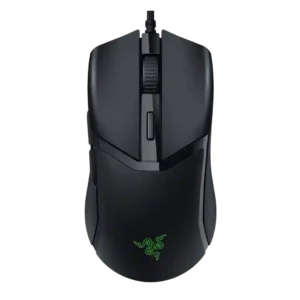
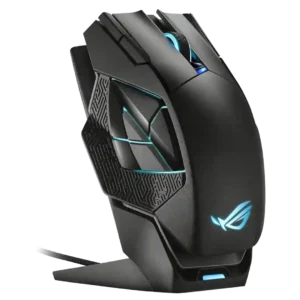
Compare Razer Cobra vs ASUS ROG Spatha X

P1 Razer Cobra
P2 ASUS ROG Spatha X

Comparison Takeaways

Razer Cobra

Where It Has the Edge

  • fingertip grip comfort is 4.3 vs 1.5. Fingertip grip comfort is supported by one reviewer who found fingertip positioning comfortable.
  • weight is 4.6 vs 1.9. Weight is one of the strongest points, with nearly every review describing the mouse around 56-58 grams and...
  • cross-platform compatibility is 3.4 vs 1.5. Cross-platform compatibility is partial: the mouse is described as Windows and Mac compatible, but software support is Windows-only.
  • FPS gaming suitability is 4.1 vs 2.3. FPS suitability is positive for small to medium hands and mainstream play, though one reviewer suggests top FPS...

ASUS ROG Spatha X

Where It Has the Edge

  • wireless performance is 5.0 vs 1.0. Wireless performance is a clear strength, with reviewers reporting smooth and dependable untethered use.
  • 2.4GHz connectivity is 4.5 vs 1.0. The mouse supports 2.4GHz wireless play, and reviews treat it as a standard part of the setup.
  • wireless latency is 4.5 vs 1.0. One reviewer specifically reported no delay during wireless gameplay.
  • profile switching is 4.0 vs 2.4. A DPI or profile switch is mentioned, including lighting that indicates which profile is active.
Average score
Product 1: Razer Cobra
3.8
Product 2: ASUS ROG Spatha X
4.0
2.4GHz connectivity
Product 1: Razer Cobra
1.0

2.4GHz support is absent according to the review that explicitly says there is no 2.4GHz dongle.

Product 2: ASUS ROG Spatha X
4.5

The mouse supports 2.4GHz wireless play, and reviews treat it as a standard part of the setup.

acceleration control
Product 1: Razer Cobra
4.1

Acceleration-related performance is adequate in the reviews that mention it, with specs and no-skip testing supporting confidence.

Product 2: ASUS ROG Spatha X
4.5

A review explicitly lists 50G acceleration among the Spatha X's key performance specs.

Accuracy and tracking precision
Product 1: Razer Cobra
4.5

Reviewers repeatedly describe the Cobra as accurate and dependable in tracking, with no missed beats or skipping in the strongest accounts.

Product 2: ASUS ROG Spatha X
4.5

Reviews describe the sensor as precise and accurate, with strong aim and control once set to the user's preferred sensitivity.

balance and weight distribution
Product 1: Razer Cobra
4.5

Weight balance is directly praised in one review as centered and stable.

Product 2: ASUS ROG Spatha X
No score yet
battery life
Product 1: Razer Cobra
No score yet
Product 2: ASUS ROG Spatha X
4.5

Battery life is described as strong, with up to 67 hours claimed when RGB is off and fast charging highlighted.

Bluetooth support
Product 1: Razer Cobra
1.0

Bluetooth support is absent according to the review that explicitly says there are no Bluetooth wireless options.

Product 2: ASUS ROG Spatha X
1.8

Bluetooth is a notable omission, and reviewers explicitly wish it were included.

build quality
Product 1: Razer Cobra
4.5

Build quality is mostly strong, with repeated praise for solid construction, durable feel, and robust materials.

Product 2: ASUS ROG Spatha X
4.5

Build quality is consistently praised as sturdy and premium-feeling.

button customization
Product 1: Razer Cobra
4.5

Button customization is well supported through Synapse, including remapping buttons, DPI controls, and other mouse functions.

Product 2: ASUS ROG Spatha X
4.5

Armoury Crate repeatedly comes up as the way to remap buttons for both gaming and productivity tasks.

button responsiveness
Product 1: Razer Cobra
4.4

Button responsiveness is mostly strong, with reviewers calling the switches responsive, easy to press, or improved by zero debounce.

Product 2: ASUS ROG Spatha X
4.0

Main button presses are described as having a noticeable, positive click when actuated.

cable flexibility
Product 1: Razer Cobra
4.4

Cable flexibility is widely praised, with reviewers describing the SpeedFlex or braided cable as light, flexible, and low-drag.

Product 2: ASUS ROG Spatha X
4.0

The included paracord-style cables are generally described as light and flexible, though one reviewer noted bunching.

charging convenience
Product 1: Razer Cobra
No score yet
Product 2: ASUS ROG Spatha X
4.8

The charging system is repeatedly praised for making top-ups quick and easy.

claw grip comfort
Product 1: Razer Cobra
4.3

Claw grip comfort is positive where tested, with reviewers saying the mouse works well for claw-style use.

Product 2: ASUS ROG Spatha X
3.5

One reviewer found claw grip workable, but clearly secondary to palm grip.

click latency
Product 1: Razer Cobra
4.7

Click latency evidence is positive, with optical switching and zero-debounce language pointing to very responsive inputs.

Product 2: ASUS ROG Spatha X
No score yet
click noise
Product 1: Razer Cobra
3.0

Click noise is a common caveat, with multiple reviewers describing loud, deeper, or hollow-sounding clicks.

Product 2: ASUS ROG Spatha X
No score yet
connection stability
Product 1: Razer Cobra
4.5

Connection stability is positive for wired use, with plug-and-play behavior and no lag or jitters reported.

Product 2: ASUS ROG Spatha X
5.0

Wireless connectivity is described as flawless, with no dropouts in testing.

cross-platform compatibility
Product 1: Razer Cobra
3.4

Cross-platform compatibility is partial: the mouse is described as Windows and Mac compatible, but software support is Windows-only.

Product 2: ASUS ROG Spatha X
1.5

A Mac-focused review says core customization is Windows-only and does not work properly on Mac.

dock compatibility
Product 1: Razer Cobra
No score yet
Product 2: ASUS ROG Spatha X
4.8

The dock is central to the experience, acting as charger and receiver while seating the mouse easily.

DPI range
Product 1: Razer Cobra
3.7

The DPI range is consistently framed as mainstream rather than flagship, with most reviews citing an 8500 DPI class limit and one noting a lower software range.

Product 2: ASUS ROG Spatha X
5.0

Multiple reviews highlight the 19,000 DPI ceiling as one of the mouse's headline specs.

durability over time
Product 1: Razer Cobra
4.0

Durability over time is lightly supported by one review’s broad speed, reliability, and durability verdict rather than extended long-term testing.

Product 2: ASUS ROG Spatha X
4.5

Easy switch replacement and service access are repeatedly described as advantages for long-term ownership.

ecosystem integration
Product 1: Razer Cobra
4.4

Ecosystem integration is supported by Synapse RGB syncing with other Razer accessories.

Product 2: ASUS ROG Spatha X
4.5

RGB syncing with other ASUS or ROG gear is repeatedly mentioned as part of the appeal.

ergonomic design
Product 1: Razer Cobra
4.4

Ergonomics are generally praised for small to medium hands, versatile grips, and a compact symmetrical design.

Product 2: ASUS ROG Spatha X
3.9

Finger rests and sculpted supports help some users, but the overall ergonomics remain polarizing.

fingertip grip comfort
Product 1: Razer Cobra
4.3

Fingertip grip comfort is supported by one reviewer who found fingertip positioning comfortable.

Product 2: ASUS ROG Spatha X
1.5

Fingertip grip is explicitly described as a poor match for this mouse.

FPS gaming suitability
Product 1: Razer Cobra
4.1

FPS suitability is positive for small to medium hands and mainstream play, though one reviewer suggests top FPS players may want a better sensor.

Product 2: ASUS ROG Spatha X
2.3

FPS suitability is a weak point, with reviewers citing the weight and slower feel for twitch play.

glide smoothness
Product 1: Razer Cobra
4.5

Glide is a strong point, with PTFE feet and low-drag skate behavior praised across several reviews.

Product 2: ASUS ROG Spatha X
5.0

One reviewer reports very smooth glide with essentially no friction on a cloth mat.

grip texture
Product 1: Razer Cobra
3.6

Grip texture is mixed, with some reviewers praising the grippy texture and others finding the surface slick or lacking grip.

Product 2: ASUS ROG Spatha X
4.3

Reviewers note patterned or rubberized grip areas that help support the fingers.

handedness options
Product 1: Razer Cobra
2.5

Handedness is limited: the shape is symmetrical, but the left-side buttons make it functionally right-hand oriented.

Product 2: ASUS ROG Spatha X
4.0

The Spatha X is described as a right-handed design.

left and right click quality
Product 1: Razer Cobra
3.4

Main click quality is mixed, ranging from firm and play-free to hollow or merely interesting in a critical first-impressions review.

Product 2: ASUS ROG Spatha X
4.5

Primary clicks are described as crisp, with little pre-travel and strong tactile feedback.

lift-off distance
Product 1: Razer Cobra
No score yet
Product 2: ASUS ROG Spatha X
4.0

Armoury Crate allows lift-off distance adjustment, with reviewers noting low and high options.

long-session comfort
Product 1: Razer Cobra
4.5

Long-session comfort is supported by one review that directly says it avoids hand strain during long play sessions.

Product 2: ASUS ROG Spatha X
3.0

Long-session comfort depends on fit: MMO sessions can work well, but the weight also causes fatigue for some users.

macro support
Product 1: Razer Cobra
No score yet
Product 2: ASUS ROG Spatha X
4.5

Macro support is present through the software, which reviewers note can record and assign macros.

materials quality
Product 1: Razer Cobra
4.3

Materials quality is positive where discussed, especially the rough matte plastic and robust body.

Product 2: ASUS ROG Spatha X
4.5

One review specifically highlights the sturdy plastic shell and shaped metal base plate.

MMO gaming suitability
Product 1: Razer Cobra
No score yet
Product 2: ASUS ROG Spatha X
4.4

MMO play is the clearest use case, thanks to the extra buttons and large-button-heavy design.

MOBA gaming suitability
Product 1: Razer Cobra
No score yet
Product 2: ASUS ROG Spatha X
4.5

One reviewer explicitly groups the Spatha X with MMO and MOBA players.

motion consistency
Product 1: Razer Cobra
4.5

Motion consistency is a strength in the tested reviews, with no lag, jitters, or sensor skip reported.

Product 2: ASUS ROG Spatha X
5.0

One reviewer reported no delay, jitter, or failed inputs during gameplay, pointing to stable motion behavior.

onboard memory
Product 1: Razer Cobra
2.3

Onboard memory is a weakness or mixed point, with reviews disagreeing between one stored profile and no onboard memory, but none describing robust storage.

Product 2: ASUS ROG Spatha X
No score yet
palm grip comfort
Product 1: Razer Cobra
4.4

Palm grip comfort is positive in the two reviews that directly tried or named palm grip use.

Product 2: ASUS ROG Spatha X
4.5

Palm-grip users, especially with larger hands, are the clearest fit according to multiple reviews.

polling rate
Product 1: Razer Cobra
4.0

Polling is described as standard 1000Hz-class performance, suitable for most gamers rather than a high-polling specialty mouse.

Product 2: ASUS ROG Spatha X
3.5

One review notes a 1,000 Hz polling rate, treating it as adequate but less impressive than some flagship expectations.

portability
Product 1: Razer Cobra
4.1

Portability is supported mainly by the very lightweight, small wired design.

Product 2: ASUS ROG Spatha X
2.5

Portability is mixed: the pouch helps, but the mouse's size makes it awkward to travel with.

premium feel
Product 1: Razer Cobra
4.4

Premium feel is generally positive because reviewers describe a premium experience, polished product, and solid construction despite the price.

Product 2: ASUS ROG Spatha X
4.8

Multiple reviews frame the Spatha X as a premium mouse with premium extras.

profile switching
Product 1: Razer Cobra
2.4

Profile switching is limited because the Cobra is described as holding only one profile or making multi-profile use a drawback.

Product 2: ASUS ROG Spatha X
4.0

A DPI or profile switch is mentioned, including lighting that indicates which profile is active.

programmable buttons
Product 1: Razer Cobra
4.2

Programmable buttons are a clear feature, with reviewers citing the eight-button layout or the two extra side buttons.

Product 2: ASUS ROG Spatha X
4.5

The large number of remappable buttons is one of the Spatha X's main selling points across reviews.

RGB features
Product 1: Razer Cobra
4.4

RGB is a consistent positive, with logo and underglow lighting plus customization through Synapse.

Product 2: ASUS ROG Spatha X
4.5

RGB is a major focus, with multiple lighting zones on the mouse and additional lighting on the dock.

scroll wheel quality
Product 1: Razer Cobra
4.0

Scroll wheel quality is mixed: some reviewers like the rubberized, tactile, firm feel, while others call the tactility mushy or the middle click weaker.

Product 2: ASUS ROG Spatha X
4.5

One review specifically praises the scroll wheel's grippy texture and satisfying click feel.

sensor performance
Product 1: Razer Cobra
4.2

Sensor impressions are broadly positive: reviewers cite responsive, smooth, accurate tracking, though one comparison-focused review finds the update hard to feel.

Product 2: ASUS ROG Spatha X
4.8

Sensor performance is a clear strength, with reviewers calling out excellent tracking and accurate response.

shape comfort
Product 1: Razer Cobra
4.4

Shape comfort is broadly positive, especially for small to medium hands and users who like a compact symmetrical form.

Product 2: ASUS ROG Spatha X
3.5

Shape comfort is mixed: some reviewers love the large frame, while others find it awkward or oversized.

side button quality
Product 1: Razer Cobra
3.4

Side button quality is split, with praise for quick, larger buttons but criticism of free play, hollow feel, and post-travel.

Product 2: ASUS ROG Spatha X
2.5

The side-button cluster is divisive: reviewers liked the idea but often found it cramped, awkward, or inconsistent.

software stability
Product 1: Razer Cobra
No score yet
Product 2: ASUS ROG Spatha X
2.5

One review reports finicky software behavior during setup and use.

software usability
Product 1: Razer Cobra
4.3

Software usability is generally positive for customization, lighting, DPI, and settings management through Synapse.

Product 2: ASUS ROG Spatha X
4.3

Armoury Crate offers broad control, and positive reviews describe it as straightforward and easy to use.

surface compatibility
Product 1: Razer Cobra
4.2

Surface compatibility is good in the reviews that tested different materials, though smoother performance is noted on mats.

Product 2: ASUS ROG Spatha X
4.5

Software calibration options for different pads and custom surfaces are explicitly mentioned.

switch durability
Product 1: Razer Cobra
4.8

Switch durability is supported by the 90 million click lifespan cited for the optical switches.

Product 2: ASUS ROG Spatha X
4.5

Swappable switches and 70-million-click ratings are presented as meaningful durability advantages.

switch feel
Product 1: Razer Cobra
3.8

Switch feel is mixed: several reviewers like the satisfying tactile feel, while others describe hollow or less crisp clicks.

Product 2: ASUS ROG Spatha X
4.5

Switch feel is generally positive, with reviewers describing the buttons as responsive, tactile, and accurate.

value for money
Product 1: Razer Cobra
4.5

Value is a strong consensus point, with reviewers repeatedly calling it budget-friendly, affordable, or very good for the money.

Product 2: ASUS ROG Spatha X
4.3

Value is mixed-positive, with reviewers saying the high price is partly justified by the included features and extras.

weight
Product 1: Razer Cobra
4.6

Weight is one of the strongest points, with nearly every review describing the mouse around 56-58 grams and very light in hand.

Product 2: ASUS ROG Spatha X
1.9

The Spatha X is consistently described as very large and very heavy, which strongly shapes its appeal and drawbacks.

wireless latency
Product 1: Razer Cobra
1.0

Wireless latency scores low because the product is described as lacking wireless connectivity entirely.

Product 2: ASUS ROG Spatha X
4.5

One reviewer specifically reported no delay during wireless gameplay.

wireless performance
Product 1: Razer Cobra
1.0

Wireless performance scores low because the review evidence says there are no wireless connectivity options.

Product 2: ASUS ROG Spatha X
5.0

Wireless performance is a clear strength, with reviewers reporting smooth and dependable untethered use.