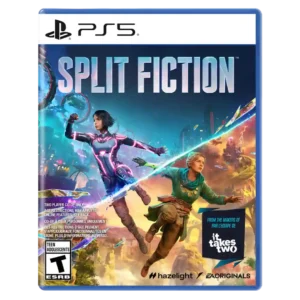
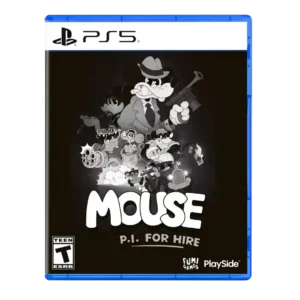
platform-specific feature support
Split Fiction
4.5
Platform-specific support stood out on Switch 2 through kickstand/tabletop play and Game Share functionality.
Mouse: P.I. For Hire
2.5
Linux and Steam Deck support is strong, while the Switch 2 version lacks gyro aiming and performs poorly. Some players also wished for fuller DualSense haptic feedback.
age appropriateness
Split Fiction
4.0
Age appropriateness was considered fitting for a Teen rating, with some language and blood but nothing gratuitous.
Mouse: P.I. For Hire
2.0
The cartoon presentation can look inviting to younger players, but the frequent splattering violence and adult-leaning jokes make it a poor fit for some children.
family friendliness
Split Fiction
4.0
Family friendliness was supported by forgiving co-op design that can work across different skill levels.
Mouse: P.I. For Hire
2.0
Despite its vintage-cartoon surface, the game features graphic slapstick deaths, adult themes, and language that may not suit younger children. It is better treated as an adult-oriented cartoon shooter.
innovation
Split Fiction
4.8
Innovation was strongly praised through creative levels, final sequences, and inventive co-op design.
Mouse: P.I. For Hire
2.9
The game does not reinvent first-person shooting or detective mechanics, and its combat structure is deliberately familiar. Its unusual fusion of rubber-hose animation, noir storytelling, and boomer-shooter action supplies most of the novelty.
bug frequency
Split Fiction
2.5
Bug frequency was low for some but notable in reviews citing glitches, snags, and a specific failed checkpoint interaction.
Mouse: P.I. For Hire
4.2
PC, PlayStation, and handheld-PC experiences were often clean, but isolated achievement glitches, stuck enemies, and launch bugs appeared. Some reported problems were patched quickly.
protagonist appeal
Split Fiction
2.8
Protagonist appeal was mixed because several reviewers needed time to warm up to Mio and Zoe, or never found them interesting.
Mouse: P.I. For Hire
4.5
Jack Pepper is widely liked for his weary hard-boiled delivery, humor, and grounded personality. He gives the exaggerated cartoon world a convincing center.
world interactivity
Split Fiction
2.5
World interactivity was limited because some props amused briefly but did not reward or advance players.
Mouse: P.I. For Hire
4.1
Kickable barrels, falling anvils, traps, destructible props, and elemental hazards turn arenas into playful combat tools. Invisible walls and decorative doors that cannot be entered limit that sense of freedom.
writing quality
Split Fiction
2.4
Writing quality was the most common weakness, with repeated complaints about dull characters, cliches, and amateurish story beats.
Mouse: P.I. For Hire
3.9
The script blends noir tropes, sincere themes, and an enormous supply of cheese puns with confident humor. Its wordplay delights many players but can feel heavy-handed, repetitive, or tonally clumsy to others.
exploration quality
Split Fiction
2.2
Exploration was criticized where invisible walls and glitches undercut curiosity.
Mouse: P.I. For Hire
3.7
Hidden passages, secrets, blueprints, collectibles, and traversal upgrades make poking through levels rewarding. Missable items and the inability to revisit completed missions undermine completionist play.
gameplay mechanics
Split Fiction
4.4
Reviewers broadly praised the constantly changing mechanics and strong moment-to-moment play, though a few found some actions forgettable or simple.
Mouse: P.I. For Hire
3.0
The shooter mechanics are accessible and satisfying, but the detective fantasy is divisive. Some enjoy the streamlined clue gathering, while many wish the clue board and deduction process required meaningful player input.
dialogue quality
Split Fiction
2.8
Dialogue drew mixed responses, ranging from thoughtful and believable to painfully uninspired or full of cliches.
Mouse: P.I. For Hire
4.2
The noir monologues, period delivery, and playful cheese wordplay give conversations plenty of personality. Long exchanges and relentless puns can slow the pace or wear thin.
voice acting
Split Fiction
3.4
Voice acting was mixed, with some praise for performances but criticism that delivery did not elevate weaker writing.
Mouse: P.I. For Hire
4.7
Troy Baker and the wider cast receive exceptional praise for balancing hard-boiled sincerity with cartoon comedy. A small minority found the lead performance too recognizable or less convincing.
replay value
Split Fiction
3.8
Replay value was mixed: alternate characters and modes help, but some reviewers still saw it as a one-and-done game.
Mouse: P.I. For Hire
2.5
Secrets, collectibles, multiple difficulties, and an enjoyable campaign encourage another run. The lack of New Game Plus, mission replay, and easy level revisits is a repeated frustration.
character development
Split Fiction
4.5
Character development earned praise from reviewers who felt Mio and Zoe’s relationship and emotional growth paid off.
Mouse: P.I. For Hire
3.3
Jack and several supporting characters feel more grounded than their cartoon designs suggest, but a few important side characters could have used clearer motives and more development.
puzzle design
Split Fiction
4.8
Puzzle design was consistently praised for co-op dependence, teamwork, and creativity, with only occasional simplicity noted.
Mouse: P.I. For Hire
3.6
Tail-based lockpicking is clever and initially enjoyable, while the baseball card game offers a light diversion. Both can become repetitive, trivial, or unfair depending on progression.
difficulty balance
Split Fiction
4.1
Difficulty was seen as forgiving but more demanding than earlier Hazelight games, especially for casual or unseasoned partners.
Mouse: P.I. For Hire
2.9
Multiple settings make the shooter approachable, but normal mode is often considered too easy and the challenge curve can be inconsistent. A few encounters spike unexpectedly while later bosses may feel less demanding.
level design
Split Fiction
4.8
Level design stood out for memorable finales, strong set pieces, and mechanics that could sustain larger ideas.
Mouse: P.I. For Hire
3.6
Many stages combine readable routes, vertical movement, secrets, shortcuts, and memorable themed spaces. Other areas fall back on linear corridors, repeated arena scripts, or restrictive invisible barriers.
controls responsiveness
Split Fiction
4.5
Controls were generally seen as responsive and intuitive, with one Switch 2 local controller setup working without issue.
Mouse: P.I. For Hire
3.4
Movement and standard controls generally feel smooth and responsive, especially on PC. Controller play can feel a little stiff or less natural for the game's rapid enemy patterns.
pacing
Split Fiction
4.2
Pacing was one of the most praised areas, though a minority felt certain ideas lingered too long or were not flawless.
Mouse: P.I. For Hire
3.2
The best stretches alternate explosive combat with hub conversations, exploration, and investigation at a lively rhythm. Dialogue pauses, longer late-game levels, and repeated combat can make the second half drag.
soundtrack quality
Split Fiction
3.7
Soundtrack quality was mixed: some heard an upgrade or strong genre styling, while another found it forgettable.
Mouse: P.I. For Hire
4.7
The original jazz and big-band score is a near-universal highlight, shifting naturally between smoky noir and energetic combat. It reinforces the period atmosphere without overpowering the action.
core gameplay loop
Split Fiction
4.5
The core loop was praised as gameplay-first, using its premise mainly to enable new co-op situations.
Mouse: P.I. For Hire
3.6
Alternating between the hub, clue gathering, exploration, upgrades, and arena combat creates an easy-to-understand, often addictive rhythm. That loop loses some freshness late in the campaign for players sensitive to repetition.
progression system
Split Fiction
3.0
Progression was intentionally minimal, with no score tracking or skill leveling, which some players may find limiting.
Mouse: P.I. For Hire
3.7
Regular weapon unlocks and traversal abilities help keep the campaign fresh after a simple opening. Progression is straightforward, and several later abilities receive too little meaningful use.
accessibility options
Split Fiction
3.7
Accessibility support was praised for options like damage reduction and checkpoint skipping, though one review encountered a failed QuickTime accessibility workaround.
Mouse: P.I. For Hire
3.0
Control remapping, subtitles, aim assistance, sensitivity settings, and adjustable visual or audio filters offer useful flexibility. Key rebinding and broader accessibility support drew some criticism.
narrative quality
Split Fiction
3.3
Narrative quality divided reviewers: some liked the human story and concept, while others found the plot predictable or forgettable.
Mouse: P.I. For Hire
3.9
The noir mystery is engaging, characterful, and packed with entertaining twists, but its clarity and depth vary. Some players found the plot boilerplate, vague early on, or less satisfying under close scrutiny.
onboarding experience
Split Fiction
3.4
Onboarding was praised for intuitive design but criticized on Switch 2 crossplay setup for poor in-game explanation.
Mouse: P.I. For Hire
4.0
Mechanics arrive methodically and build on one another, turning a deliberately simple opening into a broader movement-and-combat toolkit.
performance optimization
Split Fiction
4.8
Performance optimization was praised across several reviews, with smooth operation on consoles and strong overall polish.
Mouse: P.I. For Hire
4.2
PC, PS5, Linux, Steam Deck, and Xbox Ally X versions are generally well optimized and smooth. Switch 2 is the major exception, with frustrating frame drops and other technical problems.
content variety
Split Fiction
4.8
Content variety was a major strength, especially side stories, genre shifts, and constantly changing mechanics.
Mouse: P.I. For Hire
4.3
The campaign mixes shootouts, exploration, platforming, clues, collectibles, side jobs, and small minigames across varied locations. Some optional activities feel more like checklists than essential diversions.
originality
Split Fiction
4.4
Originality was mixed: some called it audacious or original, while another argued it was polished more than new.
Mouse: P.I. For Hire
3.8
The visual and tonal combination makes the game feel fresh even when its shooter foundations borrow heavily from familiar classics. A few critics saw the style as pastiche rather than genuine originality.
fun factor
Split Fiction
4.7
Fun factor was consistently high, even among more critical reviewers.
Mouse: P.I. For Hire
4.2
Most players found the game highly entertaining, thanks to its lively movement, creative weapons, visual gags, and distinctive world. Repetition and shallow side systems reduce the excitement for a smaller group.
emotional impact
Split Fiction
4.5
Emotional impact landed for several reviewers, especially through friendship themes and later character moments.
Mouse: P.I. For Hire
4.0
The quieter conversations and Jack's weary perspective give the story occasional emotional weight beyond its slapstick violence. These restrained moments resonated more than the broad comedy for some players.
platforming precision
Split Fiction
4.5
Platforming was repeatedly called precise and immediately satisfying.
Mouse: P.I. For Hire
4.0
First-person platforming feels sharper and more forgiving than expected, with quick respawns reducing frustration after missed jumps.
quest design
Split Fiction
4.5
Side-story quests were considered worthwhile and rewarding to find.
Mouse: P.I. For Hire
4.0
Side jobs fit naturally into Mouseburg and rarely feel tedious, but they are usually small collection tasks rather than substantial stories or challenges.
frame rate stability
Split Fiction
4.0
Frame rate stability was platform-dependent: strong on most versions, but Switch 2 had noticeable dips in demanding moments.
Mouse: P.I. For Hire
3.5
PC, PS5, Steam Deck, and Xbox Ally X performance is usually smooth with appropriate settings. Switch 2 suffers the clearest problems, including frequent drops and uneven performance in larger areas.
value for money
Split Fiction
4.0
Value for money was helped by Friend’s Pass and sharing features, though one review noted it was shorter and more expensive than its predecessor.
Mouse: P.I. For Hire
4.5
At roughly $29.99, the campaign, presentation, and optional content are widely considered strong value. The pricier physical Switch 2 edition is less appealing given that version's technical problems.
side character depth
Split Fiction
2.3
Side character depth was weak, especially around the one-dimensional CEO/villain.
Mouse: P.I. For Hire
2.7
The supporting ensemble often feels woven into the city rather than serving as simple quest dispensers. A few characters remain underdeveloped or actively irritating.
handheld play suitability
Split Fiction
4.5
Handheld play suitability was praised for portable convenience despite technical tradeoffs.
Mouse: P.I. For Hire
4.1
Steam Deck and Xbox Ally X players generally report smooth, comfortable portable play. The Switch 2 handheld version is much harder to recommend because of frequent frame-rate drops.
polish
Split Fiction
4.4
Polish was generally strong, though some reviewers mentioned rough gameplay stretches or platform-specific compromises.
Mouse: P.I. For Hire
4.7
The presentation and core systems feel carefully handcrafted and cohesive on most platforms. Small technical flaws, invisible barriers, and the troubled Switch 2 port prevent a uniformly polished result.
movement feel
Split Fiction
4.5
Movement received strong praise for added weight, consistency, and approachability.
Mouse: P.I. For Hire
4.2
Dashing, double-jumping, wall-running, gliding, and tail grappling create fast, fluid traversal that many consider a standout strength. A few late abilities feel gimmicky or underused.
checkpoint system
Split Fiction
4.5
The checkpoint system was consistently praised for generosity, fast respawns, and reducing frustration.
Mouse: P.I. For Hire
4.8
Frequent, well-placed save points keep deaths from forcing long repeats. The generous checkpointing is convenient, though habitual savers may find it excessive.
boss design
Split Fiction
4.2
Boss design was often praised for imagination and spectacle, with some caveats around daunting or repeated patterns.
Mouse: P.I. For Hire
4.4
Bosses are often imaginative, visually memorable, and more mechanically varied than ordinary encounters. Their challenge is uneven, with some later fights easier or more restrictive than expected.
world-building
Split Fiction
4.5
World-building was praised for immersive, explorable worlds built from the protagonists’ imaginations.
Mouse: P.I. For Hire
4.7
Mouseburg feels lived-in through its factions, newspapers, politics, character histories, and distinctive districts. The hub hints at a larger city that some players wanted to explore more deeply.
animation quality
Split Fiction
4.5
Animation quality was praised in the technical review, especially for effective character animation.
Mouse: P.I. For Hire
4.6
The hand-drawn rubber-hose animation is one of the game's biggest triumphs, filling weapons, enemies, reloads, and scenery with expressive motion. A few repeated or abrupt animation cycles keep it from being flawless.
combat system
Split Fiction
4.0
Combat was described positively when the game shifts into shooter and action-platforming sequences.
Mouse: P.I. For Hire
4.1
Fast movement, punchy weapons, environmental traps, and rapid weapon swapping make firefights energetic and satisfying. The action can become repetitive or generic during longer stretches, and a few players disliked its loose feel.
environmental detail
Split Fiction
4.5
Environmental detail was praised for keeping varied worlds visually interesting.
Mouse: P.I. For Hire
4.6
Mouseburg is packed with tiny animations, background jokes, interactive props, and handcrafted scenery that reward close attention. The density of visual detail helps the city feel unusually alive.
graphics quality
Split Fiction
4.6
Graphics were usually praised as gorgeous or stunning, with Switch 2 visual compromises noted by one reviewer.
Mouse: P.I. For Hire
4.7
The blend of 2D hand-drawn characters with 3D monochrome environments creates a consistently beautiful and technically distinctive presentation. The lack of color can occasionally reduce readability.
art direction
Split Fiction
4.6
Art direction was widely praised for striking worlds, scale, and strong creative environments, even on compromised hardware.
Mouse: P.I. For Hire
4.7
The monochrome 1930s cartoon-noir look gives the game an instantly recognizable identity and carries through nearly every visual detail. Even more skeptical players generally found the style striking, though a few considered it derivative.
learning curve
Split Fiction
4.0
The learning curve was approachable for experienced players but could require adjustment for casual players.
Mouse: P.I. For Hire
4.0
New weapons and movement abilities are introduced gradually, keeping the systems approachable without overwhelming newcomers. Experienced shooter players may find the early hours overly simple.
AI behavior
Split FictionNo score yet
Mouse: P.I. For Hire
1.5
Enemy pathfinding can misbehave, particularly when flying enemies get stuck in corners. These lapses are occasional rather than a defining part of combat.
aiming precision
Split FictionNo score yet
Mouse: P.I. For Hire
2.0
Gun handling is functional, but several players found the aim slightly loose or imprecise compared with tighter traditional shooters. That softer feel may be more noticeable with a controller.
atmosphere
Split FictionNo score yet
Mouse: P.I. For Hire
4.4
Big-band jazz, shadowy streets, lively animation, and hard-boiled dialogue create a charming noir mood from the opening moments. The setting balances grim themes with playful cartoon energy.
camera behavior
Split Fiction
3.8
Camera behavior was split between praise for clear tracking and complaints about awkward perspective shifts.
Mouse: P.I. For HireNo score yet
character roster
Split FictionNo score yet
Mouse: P.I. For Hire
2.0
The cast is broad and colorful, although one recurring visual complaint is that too many character models—especially background figures—look alike.
co-op experience
Split Fiction
4.8
Co-op experience was the strongest consensus point, repeatedly described as excellent, accessible, communicative, and central to the fun.
Mouse: P.I. For HireNo score yet
couch co-op quality
Split Fiction
4.5
Couch co-op quality was praised for local convenience and the way Hazelight supports shared-play experiences.
Mouse: P.I. For HireNo score yet
crash stability
Split FictionNo score yet
Mouse: P.I. For Hire
2.8
Most PC and Steam Deck sessions were stable, but isolated hard crashes and a mid-mission Switch 2 crash were reported. Stability appears substantially better on stronger platforms than on the Switch 2 port.
cross-play support
Split Fiction
4.5
Cross-play support was praised as player-friendly and helpful for Friend’s Pass co-op.
Mouse: P.I. For HireNo score yet
cross-save support
Split Fiction
4.5
Cross-save/progression support was praised where non-host progression carried over.
Mouse: P.I. For HireNo score yet
driving mechanics
Split FictionNo score yet
Mouse: P.I. For Hire
3.0
The small overworld drive between missions adds scale and works as a charming visual transition. Some players saw it as atmospheric padding rather than meaningful gameplay.
enemy variety
Split FictionNo score yet
Mouse: P.I. For Hire
3.3
Opinions split sharply: some found a healthy mix of enemy roles and visual variants, while others saw too many reskinned or functionally similar foes. Repetition is most noticeable in the middle and later combat arenas.
facial animations
Split Fiction
4.5
Facial animation/lip sync received specific praise from one reviewer.
Mouse: P.I. For HireNo score yet
flying mechanics
Split Fiction
2.8
Flying was more divisive, with reviewers citing some early flying sections and dragon flight as weaker or imprecise.
Mouse: P.I. For HireNo score yet
HUD clarity
Split FictionNo score yet
Mouse: P.I. For Hire
4.1
The compass, objective markers, and optional route guidance usually make goals easy to follow without cluttering the action. Dark gray prompts against the monochrome scenery can still be difficult to distinguish.
immersion
Split FictionNo score yet
Mouse: P.I. For Hire
4.3
Detailed environments, expressive animation, strong audio, and a cohesive noir tone make Mouseburg feel like a living cartoon. Frame drops, invisible walls, and shallow investigation can briefly break the illusion.
load times
Split FictionNo score yet
Mouse: P.I. For Hire
3.3
Transitions are generally brief on PC, but the Switch 2 version can suffer noticeably long loading screens alongside its other performance problems.
lore depth
Split FictionNo score yet
Mouse: P.I. For Hire
5.0
Newspapers, faction histories, political tensions, and character backstories give Mouseburg more substance than its cartoon premise initially suggests.
map and navigation design
Split FictionNo score yet
Mouse: P.I. For Hire
4.1
The compass, objective tracker, detective duster, and overworld map usually keep progress clear without removing exploration. Monochrome prompts and occasional missing directional cues can still cause confusion.
matchmaking quality
Split Fiction
3.0
Matchmaking quality was limited because finding a partner could still be a challenge.
Mouse: P.I. For HireNo score yet
menu usability
Split FictionNo score yet
Mouse: P.I. For Hire
2.0
Menus are straightforward on most platforms, but the Switch 2 version produced an odd scrolling bug that moved selections without controller input.
mission design
Split FictionNo score yet
Mouse: P.I. For Hire
3.8
The three intertwined cases provide memorable locations and a steady sense of forward movement. Some missions feel overly convenient or leave little room for substantial side stories.
mission variety
Split Fiction
3.9
Mission variety was strong overall, but a few sci-fi sections were called less memorable.
Mouse: P.I. For HireNo score yet
multiplayer design
Split Fiction
4.5
Multiplayer design was praised for fitting the exclusively co-op approach and supporting differing skill levels.
Mouse: P.I. For HireNo score yet
online stability
Split Fiction
4.3
Online stability was generally positive, with rare lag or strong latency reports.
Mouse: P.I. For HireNo score yet
sound design
Split FictionNo score yet
Mouse: P.I. For Hire
4.8
Weapons, impacts, movement effects, and cartoon flourishes are crisp and well matched to the visuals. One persistent flying-enemy buzz was the main audio-specific flaw noted.
split-screen quality
Split Fiction
4.2
Split-screen quality was useful for coordination, though small handheld details could still be harder to read.
Mouse: P.I. For HireNo score yet
upgrade system
Split FictionNo score yet
Mouse: P.I. For Hire
4.0
Weapon upgrades are simple, visually satisfying, and useful for unlocking alternate fire modes. The system works well but offers less depth than players seeking elaborate builds may expect.
user interface design
Split FictionNo score yet
Mouse: P.I. For Hire
5.0
The clean interface keeps objectives and navigation visible without crowding the screen. Its animated elements support the cartoon style while remaining functional.
visual effects quality
Split FictionNo score yet
Mouse: P.I. For Hire
4.0
Weapon effects, enemy reactions, reloads, smoke, and slapstick death animations add tremendous personality to every fight. Heavy effects can contribute to occasional performance dips.
weapon balance
Split FictionNo score yet
Mouse: P.I. For Hire
3.1
The arsenal is varied and encourages switching, but balance is uneven: a few guns dominate while some late unlocks feel weak, cumbersome, or overly situational. Alternate-fire modes add useful experimentation.