AI behavior
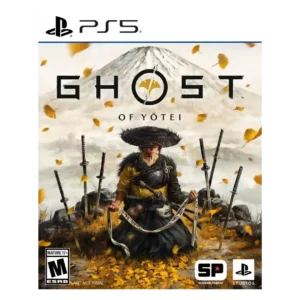
Ghost of Yōtei
4.5
Enemy perception receives positive attention where stealth is described as sound-driven, with enemies reacting to audio as well as sight.
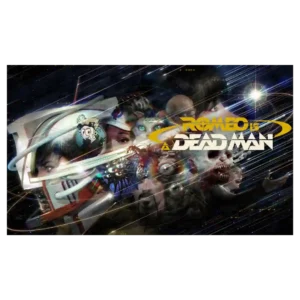
Romeo is a Dead Man
1.0
The direct AI critique is severe: enemies can stand idle or get stuck when elevation changes, undermining otherwise straightforward encounters.
HUD clarity
Ghost of Yōtei
4.8
HUD and marker restraint are praised for keeping the view clear and helping exploration feel less like a checklist.
Romeo is a Dead Man
1.8
Combat readability is a recurring problem. Dense blood, particles, cyan sparks, summons, and cramped arenas can turn the screen into visual noise that reviewers struggle to parse.
map and navigation design
Ghost of Yōtei
4.8
Navigation is strongly praised for wind guidance, readable maps, organic discovery, spyglass/map ideas, and low UI clutter.
Romeo is a Dead Man
2.1
Navigation is one of the clearest weaknesses, especially in Subspace. Maze-like rooms, weak vertical guidance, repeated TVs, and getting lost make progression more tiring than exploratory.
environmental detail
Ghost of Yōtei
5.0
Environmental detail earns strong praise for realistic items, dense foliage, weather, light, and painstakingly crafted spaces.
Romeo is a Dead Man
2.3
Environment quality trails the broader art direction. Critics describe several locations as bland, basic, or budget-constrained even when the surrounding presentation is imaginative.
movement feel
Ghost of Yōtei
5.0
Movement is praised for fluidity, especially in combat flow and traversal compared with the predecessor.
Romeo is a Dead Man
2.4
Movement is one of the rougher mechanical areas, with complaints about sluggish transitions, animation lock-in, and awkward recovery after being hit. A few reviewers adapt, but the jank remains noticeable.
frame rate stability
Ghost of Yōtei
5.0
Frame-rate evidence is very positive, including stable pacing, smooth transitions, and rock-solid 60 FPS in PS5 Pro modes.
Romeo is a Dead Man
2.4
Frame-rate drops are one of the most repeated complaints, particularly in crowded fights, Subspace, and certain late areas. Some console configurations stay stable, but consistency varies sharply by platform and scene.
performance optimization
Ghost of Yōtei
4.9
Performance feedback is very positive overall, with strong PS5/PS5 Pro stability, polished execution, and few performance complaints.
Romeo is a Dead Man
2.3
Performance is a persistent technical weakness. Reviews repeatedly report heavy slowdowns, poor PC scaling, troublesome settings, and especially bad Steam Deck results, though a few systems run smoothly.
core gameplay loop
Ghost of Yōtei
4.8
The core loop is repeatedly described as compelling, hard to put down, and more fruitful than Tsushima for some reviewers.
Romeo is a Dead Man
2.2
The routine of clearing enemies, dipping into Subspace, and repeating objectives wears thin for several reviewers. Creative detours help, but the standard loop is often described as repetitive or tedious.
fast travel convenience
Ghost of Yōtei
5.0
Fast travel is strongly praised as instantaneous or highly respectful of the player’s time.
Romeo is a Dead Man
2.8
Fast travel through Space-Time Pharmacies is useful, but using those points can respawn defeated enemies, making backtracking and repeated traversal less convenient than expected.
economy and resource balance
Ghost of Yōtei
4.5
Resource balance is praised where simplified material categories and less strict upgrade paths encourage more engagement.
Romeo is a Dead Man
2.5
One reviewer specifically disliked how scarce upgrade materials can push players toward investing in only a small part of the weapon roster rather than experimenting freely.
polish
Ghost of Yōtei
4.8
Polish is a recurring strength, with reviewers calling the release premium, cinematic, and impressively crafted despite a few bugs or animation rough edges.
Romeo is a Dead Man
2.8
The game’s rough edges are impossible to ignore even for many fans. Jank, uneven controls, technical problems, and reused content coexist with unusually confident presentation and several highly polished individual systems.
innovation
Ghost of Yōtei
3.2
Innovation scores trend moderate because reviewers describe Yōtei as refinement rather than reinvention, with familiar systems made better.
Romeo is a Dead Man
5.0
The most celebrated innovations are small but memorable: the DeadGear Cannonball progression maze, Bastard system, mixed-media storytelling, and willingness to switch genres without warning.
stealth mechanics
Ghost of Yōtei
3.9
Stealth is enjoyable and viable, especially with chain assassinations and tools, but several reviewers call it basic or largely unchanged.
Romeo is a Dead Man
2.1
The weaponless asylum sequence sharply divides opinion. Horror-focused reviewers call the stealth change-up fantastic, while others consider the forced sneaking one of the game’s weakest sections.
character development
Ghost of Yōtei
4.8
Atsu’s arc is praised for emotional clarity, redemption, growth, and a more intimate character focus than the predecessor.
Romeo is a Dead Man
3.1
Reviewers who connect with the cast praise the care given to relationships and recurring crew members. More critical sources argue that major characters remain thin or never become emotionally convincing.
originality
Ghost of Yōtei
3.0
Originality is moderate: reviewers repeatedly say Yōtei does not revolutionize the formula, but many accept that as focused refinement.
Romeo is a Dead Man
4.8
Originality is the strongest consensus point. Even harsh critics acknowledge that the game is bold, strange, handmade-feeling, and unlike the safer action games surrounding it.
tutorial quality
Ghost of Yōtei
4.0
Tutorial/onboarding evidence is modestly positive, praising learn-by-doing design and seamless early teaching.
Romeo is a Dead Man
2.3
The opening tutorial is viewed as generic and insufficient for some of the game’s stranger systems. Important mechanics can feel underexplained even when the basic attack controls are easy to grasp.
onboarding experience
Ghost of Yōtei
4.0
Onboarding is initially intimidating for some, but reviewers say the discovery and indicator systems become enjoyable once learned.
Romeo is a Dead Man
2.3
Early hours can misrepresent how complex and unusual the game becomes. Reviewers repeatedly mention awkward introductions or systems—especially Bastards—being explained too late or too vaguely.
platform-specific feature support
Ghost of Yōtei
4.2
PS5-specific features are mostly praised, especially PS5 Pro modes and DualSense use, though some touchpad/motion gimmicks are considered distracting.
Romeo is a Dead Man
2.5
The detailed technical review finds the PC upscaling controls confusing and ineffective in places, with DLSS quality settings not behaving as their labels suggest.
gameplay mechanics
Ghost of Yōtei
4.3
General mechanics are praised as refined and improved, though some reviewers call them reused rather than evolutionary.
Romeo is a Dead Man
2.7
The broader gameplay package is divisive: some reviewers find its layered systems satisfying once they click, while others call the underlying mechanics stiff, dated, or uneven.
endgame content
Ghost of Yōtei
3.3
Endgame evidence is mixed: there are post-story tasks and challenge reasons to return, but one review notes no new game plus and another says late content can feel samey.
Romeo is a Dead Man
4.8
New Game Plus is the main post-credits attraction and is enthusiastically received by the reviewers who discuss it, especially because progression carries over and higher difficulties deepen combat.
bug frequency
Ghost of Yōtei
4.2
Most reviewers report few or no serious bugs, though some mention an odd freeze, minor technical issues, or rare late-game disruptions.
Romeo is a Dead Man
2.7
Bug experiences vary from almost clean runs to serious progression and audio problems. Pathfinding glitches, broken settings, and late-game bugs keep the technical picture from feeling dependable.
graphics quality
Ghost of Yōtei
4.9
Visuals receive near-universal praise, from stunning fidelity and landscapes to screenshot-worthy environments and color.
Romeo is a Dead Man
3.5
Raw graphical fidelity is less consistent than the art direction. Some call it Grasshopper’s best-looking work, while others point to dated environments, uneven lighting, low-detail scenes, or technical softness.
checkpoint system
Ghost of Yōtei
4.0
Checkpoint evidence is limited but positive for convenience, with one reviewer noting instant respawns and mid-fight boss checkpoints that reduce punishment.
Romeo is a Dead Man
2.6
Checkpoints are functional but divisive. Some reviewers appreciate returning to an activated point with a retry buff, while others dislike old-school save-point rules and unforgiving placement.
enemy variety
Ghost of Yōtei
4.3
Enemy variety is positively noted through more weapon matchups, multiple factions, and a better range of enemies than before.
Romeo is a Dead Man
2.9
Enemy variety is mixed and trends weaker late in the game. Some reviewers enjoy distinct tactical threats and weak-point roles, while others feel the same small pool is recycled too often.
platforming precision
Ghost of Yōtei
3.7
Platforming and climbing are mixed: one review says climbing is improved, while others call it awkward or overly gamified.
Romeo is a Dead Man
2.3
Ladders, ledges, and vertical spaces expose control roughness, with reviewers describing falls, pauses, and vulnerable transitions that make traversal more frustrating than precise.
writing quality
Ghost of Yōtei
4.3
Writing is praised for creative freshness and emotional ambition, but one dissenting review calls it conventional blockbuster material.
Romeo is a Dead Man
2.9
Writing ranges from layered and thoughtful to rambling and underdeveloped. The strongest reactions praise thematic depth and character moments, while critics object to tenuous plot connections, cryptic exposition, and uneven payoff.
loot system
Ghost of Yōtei
4.5
Loot evidence is positive where quests and conflicts reward Atsu with valuable loot, information, and clues that feed exploration.
Romeo is a Dead Man
3.3
Reward quality depends on the activity. Some optional content delivers worthwhile badges and materials, while generic combat dungeons are criticized for offering little worth chasing.
combat system
Ghost of Yōtei
4.7
Combat is the most broadly praised system, with fluid parries, weapon-swapping, violent impact, and strong duels; criticisms focus on rigidity or fatigue in the rock-paper-scissors weapon setup.
Romeo is a Dead Man
3.5
Combat lands very differently depending on the reviewer. Its aggressive melee/ranged rhythm, Bloody Summer attacks, and Bastard summons can feel exhilarating, but others find the foundation shallow, clunky, or overly repetitive.
mission design
Ghost of Yōtei
4.3
Mission design is generally positive for diverse objectives and strong campaign structure, though some side mission design is criticized elsewhere.
Romeo is a Dead Man
3.1
The episodic structure produces some memorable setups, yet late-game missions and repeated routes can become exhausting. Several reviewers specifically dislike the gauntlets and reused material near the end.
immersion
Ghost of Yōtei
3.8
Immersion is a major strength through world navigation, sound, and minimal HUD, though occasional technical or duel design issues can break it.
Romeo is a Dead Man
5.0
Reviewers who click with the game find its world-building and constant tonal shifts unusually absorbing, even when they stop actively trying to decode every plot detail.
world-building
Ghost of Yōtei
3.8
World-building is mixed-to-positive: Ezo’s culture and social context are compelling, but some reviewers wanted broader supporting context.
Romeo is a Dead Man
4.9
The fractured space-time setting, bizarre institutions, crew, horror detours, and mixed-media presentation create an unusually immersive world for reviewers who embrace the game’s logic.
narrative quality
Ghost of Yōtei
4.4
The narrative is generally praised as emotional, well-executed, and compelling, but some reviewers criticize predictability, structure, or linear revenge beats.
Romeo is a Dead Man
3.2
The story is intentionally bizarre and deeply polarizing. Some reviewers find its fragmented mystery, themes, and emotional turns captivating; others see an incoherent, directionless plot that never earns its chaos.
voice acting
Ghost of Yōtei
4.9
Voice acting receives strong praise, especially Erika Ishii’s performance and the English/Japanese voice casts.
Romeo is a Dead Man
3.9
Voice work is generally well received, with several reviewers singling out Romeo’s performance and the cast’s delivery. A few sources find parts of the English voice work merely adequate or uneven.
camera behavior
Ghost of Yōtei
3.3
Camera feedback is mixed: one reviewer says it is improved, while others cite visibility problems or off-screen/camera-management friction.
Romeo is a Dead Man
2.3
The camera compounds crowded fights for several reviewers, with complaints about tight zoom, wall collisions, poor tracking, and aiming movements that disorient the view.
controls responsiveness
Ghost of Yōtei
4.3
Parrying, quick selection, and combat inputs are praised, but one review flags the overall control system as demanding.
Romeo is a Dead Man
3.3
Responsiveness ranges from superbly snappy to frustratingly delayed. Weapon-switch locks, dodge timing, and animation commitments are the main complaints when the controls feel slow.
weapon balance
Ghost of Yōtei
4.1
Weapon balance is praised for distinct tools and effective counters, but mixed overall because several reviewers find weapons too situational or favorite weapons underpowered outside matchups.
Romeo is a Dead Man
3.2
The eight-weapon arsenal invites experimentation, yet melee and guns do not always feel equally satisfying. Ranged weapons are strategically essential for weak points, but slow reloads and awkward switching often make melee more enjoyable.
puzzle design
Ghost of Yōtei
1.5
Puzzle design receives a low score from a reviewer who calls several puzzles overly simple and almost pointless.
Romeo is a Dead Man
2.4
Subspace puzzles are usually viewed as simple rather than clever, and their growing length can turn them into a chore. The asylum’s horror puzzles are a notable positive exception.
fun factor
Ghost of Yōtei
4.7
Reviewers repeatedly describe the game as enjoyable, addictive, and fun from start to finish, even when noting formulaic elements.
Romeo is a Dead Man
3.8
Most reviewers find substantial fun in the combat spectacle, Bastards, bosses, and sheer unpredictability, but a sizable minority is worn down by repetition, rough controls, and navigation.
pacing
Ghost of Yōtei
3.6
Pacing is divisive: Game Informer praises it as a triumph, while several reviewers cite predictability, prolonged beats, or odd act structure.
Romeo is a Dead Man
2.8
High-energy combat and rapid tonal shifts keep the best stretches moving, but repeated Subspace trips, late-game gauntlets, and drawn-out navigation repeatedly interrupt that momentum.
sound design
Ghost of Yōtei
4.9
Sound design is consistently praised for environmental audio, combat effects, and the way it supports immersion.
Romeo is a Dead Man
4.1
Most reviewers like the punchy, unsettling audio and how it supports the action and horror tone. One detailed PS5 assessment reports tinny sound and sibilant dialogue, creating a notable dissenting view.
exploration quality
Ghost of Yōtei
4.7
Exploration is one of the strongest areas, often called rewarding, organic, and meaningful, though one dissenting review finds it over-guided.
Romeo is a Dead Man
3.9
Exploration often pays off with upgrades, collectibles, and hidden material, and some stages invite satisfying detours. Backtracking and Subspace navigation can undermine that sense of discovery.
protagonist appeal
Ghost of Yōtei
4.8
Atsu is widely praised as a compelling, complex, fiery, and memorable lead who gives the sequel a stronger identity.
Romeo is a Dead Man
4.0
Romeo is usually seen as a solid or compelling lead, with his earnestness and growth helping anchor the chaos. Even positive reviewers sometimes want more depth behind his fixation on Juliet.
value for money
Ghost of Yōtei
4.8
Value sentiment is positive where reviewers call the game worth buying or a must-play, supported by long playtime and substantial content.
Romeo is a Dead Man
4.1
Positive reviewers see strong value in the mid-priced runtime, side content, New Game Plus, and replayability. One more skeptical source recommends waiting for a steep discount, so value depends on tolerance for the roughness.
dialogue quality
Ghost of Yōtei
2.8
Dialogue and delivery are mixed: some conversations carry emotion well, but several reviewers call line delivery stilted or conversations dated.
Romeo is a Dead Man
3.4
Quirky banter, one-liners, and crew conversations are often charming, but the quantity of text and occasional nonsense can become tiring for reviewers less receptive to the style.
user interface design
Ghost of Yōtei
3.5
UI evidence is mixed: restrained maps and menus are praised, but one reviewer reports low-contrast text and hard-to-see map elements.
Romeo is a Dead Man
2.9
The interface is visually distinctive but not universally easy to use. Its retro flourishes and strong personality win praise, while messy layouts and confusing technical settings can frustrate.
upgrade system
Ghost of Yōtei
4.5
Upgrades are praised for being tied to exploration, weapons, armor, charms, and mastery activities rather than pure XP grinding.
Romeo is a Dead Man
3.9
Upgrades usually feel consequential, especially reload speed, health, damage, and Bastard improvements. Resource limits and late grinding keep a few reviewers from enjoying the system as much.
side character depth
Ghost of Yōtei
3.7
Side character depth is mixed, with praise for strong companions and villains but criticism that many allies or supporting figures lack involvement.
Romeo is a Dead Man
4.3
The colorful Space-Time Police crew is a major source of charm. Reviewers often enjoy returning to the ship just to hear new conversations and spend time with its strange, likable personalities.
content variety
Ghost of Yōtei
4.3
Reviewers praise the amount of meaningful activities and handcrafted diversions, while a few note that repeated open-world tasks can become chores.
Romeo is a Dead Man
4.8
Variety is one of the game’s defining strengths. Third-person action, pixel-art hub exploration, horror, comics, minigames, dungeons, and other format shifts make the experience unusually unpredictable.
emotional impact
Ghost of Yōtei
4.9
Reviewers frequently describe the story as moving, affecting, and emotionally rich, including moments that brought tears or strong sympathy.
Romeo is a Dead Man
4.4
Beneath the gore and absurdity, several reviewers find genuine melancholy, loss, and tenderness. The best story beats and boss setups can hit surprisingly hard when the game’s emotional wavelength connects.
animation quality
Ghost of Yōtei
4.0
Combat animation is often praised for brutality and style, but several reviewers note repetition or less-polished NPC/casual dialogue animation.
Romeo is a Dead Man
4.5
The limited direct assessments are positive, praising stellar character-scene animation and well-executed motion even when the broader presentation can be rough.
age appropriateness
Ghost of Yōtei
2.0
The only explicit age-appropriateness judgment warns against younger players because of bloody violence, mature themes, language, drug use, frightening scenes, and slight nudity.
Romeo is a Dead Man
1.5
The direct parental-suitability assessment advises against the game for concerned parents because of frequent blood fountains and coarse language.
family friendliness
Ghost of Yōtei
2.0
The family-friendliness score is low because the only explicit family guidance warns against younger gamers due to violence and mature content.
Romeo is a Dead Man
1.5
The same parental assessment rates the game poorly for family suitability due to its extreme violence and strong language, even if the gore can be exaggerated and comic.
menu usability
Ghost of Yōtei
2.5
Menu usability has a specific criticism around a hard-to-see reticule and low-contrast text.
Romeo is a Dead Man
3.0
One reviewer explicitly wishes more upgrade and farming tasks were handled through straightforward menus, finding the repeated hands-on routines charming at first but increasingly cumbersome.
visual effects quality
Ghost of Yōtei
4.0
Visual-effects evidence is positive but limited, with reviewers appreciating enhanced particles, blood, mud, wind, and cinematic environmental effects.
Romeo is a Dead Man
3.5
Blood, neon, particles, and special attacks create huge spectacle, but the same excess can obscure enemies and make combat visually overwhelming. Reviewers love the style more than its readability.
difficulty balance
Ghost of Yōtei
4.0
Difficulty is mostly praised for rewarding patience and offering customization, though critics cite easy challenge, high damage, or artificial duel constraints.
Romeo is a Dead Man
3.6
Higher difficulties often bring out the combat’s best qualities by forcing full use of weapons, Bastards, and boss patterns. Cheap attacks, uneven spikes, and a too-easy standard setting create some disagreement.
mission variety
Ghost of Yōtei
4.0
Mission variety is lightly positive, with praise for varied missions in different places and diverse objectives.
Romeo is a Dead Man
4.4
Chapters regularly introduce new eras, gimmicks, or genre shifts, which helps the campaign avoid feeling identical from start to finish even when the underlying objective structure repeats.
art direction
Ghost of Yōtei
4.9
Reviewers strongly praise the painterly visual identity, lighting, color, and intentional environmental effects, with only mild familiarity concerns.
Romeo is a Dead Man
4.6
Art direction earns near-universal enthusiasm. The game constantly shifts among 3D action, pixel art, comics, animation, retro interfaces, and other styles while retaining a distinct Grasshopper identity.
skill tree depth
Ghost of Yōtei
4.5
Skill depth is praised where charms, loadouts, weapon skills, and spirit attacks allow specialized builds and granular tuning.
Romeo is a Dead Man
4.8
Reviewers who discuss the stat maze like how route choices turn character growth into a small puzzle rather than a conventional list of nodes. It offers meaningful planning without becoming opaque.
quest design
Ghost of Yōtei
4.5
Quest design is a major strength in many reviews thanks to memorable tales, bounties, organic side stories, and worthwhile rewards, though Eurogamer sharply dislikes the formulaic sidequests.
Romeo is a Dead Man
4.8
Optional missions and side dungeons can be compelling enough to pull players away from the main path, especially when they combine combat with useful upgrades and rewards.
crafting system
Ghost of Yōtei
4.0
Crafting/resource gathering is lightly but positively scored because materials are more generalized, making upgrades easier to engage with.
Romeo is a Dead Man
4.3
Growing, fusing, and refining Bastards is a major highlight. Reviewers frequently treat the system as a game within the game because it supports experimentation, stronger summons, and personalized builds.
accessibility options
Ghost of Yōtei
3.0
Accessibility evidence is limited and mixed: TechRadar notes helpful subtitles, visibility, control simplification, and combat assists, but says the suite is lighter than some PS5 peers and lacks colorblind options.
Romeo is a Dead Man
3.3
Accessibility impressions conflict. One reviewer says dedicated options are sparse despite aim assists and colorblind settings, while another finds the game broadly accessible and praises clear subtitles.
character roster
Ghost of Yōtei
4.5
The supporting ensemble is viewed positively in several reviews, though some reviewers find side figures underused or shallow.
Romeo is a Dead Man
4.7
The ensemble is widely liked for being bizarre, colorful, and memorable, with the ship’s crew providing some of the game’s warmest and funniest downtime.
boss design
Ghost of Yōtei
4.1
Duels and boss-style encounters are usually exciting and memorable, though one reviewer criticizes duel advantages as artificial.
Romeo is a Dead Man
4.0
Bosses are among the most reliable highlights: grotesque designs, bespoke music, varied mechanics, and demanding patterns make many encounters memorable. A minority find some fights spongy, cheap, or mechanically basic.
replay value
Ghost of Yōtei
4.5
Replay value is supported by a large map, many activities, and difficulty-based return reasons, but lack of new game plus limits the endgame.
Romeo is a Dead Man
4.6
New Game Plus is widely welcomed, and several reviewers immediately started or planned another run. Carryover progression, higher difficulties, missed Bastards, and interpretive story details give repeat play real appeal.
grind level
Ghost of Yōtei
2.8
Grind sentiment is mixed-to-negative where repeated side activities, collectibles, or checklist tasks create fatigue over time.
Romeo is a Dead Man
2.9
Grinding is manageable when save points let players quickly respawn nearby enemies, but some reviewers still resent being pushed into farming for late upgrades or harder encounters.
learning curve
Ghost of Yōtei
4.0
Learning curve evidence is positive but modest, emphasizing learn-by-doing design that mirrors Atsu’s practice and attention rather than heavy explanation.
Romeo is a Dead Man
3.9
Basic combat is easy to pick up, but weapon switching, aiming, Bastard use, and higher difficulties take longer to internalize. Some reviewers enjoy that mastery curve; others find the adaptation needlessly awkward.
aiming precision
Ghost of Yōtei
2.5
The only scored aiming-related evidence is negative, with one reviewer saying auto-targeting hindered them and contributed to deaths.
Romeo is a Dead Man
2.6
Ranged combat is useful for weak points, yet aiming frequently draws criticism for slow speed, awkward camera movement, manual-aim feel, and cumbersome reload behavior.
level design
Ghost of Yōtei
2.5
The only scored level-design evidence is critical, describing certain mission spaces as single-route and overly linear.
Romeo is a Dead Man
2.4
Level design is a recurring weakness despite flashes of creativity. Reviewers praise certain chapter gimmicks and the asylum, but criticize bland corridors, reused spaces, overly linear layouts, and Subspace-heavy progression.
atmosphere
Ghost of Yōtei
5.0
The atmosphere is consistently framed as a major strength, emphasizing contemplative tone, environmental mood, and cinematic immersion.
Romeo is a Dead Man
4.9
The game’s strongest locations can feel intensely distinct, from cozy pixel-art downtime aboard The Last Night to oppressive, grotesque horror spaces. Its tonal confidence is a major attraction.
soundtrack quality
Ghost of Yōtei
4.8
The soundtrack receives strong praise for atmospheric Japanese instrumentation, shamisen motifs, memorable songs, and cinematic tension.
Romeo is a Dead Man
4.8
The soundtrack is one of the clearest consensus strengths. Reviewers repeatedly praise its rock, synth, vocal boss themes, and eclectic genre mix, with several wanting to keep listening after play ends.
progression system
Ghost of Yōtei
4.4
Progression is praised for tying upgrades to exploration and skill shrines, though some reviewers want more depth or nuance.
Romeo is a Dead Man
4.4
DeadGear Cannonball is one of the most consistently praised systems: turning stat growth into a Pac-Man-like route-planning minigame makes progression feel playful, deliberate, and memorable.
crash stability
Ghost of Yōtei
3.0
Crash evidence is limited to one reviewer reporting two late-game crashes, while most other technical impressions lean stable.
Romeo is a Dead Man
3.0
Crash reports are inconsistent: some reviewers encounter no major crashes, while others report multiple crashes or severe issues requiring restarts or reinstalls.
lore depth
Ghost of Yōtei
4.5
Lore depth receives positive but limited support through mythic tales and storytelling sequences that expand the world’s legends.
Romeo is a Dead Man
4.5
The denser story material rewards close reading and replay for reviewers who enjoy interpretation. Layers of meaning, notes, and recurring themes leave some players wanting to revisit the game with a notebook.
character customization
Ghost of YōteiNo score yet
Romeo is a Dead Man
4.3
Build flexibility comes from combining weapons, badges, consumables, and Bastard loadouts rather than cosmetic creation. Reviewers like how those choices support different combat approaches.
collector appeal
Ghost of YōteiNo score yet
Romeo is a Dead Man
5.0
One reviewer strongly wishes for a physical copy specifically to keep and display on a shelf, showing clear collector appeal despite the lack of a broader consensus.
companion AI
Ghost of Yōtei
4.0
The wolf companion is generally appreciated as a useful and flavorful aid, but some reviewers expected it to be more impactful or frequent.
Romeo is a Dead ManNo score yet
facial animations
Ghost of Yōtei
4.5
Facial animation is praised in cutscenes and Atsu’s expressions, with reviewers noting visible emotion and strong performance capture.
Romeo is a Dead ManNo score yet
faithfulness to franchise
Ghost of Yōtei
4.7
Yōtei is viewed as a worthy successor that preserves Ghost of Tsushima’s best ideas while refining them around Atsu.
Romeo is a Dead ManNo score yet
flying mechanics
Ghost of YōteiNo score yet
Romeo is a Dead Man
4.0
The limited ship travel works more like a stylish level-select and resource-gathering interlude than free flight. The one direct assessment found its restrictions acceptable.
handheld play suitability
Ghost of YōteiNo score yet
Romeo is a Dead Man
1.3
Steam Deck impressions are poor. Reviewers report frame rates falling into the 20s or teens and describe the handheld experience as effectively unplayable or more frustrating than fun.
haptic feedback integration
Ghost of Yōtei
5.0
DualSense haptics and touchpad integrations are widely praised, especially wind, riding, rain, music, and activity feedback.
Romeo is a Dead ManNo score yet
horror tension
Ghost of YōteiNo score yet
Romeo is a Dead Man
4.8
The asylum chapter is the standout horror moment, with stalking, disturbing imagery, puzzles, and a helpless-player setup that several horror-focused reviewers find genuinely effective.
load times
Ghost of Yōtei
5.0
Load times are one of the clearest technical wins, with reviewers calling travel and boot-to-game transitions near-instant.
Romeo is a Dead ManNo score yet
open-world design
Ghost of Yōtei
4.4
The open world is widely praised for beauty, density, organic discovery, and restraint, with dissenting notes about repetition, over-guidance, or familiar structure.
Romeo is a Dead ManNo score yet
romance quality
Ghost of YōteiNo score yet
Romeo is a Dead Man
3.8
The Romeo-and-Juliet relationship is a major point of disagreement. Some reviewers find its messy, unhealthy dynamic fascinating, while others think the central romance lacks enough substance to justify Romeo’s devotion.
sandbox freedom
Ghost of Yōtei
3.8
Freedom is moderate: reviewers appreciate loose target order and player-directed wandering, but note that some freedom is an illusion.
Romeo is a Dead ManNo score yet
world interactivity
Ghost of YōteiNo score yet
Romeo is a Dead Man
5.0
The Last Night hub stands out for its tactile feel, with hands-on activities and character interactions giving the ship more personality than a simple menu-based base.