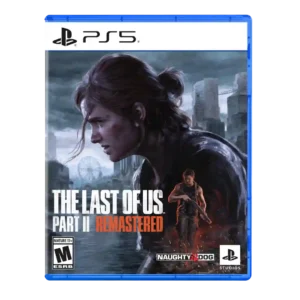
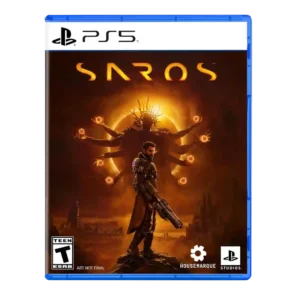
Compare The Last of Us Part II Remastered vs Saros

P1 The Last of Us Part II Remastered
P2 Saros

Comparison Takeaways

The Last of Us Part II Remastered

Where It Has the Edge

  • side character depth is 4.5 vs 2.8. Side character depth is supported by praise for supporting performances and scenes involving characters beyond Ellie and Abby.
  • facial animations is 4.8 vs 3.1. Facial animation and capture are repeatedly praised as best-in-class or amazing, preserving the campaign's emotional delivery.
  • animation quality is 4.8 vs 3.2. Animation remains a major strength, with industry-best combat animation and varied contextual actions supporting the game's brutal presentation.
  • emotional impact is 4.7 vs 3.4. Emotional impact is one of the strongest consensus areas; reviewers repeatedly describe the story as heavy, upsetting, and...

Saros

Where It Has the Edge

  • level design is 4.5 vs 3.4. Level design is praised for handcrafted chunks, strong arenas, biome structure, and exploration routes, though one review notes...
  • tutorial quality is 4.4 vs 3.6. Tutorial quality is supported through enemies teaching boss patterns and mechanics being learned quickly through trial and error.
  • pacing is 3.9 vs 3.3. Pacing is mixed: shorter runs and 30-minute chunks are appreciated, but some reviewers cite repetition or long stretches...
  • replay value is 4.6 vs 4.1. Replay value is high, with reviewers wanting to return after credits, start fresh saves, or keep chasing better...
Average score
Product 1: The Last of Us Part...
4.2
Product 2: Saros
4.3
accessibility options
Product 1: The Last of Us Part...
4.7

Reviewers praise the expanded accessibility suite, especially descriptive audio, speech-to-vibration support, and broader options that make the game easier to experience.

Product 2: Saros
4.5

Accessibility evidence is strong for difficulty modifiers, attack recoloring, control remapping, HUD options, and challenge customization.

age appropriateness
Product 1: The Last of Us Part...
2.0

Evidence points to mature-only suitability: reviewers cite an M rating and warn that younger players or those without a strong stomach may not appreciate it.

Product 2: Saros
No score yet
AI behavior
Product 1: The Last of Us Part...
4.7

Enemy behavior is praised for unpredictable patrols, strong aim, and AI that can swarm the player, especially in No Return encounters.

Product 2: Saros
No score yet
aiming precision
Product 1: The Last of Us Part...
4.4

Aiming is helped by precise PC controls and performance modes, with one technical review emphasizing fast aiming precision and dodging.

Product 2: Saros
4.3

Aiming is helped by generous tracking and auto-aim options, while some weapons demand more precision; reviewers generally find the system supportive without removing challenge.

animation quality
Product 1: The Last of Us Part...
4.8

Animation remains a major strength, with industry-best combat animation and varied contextual actions supporting the game's brutal presentation.

Product 2: Saros
3.2

Animation quality has a notable caveat, with stiff character animation outside cutscenes called out despite strong overall presentation.

art direction
Product 1: The Last of Us Part...
4.7

The art direction is praised through scenic, atmospheric landscapes that reviewers repeatedly stop to admire.

Product 2: Saros
4.7

Art direction stands out through marble, statues, alien architecture, and disturbing visual motifs.

atmosphere
Product 1: The Last of Us Part...
4.7

The game maintains an oppressive, visceral atmosphere, with reviewers calling out its tension, revenge story, and masterclass sense of mood.

Product 2: Saros
4.7

Atmosphere is a standout, with reviewers describing dread, nightmares, unease, and an entrancing alien mood.

boss design
Product 1: The Last of Us Part...
4.4

Boss encounters are supported mainly through No Return and Abby-focused PC coverage, with reviewers highlighting memorable boss fights and final-run showdowns.

Product 2: Saros
4.5

Boss design is a major strength, with reviewers calling bosses memorable, challenging, spectacular, and often the highlight of the experience.

bug frequency
Product 1: The Last of Us Part...
3.2

Bug and stutter reports are limited but present in PC coverage, including texture glitches, foliage pop-in, and stutter entering dense areas.

Product 2: Saros
No score yet
camera behavior
Product 1: The Last of Us Part...
4.0

Camera praise is mostly cinematic rather than mechanical, with reviewers noting strong camera shots rather than camera problems.

Product 2: Saros
4.3

Camera behavior is positive in limited evidence, with fast rotation that avoids disorientation.

character development
Product 1: The Last of Us Part...
4.7

Character development is supported by reviews praising Abby's humanization, character arcs, and the emotional impact of the main cast.

Product 2: Saros
4.3

Character development centers on Arjun and is generally compelling, though one reviewer frames him as flawed and difficult to like.

character roster
Product 1: The Last of Us Part...
4.4

No Return's playable roster is a major positive, bringing Ellie, Abby, Joel, Dina, Lev, Jesse, Tommy, and others into the mode with distinct traits.

Product 2: Saros
4.2

The character roster is larger than Returnal’s and includes a wider crew, though reviewers differ on how much depth that cast receives.

checkpoint system
Product 1: The Last of Us Part...
No score yet
Product 2: Saros
4.7

The checkpoint system is praised through teleportation shortcuts back to base after bosses.

co-op experience
Product 1: The Last of Us Part...
1.4

The co-op experience is essentially absent; one review explicitly notes that the gameplay bones are there but the online infrastructure is not.

Product 2: Saros
No score yet
combat system
Product 1: The Last of Us Part...
4.6

Combat is one of the strongest areas, repeatedly described as dynamic, brutal, satisfying, and mechanically solid in both campaign and No Return.

Product 2: Saros
4.8

Combat is the strongest point: reviewers repeatedly call the shooting, shield use, projectile reading, and boss battles thrilling, tactile, and finely tuned.

community features
Product 1: The Last of Us Part...
3.8

Community features are light but present through Daily Run-style shared challenges and leaderboard comparisons.

Product 2: Saros
No score yet
content variety
Product 1: The Last of Us Part...
4.3

The remaster is praised for its extras: No Return, Lost Levels, commentary, guitar free play, skins, speedrun tools, and other options.

Product 2: Saros
4.4

Content variety is positive around weapons, variants, power weapons, bosses, and combat options, though evidence is concentrated in a few reviews.

controls responsiveness
Product 1: The Last of Us Part...
4.5

Controls are generally praised as responsive, smooth, and especially strong on PC mouse and keyboard.

Product 2: Saros
4.8

Controls are widely praised as precise, responsive, and fluid, with reviewers highlighting reliable jumping, dashing, shooting, and defensive timing.

core gameplay loop
Product 1: The Last of Us Part...
4.5

The core loop is highly praised, especially the tight combat-survival rhythm and No Return's distilled version of the game's mechanics.

Product 2: Saros
4.5

The core loop of repeated runs, permanent growth, and high-intensity combat is described as compelling, satisfying, and more approachable than Returnal, with some repetition noted.

crafting system
Product 1: The Last of Us Part...
4.4

Crafting remains important, with reviewers tying it to survival, stealth, ammunition scarcity, and No Return upgrades.

Product 2: Saros
No score yet
cross-save support
Product 1: The Last of Us Part...
4.6

Cross-save support is supported by a review noting that PS4 saves and achievements can be carried over.

Product 2: Saros
No score yet
dialogue quality
Product 1: The Last of Us Part...
3.9

Dialogue quality is split: one reviewer says no line is wasted, while another says some dialog exchanges stumble and bore.

Product 2: Saros
3.8

Dialogue quality is uneven, with useful crew conversations but some optional dialogue or hub exchanges feeling stiff or unnatural.

difficulty balance
Product 1: The Last of Us Part...
4.4

Difficulty is framed as challenging but fair, with selectable difficulty helping players ease into No Return while preserving tension.

Product 2: Saros
4.3

Difficulty balance is broadly positive, with tough-but-fair combat and modifiers for tailoring challenge, though one review argues the systems can overcorrect.

economy and resource balance
Product 1: The Last of Us Part...
4.5

Resource balance is a strength, with reviewers praising scarcity that makes ammo, crafting materials, and every shot feel meaningful.

Product 2: Saros
4.3

Resource balance is supported by Lucenite pickup pressure and upgrade spending, with one review praising how drops keep players engaged in combat.

emotional impact
Product 1: The Last of Us Part...
4.7

Emotional impact is one of the strongest consensus areas; reviewers repeatedly describe the story as heavy, upsetting, and memorable.

Product 2: Saros
3.4

Emotional impact is limited and mixed, with some reviewers appreciating the premise but not feeling fully invested in the cast.

endgame content
Product 1: The Last of Us Part...
4.2

Endgame value comes primarily from No Return's daily and custom runs, ongoing boss attempts, and reasons to return after the campaign.

Product 2: Saros
3.3

Endgame content is a limitation, with one reviewer wanting a dedicated post-game activity after the story wraps.

enemy variety
Product 1: The Last of Us Part...
4.4

Enemy variety is supported by No Return's randomized factions and the addition of new enemy types and infected encounters.

Product 2: Saros
4.6

Enemy variety is praised for impressive combinations, late-game escalation, alien creature design, and visually distinct foes.

environmental detail
Product 1: The Last of Us Part...
4.7

Environmental detail is consistently praised, from photorealistic detail to Seattle's scenery, overgrown environments, and accurate city recreation.

Product 2: Saros
4.5

Environmental detail is praised through gothic architecture, desolate biomes, underground machinery, and striking alien spaces.

exploration quality
Product 1: The Last of Us Part...
4.1

Exploration is mostly positive because it rewards searching and environmental storytelling, though PC Gamer finds it more constrained than combat.

Product 2: Saros
4.5

Exploration is rewarded through hidden paths, side spaces, traversal unlocks, and reasons to revisit earlier regions.

facial animations
Product 1: The Last of Us Part...
4.8

Facial animation and capture are repeatedly praised as best-in-class or amazing, preserving the campaign's emotional delivery.

Product 2: Saros
3.1

Facial animations are a weakness in some in-game conversations, where models fail to match the emotional voice performances.

faithfulness to franchise
Product 1: The Last of Us Part...
4.3

Faithfulness is mixed but positive: reviewers call it a fascinating, bold sequel that recontextualizes the first game rather than repeating it.

Product 2: Saros
4.7

Faithfulness to franchise is strong for Housemarque/Returnal fans, with Saros treated as a confident spiritual successor.

family friendliness
Product 1: The Last of Us Part...
1.5

Family friendliness scores very low because reviewers emphasize the game's violence, mature tone, and need for a strong stomach.

Product 2: Saros
No score yet
fast travel convenience
Product 1: The Last of Us Part...
No score yet
Product 2: Saros
4.7

Fast travel is a major quality-of-life win, letting players return to unlocked biomes and reduce repeated early-game runs.

frame rate stability
Product 1: The Last of Us Part...
4.6

Frame-rate impressions are mostly positive, especially on PS5, though PC coverage notes some scene-dependent or configuration-specific issues.

Product 2: Saros
4.7

Frame rate stability is very strong, with many reviewers citing near-locked or rock-solid 60fps performance.

fun factor
Product 1: The Last of Us Part...
4.6

Fun factor is strongest in No Return, where reviewers repeatedly describe the mode as fun, addictive, and a strong reason to replay.

Product 2: Saros
4.9

Fun factor is extremely high, with reviewers calling play joyful, flow-state inducing, and exciting even after failures.

gameplay mechanics
Product 1: The Last of Us Part...
4.8

Gameplay mechanics are praised for fresh combat, stealth, top-notch play, and improved action systems over the original.

Product 2: Saros
4.6

Reviewers praise the shield, eclipse, dash, grapple, and parry mechanics for giving Saros a layered bullet-hell foundation, even when some systems feel familiar.

graphics quality
Product 1: The Last of Us Part...
4.7

Graphics remain a major strength, with reviewers praising PS5 and PC visuals even when they call the upgrade modest.

Product 2: Saros
4.7

Graphics quality is consistently strong across reviews, with praise for image quality, landscapes, UE5 visuals, and overall presentation.

grind level
Product 1: The Last of Us Part...
No score yet
Product 2: Saros
3.1

Grind level is a concern in one review, which describes repeated 20-to-30-minute boss attempts as tedious.

handheld play suitability
Product 1: The Last of Us Part...
4.4

Handheld suitability is supported by Steam Deck impressions, which describe playable performance and a fruitful handheld experience.

Product 2: Saros
4.4

Handheld play evidence is limited but positive, with one reviewer saying the game played beautifully on PlayStation Portal.

haptic feedback integration
Product 1: The Last of Us Part...
4.5

Haptic feedback is widely praised on PS5, especially weapon resistance, bows, subtle vibrations, and DualSense immersion, though one PC review says it feels weaker than PS5.

Product 2: Saros
4.7

Haptic feedback is a major strength, with reviewers repeatedly praising DualSense triggers, tactile feedback, and weapon feel.

horror tension
Product 1: The Last of Us Part...
4.7

Horror tension is strong, with reviewers mentioning anxiety from headphones, clicker sounds, and overall atmosphere.

Product 2: Saros
4.6

Horror tension is strong, built more on cosmic dread, fear of the unknown, and psychological unease than cheap scares.

HUD clarity
Product 1: The Last of Us Part...
No score yet
Product 2: Saros
3.6

HUD clarity is mildly positive because high-level equipment information is visible, though broader HUD evidence is limited.

immersion
Product 1: The Last of Us Part...
4.7

Immersion is helped by DualSense, 3D audio, haptics, and environmental presentation that reinforce the harsh world.

Product 2: Saros
4.2

Immersion is supported by eerie atmosphere, audiovisual spectacle, and the sense of Carcosa bleeding out of the screen.

innovation
Product 1: The Last of Us Part...
4.4

Innovation comes from the Lost Levels, developer commentary, and rare behind-the-scenes transparency more than from the unchanged campaign.

Product 2: Saros
4.4

Innovation is positive but limited, mainly around evolving Returnal’s formula through shield, eclipse, and run-structure changes.

learning curve
Product 1: The Last of Us Part...
4.2

Learning curve is helped by selectable difficulty and clear No Return progression, though some automated hinting is described as blunt.

Product 2: Saros
4.4

The learning curve is considered fair because the game teaches through color-coded attacks, trial, error, and repeated mastery.

level design
Product 1: The Last of Us Part...
3.4

Level design is mixed: reviewers praise design explanations and training of expectations, but one PC review finds navigation unclear.

Product 2: Saros
4.5

Level design is praised for handcrafted chunks, strong arenas, biome structure, and exploration routes, though one review notes some repeated room cadence.

live-service support
Product 1: The Last of Us Part...
1.1

Live-service support is poor because the planned online or live-service multiplayer project is repeatedly referenced as canceled.

Product 2: Saros
No score yet
load times
Product 1: The Last of Us Part...
4.7

Load times are a clear improvement, with reviewers noting fast or seamless loading compared with older versions.

Product 2: Saros
4.9

Load times receive limited but excellent evidence, with one technical review calling them close to instant.

loot system
Product 1: The Last of Us Part...
4.1

Loot systems matter in No Return through randomized shops, rewards, modifiers, and challenges, though this is not a traditional loot-heavy game.

Product 2: Saros
3.7

Loot is mixed: artifacts create risk-reward choices, but some reviewers found artifact availability or tradeoffs less consistently satisfying.

lore depth
Product 1: The Last of Us Part...
4.6

Lore depth is supported by environmental storytelling and optional encounters that reveal wider stories without large exposition dumps.

Product 2: Saros
4.6

Lore depth is supported by hidden paths, logs, and interpretive horror details that encourage players to uncover Carcosa’s secrets.

map and navigation design
Product 1: The Last of Us Part...
3.4

Map and navigation design is mixed: No Return's route board is clear, but some campaign navigation is criticized as hard to read.

Product 2: Saros
3.6

Map and navigation are mixed, with clear minimap markers in one review but late-game destination guidance criticized in another.

menu usability
Product 1: The Last of Us Part...
4.3

Menu usability is supported by the feature-rich extras menu and speedrun recap tools.

Product 2: Saros
3.4

Menu usability is adequate but imperfect, with one reviewer noting unclear equipment-screen navigation.

mission design
Product 1: The Last of Us Part...
4.4

Mission design is strongest in No Return, where randomized encounters and changing objectives create short, focused challenges.

Product 2: Saros
No score yet
mission variety
Product 1: The Last of Us Part...
4.2

Mission variety is a No Return highlight, though a few reviewers say encounter types can eventually become samey.

Product 2: Saros
No score yet
monetization fairness
Product 1: The Last of Us Part...
4.3

Monetization is generally seen as fair because reviewers repeatedly accept or praise the $10 upgrade price.

Product 2: Saros
No score yet
movement feel
Product 1: The Last of Us Part...
4.6

Movement feel is praised for nimble combat, large arenas, smoother movement, and improved melee animation.

Product 2: Saros
4.6

Movement feels smooth and empowering, letting players dash, jump, evade, and reposition through dense projectile patterns with strong flow.

multiplayer design
Product 1: The Last of Us Part...
1.3

Multiplayer design is effectively absent because the Factions or live-service project was canceled.

Product 2: Saros
No score yet
narrative quality
Product 1: The Last of Us Part...
4.2

Narrative quality remains the most divisive area: many reviewers call it profound or powerful, while others criticize cynicism, pacing, or its framing.

Product 2: Saros
4.1

Narrative quality is divisive: many reviewers enjoy the mystery and character study, while others find the story underdeveloped, opaque, or less effective than Returnal.

onboarding experience
Product 1: The Last of Us Part...
3.8

Onboarding is decent through difficulty settings and hint prompts, though some guidance can feel artificial.

Product 2: Saros
4.3

Onboarding is approachable for a demanding roguelite, with reviewers noting quick mechanical learning and early hands-on comfort.

originality
Product 1: The Last of Us Part...
3.3

Originality is mixed: the core game remains singular, but No Return is described as fun without being a unique roguelike structure.

Product 2: Saros
3.3

Originality is mixed, with one reviewer saying it feels like a familiar Returnal retread despite refinements.

pacing
Product 1: The Last of Us Part...
3.3

Pacing is the most repeated story concern, with reviewers citing excessive length, elongated sections, and short lost levels cut for pacing.

Product 2: Saros
3.9

Pacing is mixed: shorter runs and 30-minute chunks are appreciated, but some reviewers cite repetition or long stretches before another boss attempt.

performance optimization
Product 1: The Last of Us Part...
4.3

Performance optimization is generally good on PS5 and PC, but PC impressions vary with some stutter and texture-glitch caveats.

Product 2: Saros
4.5

Performance optimization is strong overall, especially on PS5 Pro and base PS5, though occasional dips are reported.

platform-specific feature support
Product 1: The Last of Us Part...
4.6

Platform-specific feature support is strong, spanning DualSense, 3D audio, VRR, FOV, ultrawide, HDR, PC options, and save carryover.

Product 2: Saros
4.8

Platform-specific support is strong on PS5 Pro, where the technical review says the game truly excels.

platforming precision
Product 1: The Last of Us Part...
No score yet
Product 2: Saros
4.4

The parry timing and platforming-adjacent precision receive positive but limited evidence, mainly around timing red attacks and execution windows.

polish
Product 1: The Last of Us Part...
4.4

Polish is generally high, with reviewers citing Naughty Dog polish, top-notch PS5 optimization, and a strong PC definitive version.

Product 2: Saros
4.2

Polish is generally positive, especially around the tight overall package, but some balance and communication issues remain.

progression system
Product 1: The Last of Us Part...
4.5

Progression is praised in No Return through unlockable characters, cosmetics, bosses, modifiers, and an overarching progression track.

Product 2: Saros
4.5

Progression is one of the clearest strengths, with permanent upgrades, the Armor Matrix, and repeat-run growth making failure feel productive.

protagonist appeal
Product 1: The Last of Us Part...
3.9

Protagonist appeal is mixed: Ellie is praised as carrying the sequel, but one reviewer says the character became harder to relate to.

Product 2: Saros
4.1

Protagonist appeal is mixed-positive: Arjun is layered and compelling for some, while another review finds him unpleasant when viewed closely.

puzzle design
Product 1: The Last of Us Part...
4.1

Puzzle design appears mostly in Lost Levels and optional environmental sections, with reviewers calling out light or water-based puzzle elements.

Product 2: Saros
4.0

Puzzle evidence is light but positive, covering combat-puzzle encounters and occasional environmental switch puzzles rather than deep puzzle systems.

remake/remaster quality
Product 1: The Last of Us Part...
4.8

Remaster quality is strong as a special edition, not a remake: reviewers praise the package while noting visual changes are modest.

Product 2: Saros
No score yet
replay value
Product 1: The Last of Us Part...
4.1

Replay value improves through No Return, daily/custom runs, unlocks, and extras, though a few reviewers question long-term staying power.

Product 2: Saros
4.6

Replay value is high, with reviewers wanting to return after credits, start fresh saves, or keep chasing better runs.

sandbox freedom
Product 1: The Last of Us Part...
4.6

Sandbox freedom is strongest in No Return, where custom runs, modifiers, and route choices let players tune combat scenarios.

Product 2: Saros
4.3

Saros offers some combat sandbox freedom through arena layouts, playstyle choice, and flexible approaches rather than a true open sandbox.

save system reliability
Product 1: The Last of Us Part...
No score yet
Product 2: Saros
4.6

Save-system convenience is positive thanks to suspending runs and leaving/picking up later.

side character depth
Product 1: The Last of Us Part...
4.5

Side character depth is supported by praise for supporting performances and scenes involving characters beyond Ellie and Abby.

Product 2: Saros
2.8

Side character depth is a weakness, with supporting characters often reduced to descent-into-madness arcs rather than fully developed roles.

skill tree depth
Product 1: The Last of Us Part...
4.1

Skill depth appears in No Return through supplements, upgrade trees, skills, and temporary build decisions rather than a deep RPG system.

Product 2: Saros
3.5

Skill-tree depth is mixed; reviewers value meaningful stat growth but several say the tree is simple, incremental, or lacks buildcrafting depth.

social features
Product 1: The Last of Us Part...
3.8

Social features are limited but include friend comparisons on leaderboards for Daily Runs.

Product 2: Saros
No score yet
sound design
Product 1: The Last of Us Part...
4.7

Sound design is a major strength, especially stealth audio, clicker/stalker cues, and anxiety-enhancing headphone play.

Product 2: Saros
4.7

Sound design and 3D audio are repeatedly praised for making combat, projectiles, and the world feel intense and immersive.

soundtrack quality
Product 1: The Last of Us Part...
4.7

Soundtrack quality remains strong, with reviewers praising the score and music's emotional impact.

Product 2: Saros
4.7

The soundtrack is highly praised for oppressive, drone-metal, sci-fi horror, and atmospheric qualities.

stealth mechanics
Product 1: The Last of Us Part...
4.7

Stealth mechanics are praised as improved, tense, and central to both campaign and No Return.

Product 2: Saros
No score yet
tutorial quality
Product 1: The Last of Us Part...
3.6

Tutorial and guidance are present but mixed, with hints and commentary explaining scenes but some prompts feeling artificial.

Product 2: Saros
4.4

Tutorial quality is supported through enemies teaching boss patterns and mechanics being learned quickly through trial and error.

upgrade system
Product 1: The Last of Us Part...
4.4

Upgrade systems are praised within No Return through weapon upgrades, skills, recipes, and character unlocks.

Product 2: Saros
4.6

The upgrade system is praised for stat buffs, weapon improvements, resource spending, and permanent growth that makes players stronger over time.

user interface design
Product 1: The Last of Us Part...
3.7

UI is mixed: the Extras menu is feature-rich, but one PC review notes a mouse/UI frame-rate issue and guitar free play clunkiness.

Product 2: Saros
3.5

User interface design is serviceable rather than standout, with one review calling the UI good enough.

value for money
Product 1: The Last of Us Part...
4.3

Value for money is usually positive, especially at $10, though one review argues the package may not be worth every player's time.

Product 2: Saros
4.5

Value for money has limited but positive support from one reviewer who would pay full MSRP.

visual effects quality
Product 1: The Last of Us Part...
4.5

Visual effects remain strong, with praise for lighting, scenery, pop-in improvements, and environmental effects.

Product 2: Saros
4.7

Visual effects are a standout, especially the bespoke particle systems, combat fireworks, and PS5 Pro presentation.

voice acting
Product 1: The Last of Us Part...
4.8

Voice acting is consistently praised, with reviewers calling the cast superb and the performances central to the story.

Product 2: Saros
4.6

Voice acting is strongly praised, especially Rahul Kohli’s lead performance, with several reviews also commending the broader cast.

weapon balance
Product 1: The Last of Us Part...
4.3

Weapon balance is supported by scarcity and weapon tradeoffs, where having ammo for one weapon often means lacking it for another.

Product 2: Saros
4.0

Weapon balance is mostly positive because many weapons feel viable, but shotguns and no-autohit variants draw criticism.

world-building
Product 1: The Last of Us Part...
4.8

World-building is praised through Seattle's detail, environmental storytelling, and the expanded world of the sequel.

Product 2: Saros
4.7

World-building is praised for Carcosa, Soltari, cosmic horror, and layered environmental storytelling.

world interactivity
Product 1: The Last of Us Part...
4.4

World interactivity appears in optional encounters, environmental clues, and small interactive moments that deepen the setting.

Product 2: Saros
4.4

World interactivity centers on eclipses transforming biomes, hazards, and enemy behavior, making the planet feel reactive during runs.

writing quality
Product 1: The Last of Us Part...
4.6

Writing quality is mixed but high-impact, with praise for intentional storytelling alongside criticism of some script choices.

Product 2: Saros
3.7

Writing quality is mixed; data logs and media-literacy-friendly storytelling get praise, while repetitive references and silence between beats draw criticism.