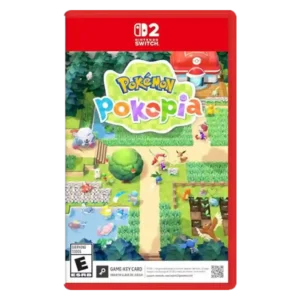
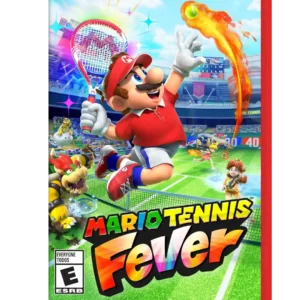
exploration quality
Pokémon Pokopia
4.4
Exploration was widely praised for rewarding curiosity through routes, secrets, lore, vistas, and discoveries.
Mario Tennis Fever
1.0
Adventure's exploration is a clear weakness. Multiple reviewers describe its world as bare, linear, or lacking meaningful secrets and discovery, making traversal feel more like connective tissue than exploration.
puzzle design
Pokémon Pokopia
4.4
Habitat construction worked as a light puzzle system, with simple environmental puzzles that made discovery satisfying.
Mario Tennis Fever
1.7
Adventure's puzzles are repeatedly described as very light or nearly nonexistent. Reviewers wanting meaningful problem-solving found little beyond simple tennis-based interactions and boss mechanics.
onboarding experience
Pokémon Pokopia
4.3
Onboarding was mostly positive, with several reviewers finding early flow smooth, concise, or less cumbersome than expected.
Mario Tennis Fever
2.1
The game teaches its mechanics thoroughly, but many experienced players find the academy painfully slow and overlong. Newcomers may benefit from the structure, yet the repeated lessons are the most common onboarding complaint.
load times
Pokémon Pokopia
3.0
Load times were a recurring technical complaint, especially when moving between large customized zones.
Mario Tennis Fever
5.0
The few reviewers who discussed loading found it impressively quick and unobtrusive. Short waits help matches and mode changes keep a brisk pace.
value for money
Pokémon Pokopia
4.0
Value for money was supported mainly by playtime evidence, with one review citing 20+ hours and far more for completionists.
Mario Tennis Fever
2.0
Price is one of the biggest concerns. Many reviewers struggle to justify the $70 asking price because Adventure and solo depth feel thin, although some buyers still consider the strong core play and broader modes worth the cost.
writing quality
Pokémon Pokopia
4.3
Writing quality was praised for charm, humor, clever dialogue, and sharp cross-generational references.
Mario Tennis Fever
2.4
Adventure's writing is commonly criticized as bland, repetitive, or padded with tutorial dialogue. There are occasional funny lines and charming character moments, but the script rarely elevates the campaign.
world interactivity
Pokémon Pokopia
4.4
World interactivity was praised through Pokémon reacting to objects, environmental interactions, and functional items.
Mario Tennis Fever
2.5
Adventure's world itself offers little to uncover, but court-level environmental effects can interact with the ball in enjoyable ways. That contrast leaves broader world interactivity feeling underdeveloped.
age appropriateness
Pokémon Pokopia
3.0
Younger players may enjoy the gentle premise, but one reviewer warned that heavy reading could deter some younger trainers.
Mario Tennis Fever
4.7
Several reviewers specifically found the game welcoming for children and even older players who may not use traditional controllers often. Swing Mode and the forgiving learning curve were repeatedly framed as especially suitable for younger players.
narrative quality
Pokémon Pokopia
4.6
Narrative quality was widely praised for mystery, emotional hooks, and surprising story strength for a cozy spin-off.
Mario Tennis Fever
2.9
Adventure's story is divisive but generally weak: the baby premise is cute and occasionally funny, yet the plot is short, simple, and often treated as little more than a tutorial wrapper. A minority appreciates its lighthearted charm.
tutorial quality
Pokémon Pokopia
3.7
Tutorial quality was mixed-positive: one reviewer liked its brevity, while another wanted more early explanation.
Mario Tennis Fever
2.3
The tutorials are comprehensive but far too long for many reviewers, especially because a shorter basic tutorial already exists. A minority values the academy as a gentle teaching tool, but the dominant reaction is that it overstays its welcome.
emotional impact
Pokémon Pokopia
4.7
Several reviewers found the game unexpectedly moving, linking its restoration theme to warmth, melancholy, and emotional payoff.
Mario Tennis Fever
3.3
Fever rallies can be tense, exciting, and laugh-out-loud chaotic, but the same randomness can also become frustrating. The emotional highs tend to come from close multiplayer exchanges rather than the story.
accessibility options
Pokémon Pokopia
3.0
Accessibility evidence is mixed: one review praised the interface for speed and immediacy, while another found the dedicated accessibility menu thin beyond basics.
Mario Tennis Fever
4.3
The game is widely described as easy to approach, with simplified shot inputs, adjustable camera choices, motion play, and other settings that reduce friction. One review notes there is no dedicated accessibility-settings suite, so the strength comes more from flexible controls than formal accessibility features.
innovation
Pokémon Pokopia
4.7
Innovation was praised as a fresh direction for Pokémon, with reviewers calling it novel, benchmark-setting, and franchise-reinvigorating.
Mario Tennis Fever
3.4
Fever Rackets are generally viewed as a meaningful new wrinkle, but the game as a whole is more evolutionary than revolutionary. Some reviewers praise the strategic shake-up while others wanted a bolder reinvention of Mario Tennis.
aiming precision
Pokémon Pokopia
2.8
Block-breaking aim was a recurring weak point, with reviewers noting that directional punches could be fiddly and accidentally destructive.
Mario Tennis Fever
4.0
Shot placement generally feels deliberate and rewarding, especially when angling returns or precisely directing Fever Shots. Reviewers who focused on aiming found the controls accurate enough to reward timing and placement.
camera behavior
Pokémon Pokopia
2.8
Camera and placement friction appeared in building-heavy moments, especially in tight spaces or while placing items.
Mario Tennis Fever
4.0
The match camera was praised for keeping players close to the action while remaining readable. That framing helps the fast rallies feel immediate without becoming hard to follow.
pacing
Pokémon Pokopia
3.3
Pacing was sharply mixed: some called it brilliant, while others disliked day-long construction waits and story throttling.
Mario Tennis Fever
2.1
Adventure mode's pacing is one of the most consistent criticisms: it spends too long teaching basics, then ends soon after the more interesting material begins. Match play itself is much faster and more energetic.
learning curve
Pokémon Pokopia
3.6
Learning curve impressions were mixed: some liked the lack of handholding, while others needed many hours or wanted more nudges.
Mario Tennis Fever
4.6
This is one of the game's clearest strengths: newcomers can serve and rally quickly, yet character traits, shot selection, positioning, and Fever counters provide room to improve. A few reviewers still note an initial barrier for true party-game drop-ins.
progression system
Pokémon Pokopia
4.2
Progression drew both praise and criticism: reviewers liked unlocks and ability growth but flagged occasional poor gating.
Mario Tennis Fever
3.1
Unlocking characters, rackets, courts, and achievements gives many reviewers a satisfying stream of goals. Others dislike linear stat growth, forced solo unlocks, or progression that feels more procedural than meaningful.
polish
Pokémon Pokopia
4.7
Overall polish was praised in broad terms, especially how thoughtfully made and player-first the experience felt.
Mario Tennis Fever
3.7
The core matches and presentation usually feel polished, but Adventure mode contains rougher, thinner, or less refined stretches. The overall finish is good, just not equally strong across every mode.
replay value
Pokémon Pokopia
4.7
Replay value was very high, with reviewers describing daily play, dozens or hundreds of hours, and long-term projects.
Mario Tennis Fever
3.7
The large roster, Fever combinations, Trial Towers, unlocks, and ranked play give the game meaningful replay potential, especially for multiplayer fans. Solo-focused reviewers are much less convinced it has long-term staying power.
level design
Pokémon Pokopia
3.0
Level design was mixed, with one reviewer finding the large terrain rewarding but sometimes too mountainous or exhausting.
Mario Tennis Fever
3.9
Special courts and Adventure environments often use hazards and themes effectively, with Wonder-style and other gimmick courts standing out. A few reviewers criticize the limited number or inspiration of some venues, so quality is stronger than quantity.
platform-specific feature support
Pokémon Pokopia
4.5
Platform-specific support was praised around Switch 2/GameShare-style features that let more players join with one copy.
Mario Tennis Fever
3.7
GameShare, handheld play, HDR, and Switch 2 performance give the package useful platform-specific benefits. Motion controls are more divisive, and some reviewers still feel the game does not fully justify being a Switch 2 exclusive.
protagonist appeal
Pokémon Pokopia
4.8
Ditto was praised as a lovable, funny protagonist whose odd transformations became a major source of charm.
Mario Tennis Fever
4.0
Baby Mario's design lands well with the small number of reviewers who discuss him directly. The character is considered cute and visually charming even when the surrounding Adventure mode is criticized.
animation quality
Pokémon Pokopia
4.8
Animation detail was strongly praised, especially Ditto’s transformations and Pokémon character touches.
Mario Tennis Fever
4.1
Character animation and cinematics earn frequent praise for their personality, fluidity, and polish, though a few reviewers call some reused or limited animations disappointing. Overall, the presentation usually looks lively rather than static.
map and navigation design
Pokémon Pokopia
2.8
Map and navigation design drew complaints about limited map detail, lack of full-screen access, and weak labeling.
Mario Tennis Fever
2.1
Adventure's map design is mostly criticized for being small, linear, or padded with unnecessary movement. Reviewers frequently felt the world map added travel time without enough discovery to justify it.
quest design
Pokémon Pokopia
3.6
Quest design ranged from rewarding app-based goals to occasional chaotic quest completion and unclear sequencing.
Mario Tennis Fever
3.0
Quest quality is mixed: some missions feel playful and freeing, while others are thin pretexts for moving between tennis challenges. The structure rarely develops into a deep RPG-style quest system.
sound design
Pokémon Pokopia
4.6
Sound design was praised alongside the music as wonderfully handled.
Mario Tennis Fever
4.0
Racket impacts, crowd reactions, and Fever effects give rallies a satisfying punch, and most comments on sound are positive. A few reviewers found parts of the audio mix or repeated chatter less polished.
content variety
Pokémon Pokopia
4.6
Content variety was one of the strongest points, with reviewers repeatedly citing huge amounts to do, discover, collect, and build.
Mario Tennis Fever
4.1
Most reviewers see plenty to do across tournaments, Trial Towers, special courts, unlocks, and multiplayer, although a sizable minority still calls the solo package thin. The breadth feels strongest outside the short Adventure mode.
handheld play suitability
Pokémon Pokopia
4.5
Handheld suitability was positive in the available evidence, with one reviewer saying it looked and ran great both handheld and docked.
Mario Tennis Fever
4.0
Handheld play performs well, with stable performance and visuals that still look sharp on the Switch 2 screen. Reviewers who tested both modes found little compromise away from the TV.
mission design
Pokémon Pokopia
3.4
Mission design was useful for structure but sometimes too guided, rail-like, or busywork-heavy.
Mario Tennis Fever
3.8
Trial Towers, boss battles, and special challenges provide many of the game's best structured tasks, while academy exercises and some minigames are much less inspired. Mission quality rises sharply once the tutorial-heavy opening is over.
difficulty balance
Pokémon Pokopia
4.0
Difficulty was described as approachable and not especially tough, with the challenge mostly coming from planning and organization.
Mario Tennis Fever
3.6
Challenge varies noticeably by mode. Trial Towers and higher-level matches can push skilled players, but some tournaments and early Adventure content feel too easy, while certain AI behavior can create artificial spikes.
originality
Pokémon Pokopia
4.3
Originality evidence was positive, with one reviewer stressing that it was not simply Animal Crossing and felt more interesting.
Mario Tennis Fever
3.9
The combination of character builds and Fever Rackets keeps individual matches feeling fresh, even if the broader formula remains familiar. Reviewers see more originality in the match-to-match chaos than in the overall structure.
fun factor
Pokémon Pokopia
4.8
Reviewers repeatedly described the game as highly fun, special, and difficult to stop playing.
Mario Tennis Fever
4.4
The dominant view is that Mario Tennis Fever is simply fun, especially with friends and Fever Rackets enabled. A small number of harsh critics found the package shallow or disappointing, but positive reactions to actual matches are far more common.
controls responsiveness
Pokémon Pokopia
4.6
Controls were generally praised as intuitive, smooth, and snappy in common actions like planting and traversal.
Mario Tennis Fever
4.2
Standard controls are repeatedly described as tight, clean, and responsive. Serving, volleying, and changing shot types feel dependable enough for quick casual play while still supporting more deliberate tactics.
movement feel
Pokémon Pokopia
4.6
Movement feel was praised for making Pokémon feel unusually free, especially as abilities opened up traversal.
Mario Tennis Fever
4.2
Character movement is usually described as fluid, natural, and satisfying, helping rallies stay readable and responsive. A few control modes or effects can restrict movement, but standard play feels strong.
core gameplay loop
Pokémon Pokopia
4.7
The core loop drew the strongest agreement: building habitats, helping Pokémon, gathering resources, and progressing was repeatedly called addictive and satisfying.
Mario Tennis Fever
4.3
The basic act of serving, positioning, rallying, and creating angles is the game's most dependable strength. Even several negative reviews concede that the underlying arcade tennis remains compelling.
multiplayer design
Pokémon Pokopia
3.8
Multiplayer design had strong ideas like shared islands and group building, but some reviewers saw limitations or early roughness.
Mario Tennis Fever
4.2
Local and online multiplayer form the heart of the experience, with flexible singles, doubles, ranked play, private rooms, and GameShare. Reviewers love the social tennis, though some criticize missing ranked-duos options or other online limitations.
immersion
Pokémon Pokopia
4.7
Immersion was boosted by Ditto’s fantasy, environmental storytelling, and the sense of being locked into the Pokémon world.
Mario Tennis Fever
5.0
One reviewer was especially pulled in by Adventure mode's beautifully animated opening. The cinematic presentation can briefly make the campaign feel more substantial than its simple structure ultimately becomes.
faithfulness to franchise
Pokémon Pokopia
4.8
Longtime Pokémon references and Kanto treatment were praised as respectful, nostalgic, and faithful to the wider franchise.
Mario Tennis Fever
4.5
Despite disagreements about Adventure mode, most reviewers see the on-court action as a strong continuation of Mario Tennis. Several call it a return to form or one of the series' best-playing entries.
character roster
Pokémon Pokopia
4.0
The roster impressed through variety and personality, though a few reviewers wanted more individuality or found some Pokémon less distinct.
Mario Tennis Fever
4.3
The roughly 38-character roster is one of the package's biggest strengths, with a broad mix of familiar faces and deeper cuts. Most reviewers also liked that different stats and traits make roster choices matter, though a few wanted more meaningful additions over Aces.
soundtrack quality
Pokémon Pokopia
4.2
The soundtrack was broadly praised for nostalgic, ambient remixes, though one reviewer found the music grating after a while.
Mario Tennis Fever
3.9
The soundtrack is generally upbeat and suits the fast matches, but opinions range from memorable and energetic to safe or repetitive. It works well in play without earning unanimous enthusiasm.
co-op experience
Pokémon Pokopia
4.3
Co-op impressions were positive overall, especially GameShare and relaxed building, though some review evidence came from previews or limited sessions.
Mario Tennis Fever
4.0
Doubles can be genuinely satisfying when partners coordinate positioning, lobs, and net play. Local co-op is especially strong, while online cooperative options are somewhat more constrained.
frame rate stability
Pokémon Pokopia
4.5
Frame rate evidence was consistently positive, with multiple reviews noting stable or solid 60fps performance.
Mario Tennis Fever
4.7
Performance is usually smooth and close to the targeted 60 fps, even during effects-heavy rallies. A few small dips or hiccups were reported, especially around split-screen or isolated moments, but they were not the norm.
family friendliness
Pokémon Pokopia
4.6
One review found it well suited to family play, with kids drawn in by the Pokémon-Minecraft-like building loop.
Mario Tennis Fever
4.8
The forgiving controls, colorful presentation, local multiplayer, and broad skill range make this an especially strong family game. Reviewers repeatedly describe it as easy to enjoy with children, parents, or mixed-age groups.
gameplay mechanics
Pokémon Pokopia
4.6
Gameplay mechanics were praised for being intuitive, modern, novel, and less laborious than similar cozy games.
Mario Tennis Fever
4.4
Fever Rackets add hazards, buffs, counters, and tactical matchup choices on top of an already solid tennis system. Most reviewers like the added strategy and spectacle, while some think the simplified tennis or stronger powers reduce technical depth.
performance optimization
Pokémon Pokopia
4.7
Performance optimization was positive, with reviewers reporting no issues and smooth Switch 2 play.
Mario Tennis Fever
4.5
The game generally runs smoothly and handles effects-heavy courts without meaningful slowdown. Reviewers repeatedly describe performance as stable, with only isolated technical hiccups.
companion AI
Pokémon Pokopia
4.7
Follower pathing and companion behavior were praised as reliable, with Pokémon keeping up and functioning smoothly.
Mario Tennis Fever
4.5
AI partners generally hold up well in doubles. The few reviewers who focused on teammate behavior found them capable and, in one case, surprisingly smart.
art direction
Pokémon Pokopia
4.4
Reviewers liked the cute, bright visual style, with praise for gorgeous art and a distinct look.
Mario Tennis Fever
4.2
Bright colors, expressive Mario styling, and energetic courts make the game visually inviting. A handful of critics say it does not look transformative for Switch 2, but the overall aesthetic is consistently appealing.
grind level
Pokémon Pokopia
3.2
Late-game grind was a repeated caveat, though reviewers usually treated it as a manageable blemish rather than a dealbreaker.
Mario Tennis Fever
3.3
Grinding depends heavily on the mode: Adventure can feel tedious to veterans, while ranked progression gives competitive players a more purposeful grind. Other reviewers appreciate that much of the campaign avoids excessive repetition.
user interface design
Pokémon Pokopia
4.5
User interface design was praised for clarity, cleanliness, and a more seamless feel than many cozy sims.
Mario Tennis Fever
4.5
Menus and on-court cues are clean, quick, and easy to read. Reviewers praise both the snappy navigation and the way the UI communicates incoming shots without excessive hand-holding.
atmosphere
Pokémon Pokopia
4.7
The overall mood landed warmly for reviewers, who described the experience as comforting and inviting.
Mario Tennis Fever
4.7
Crowds, stadium presentation, and Fever-powered chaos create a lively party-sports atmosphere. The energy is strongest in multiplayer, where the spectacle reinforces the sense of a playful Mario event.
visual effects quality
Pokémon Pokopia
4.3
Visual effects had limited but positive evidence, with glowing visual touches helping the presentation feel lively.
Mario Tennis Fever
4.3
Fever Shots bring bright particles, hazards, and screen-filling effects that look energetic without usually obscuring the action. Reviewers found the visual spectacle both attractive and well integrated into play.
graphics quality
Pokémon Pokopia
4.4
Graphics were praised as cute, bright, charming, and strong for Switch 2, though one review framed them as limited but charming.
Mario Tennis Fever
4.4
The game is broadly praised for sharp, vibrant visuals and polished character models in both docked and handheld play. Some reviewers expected a bigger generational leap from a Switch 2 exclusive, but few consider it unattractive.
AI behavior
Pokémon PokopiaNo score yet
Mario Tennis Fever
2.7
CPU quality is inconsistent. Some reviewers found computer opponents predictable or prone to poor decisions, while another praised surprisingly smart opponents and capable doubles partners.
boss design
Pokémon PokopiaNo score yet
Mario Tennis Fever
4.0
Boss encounters are one of Adventure mode's most consistently praised elements. They use tennis mechanics in creative ways and often provide the campaign's most memorable challenges, even for reviewers who disliked the rest of Adventure.
character customization
Pokémon PokopiaNo score yet
Mario Tennis Fever
3.0
Customization is mixed: some reviewers enjoy the color and costume options, while others feel the available palettes and character variations are too bare-bones. It adds some personalization, but not enough for everyone.
combat system
Pokémon Pokopia
4.5
The lack of combat was judged as a good fit for the life-sim design rather than a missing feature.
Mario Tennis FeverNo score yet
commentary quality
Pokémon PokopiaNo score yet
Mario Tennis Fever
2.8
The Talking Flower is one of the most divisive presentation choices. A few reviewers enjoy the playful commentary, but many find the repeated lines grating and wish it could be reduced or disabled everywhere.
competitive balance
Pokémon PokopiaNo score yet
Mario Tennis Fever
3.5
Balance is one of the more debated areas. Many reviewers praise counterable Fever Shots and character-racket tradeoffs, but others identify stronger rackets, exploitable characters, or luckier doubles situations that can skew competition.
couch co-op quality
Pokémon PokopiaNo score yet
Mario Tennis Fever
4.4
Local multiplayer is a standout and often described as the best way to play. Easy setup, four-player support, doubles, and chaotic Fever Rackets make it especially effective for living-room sessions.
crafting system
Pokémon Pokopia
3.6
Crafting and building were seen as deep and rewarding, but some reviewers found manual construction cumbersome or imprecise.
Mario Tennis FeverNo score yet
dialogue quality
Pokémon PokopiaNo score yet
Mario Tennis Fever
2.2
Dialogue is a weak spot in Adventure mode. Several reviewers call it repetitive, stilted, or padded, though a few enjoy the rare character-focused jokes and playful exchanges.
environmental detail
Pokémon PokopiaNo score yet
Mario Tennis Fever
4.4
Courts and stadiums are often dense, colorful, and full of background activity. Reviewers regularly praised crowds, screens, lighting, and environmental touches that keep matches visually busy.
facial animations
Pokémon PokopiaNo score yet
Mario Tennis Fever
5.0
Close-up character work is notably expressive, with detailed faces, clothing, and small reactions. Reviewers who singled it out considered the character presentation among the game's best-looking elements.
HUD clarity
Pokémon PokopiaNo score yet
Mario Tennis Fever
4.0
On-court cues communicate incoming shots clearly without overwhelming players. The UI was praised for helping timing and readability while still letting the tennis speak for itself.
lore depth
Pokémon Pokopia
4.5
Lore was praised through notes, drops, and mysteries that hinted at what happened to the ruined world.
Mario Tennis FeverNo score yet
matchmaking quality
Pokémon PokopiaNo score yet
Mario Tennis Fever
4.0
Most online testers found matches quickly and without much friction, but experiences were not universal. A few reviewers encountered limited pools, regional restrictions, or difficulty finding opponents.
menu usability
Pokémon Pokopia
3.0
Menu and inventory usability were a major caveat, especially storage management, though one reviewer liked item pictures.
Mario Tennis FeverNo score yet
mission variety
Pokémon PokopiaNo score yet
Mario Tennis Fever
2.3
Mission variety is uneven. Some reviewers enjoy the different minigames and challenge formats, while others find Adventure tasks repetitive and too often built around the same basic lesson structure.
online stability
Pokémon PokopiaNo score yet
Mario Tennis Fever
4.3
Online play is usually smooth, with low input lag and stable matches reported across many outlets. There are scattered cases of stutter, lag, or poor connections, but reliable play is the stronger overall pattern.
open-world design
Pokémon Pokopia
3.6
The open-world structure was praised for scale and freedom but could become daunting without enough guardrails.
Mario Tennis FeverNo score yet
sandbox freedom
Pokémon Pokopia
4.5
Sandbox freedom was strongly praised, especially the mix of free-form building, guidance, and postgame creative space.
Mario Tennis FeverNo score yet
server reliability
Pokémon PokopiaNo score yet
Mario Tennis Fever
5.0
Pre-launch server play was reported as mostly smooth in the one review that addressed server behavior directly. That is encouraging but too limited to establish a broader pattern.
side character depth
Pokémon PokopiaNo score yet
Mario Tennis Fever
2.0
Adventure's NPCs receive little characterization, with one reviewer finding their dialogue barely worth engaging with. Side characters function more as tutorial guides than memorable personalities.
social features
Pokémon PokopiaNo score yet
Mario Tennis Fever
4.0
The huge selection of characters and options can make group play feel socially lively even when the choices are not all competitively distinct. The feature is more about party variety than deep social systems.
split-screen quality
Pokémon PokopiaNo score yet
Mario Tennis Fever
5.0
The one direct assessment of split-screen play is strongly positive, calling it the game's best local format. It keeps the social match experience immediate and easy to share.
upgrade system
Pokémon PokopiaNo score yet
Mario Tennis Fever
2.0
Adventure's stat upgrades lack impact for the reviewers who focused on them. Improvements are often handed out automatically and do not create the meaningful build decisions expected from an RPG-like progression system.
world-building
Pokémon Pokopia
4.6
World-building was a major strength, with reviewers praising Kanto’s depth, lore, environmental clues, and ruined-world context.
Mario Tennis FeverNo score yet