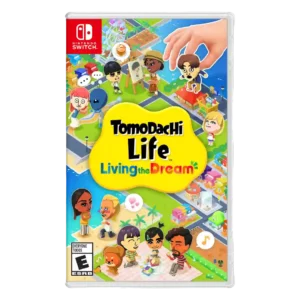
Average score
Tomodachi Life: Living the Dream
3.9
Pokemon LeafGreen and FireRed Versions
3.9
originality
Tomodachi Life: Living the Dream
4.8
Reviewers repeatedly describe the experience as unusually distinctive, hard to compare, and powered by a kind of play few games offer.
Pokemon LeafGreen and FireRed Versions
1.5
The Kanto formula is foundational rather than novel today; the remake preserves what works, but repeated story beats and limited new ideas can make it feel familiar to longtime players.
accessibility options
Tomodachi Life: Living the Dream
2.0
Only one review directly discusses accessibility options, and it flags the absence of specific settings as a limitation despite general ease of play.
Pokemon LeafGreen and FireRed Versions
4.5
There are few built-in accessibility tools, but the turn-based pace is broadly approachable, and one-handed Joy-Con play is a welcome modern accommodation.
character development
Tomodachi Life: Living the Dream
4.4
Reviewers often felt Miis became memorable through quirks, relationships, and player input, although one noted that development can be slow.
Pokemon LeafGreen and FireRed Versions
2.0
Character growth is intentionally light; the adventure focuses far more on building a Pokémon team than on deep personal arcs or emotional storytelling.
grind level
Tomodachi Life: Living the Dream
5.0
One reviewer specifically praises the relaxed progression for having no grind.
Pokemon LeafGreen and FireRed Versions
2.8
Old-school experience distribution makes training considerably slower than in newer Pokémon games. Some enjoy the deliberate team-building; others find repeated battles tedious.
innovation
Tomodachi Life: Living the Dream
4.0
One review frames the sequel as a bold evolution, expanding the series with a more connected world, deeper systems, and player-created content.
Pokemon LeafGreen and FireRed Versions
1.9
The original 2004 remake added worthwhile mechanics and wireless features, but the 2026 rerelease is widely viewed as conservative, with very little new beyond targeted fixes and event access.
animation quality
Tomodachi Life: Living the Dream
4.5
Reviewers praise smoother transitions and expressive Mii animation, especially how animation supports personality and absurdity.
Pokemon LeafGreen and FireRed Versions
2.7
Sprite animation retains classic charm but is often described as sparse or slow by modern standards; the 2004 remake still improved battle presentation over the originals.
age appropriateness
Tomodachi Life: Living the Dream
3.0
One review notes the relaxed content filter can push the humor beyond the expected family rating, broadening appeal but complicating age fit.
Pokemon LeafGreen and FireRed Versions
4.7
The simple controls, kid-friendly structure, and easy-to-grasp goals make this an inviting entry point for younger players as well as adults returning to Kanto.
writing quality
Tomodachi Life: Living the Dream
4.7
Localized dialogue, absurd phrasing, and player-seeded language are frequently praised as central to the comedy and personality.
Pokemon LeafGreen and FireRed Versions
3.1
The writing is plain and functional rather than deep, though memorable NPC lines and the clean story structure help the world stay charming and easy to follow.
community features
Tomodachi Life: Living the Dream
2.4
Community-facing features are a major weakness, with reviewers frustrated by blocked sharing, capture limits, and reduced online potential.
Pokemon LeafGreen and FireRed Versions
3.9
Trading rooms, wireless chat, and newer communication layers preserve some of Pokémon’s social spirit, though the modern release does not fully modernize those features.
sound design
Tomodachi Life: Living the Dream
4.3
Sound design supports the quirky atmosphere through playful audio touches and oddball effects that reinforce the game's tone.
Pokemon LeafGreen and FireRed Versions
2.8
Pokémon cries and effects are divisive: some find the classic bleeps satisfying, while others call them tinny, archaic, or unpleasant compared with the music.
faithfulness to franchise
Tomodachi Life: Living the Dream
3.6
Several reviewers see it as a fitting sequel or upgrade, though others feel missing features and sharing cuts weaken its connection to earlier entries.
Pokemon LeafGreen and FireRed Versions
4.9
These games preserve the classic Pokémon formula exceptionally well, keeping the original Kanto structure while layering in key Generation 3 mechanics and postgame content.
user interface design
Tomodachi Life: Living the Dream
4.6
The interface and building tools are repeatedly praised as clean, intuitive, snappy, and easy to use.
Pokemon LeafGreen and FireRed Versions
3.3
The interface is generally simple and readable, especially in the remake’s cleaner information screens, though some older menus and wireless flows feel clunky.
world interactivity
Tomodachi Life: Living the Dream
3.5
Custom items and island objects can feed into Mii behavior and scenarios, but several reviewers note that some interactions remain shallow or limited.
Pokemon LeafGreen and FireRed Versions
4.8
Cut, Surf, Flash, and other field abilities tie exploration to team growth, creating satisfying moments when new tools open previously blocked paths.
pacing
Tomodachi Life: Living the Dream
2.9
Pacing is divisive: the relaxed daily rhythm suits short bursts, but longer sessions can become slow, empty, or repetitive.
Pokemon LeafGreen and FireRed Versions
4.0
The campaign is compact and purposeful compared with many modern RPGs, though grinding, random encounters, and slow early movement can interrupt that otherwise strong rhythm.
tutorial quality
Tomodachi Life: Living the Dream
3.8
Tutorial impressions are mostly positive for basic play, though one reviewer felt the creation tools could use more guidance after the quick introduction.
Pokemon LeafGreen and FireRed Versions
4.8
Guidance is lightweight and optional, offering help without forcing lengthy tutorials, which suits both newcomers and returning players.
gameplay mechanics
Tomodachi Life: Living the Dream
3.0
Reviewers consistently describe the active play as light, simple, and often passive, with minigames and requests adding texture but not deep mechanical substance.
Pokemon LeafGreen and FireRed Versions
4.0
The mechanical foundation is deep and rewarding, but HMs, single-use TMs, older move rules, random encounters, and limited convenience features can feel dated.
content variety
Tomodachi Life: Living the Dream
3.2
Opinions are mixed: many praise surprising events and plentiful unlocks, but repetition, missing activities, and finite scenarios are common concerns.
Pokemon LeafGreen and FireRed Versions
4.2
Beyond gyms and catching, the Sevii Islands, trainer rematches, legendary hunts, trading, and postgame challenges add meaningful variety, though the Switch port itself adds very little new.
bug frequency
Tomodachi Life: Living the Dream
4.0
One reviewer reported no major technical issues during Switch 2 play.
Pokemon LeafGreen and FireRed Versions
5.0
The Switch release fixes several notorious legacy bugs, including problems that could permanently lose roaming legendary Pokémon, making this version safer than the original cartridges.
value for money
Tomodachi Life: Living the Dream
4.2
Value is positive for players who enjoy short-session chaos and creative building, with reviewers citing money's worth and plenty of value.
Pokemon LeafGreen and FireRed Versions
3.2
Value is the most contentious part of the modern release: the amount of game is substantial, but many object to paying separately for a barebones port with missing online and emulator-style features.
menu usability
Tomodachi Life: Living the Dream
4.5
One review specifically praises the lack of bloated menus and the ability to jump directly to characters.
Pokemon LeafGreen and FireRed Versions
3.6
Core menus are straightforward, but inventory organization and some older status screens lack the convenience and cleanliness of later games.
replay value
Tomodachi Life: Living the Dream
3.8
Replay potential depends heavily on player creativity; many reviewers saw long-term daily appeal, while others found repetition and content limits setting in.
Pokemon LeafGreen and FireRed Versions
4.7
Different starters, team combinations, route orders, challenge runs, collecting goals, and postgame content make repeated playthroughs unusually durable.
core gameplay loop
Tomodachi Life: Living the Dream
4.0
The loop of checking in, helping Miis, collecting happiness, and unlocking island features is widely seen as relaxed and satisfying, though best in short sessions.
Pokemon LeafGreen and FireRed Versions
4.8
Exploring, catching, training, and battling remains remarkably addictive. The loop is repeatedly described as the reason these games still work decades later.
social features
Tomodachi Life: Living the Dream
1.9
The lack of online sharing, QR-style exchange, and broader social tools is one of the most repeated complaints.
Pokemon LeafGreen and FireRed Versions
2.7
Pokémon’s trading culture remains integral to the experience, but local-only communication on Switch sharply limits that social loop for players without nearby friends.
endgame content
Tomodachi Life: Living the Dream
4.0
One reviewer says reaching credits does not end the game, treating post-credits play as continued island life rather than a conventional ending.
Pokemon LeafGreen and FireRed Versions
4.7
The Sevii Islands, stronger opponents, legendary encounters, and continued collecting give the game a substantial postgame that many consider one of the remake’s defining strengths.
map and navigation design
Tomodachi Life: Living the Dream
4.5
One review praises the ability to use the menu to jump straight to characters instead of searching tediously.
Pokemon LeafGreen and FireRed Versions
3.8
Kanto encourages self-directed navigation and satisfying backtracking, although older dungeons such as Rock Tunnel can be frustrating without the right utility move.
family friendliness
Tomodachi Life: Living the Dream
4.2
Family friendliness is mostly positive because the game is easy to understand and enjoyable for family watching or younger players, despite caveats around content settings.
Pokemon LeafGreen and FireRed Versions
4.8
The friendly presentation, simple button demands, and kid-oriented structure make the adventure easy to share with younger players, without removing strategic depth for adults.
onboarding experience
Tomodachi Life: Living the Dream
4.0
One review notes that new features begin unlocking quickly enough to keep the early setup from dragging.
Pokemon LeafGreen and FireRed Versions
4.6
The clear catch-battle-trade structure makes the games a strong introduction to classic Pokémon, helped by simple controls and optional guidance rather than heavy hand-holding.
platform-specific feature support
Tomodachi Life: Living the Dream
2.6
Hardware-specific support is uneven: handheld visuals are praised, but mouse, touch, capture, and local-only sharing limitations frustrate reviewers.
Pokemon LeafGreen and FireRed Versions
2.0
The Switch versions gain portability, local wireless, event access, and some modern compatibility, but omit online trading, save states, rewind, filters, widescreen, and other expected conveniences.
narrative quality
Tomodachi Life: Living the Dream
3.9
The story is mostly emergent and player-authored, producing memorable relationship drama for some while feeling barebones to others.
Pokemon LeafGreen and FireRed Versions
3.3
The story is deliberately simple and easy to follow, which suits the adventure’s pace, but it offers little depth or surprise for players seeking richer RPG storytelling.
controls responsiveness
Tomodachi Life: Living the Dream
4.2
Controls are generally described as intuitive and responsive, especially for basic island management, though one reviewer wanted stronger touchscreen use.
Pokemon LeafGreen and FireRed Versions
3.6
Basic inputs are easy to understand, but a few modern-port impressions note slight startup or menu latency that can make movement feel less immediate.
learning curve
Tomodachi Life: Living the Dream
4.7
The game is widely framed as easy to pick up, approachable, and accessible in play style rather than demanding or skill-heavy.
Pokemon LeafGreen and FireRed Versions
4.2
The basic rules are easy to pick up, but older systems hide important quirks around typings, stats, HMs, TMs, and progression that can surprise newcomers.
economy and resource balance
Tomodachi Life: Living the Dream
3.8
Economy impressions are mildly mixed, with one reviewer saying cash was never a problem and another joking about surprisingly high food prices.
Pokemon LeafGreen and FireRed Versions
4.3
Limited TMs and version-specific Game Corner costs make resource choices matter more than in newer entries, rewarding careful planning but sometimes creating avoidable friction.
load times
Tomodachi Life: Living the Dream
4.5
Load times are praised as minimal or nearly absent in the reviews that discuss them.
Pokemon LeafGreen and FireRed Versions
5.0
Saving is extremely fast on the Switch release, with one assessment calling it the fastest version experienced for that operation.
exploration quality
Tomodachi Life: Living the Dream
4.0
One review praises the shift from menu screens to a connected island where events unfold more organically as players move through the space.
Pokemon LeafGreen and FireRed Versions
4.5
Kanto rewards curiosity with branching routes, hidden items, optional detours, and progression gates that encourage players to figure out where to go rather than follow constant directions.
graphics quality
Tomodachi Life: Living the Dream
4.4
Visuals are consistently described as sharp, colorful, clearer than past entries, and good-looking on Switch 2 hardware.
Pokemon LeafGreen and FireRed Versions
4.0
The pixel visuals remain crisp, colorful, and charming, yet opinions split between admiration for the timeless sprite work and frustration with barebones scaling, black borders, and limited modern enhancement.
emotional impact
Tomodachi Life: Living the Dream
4.3
Some reviewers grew attached to their islands and Miis, describing the game as smile-inducing, endearing, and easy to return to.
Pokemon LeafGreen and FireRed Versions
4.6
For longtime fans, returning to Kanto can be intensely nostalgic and comforting; familiar music, sprites, and team-building repeatedly trigger strong childhood memories.
art direction
Tomodachi Life: Living the Dream
4.3
The bright, cartoonish, sometimes photorealistic presentation is generally praised for matching the game's strange and playful tone.
Pokemon LeafGreen and FireRed Versions
4.6
Bright colors and expressive pixel sprites have aged especially well, giving Kanto a warm, recognizable look even when the technical presentation feels old.
fun factor
Tomodachi Life: Living the Dream
4.5
The strongest agreement is that the game is funny, weird, charming, and often laugh-out-loud enjoyable when its absurd systems click.
Pokemon LeafGreen and FireRed Versions
4.8
Even critics of the rerelease’s pricing and presentation repeatedly describe the underlying game as genuinely fun, addictive, and easy to lose hours in.
soundtrack quality
Tomodachi Life: Living the Dream
4.1
Music is generally described as whimsical, playful, and catchy, though one review found the selection more dialed back than before.
Pokemon LeafGreen and FireRed Versions
4.4
The soundtrack is one of the most consistently celebrated elements, with memorable route, town, gym, rival, and champion themes carrying much of the game’s atmosphere.
sandbox freedom
Tomodachi Life: Living the Dream
4.5
Creative freedom is one of the strongest points, with reviewers praising island building, custom objects, relationship nudging, and player-authored absurdity.
Pokemon LeafGreen and FireRed Versions
4.8
Kanto is not an open world, but its middle and later sections give players meaningful freedom to choose routes, tackle objectives in different orders, and explore without constant direction.
handheld play suitability
Tomodachi Life: Living the Dream
4.5
Handheld play is praised for sharp 1080p output and a portable, short-session structure that fits the game's rhythm.
Pokemon LeafGreen and FireRed Versions
4.8
Short routes, frequent saving, compact battles, and a portable-first structure make FireRed and LeafGreen especially comfortable in handheld play.
environmental detail
Tomodachi Life: Living the Dream
4.5
One review specifically notes that environments are more detailed than before, supporting the upgraded presentation.
Pokemon LeafGreen and FireRed Versions
4.8
The GBA-era world is colorful and readable, with distinct caves, towns, forests, water routes, and small visual touches that give each area its own identity.
atmosphere
Tomodachi Life: Living the Dream
4.5
Atmosphere is praised where discussed, especially for the bright, silly, offbeat mood created by the presentation and sound.
Pokemon LeafGreen and FireRed Versions
4.7
Kanto still carries a strong sense of adventure and nostalgia, with distinctive towns, routes, music, and familiar encounters giving the journey lasting personality.
world-building
Tomodachi Life: Living the Dream
4.3
The island can become a personalized little society, with reviewers highlighting its growth from a blank space into a distinct Mii world.
Pokemon LeafGreen and FireRed Versions
4.5
Kanto feels coherent and memorable despite sparse text, using connected routes, distinctive towns, gyms, caves, villains, and Pokémon habitats to create a convincing adventure.
performance optimization
Tomodachi Life: Living the Dream
4.5
Switch and Switch 2 impressions are positive, with reviewers saying the game runs well and feels snappy.
Pokemon LeafGreen and FireRed Versions
4.7
The modern versions generally run cleanly with sharp presentation and very fast saving, though their technical upgrades are modest rather than transformative.
HUD clarity
Tomodachi Life: Living the Dream
4.0
One review highlights the relationship chart as a helpful on-screen aid for understanding nearby Mii connections.
Pokemon LeafGreen and FireRed Versions
4.2
Information screens are generally readable and helpful, though older layouts can feel cluttered compared with modern interfaces.
progression system
Tomodachi Life: Living the Dream
3.9
The Wishing Fountain, island ranks, and Mii levels are often rewarding, but some reviewers found later unlocks generic or less motivating.
Pokemon LeafGreen and FireRed Versions
3.8
Badge progression and team growth remain satisfying, but leveling is slower and more manual than in newer entries, with HMs and delayed conveniences adding friction.
AI behavior
Tomodachi Life: Living the Dream
3.4
The Miis' semi-autonomous behavior creates enjoyable unpredictability, though reviewers also identify repeated patterns and limited spontaneity over time.
Pokemon LeafGreen and FireRed Versions
3.5
Opponent AI is only modestly smarter than earlier entries, occasionally using items or switching, and rarely creates a serious tactical wall.
character roster
Tomodachi Life: Living the Dream
4.0
The 70-Mii limit is generally treated as sufficient by reviewers who discussed it, with one saying even 20 felt like enough.
Pokemon LeafGreen and FireRed Versions
3.9
The 151-Kanto focus gives the game an iconic, tightly curated roster, but version exclusives and postgame restrictions can make the available pool feel narrow or incomplete.
dialogue quality
Tomodachi Life: Living the Dream
4.5
Dialogue is often called hilarious and well localized, though a few reviewers noticed repeated conversation templates over time.
Pokemon LeafGreen and FireRed Versions
4.5
NPC dialogue is simple but charming and memorable, giving towns and routes personality without slowing the adventure with long conversations.
battle mode quality
Tomodachi Life: Living the DreamNo score yet
Pokemon LeafGreen and FireRed Versions
4.5
Double battles add a welcome extra tactical layer, even though they appear far less often than the standard one-on-one format.
boss design
Tomodachi Life: Living the DreamNo score yet
Pokemon LeafGreen and FireRed Versions
5.0
The gym leaders remain memorable, well-defined milestones, with one long-term assessment calling the entire lineup consistently solid.
character customization
Tomodachi Life: Living the Dream
4.6
Customization is the most consistently praised feature, from upgraded Mii creation and relationship settings to deep custom items and island design.
Pokemon LeafGreen and FireRed VersionsNo score yet
choice impact
Tomodachi Life: Living the DreamNo score yet
Pokemon LeafGreen and FireRed Versions
4.8
Team composition, route order, version choice, and optional detours can meaningfully change how a playthrough unfolds, helping repeated runs feel distinct.
combat system
Tomodachi Life: Living the DreamNo score yet
Pokemon LeafGreen and FireRed Versions
4.7
Turn-based battles remain the game’s biggest strength: simple to operate, but deep enough that typing, abilities, movesets, stats, and team construction reward planning.
competitive balance
Tomodachi Life: Living the DreamNo score yet
Pokemon LeafGreen and FireRed Versions
2.9
The Generation 3 mechanics improve balance over the originals, but the pre-physical/special split and limited type roster still leave certain Pokémon and matchups awkwardly advantaged.
crafting system
Tomodachi Life: Living the Dream
4.0
One reviewer explicitly praises the absence of crafting, framing that omission as a benefit rather than a missing feature.
Pokemon LeafGreen and FireRed VersionsNo score yet
difficulty balance
Tomodachi Life: Living the DreamNo score yet
Pokemon LeafGreen and FireRed Versions
3.6
Challenge is highly perspective-dependent: veterans may find the campaign easy, while players used to modern Pokémon often find the older leveling curve and late battles demanding but engaging.
enemy variety
Tomodachi Life: Living the DreamNo score yet
Pokemon LeafGreen and FireRed Versions
2.5
Kanto’s restricted early roster keeps battles recognizable but can make opposing teams feel repetitive, especially before later-generation Pokémon open up in the postgame.
facial animations
Tomodachi Life: Living the Dream
2.5
One reviewer criticizes face paint for sometimes blocking traditional facial expressions, limiting expressiveness.
Pokemon LeafGreen and FireRed VersionsNo score yet
horror tension
Tomodachi Life: Living the DreamNo score yet
Pokemon LeafGreen and FireRed Versions
4.5
Lavender Town’s eerie mood still lands strongly, with unsettling music and atmosphere giving that stretch of Kanto a memorable edge.
immersion
Tomodachi Life: Living the Dream
4.5
Reviewers who scored immersion felt the island tracks daily life well enough to feel like a living virtual world.
Pokemon LeafGreen and FireRed VersionsNo score yet
level design
Tomodachi Life: Living the DreamNo score yet
Pokemon LeafGreen and FireRed Versions
4.7
Kanto’s compact, interconnected routes and smart roadblocks remain a major strength, letting players discover paths and sequence parts of the journey without becoming directionless.
lore depth
Tomodachi Life: Living the DreamNo score yet
Pokemon LeafGreen and FireRed Versions
4.0
The Sevii Islands give the otherwise simple Kanto story extra context, connecting later Pokémon, Team Rocket developments, and broader series history.
matchmaking quality
Tomodachi Life: Living the DreamNo score yet
Pokemon LeafGreen and FireRed Versions
2.0
The original wireless connection flow can be cumbersome and laggy, making it awkward to tell when another nearby player is actually available to trade or battle.
monetization fairness
Tomodachi Life: Living the DreamNo score yet
Pokemon LeafGreen and FireRed Versions
1.5
Selling the versions separately draws sharp criticism, with the harshest takes calling the rerelease overpriced and needlessly extractive.
movement feel
Tomodachi Life: Living the DreamNo score yet
Pokemon LeafGreen and FireRed Versions
2.9
Running Shoes are a major improvement over the originals, yet the slow opening pace and four-direction movement still make traversal feel dated to some players.
multiplayer design
Tomodachi Life: Living the DreamNo score yet
Pokemon LeafGreen and FireRed Versions
2.7
Trading and battling remain central to the design, but the Switch release’s local-only communication is the most repeated multiplayer complaint and can block trade evolutions or Pokédex completion.
open-world design
Tomodachi Life: Living the Dream
3.8
The connected island is viewed as a meaningful upgrade that gives players a visible, customizable world, though building depth is not universally praised.
Pokemon LeafGreen and FireRed VersionsNo score yet
polish
Tomodachi Life: Living the DreamNo score yet
Pokemon LeafGreen and FireRed Versions
3.6
The underlying remake is often praised as cohesive and refined, while the modern package is criticized for feeling minimally dressed up despite fixing several old bugs.
protagonist appeal
Tomodachi Life: Living the DreamNo score yet
Pokemon LeafGreen and FireRed Versions
2.0
The silent child protagonist is functional rather than charismatic, and at least one assessment finds that old-fashioned blank-slate lead irritating.
quest design
Tomodachi Life: Living the DreamNo score yet
Pokemon LeafGreen and FireRed Versions
4.5
Kanto’s item-gated route chains and the Sevii Islands give exploration a pleasing cause-and-effect structure, with detours that reward paying attention.
remake/remaster quality
Tomodachi Life: Living the DreamNo score yet
Pokemon LeafGreen and FireRed Versions
3.3
The 2004 remake is widely admired for modernizing the originals without losing their identity, but the 2026 port is repeatedly criticized for adding too little for a paid anniversary release.
side character depth
Tomodachi Life: Living the DreamNo score yet
Pokemon LeafGreen and FireRed Versions
5.0
The rival stands out as a simple but effective recurring foil whose arrogant personality and constant lead over the player make each rematch satisfying.
upgrade system
Tomodachi Life: Living the DreamNo score yet
Pokemon LeafGreen and FireRed Versions
4.5
Raising a personally caught team still feels rewarding, especially when training pays off in visible level growth and evolution.
visual effects quality
Tomodachi Life: Living the DreamNo score yet
Pokemon LeafGreen and FireRed Versions
3.8
Battle effects are modest by modern standards but add color and personality to the sprite-based combat, with several assessments praising the upgraded move presentation.
voice acting
Tomodachi Life: Living the Dream
4.3
The robotic text-to-speech voices are repeatedly praised as funny and charming, even when awkward by design.
Pokemon LeafGreen and FireRed VersionsNo score yet