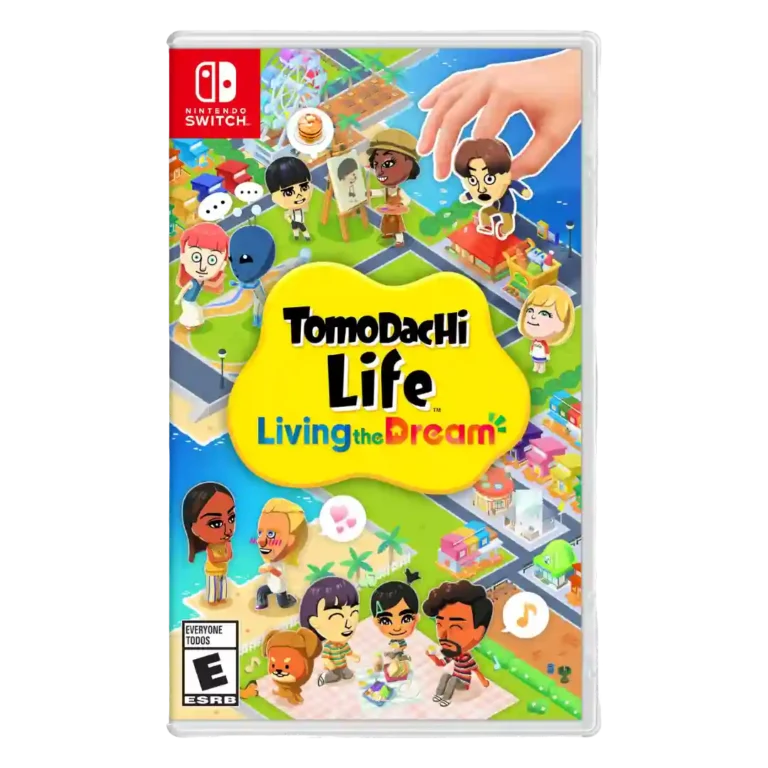
Tomodachi Life: Living the Dream

Tomodachi Life: Living the Dream Review

Brand: Nintendo
Released: April 16, 2026
Updated: 10 minutes ago
4.0
Consolidated expert score
283
Review insights
56
Scored features
34
Expert reviews

Bottom Line

Choose Tomodachi Life: Living the Dream if you want absurd, cozy Mii stories and deep customization. Skip it if you need structured goals, long sessions, robust online sharing, or gameplay that stays fresh without your creativity.

Best for

Best for players who enjoy cozy daily check-ins, player-made absurdity, Mii creation, and social-sandbox storytelling. It especially rewards people who like designing characters, objects, homes, and island spaces.

Not for

Not for players who want deep management systems, strong goals, online sharing, or long sessions full of fresh activities. It can feel thin or repetitive if you do not bring your own creativity.

Verdict

Tomodachi Life: Living the Dream works best as a personal comedy sandbox, not a deep management sim. Across the reviews, its biggest strengths are absurd Mii interactions, upgraded character creation, broad island customization, funny text-to-speech, and a low-pressure daily loop. The tradeoff is that much of the magic depends on what the player creates: less imaginative or longer-session play can expose repeated scenes, light mechanics, missing activities, and thin structure. Sharing restrictions are the clearest recurring frustration, especially because the game’s funniest moments seem built to be shown to others. Still, for players who enjoy checking in, tinkering, and letting strange social stories unfold, the evidence points to a charming and unusually personal sequel.

Compared in Reviews

Products reviewers directly compared with this model, grouped into quick takeaways.

  • Compared: life-sim parallel The review explicitly contrasts Living the Dream with Pokémon Pokopia while positioning its genre.

The Sims

  • Alternative: management complexity The review says Living the Dream avoids The Sims-style stat micromanagement.
  • Similar: life-sim parallel The review sees The Sims as the closest broad parallel to Living the Dream.
  • Compared: overall feel The review likens the game to The Sims blended with Animal Crossing and surreal TV energy.

Animal Crossing

  • Compared: life-sim parallel The review explicitly contrasts Living the Dream with Animal Crossing while positioning its genre.
  • Compared: overall feel The review likens the game to Animal Crossing blended with The Sims and surreal TV energy.
  • Worse: daily pressure The review says Living the Dream is less pressure-driven than Animal Crossing.

Feature Scorecards

Summary

56 reviewed features
  • Very positive 4.5-5.0 32% 18 features
  • Positive 3.5-4.4 50% 28 features
  • Neutral 2.5-3.4 13% 7 features
  • Negative 1.5-2.4 5% 3 features
  • Very negative below 1.5 0% 0 features

Pros

  • 5.0
    based on 1 review
    grind level: 5.0, based on 1 review
    One reviewer specifically praises the relaxed progression for having no grind.
  • 4.8
    based on 3 reviews
    originality: 4.8, based on 3 reviews
    Reviewers repeatedly describe the experience as unusually distinctive, hard to compare, and powered by a kind of play few games offer.
  • 4.7
    based on 5 reviews
    writing quality: 4.7, based on 5 reviews
    Localized dialogue, absurd phrasing, and player-seeded language are frequently praised as central to the comedy and personality.
  • 4.7
    based on 3 reviews
    learning curve: 4.7, based on 3 reviews
    The game is widely framed as easy to pick up, approachable, and accessible in play style rather than demanding or skill-heavy.
  • 4.6
    based on 24 reviews
    character customization: 4.6, based on 24 reviews
    Customization is the most consistently praised feature, from upgraded Mii creation and relationship settings to deep custom items and island design.
  • 4.6
    based on 6 reviews
    user interface design: 4.6, based on 6 reviews
    The interface and building tools are repeatedly praised as clean, intuitive, snappy, and easy to use.
  • 4.5
    based on 7 reviews
    dialogue quality: 4.5, based on 7 reviews
    Dialogue is often called hilarious and well localized, though a few reviewers noticed repeated conversation templates over time.
  • 4.5
    based on 3 reviews
    handheld play suitability: 4.5, based on 3 reviews
    Handheld play is praised for sharp 1080p output and a portable, short-session structure that fits the game's rhythm.
  • 4.5
    based on 2 reviews
    animation quality: 4.5, based on 2 reviews
    Reviewers praise smoother transitions and expressive Mii animation, especially how animation supports personality and absurdity.
  • 4.5
    based on 2 reviews
    immersion: 4.5, based on 2 reviews
    Reviewers who scored immersion felt the island tracks daily life well enough to feel like a living virtual world.
  • 4.5
    based on 2 reviews
    load times: 4.5, based on 2 reviews
    Load times are praised as minimal or nearly absent in the reviews that discuss them.
  • 4.5
    based on 2 reviews
    performance optimization: 4.5, based on 2 reviews
    Switch and Switch 2 impressions are positive, with reviewers saying the game runs well and feels snappy.
  • 4.5
    based on 1 review
    atmosphere: 4.5, based on 1 review
    Atmosphere is praised where discussed, especially for the bright, silly, offbeat mood created by the presentation and sound.
  • 4.5
    based on 1 review
    environmental detail: 4.5, based on 1 review
    One review specifically notes that environments are more detailed than before, supporting the upgraded presentation.
  • 4.5
    based on 1 review
    map and navigation design: 4.5, based on 1 review
    One review praises the ability to use the menu to jump straight to characters instead of searching tediously.
  • 4.5
    based on 1 review
    menu usability: 4.5, based on 1 review
    One review specifically praises the lack of bloated menus and the ability to jump directly to characters.
  • 4.5
    based on 24 reviews
    fun factor: 4.5, based on 24 reviews
    The strongest agreement is that the game is funny, weird, charming, and often laugh-out-loud enjoyable when its absurd systems click.
  • 4.5
    based on 19 reviews
    sandbox freedom: 4.5, based on 19 reviews
    Creative freedom is one of the strongest points, with reviewers praising island building, custom objects, relationship nudging, and player-authored absurdity.
  • 4.4
    based on 7 reviews
    graphics quality: 4.4, based on 7 reviews
    Visuals are consistently described as sharp, colorful, clearer than past entries, and good-looking on Switch 2 hardware.
  • 4.4
    based on 8 reviews
    character development: 4.4, based on 8 reviews
    Reviewers often felt Miis became memorable through quirks, relationships, and player input, although one noted that development can be slow.
  • 4.3
    based on 3 reviews
    world-building: 4.3, based on 3 reviews
    The island can become a personalized little society, with reviewers highlighting its growth from a blank space into a distinct Mii world.
  • 4.3
    based on 5 reviews
    voice acting: 4.3, based on 5 reviews
    The robotic text-to-speech voices are repeatedly praised as funny and charming, even when awkward by design.
  • 4.3
    based on 2 reviews
    art direction: 4.3, based on 2 reviews
    The bright, cartoonish, sometimes photorealistic presentation is generally praised for matching the game's strange and playful tone.
  • 4.3
    based on 2 reviews
    emotional impact: 4.3, based on 2 reviews
    Some reviewers grew attached to their islands and Miis, describing the game as smile-inducing, endearing, and easy to return to.
  • 4.3
    based on 2 reviews
    sound design: 4.3, based on 2 reviews
    Sound design supports the quirky atmosphere through playful audio touches and oddball effects that reinforce the game's tone.
  • 4.2
    based on 3 reviews
    controls responsiveness: 4.2, based on 3 reviews
    Controls are generally described as intuitive and responsive, especially for basic island management, though one reviewer wanted stronger touchscreen use.
  • 4.2
    based on 3 reviews
    family friendliness: 4.2, based on 3 reviews
    Family friendliness is mostly positive because the game is easy to understand and enjoyable for family watching or younger players, despite caveats around content settings.
  • 4.2
    based on 3 reviews
    value for money: 4.2, based on 3 reviews
    Value is positive for players who enjoy short-session chaos and creative building, with reviewers citing money's worth and plenty of value.
  • 4.1
    based on 4 reviews
    soundtrack quality: 4.1, based on 4 reviews
    Music is generally described as whimsical, playful, and catchy, though one review found the selection more dialed back than before.
  • 4.0
    based on 2 reviews
    character roster: 4.0, based on 2 reviews
    The 70-Mii limit is generally treated as sufficient by reviewers who discussed it, with one saying even 20 felt like enough.
  • 4.0
    based on 1 review
    bug frequency: 4.0, based on 1 review
    One reviewer reported no major technical issues during Switch 2 play.
  • 4.0
    based on 1 review
    crafting system: 4.0, based on 1 review
    One reviewer explicitly praises the absence of crafting, framing that omission as a benefit rather than a missing feature.
  • 4.0
    based on 1 review
    endgame content: 4.0, based on 1 review
    One reviewer says reaching credits does not end the game, treating post-credits play as continued island life rather than a conventional ending.
  • 4.0
    based on 1 review
    exploration quality: 4.0, based on 1 review
    One review praises the shift from menu screens to a connected island where events unfold more organically as players move through the space.
  • 4.0
    based on 1 review
    HUD clarity: 4.0, based on 1 review
    One review highlights the relationship chart as a helpful on-screen aid for understanding nearby Mii connections.
  • 4.0
    based on 1 review
    innovation: 4.0, based on 1 review
    One review frames the sequel as a bold evolution, expanding the series with a more connected world, deeper systems, and player-created content.
  • 4.0
    based on 1 review
    onboarding experience: 4.0, based on 1 review
    One review notes that new features begin unlocking quickly enough to keep the early setup from dragging.
  • 4.0
    based on 11 reviews
    core gameplay loop: 4.0, based on 11 reviews
    The loop of checking in, helping Miis, collecting happiness, and unlocking island features is widely seen as relaxed and satisfying, though best in short sessions.
  • 3.9
    based on 7 reviews
    progression system: 3.9, based on 7 reviews
    The Wishing Fountain, island ranks, and Mii levels are often rewarding, but some reviewers found later unlocks generic or less motivating.
  • 3.9
    based on 5 reviews
    narrative quality: 3.9, based on 5 reviews
    The story is mostly emergent and player-authored, producing memorable relationship drama for some while feeling barebones to others.
  • 3.8
    based on 18 reviews
    replay value: 3.8, based on 18 reviews
    Replay potential depends heavily on player creativity; many reviewers saw long-term daily appeal, while others found repetition and content limits setting in.
  • 3.8
    based on 3 reviews
    open-world design: 3.8, based on 3 reviews
    The connected island is viewed as a meaningful upgrade that gives players a visible, customizable world, though building depth is not universally praised.
  • 3.8
    based on 2 reviews
    economy and resource balance: 3.8, based on 2 reviews
    Economy impressions are mildly mixed, with one reviewer saying cash was never a problem and another joking about surprisingly high food prices.
  • 3.8
    based on 2 reviews
    tutorial quality: 3.8, based on 2 reviews
    Tutorial impressions are mostly positive for basic play, though one reviewer felt the creation tools could use more guidance after the quick introduction.
  • 3.6
    based on 4 reviews
    faithfulness to franchise: 3.6, based on 4 reviews
    Several reviewers see it as a fitting sequel or upgrade, though others feel missing features and sharing cuts weaken its connection to earlier entries.
  • 3.5
    based on 6 reviews
    world interactivity: 3.5, based on 6 reviews
    Custom items and island objects can feed into Mii behavior and scenarios, but several reviewers note that some interactions remain shallow or limited.

Cons

  • 3.4
    based on 4 reviews
    AI behavior: 3.4, based on 4 reviews
    The Miis' semi-autonomous behavior creates enjoyable unpredictability, though reviewers also identify repeated patterns and limited spontaneity over time.
  • 3.2
    based on 18 reviews
    content variety: 3.2, based on 18 reviews
    Opinions are mixed: many praise surprising events and plentiful unlocks, but repetition, missing activities, and finite scenarios are common concerns.
  • 3.0
    based on 13 reviews
    gameplay mechanics: 3.0, based on 13 reviews
    Reviewers consistently describe the active play as light, simple, and often passive, with minigames and requests adding texture but not deep mechanical substance.
  • 3.0
    based on 1 review
    age appropriateness: 3.0, based on 1 review
    One review notes the relaxed content filter can push the humor beyond the expected family rating, broadening appeal but complicating age fit.
  • 2.9
    based on 10 reviews
    pacing: 2.9, based on 10 reviews
    Pacing is divisive: the relaxed daily rhythm suits short bursts, but longer sessions can become slow, empty, or repetitive.
  • 2.6
    based on 4 reviews
    platform-specific feature support: 2.6, based on 4 reviews
    Hardware-specific support is uneven: handheld visuals are praised, but mouse, touch, capture, and local-only sharing limitations frustrate reviewers.
  • 2.5
    based on 1 review
    facial animations: 2.5, based on 1 review
    One reviewer criticizes face paint for sometimes blocking traditional facial expressions, limiting expressiveness.
  • 2.4
    based on 4 reviews
    community features: 2.4, based on 4 reviews
    Community-facing features are a major weakness, with reviewers frustrated by blocked sharing, capture limits, and reduced online potential.
  • 2.0
    based on 1 review
    accessibility options: 2.0, based on 1 review
    Only one review directly discusses accessibility options, and it flags the absence of specific settings as a limitation despite general ease of play.
  • 1.9
    based on 11 reviews
    social features: 1.9, based on 11 reviews
    The lack of online sharing, QR-style exchange, and broader social tools is one of the most repeated complaints.

Compared With Category Average

Compared with other Video Games, this product is above average in grind level, menu usability, below average in social features, community features, accessibility options.

Summary

8 compared features
  • Above average 0.4+ pts higher 25% 2 features
  • Same as average within 0.3 pts 0% 0 features
  • Below average 0.4+ pts lower 75% 6 features
Attribute This product Category average Difference
social features 1.9 4.0 -2.1
community features 2.4 4.6 -2.2
accessibility options 2.0 4.0 -2.0
grind level 5.0 3.1 +1.9
gameplay mechanics 3.0 4.3 -1.3
platform-specific feature support 2.6 4.1 -1.5
content variety 3.2 4.2 -1.0
menu usability 4.5 3.2 +1.3

FAQ

Is Tomodachi Life: Living the Dream a deep life sim?

No. Reviewers describe it as more of a light, passive social sandbox or life spectator than a deep management sim.

What do reviewers like most?

The strongest praise goes to upgraded Mii customization, strange social scenarios, funny dialogue, robotic voices, and the freedom to make the island feel personal.

Does the game get repetitive?

Yes. Many reviewers say repetition appears over time, especially in longer sessions, repeated interactions, and minigames.

Is it good for short play sessions?

Yes. Several reviewers say the game works best as a relaxed daily check-in rather than something to binge for hours.

Are online sharing features strong?

No. Reviews repeatedly criticize the lack of easy online Mii, item, screenshot, or creation sharing.

Is it family friendly?

Reviewers generally find it easy enough for families and younger players, but some note the relaxed content filter can allow humor outside the usual family-rating expectations.

Sample Expert Reviews We Analyzed

These are a few of the reviews included in our analysis.
Consider This Instead

If you want better social features

Choose Arc Raiders. It scores 4.7 vs 1.9 for social features, with a 3.9 overall score.

Compare

If you want better accessibility options

Choose Kirby Air Riders. It scores 5.0 vs 2.0 for accessibility options, with a 4.3 overall score.

Compare

If you want better gameplay mechanics

Choose Donkey Kong Bananza. It scores 5.0 vs 3.0 for gameplay mechanics, with a 4.4 overall score.

Compare

Overall Top Video Games Alternatives

#1 Hades II
4.5

Good if you want fast, tactical roguelite combat with huge progression depth, striking art, and standout music. Skip it if repetition, resource micromanagement, or a less emotionally satisfying sequel story...

Pros: skill tree depth, dialogue quality

Cons: emotional impact, economy and resource balance
#2 Donkey Kong Bananza
4.4

Best for joyful destruction, dense exploration, and a charming DK-Pauline adventure. Skip it if camera quirks, frame-rate dips, easy bosses, or premium Switch 2 pricing are dealbreakers.

Pros: gameplay mechanics, world interactivity

Cons: economy and resource balance, enemy variety
#3 Resident Evil Requiem
4.4

Best for tense Grace-led horror, slick Leon action, and lavish franchise callbacks. Skip it if you want a bolder reinvention, evenly mixed pacing, or substantial post-game modes.

Pros: driving mechanics, protagonist appeal

Cons: platform-specific feature support, checkpoint system

#4 Death Stranding 2: On the Beach
4.3

Choose Death Stranding 2 if you want a gorgeous, stranger, more action-friendly delivery epic with powerful performances. Skip it if fetch quests, Kojima exposition, reduced tension, or easier traversal undercut...

Pros: animation quality, facial animations

Cons: quest design, AI behavior