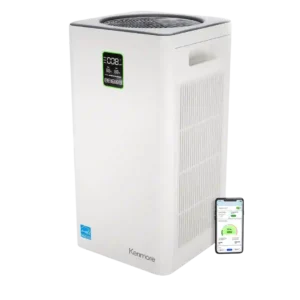
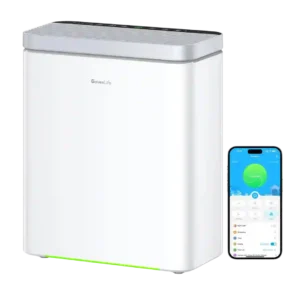
Kenmore PM4030
Where It Has the Edge
No clear scored advantage over the other product.
No clear scored advantage over the other product.
Activated carbon gets mixed marks: several owners like it for odors, but one apartment user still smelled neighboring smoke and food even while running the unit on high.
One reviewer expected the unit to exchange air many times in a small apartment, but the lingering neighbor odors made them doubt whether it was keeping up.
Airflow is a strength when the unit is healthy, with owners praising max-fan airflow and air movement. A negative review complained it only blew air weakly near a fireplace.
Owners often describe strong air movement for the size, from moving a lot of air in an RV to pulling in dust, pet hair, and bursts of smoke or odor.
Dry-air use is a weak spot in the feedback. One owner said it was not recommended for dry cities and behaved oddly around added humidity.
When the unit is working, owners often notice cleaner air quickly, especially in kitchens, living areas, and dusty homes. A smaller group says performance fades into disappointment once failures start.
Most owners say the purifier makes rooms feel cleaner and fresher, with repeated praise for quick improvements in bedrooms, living rooms, basements, and pet spaces.
The air-quality reading is useful for some owners, reacting to cooking, doors opening, and fireplace use. Others doubt the sensor after low readings around dust, smoke, or VOC-like odors.
The air-quality sensor is a standout for many buyers, especially when cooking, candles, sprays, or incense trigger a fast color and fan response. A few owners reported readings that stayed unrealistically excellent or reacted poorly to humidity.
Allergy feedback is encouraging but limited. Owners mention improved allergies and cleaner air around dust and irritating allergens.
Allergy relief is one of the strongest patterns: owners mention fewer allergy symptoms, less congestion, clearer breathing, and better comfort around pets, dust, and mold-prone spaces.
The mobile app is highly inconsistent: one owner liked it, but many could not connect, saw bugs, lost visibility, or found it unusable.
The app is usually seen as useful and information-rich, with easy controls and status checks. Complaints center on setup friction, needing an account, Bluetooth range, and one bug that customer service later fixed.
Auto mode can work impressively when cooking or air quality changes, raising fan speed on its own. Several failed units later ran high even in clean air or lost auto adjustment completely.
Auto mode earns broad praise for sensing cooking smoke, candle smoke, dust, and odors, then ramping the fan up and calming down once air improves.
Breathing-related comments are mixed. One caregiver uses the purifier to judge when a room is safer for a child with asthma, while another owner felt a failure affected their health.
Several owners connect the purifier to easier breathing, including less post-nasal drip, less coughing, and breathing that felt clearer soon after setup.
Build quality starts strong for some owners, who call it sturdy, well made, or well built. A harsh long-term review blames faulty internal electronics.
Build quality is generally praised as sturdy, solid, and well made, though one owner wished the finish came in black to match other gear.
Arrival and initial-function complaints include defective filters, a replacement unit that would not start, and one purifier that never powered on.
Arrival feedback is mostly positive when mentioned, but one buyer did receive a pre-used unit before Amazon corrected it.
The rear intake and control orientation frustrate a few users who want to place the purifier against a wall without hiding the light or flipping the controls.
Customer support is repeatedly criticized, with owners describing long holds, full voicemail boxes, unanswered emails, and little practical technical help.
Customer service receives unusually strong praise in the few reviews that needed help, including a fast app fix, troubleshooting, a refund, and a replacement without the rattle issue.
The purifier earns light praise for appearance, with owners saying it looked good out of the box and looked great tucked into a living space.
The design is usually described as sleek, modern, and easy to place, with attractive lighting. The main style complaint is the lack of a black version.
Display impressions are polarized. One buyer liked the designed screen, while several others reported dimming LEDs, failed LCD behavior, or an unusable screen.
The top panel is called easy to read and use, giving the purifier a practical on-device control experience in addition to the app.
Setup documentation gets positive remarks from a Govee owner who found the instructions well written and easy to follow.
Durability is the dominant concern. Many owners report failures between a few months and about two years, often involving controls, fans, screens, or total power loss.
Durability looks good in the reviews that mention it, including units surviving months of use and even a fall without marks or performance issues.
Dust feedback is mostly positive, with several owners noticing less dust or visible debris on the filters. One user, however, felt dust still accumulated around the house.
Dust reduction is repeatedly noticed, from less dust on furniture and surfaces to visible dirt collected in the filter after only a short time.
Basic use can be simple when the controls work, and setup gets positive marks from some owners. App dependence and touch-control quirks make it frustrating for others.
Ease of use is a major strength: buyers repeatedly call setup quick, intuitive, and simple, with easy app pairing, controls, and filter access.
Energy efficiency gets a single positive nod from an owner who liked that the unit was Energy Star certified.
Energy-saving behavior is appreciated by owners who like that the purifier can shut down or slow when air is already clean.
Fan control starts out useful, with owners using specific speeds and auto adjustments, but many later report the fan getting stuck on high or ignoring speed settings.
Fan speed options are flexible, with manual speeds, turbo, low, and sleep settings. High or turbo speeds move air well but can be much louder.
Filter life is generally seen as decent, with owners saying filters lasted a long time or about a year. One out-of-box complaint involved filters already showing reduced life.
Filter life feedback is mixed. Some owners report long life or clean filters after weeks, while others say the filter drains faster than expected under heavy use.
Replacement filters are a recurring cost complaint, with owners calling them expensive and quoting prices around $50 to $65. One buyer still saw the cost as lower than an older Kenmore unit’s filters.
Replacement filter cost is viewed favorably where mentioned, with buyers calling replacements affordable or not overly expensive.
The three-stage filter is treated as a practical plus, especially because it combines a cleanable pre-filter with HEPA and charcoal layers.
HEPA filtration is mentioned favorably by owners who wanted a higher-quality filter, including one buyer looking for HEPA-rated filtration around a newborn.
Indicator lights show up mainly in failure stories, including faded LEDs, blinking lights, and a standby light staying on while the unit would not start.
The indicator and ambient lights are widely liked for showing air quality at a glance, doubling as a night light, and adding customizable color without being too harsh.
Initial chemical odor is a concern for sensitive buyers, with one owner describing a lingering plasticizer smell coming from the machine.
Listing accuracy is positive where buyers mention it, with reviewers saying the unit arrived as described and performed as advertised.
Cleaning the filters can show the machine is catching debris, but maintenance can also trigger problems. Some owners say unplugging or changing filters led to startup and button issues.
Maintenance is considered easy: reviewers like simple filter access, quick wipe-downs, and the ability to clean the pre-filter without much fuss.
Mold-related feedback is limited but positive, with one buyer saying the purifier helped their allergy issues in a mold-sensitive situation.
Noise is pleasant at low speeds for many owners, often compared with a fan or white noise. The problem appears when failing units get stuck on high and become loud.
Noise is mostly praised on low, auto, and sleep settings, but high and turbo modes can be loud enough to bother some users or serve as white noise for others.
Odor control is a bright spot for cooking and general household freshness, with multiple owners saying smells cleared faster or the house smelled clean. Weed-smell removal is a clear miss for at least one buyer.
Odor control is one of the clearest strengths, especially for litter boxes, pets, cooking, smoke, basements, and stale indoor smells. Heavy neighboring smoke is the biggest odor-control complaint.
Overall satisfaction is sharply divided. Happy owners love the clean-air results, but many disappointed buyers say they would not purchase another Kenmore purifier.
Overall satisfaction is high across the customer reviews, with many buyers saying they love it, recommend it, bought more, or consider it a strong value.
Particle removal gets its clearest praise from a user who felt it handled dust and irritating airborne allergens well enough to be their best purifier purchase.
Particle removal is described positively when tested with cooking or dusting, with the purifier detecting particulates, ramping up, and clearing the air back down.
Pet dander feedback is strong, especially from homes with cats and dogs where buyers report fewer allergy symptoms and cleaner-feeling air.
Pet hair capture is noticeable for several owners, including less cat hair floating in the air and visible hair collecting around the unit.
PM detection is useful for buyers who chose the sensor model, though one humidity-related review suggests it can misread moisture as PM2.5.
Pollen feedback is brief but positive: one owner specifically wanted dust and pollen control and said the unit did a great job.
Portability is a plus because the unit is described as lightweight and easy to move between rooms when needed.
Power consumption feedback is positive but narrow, with one reviewer appreciating the setting that conserves power when the air is already clean.
The live number display gives owners quick feedback when cooking, opening doors, or preparing a room for an asthmatic child.
Real-time monitoring is a major draw. Owners like checking air quality from the app, seeing history, and watching the unit react to changing room conditions.
Reliability is a serious weakness after the early ownership period. Units are described as powering off, refusing to restart, getting stuck on high, or behaving unpredictably.
Reliability is mostly positive, with owners reporting months of steady use, no issues, and consistent performance after setup.
Remote control is a drawback for one owner who specifically noted that the purifier has no remote while the app was broken.
Remote control is useful through the app, but one Bluetooth user could not control it away from home and had to stay nearby.
Replacement and return experiences are poor. Owners describe multiple failed units, a daunting return process, and a replacement that did not solve the problem.
Replacement and support experiences are positive in the few cases mentioned, including a refund and a replacement unit that solved a rattle problem.
Coverage works well for open first-floor spaces in some homes, including large floor plans. A dissatisfied owner did not believe it cleaned the whole house.
Room coverage is viewed as good for bedrooms, living rooms, RVs, apartments, and larger spaces, though the toughest odor cases can still challenge it.
One owner said the room felt cooler while it ran, so temperature mixing is a small comfort bonus rather than a major theme.
Scheduling is well liked by smart-home users who want the purifier to run at set times, automate behavior, or shut off without attention.
Settings retention is weak in app-related complaints, including a unit clinging to an old Wi-Fi network and another running faster than the chosen setting.
The footprint is usually liked because the unit feels smaller than expected and has good airflow for its size. One failed-unit owner still found it gigantic once it became unusable.
The size works for many buyers: it is often described as compact, not bulky, and easy to tuck into a room, though one reviewer found it a little small.
Sleep mode is a failure point in negative reviews, with owners saying the fan blasted at high speed or controls became unresponsive after sleep mode.
Sleep mode is consistently quiet and bedroom-friendly, though one user thought it moved too little air to be fully effective.
For fan-noise sleepers, the sound can be soothing. One owner who sleeps with a fan year-round found the purifier’s noise comfortable.
Sleep benefits show up repeatedly, with owners mentioning better sleep, less congestion, and quieter overnight operation.
Smart features are a weak spot. Owners complain about app incompatibility, missing options, and fewer controls than competing smart purifier ecosystems.
Smart features are a meaningful reason to buy, especially app controls, automation, sensors, widgets, and smart-home links. Apple Home support is the notable missing integration.
Smoke performance is split. One owner says it clears smoke and smoke smell quickly, while another says it failed to remove or even detect weed smoke.
Smoke handling is usually praised for cooking smoke, candle smoke, incense, and indoor smoke smells, but very heavy hookah or neighbor smoke can overwhelm expectations.
The touch-style controls are the most repeated pain point. Many owners say buttons become unresponsive, require repeated taps, or stop controlling the purifier entirely.
True HEPA is a positive buying point in the small number of reviews that name it directly.
UV-C is a missed feature rather than a strength: one buyer felt the price should have included a UV light.
Value depends heavily on lifespan. Happy owners call it worth the money or a good fit for their budget, while failed-unit owners describe it as an expensive waste.
Value is a recurring strength, with owners calling it worth the price, a great deal on sale, and affordable compared with other air purifiers.
VOC-related odor performance was disappointing for the owner who tried it near newly applied paint, saying it did not detect those harmful scents.
VOC sensing drew a negative report from a buyer who said the purifier would not detect harmful paint-related scents.
Voice assistant compatibility is a strong smart-home perk, with repeated praise for Alexa and Google Home control.
Warranty comments are mostly negative, with owners frustrated by delays, denials, original-purchase-date limits, and complicated service steps.
The washable pre-filter is appreciated because it can be rinsed, vacuumed, or cleaned while the main HEPA/charcoal filter stays in service.
Wi-Fi reliability is poor in negative reviews, with repeated reports of failed setup, lost connections, old networks sticking, and app connection errors.
Wi-Fi and Bluetooth setup are mostly fine, but connectivity is the most common smart-feature complaint when units disconnect or require repeated pairing.