dialogue quality
Couture
1.6
The dialogue is often criticized as blunt, expository, or unnatural, especially in phone calls and scenes with younger models. A few intimate exchanges feel human, but many lines spell out emotions the performances already convey.
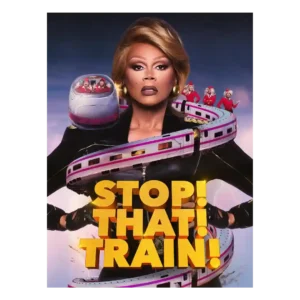
Stop! That! Train!
4.8
The strongest lines use queer wordplay, double meanings, and conversational rhythm rather than relying only on familiar references.
chemistry between characters
Couture
2.0
Maxine and Anton share a few warm, intimate moments, but their romantic spark is muted. The relationship often feels more functional than emotionally charged.
Stop! That! Train!
4.9
Ginger Minj and Jujubee’s affectionate, synchronized rapport is widely regarded as the movie’s heart and helps the absurdity feel warm.
sexual content level
Couture
1.0
The prominent nudity and intimate onscreen sex scene are treated as excessive for viewers seeking a modest drama. The content significantly lowers suitability for younger audiences.
Stop! That! Train!
3.8
The R-rated humor includes innuendo, sexual props, and raunchy jokes, though some viewers found it less explicit than expected.
supporting cast performance
Couture
1.3
The supporting performances are uneven, with some experienced actors making strong impressions while several nonprofessional models struggle with dialogue. The inconsistency makes the ensemble feel less cohesive.
Stop! That! Train!
3.9
Latrice Royale, Rachel Bloom, Chris Parnell, Matt Rogers, and several cameo players repeatedly steal scenes, although a few guest bits fall flat.
cinematography
Couture
4.3
Paris, the ateliers, and the storm-lashed runway are frequently photographed with striking elegance. The visual craft gives the film atmosphere and beauty even when the drama feels flat.
Stop! That! Train!
1.8
The bright interiors occasionally pop, but flat digital photography, washed-out lighting, and uninspired framing make the movie look less cinematic than its premise deserves.
originality
Couture
4.5
The insider, gothic approach to fashion can feel distinctive, especially when it connects bodies, labor, and mortality. The originality is less convincing when the film falls back on familiar parallel-story structures.
Stop! That! Train!
2.2
The queer drag-centered perspective feels fresh, but the plot structure and many gags borrow heavily from established disaster spoofs.
theme depth
Couture
4.3
Its exploration of women’s labor, mortality, resilience, bodies, and creative ambition gives the film real thematic weight. The ideas are often richer than the narrative structure carrying them.
Stop! That! Train!
2.0
The film is deliberately lightweight and offers little thematic complexity beyond friendship, cooperation, and queer celebration.
value for money
Couture
2.8
Jolie’s performance may justify a ticket for devoted fans, but the broader consensus favors waiting for home viewing. The uneven story makes a theatrical purchase feel harder to recommend.
Stop! That! Train!
1.0
One strongly negative critic felt the disputed, cheap-looking effects made the theatrical ticket feel insulting, while most others focused less on price.
pacing
Couture
1.6
The subdued pace frequently feels languid, ponderous, or like a slog. Viewers who enjoy quiet observation may be more patient with it, but the fragmented structure makes the slow stretches feel longer.
Stop! That! Train!
3.2
The opening half usually moves at an effective joke-a-minute clip, while repeated bits, side plots, and the final stretch can make the movie feel longer than it is.
visual style
Couture
4.4
The ateliers, gothic short film, couture garments, and stormy runway create an elegant, sometimes breathtaking visual identity. The imagery is consistently more accomplished than the storytelling.
Stop! That! Train!
3.0
The costumes, saturated interiors, and retro camp attitude are appealing, but cheap exteriors and flat photography create a visibly uneven presentation.
production design
Couture
4.5
The mirrored fashion-house interiors, ateliers, hotel spaces, and rain-soaked runway create a polished, faintly haunted Paris. The environments strongly support the contrast between public glamour and private fear.
Stop! That! Train!
3.4
The colorful train interiors and class contrasts are appealing, although the rushed, low-budget production becomes obvious outside the main sets.
critic appeal
Couture
3.0
Critical response is sharply divided on the film itself but strongly aligned around Angelina Jolie’s performance. The fragmented storytelling and thin supporting arcs are the main barriers to broader acclaim.
Stop! That! Train!
4.0
Critical response leaned positive overall, but enthusiasm varies sharply depending on tolerance for camp, Drag Race references, and rapid-fire silliness.
character development
Couture
2.0
Maxine receives the clearest emotional arc, while Ada, Angèle, Christine, and several supporting figures are repeatedly left thin or unfinished. The divided focus keeps promising personal stories from developing fully.
Stop! That! Train!
3.0
Tess and DeeDee receive a workable friendship arc, but most characters remain broad comic types and the emotional throughline can feel thin.
screenplay quality
Couture
2.2
The screenplay contains compelling ideas and a strong central crisis, but it is repeatedly described as patchy, overstuffed, and underwritten. Too many parallel stories dilute the characters and emotional focus.
Stop! That! Train!
3.1
The script delivers clever queer wordplay and a dense supply of gags, but repetition, weak runners, and thin character work keep it uneven.
lead performance
Couture
4.9
Angelina Jolie’s lead performance is the clearest point of agreement, combining restraint, vulnerability, and commanding screen presence. Even the harshest assessments credit her with keeping the film emotionally alive.
Stop! That! Train!
4.1
Ginger Minj and Jujubee carry the picture with comic confidence, sincerity, and enough emotional grounding to hold the sketch-like material together.
emotional impact
Couture
3.8
Jolie’s diagnosis scenes and the women’s brief moments of connection can be deeply moving. The impact weakens whenever the film pulls away too quickly or leaves emotional threads unresolved.
Stop! That! Train!
4.5
The friendship between Tess and DeeDee creates unexpected warmth, especially when hurt, loyalty, and reconciliation briefly cut through the chaos.
realism
Couture
3.9
Real fashion locations, working processes, and understated interactions create convincing authenticity. That naturalism is weakened by several implausible plot turns and thinly explained choices.
Stop! That! Train!
4.5
The movie wisely abandons realism and embraces cartoon logic, which suits the camp tone even when it weakens suspense.
story quality
Couture
2.4
The film has a meaningful premise and several strong individual scenes, but the overall story rarely comes together. Maxine’s health crisis is compelling while the other arcs often feel thin, detached, or unfinished.
Stop! That! Train!
3.0
The friendship and runaway-train objective provide a functional spine, but the movie can still feel like loosely connected sketches and cameos.
costume design
Couture
5.0
The garments and runway presentation are a major visual pleasure, especially during the short-film shoot and climactic show. The costuming helps sell both the glamour and the labor behind fashion.
Stop! That! Train!
4.4
Colorful uniforms, polished drag looks, and theatrical styling are among the movie’s most consistently praised visual strengths.
message quality
Couture
4.2
The film’s message about overwork, mortality, bodily autonomy, and living in the present resonates strongly. Even critics who dislike the structure often recognize the value of its central ideas.
Stop! That! Train!
3.7
Beneath the silliness, the film champions friendship, cooperation, resilience, and queer joy during a politically difficult moment.
genre satisfaction
Couture
3.5
As a quiet ensemble drama, the film is sharply divisive: some find it riveting and emotionally rich, while others consider it flat and underpowered. Its restrained style will suit a narrow audience better than viewers seeking conventional dramatic momentum.
Stop! That! Train!
4.0
As a modern disaster spoof, it captures the throw-everything-at-the-wall spirit of Airplane!-style comedy without matching the classics’ consistency.
age appropriateness
Couture
1.0
Prominent nudity, an intimate sex scene, and heavy crude language make the film unsuitable for younger viewers. It is firmly aimed at mature audiences.
Stop! That! Train!
1.5
This is an adult-oriented spoof rather than a children’s comedy, with an R rating, sexual jokes, language, drug material, and brief nudity.
family friendliness
Couture
1.0
Prominent nudity, an onscreen sex scene, and heavy crude language make this unsuitable for family viewing. Parents looking for a restrained fashion drama should expect mature content.
Stop! That! Train!
1.5
Parents should expect an adult comedy rather than family viewing because of sexual material, language, drug references, and brief nudity.
audience appeal
Couture
4.0
This quiet, fashion-focused character drama is most likely to connect with viewers interested in creative work, female solidarity, and understated storytelling. Its diffuse structure will limit its appeal for audiences wanting a propulsive plot.
Stop! That! Train!
3.6
Drag Race fans and viewers who enjoy broad camp are the strongest match, though several nonfans still found the humor accessible and fun.
world-building
Couture
3.6
Rare access to fashion workspaces and attention to fittings, makeup, sewing, and runway preparation make the industry feel tangible. Some viewers still wanted deeper insight beyond the polished surfaces.
Stop! That! Train!
4.0
The Glamazonian Express is a fun exaggerated setting, with luxury, coach, disco, and meditation spaces that support the movie’s cartoon logic.
plot clarity
Couture
2.5
The subtle plotting can become opaque, leaving the importance of certain beats and connections unclear. The three main arcs do not always cohere into a single, easily readable story.
Stop! That! Train!
2.8
A simple runaway-train setup gives the comedy useful structure, though some critics found the multiple subplots unnecessarily convoluted.
acting performance
Couture
4.6
The cast often gives the film more life than the writing provides, with natural, emotionally restrained work standing out. Performance quality becomes less consistent among some inexperienced supporting models.
Stop! That! Train!
4.3
The ensemble’s commitment gives the movie most of its momentum, with performers treating even the silliest material seriously enough to make it work.
ending satisfaction
Couture
3.2
The rain-soaked fashion show provides memorable imagery and a thematic sense of surrender to the uncontrollable. Reactions are mixed because the resolutions feel rushed, overly neat, or cut off before the strongest final image.
Stop! That! Train!
3.5
The finale keeps enough laughs flowing to remain enjoyable for many viewers, but several critics found the third act rote, prolonged, or unable to stick the landing.
cultural representation
Couture
5.0
The film treats women from different cultures and professions with empathy, emphasizing shared pressure, displacement, and mutual support. Its strongest moments honor solidarity without turning the characters into simple symbols.
Stop! That! Train!
4.7
The movie’s proud queer perspective is a major strength, centering drag performers as heroes and celebrating queer joy without making them the joke.
rewatch value
Couture
2.0
The film is more likely to be a one-time watch than a repeat favorite. Its themes may linger, but the slow, messy narrative reduces the urge to revisit it.
Stop! That! Train!
2.3
Fans may enjoy repeat communal screenings and quote-alongs, but inconsistent jokes, dated references, and rough effects limit broader replay value.
plot originality
Couture
2.0
The three intersecting journeys are built from familiar dramatic material and rarely develop in surprising ways. Their fragmentation makes the plotting feel more schematic than inventive.
Stop! That! Train!
2.0
The train setting adds a playful variation, but the story remains an openly familiar patchwork of Airplane!, disaster-movie, and Mean Girls conventions.