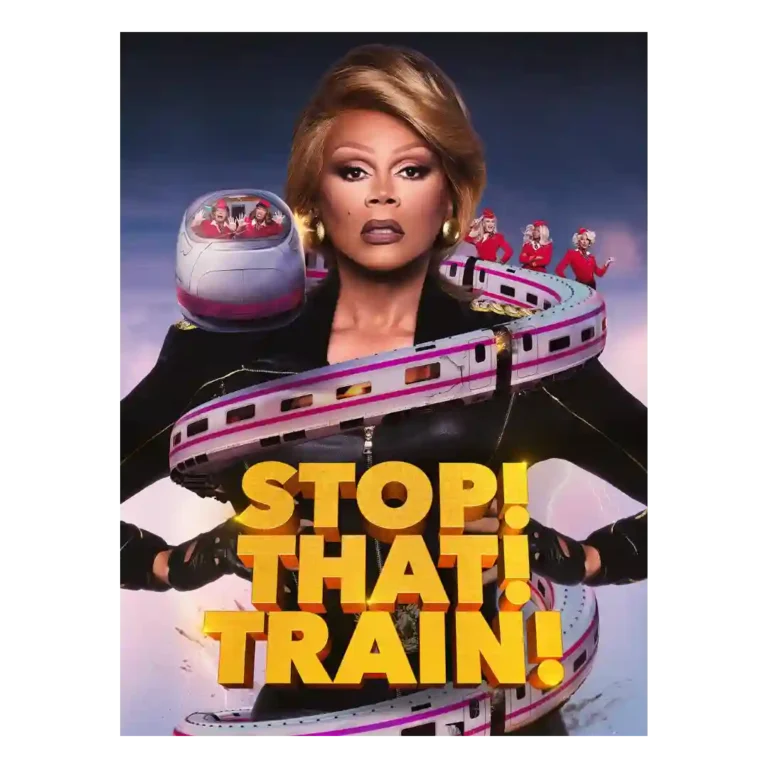
Choose it for exuberant drag performances, dense camp, and a sweet central friendship. Skip it if inconsistent jokes, adult humor, thin suspense, or visibly cheap effects quickly derail your enjoyment.
Best for
Best for Drag Race fans, queer audiences seeking celebratory escapism, and anyone who enjoys broad, knowingly stupid Airplane!-style camp with friends.
Not for
Skip it if you need polished effects, sustained suspense, subtle comedy, deep characterization, or a consistently high joke hit rate.
Verdict
Stop! That! Train! works best as a proudly ridiculous ensemble showcase rather than a polished disaster comedy. Ginger Minj and Jujubee give the chaos warmth, RuPaul energizes the White House material, and Latrice Royale leads a deep bench of scene-stealing support. The queer perspective feels celebratory and welcoming, while the rapid-fire wordplay produces enough big laughs for many viewers. Still, the hit rate varies sharply: repeated gags, a sagging final stretch, thin character development, and rough CGI keep it from reaching the classics it imitates. Its R-rated innuendo and Drag Race references also narrow the audience, though newcomers who enjoy broad camp may still have a great time.
Adam Shankman generally keeps the sprawling cast and relentless gag flow under control, though the rushed production limits visual invention and polish.
The comedy mixes bawdy dialogue with cleaner wordplay, and several critics appreciated that some of its biggest laughs do not depend on explicit language.
The disaster-movie musical cues and retro callbacks help establish the spoof tone, with the Poseidon Adventure-style opening music receiving particular praise.
Critical response leaned positive overall, but enthusiasm varies sharply depending on tolerance for camp, Drag Race references, and rapid-fire silliness.
The finale keeps enough laughs flowing to remain enjoyable for many viewers, but several critics found the third act rote, prolonged, or unable to stick the landing.
The bright interiors occasionally pop, but flat digital photography, washed-out lighting, and uninspired framing make the movie look less cinematic than its premise deserves.
One strongly negative critic felt the disputed, cheap-looking effects made the theatrical ticket feel insulting, while most others focused less on price.
The train setting adds a playful variation, but the story remains an openly familiar patchwork of Airplane!, disaster-movie, and Mean Girls conventions.
The costumes, saturated interiors, and retro camp attitude are appealing, but cheap exteriors and flat photography create a visibly uneven presentation.
The opening half usually moves at an effective joke-a-minute clip, while repeated bits, side plots, and the final stretch can make the movie feel longer than it is.
Royale’s ever-employed Barbra is the most consistently celebrated supporting character, with her facial expressions, timing, and shade turning a running gag into a highlight.
Friel’s screenplay earns praise for authentic queer wordplay and relentless joke density, but also criticism for repetitive bits and an uneven hit rate.
Wright’s screenplay is admired for fast queer comic language and spoof awareness, though weaker running jokes and thin story construction draw criticism.
Jujubee is widely considered a standout, blending deadpan comedy, sweetness, and unexpected emotional softness while forming the movie’s most endearing relationship with Ginger Minj.
RuPaul’s President Judy Gagwell is a major comic asset, combining commanding presence, expressive timing, melodrama, and a distinctive cackle that energizes nearly every scene.
Parnell makes the most of Conductor Davenport, earning praise as a rubber-faced scene stealer whose absurd backstory and early exit generate major laughs.
Minj gives Tess warmth, confidence, and enough coherence to anchor the chaos, with most critics praising her partnership with Jujubee despite a few reservations about likability.
Rogers’ sycophantic press secretary earns strong praise for rapid delivery, mugging, and energetic chemistry with RuPaul, though one critic found him grating.
Bloom’s earnest straight-woman approach gives the chaos a useful counterweight, although some reviewers felt her workplace running gags became repetitive.
Shankman is often credited with controlling the crowded ensemble and rapid gags, though critics disagree on whether his rushed, visually limited direction elevates the material enough.
Reactions to Alvarez’s dumb-jock conductor are sharply split: some found his voice and sincerity very funny, while others considered him unbelievable or simply unfunny.
Ferguson’s snooty-passenger cameo is one of the least successful recurring bits, repeatedly described as flat, poorly written, and unable to earn laughs.
Compared With Category Average
Compared with other Movies, this product is above average in makeup quality, dialogue quality, language level, near average in audience appeal, humor, below average in cinematography, animation quality, suspense.
Comparison summary
48 compared features
Above average0.4+ pts higher
16(33%)
Same as averagewithin 0.3 pts
15(31%)
Below average0.4+ pts lower
17(35%)
Largest category differences
Attribute
This product
Category average
Difference
cinematography
1.8
4.2
-2.4
animation quality
1.5
3.9
-2.4
suspense
1.7
3.7
-2.0
makeup quality
5.0
3.0
+2.0
value for money
1.0
3.0
-2.0
special effects quality
1.8
3.5
-1.7
dialogue quality
4.8
3.0
+1.7
theme depth
2.0
3.7
-1.7
Consider This Instead
If you want better originality
Choose Bouchra. It scores 4.8 vs 2.2 for originality, with a 4.3 overall score.
Products reviewers directly compared with this model, grouped into quick takeaways.
Scary Movie
Better: laugh-out-loud comedyThe reviewer recommends Scary Movie instead for viewers seeking bigger laughs.
Alternative: comedy recommendationThe reviewer recommends this as a more satisfying choice for viewers disappointed by Scary Movie.
Worse: narrative structureIts real plot keeps the comedy from feeling like disconnected sketches, unlike Scary Movie.
Airplane
Similar: broad absurd comedyFans of Airplane-style stupidity are expected to appreciate the movie's humor.
Similar: humor and setupThe reviewer calls it a queer variation on Airplane's setup and gag style.
Similar: disaster-spoof templateThe movie is described as the Airplane formula moved onto a train with drag queens.
Airplane!
Better: overall spoof qualityThe film is a daffy pleasure but falls short of becoming a modern Airplane!.
Similar: spoof structure and joke densityThe movie openly follows the rapid-fire disaster-spoof tradition of Airplane!.
FAQ
Do you need to watch RuPaul’s Drag Race first?
No. Fans will catch more references and cameos, but several reviewers unfamiliar with the show still found the broad spoof humor accessible.
Is Stop! That! Train! family-friendly?
No. It is rated R and includes sexual jokes and material, language, drug references, and brief nudity.
Is it similar to Airplane!?
Yes. It openly borrows the disaster-spoof structure, rapid sight gags, wordplay, and absurd logic, though critics generally found it less consistent than the classic.
What is the movie’s biggest strength?
The cast. Ginger Minj and Jujubee provide warmth and chemistry, while RuPaul, Latrice Royale, Rachel Bloom, Chris Parnell, and Matt Rogers deliver many of the standout laughs.
What is the biggest drawback?
The visual effects frequently look cheap or unfinished, and repeated jokes and side plots cause the pacing to sag, especially late in the film.
Sample Expert Reviews We Analyzed
These are a few of the reviews included in our analysis.
Best for a profound, formally inventive meditation on grief, memory, and the ethics of filming family. Skip it if intensely personal addiction material, a 114-minute runtime, or occasional repetition will...
Best for joyful music, rare footage, candid interviews, and a layered Maurice White portrait. Skip it if you want a tightly focused, unconventional reappraisal that lingers on performances instead of...
Best for a tender, accessible portrait that lets Oliver’s poetry, friends, and archival voice carry the experience. Skip it if you want a brisk, deeply investigative biography; the calm rhythm...
Pros: romance quality, faithfulness to source material
Best for razor-sharp adult comedy, exceptional ensemble work, and a surprisingly moving marriage story. Skip it if talk-heavy chamber pieces, explicit relationship discussions, or an occasionally intrusive string score wear...