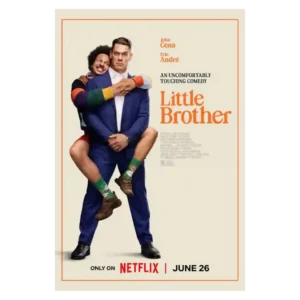

Little Brother
Where It Has the Edge
- supporting cast performance is 3.3 vs 2.7. The supporting ensemble contains several strong comic performers who make an impression when given room. The recurring complaint...
Quick verdict
Choose Little Brother for supporting cast performance.
Choose Heartstopper Forever for age appropriateness and lead performance.
The explicit sexual jokes, nudity, and bodily-function humor make this a poor fit for children. Even viewers who enjoyed it treated it as an adults-only comedy.
The story remains thoughtful and supportive for teen audiences, while its move into sex, alcohol, and heavier relationship conflict clearly targets older teens and adults.
The leads remain charismatic, but one harsh assessment finds the roles handcuff their natural comic abilities. Cena’s tightly wound straight-man part draws more criticism than André’s chaos agent.
The lead work is a major strength, with Joe Locke and especially Kit Connor receiving career-best praise for vulnerable, emotionally grounded performances.
The screenplay is the most consistent weakness, repeatedly described as predictable, underwritten, low-effort, and overly reliant on crude set pieces. A few clever early ideas and heartfelt themes never fully overcome that structure.
The screenplay is often praised for empathy, mature themes, and confident character writing, though a few scenes feel overworked or explain emotions too explicitly.
The film touches on inequality, bullying, insecurity, social services, and chosen family. Those themes are promising but rarely developed deeply enough to match the comedy’s louder surface.
The film thoughtfully explores whether first love can mature, how partners maintain separate identities, and why care must include both devotion and self-preservation.
The movie pushes graphic sexual jokes, nudity, and explicit situations far beyond typical mainstream comedy. Even some positive viewers consider the material excessive or unnecessarily gross.
Most critics approved of the more mature intimacy as loving, sensitive, and emotionally purposeful. A few found the sex scenes overly sanitized or coy.
Its appeal is narrow and highly dependent on tolerance for crude, chaotic humor. Some found it an easy streaming watch, while others considered it disposable or actively unpleasant.
Existing fans and queer viewers are the clear audience, with strong emotional and nostalgic appeal. Newcomers may struggle without the context of the three prior seasons.
As an R-rated buddy comedy, it delivers enough chaos and irreverence for some viewers. Many others feel it misses the sharper timing and tonal control of the genre’s best examples.
As a warm YA romance and series finale, it largely delivers the emotional comfort and hopeful resolution fans expect.
The biggest credibility problem is how readily nearly everyone embraces Marcus while dismissing Rudd’s reasonable concerns. Several character reactions feel engineered for the formula rather than believable.
Some critics praised the more grounded look at changing relationships and mental health, while others still found the idealized queer world too polished to feel fully real.
The humor is the biggest dividing line: supporters enjoy the physical disasters, committed performances, and outrageous set pieces. Detractors find the same material repetitive, desperate, tasteless, or simply unfunny.
Humor is used sparingly, with Imogen’s blunt observations and comic timing providing the clearest laughs.
Matt Spicer earns praise for staging individual visual gags and building certain jokes efficiently. The larger film is more often criticized for lifeless stretches and an inability to balance sweetness with abrasive chaos.
Wash Westmoreland handles the characters’ maturation gently and preserves the series’ familiar visual and emotional language rather than imposing a jarring new style.
The ending is warmly received when its family reconciliation connects, but several critics find it predictable, rushed, or emotionally underpowered. The final payoff rarely feels surprising.
Most critics found the finale heartfelt, fitting, and satisfying for longtime fans. A small minority felt the standalone movie was unnecessary or too weak to justify the farewell.
Some enthusiastic viewers expect to watch it again or consider it highly rewatchable. Others say one viewing is enough and expect the movie to be quickly forgotten.
Devoted fans are likely to revisit the finale for its comfort, nostalgia, and affectionate send-off, with several critics expecting it to endure as a comfort watch.
The romantic material has a sweet core, particularly in the quieter relationship moments. The Mia-and-Marcus thread is underdeveloped and never receives enough room to fully work.
The romance remains tender, convincing, and emotionally rewarding as Nick and Charlie confront distance, codependence, and the work of sustaining love.
Despite its family theme, the movie is packed with graphic sexual jokes, nudity, profanity, and gross-out material. It is not a comfortable all-ages or family-night choice.
The hopeful representation can be valuable for older teens and families, but the more explicit sex, drinking, and adult themes make it less suitable for younger viewers.
Negative viewers feel the comedy wears out its welcome well before the end. Repetition makes the roughly feature-length runtime feel longer than it is.
The feature-length format divided critics: some thought it suited the characters’ maturity, while many felt the story was either rushed or stretched across nearly two hours.
The found-family material gives the comedy genuine warmth for some viewers, especially through Marcus. Others find the sentimental turns abrupt, shoehorned, or too underdeveloped to land.
The farewell is widely described as moving, bittersweet, and emotionally resonant. A few critics found the rushed structure reduced the impact of key moments.
Reactions range from genuinely fun and laugh-out-loud to dull and barely watchable. It works best as a casual streaming comedy for viewers already receptive to its stars and extreme humor.
The movie remains highly enjoyable for invested fans, though occasional repetition and a fun-but-pointless musical interlude reduce its momentum.
The tightly compressed editing limits the time Cena and André spend developing their strongest comic dynamic. The movie can feel cut for efficiency rather than rhythm.
Flashbacks deepen nostalgia for some viewers, while others found the repeated montages excessive and disruptive to the movie’s rhythm.
The found-family premise has genuine warmth, but the story is thin, predictable, and tonally unstable. Stronger reactions connect with Marcus’s need for belonging; weaker ones see only set pieces linked by formula.
The main story works best as a heartfelt farewell centered on Nick and Charlie, though several critics found it driftless, repetitive, or too compressed to fully land.
The cast is often stronger than the material, with several critics praising the performers’ commitment and comic skill. Negative reactions focus more on how the roles constrain that talent than on a lack of ability.
Joe Locke and Kit Connor are widely praised for showing greater maturity, emotional range, and confidence as the characters move toward adulthood.
The movie is overwhelmingly viewed as formulaic, predictable, and assembled from familiar odd-couple comedies. Its performers and a few extreme gags provide personality, but the concept itself feels recycled.
The finale largely offers a polished continuation rather than a reinvention, with familiar tropes, callbacks, and conflicts limiting its sense of novelty.
Marcus receives the most affecting development through his abandonment and found-family arc. Rudd’s growth works for some viewers but feels predictable or unearned to others.
Charlie’s growing confidence and Nick’s identity crisis give the leads meaningful new dimensions. The compressed format and repeated anxiety cycles weaken some of the supporting development.
The supporting ensemble contains several strong comic performers who make an impression when given room. The recurring complaint is that Michelle Monaghan, Sherry Cola, Ego Nwodim, Caleb Hearon, and others are underused.
The ensemble remains likable and capable, but most critics wanted much more time with Tao, Elle, Tara, Darcy, Isaac, Imogen, Tori, and the wider friend group.
The sibling drama adds welcome sincerity, especially around Marcus’s abandonment. Its emotional side is less consistent than the comedy and does not always earn the intended payoff.
The relationship drama is strongest when it lays fear, jealousy, dependence, and vulnerability bare. Repetition makes the conflict exhausting for a minority of critics.
The musical score is serviceable but leaves little memorable impression. It rarely stands out from the rest of the production.
The score generally supports the emotion, but some critics found it overly insistent, twee, or prone to emphasizing feelings the actors already communicate.
The film’s ideas about brotherhood, second chances, inequality, and chosen family give it more substance than its premise suggests. Even positive reactions note that some of those ideas are only lightly developed.
Its messages about self-acceptance, agency, care, and LGBTQIA+ solidarity are central strengths, even when the delivery occasionally becomes heavy-handed.
The opening setup and some escalating gags move briskly, but the middle often loses momentum. Several viewers describe long generic stretches or a second act that hits the brakes.
Pacing is the most consistent drawback: some found the movie rushed and montage-heavy, while others thought the two-hour runtime repeated too few story beats.
The movie benefits from a good eye for visual gags and readable slapstick staging. Its strongest images serve the physical comedy rather than creating a distinctive overall look.
Pastel imagery, animated flourishes, deepened colors, and comic-inspired transitions keep the movie visually distinctive while signaling greater maturity.
The dialogue sharply divides opinion: one critic enjoyed its elaborately constructed smut, while another could not identify a single funny line. Much depends on the viewer’s appetite for graphic wordplay.
The dialogue can be tender and emotionally clear, but several critics found it overly sweet, platitudinous, or clunky in its most message-heavy scenes.
John Cena and Eric André’s odd-couple chemistry is the movie’s most consistent strength. Their contrasting styles create energy even when the writing around them feels familiar.
Locke and Connor’s warm, convincing chemistry remains the movie’s strongest and most consistent asset, anchoring even the more critical assessments.
The plot follows an obvious outsider-disrupts-an-uptight-man formula with few surprises. The found-family angle adds heart, but not much novelty.
The plot leans on familiar coming-of-age conflicts and revisits emotional beats the series has already explored, leaving some critics wanting fresher material.
The photography has a clean, serviceable Netflix look and avoids appearing cheap. It supports the comedy without becoming a major attraction on its own.
The cinematography keeps the recognizable Heartstopper look, including intimate framing and graceful tracking shots that suit the farewell.
The use of Hoobastank’s “The Reason” creates a memorable comic and emotional beat. Music otherwise receives little attention.
The gentle soundtrack supports the film’s tender, nostalgic atmosphere, though music is not a major focus of the criticism.
The familiar hearts, leaves, sparks, and hand-drawn accents remain charming and emotionally expressive without overwhelming the live-action story.
Critical response is strongly positive overall, but not unanimous: most call it heartfelt and satisfying, while a few dismiss it as overlong or unnecessary.
The film’s queer representation, trans-rights advocacy, and emphasis on joy and community receive near-universal praise, though some message-driven moments feel shoehorned.
The finale stays closely aligned with Alice Oseman’s source material and preserves the franchise’s defining warmth, optimism, and character focus.
The dialogue is extremely explicit, with graphic references to sex, masturbation, arousal, and genitals. Viewers sensitive to crude language are unlikely to be comfortable.
The central relationship story remains cohesive and easy to follow from beginning to end, even when secondary arcs receive less explanation.
The movie retains Heartstopper’s compassionate sweetness while adopting a more somber, mature mood. The tonal shift mostly works, though its sincerity can still feel cloying to skeptics.
As part of an existing Netflix subscription, some consider it an acceptable casual watch. The harshest reactions say it would feel like poor value as a paid theatrical experience.