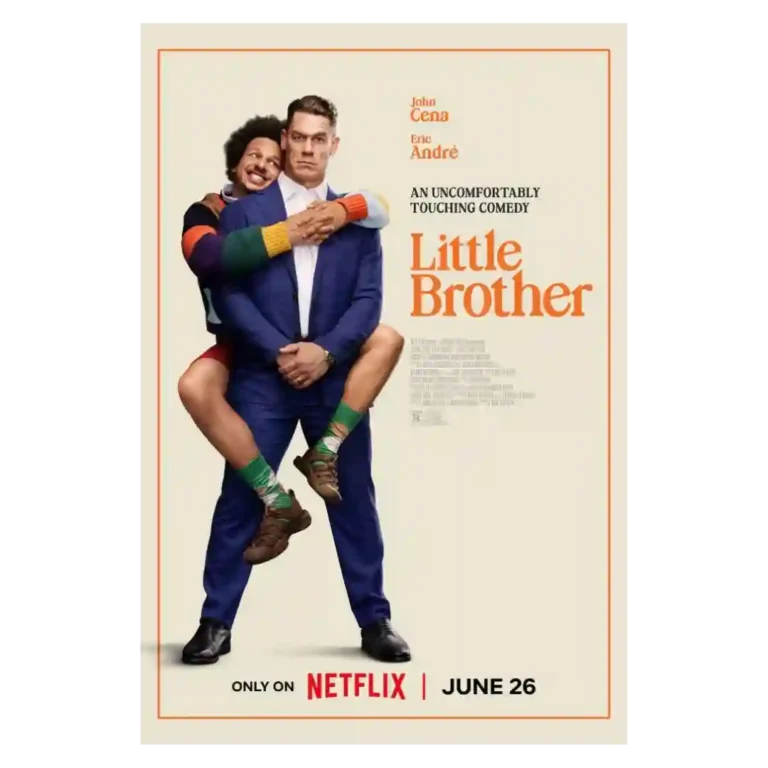
Little Brother Movie Review
Bottom Line
Choose it for Cena and André’s lively odd-couple chemistry and unapologetically crude physical comedy. Skip it if predictable plots, graphic sexual humor, or abrupt sentimental turns usually wear you down.
Best for adults who enjoy Eric André’s manic physical comedy, John Cena as a tightly wound straight man, and deliberately graphic R-rated humor.
Skip it if you want an original story, restrained comedy, believable character reactions, or a family-friendly movie night.
Little Brother is powered by a pairing that many critics agree deserves a better movie. John Cena’s rigid frustration and Eric André’s fearless chaos generate strong chemistry, while André in particular finds surprising vulnerability beneath the physical humiliation. The trouble is a screenplay repeatedly described as recycled, predictable, and overdependent on graphic sexual and bodily-function gags. Individual set pieces can be genuinely funny, and the chosen-family theme gives the film flashes of warmth, but the tonal shift toward sentiment does not consistently feel earned. Supporting performers add value without receiving enough room, and the middle can drag between comic peaks. It is a sharply taste-dependent Netflix comedy: lively when the leads collide, generic whenever the formula takes control.
Feature Scorecards
Summary
35 reviewed features- Very positive 4.5-5.0 6% 2 features
- Positive 3.5-4.4 14% 5 features
- Neutral 2.5-3.4 37% 13 features
- Negative 1.5-2.4 37% 13 features
- Very negative below 1.5 6% 2 features
Pros
-
John Cena and Eric André’s odd-couple chemistry is the movie’s most consistent strength. Their contrasting styles create energy even when the writing around them feels familiar.
-
The movie benefits from a good eye for visual gags and readable slapstick staging. Its strongest images serve the physical comedy rather than creating a distinctive overall look.
-
The film’s ideas about brotherhood, second chances, inequality, and chosen family give it more substance than its premise suggests. Even positive reactions note that some of those ideas are only lightly developed.
-
The photography has a clean, serviceable Netflix look and avoids appearing cheap. It supports the comedy without becoming a major attraction on its own.
-
The use of Hoobastank’s “The Reason” creates a memorable comic and emotional beat. Music otherwise receives little attention.
-
The cast is often stronger than the material, with several critics praising the performers’ commitment and comic skill. Negative reactions focus more on how the roles constrain that talent than on a lack of ability.
-
Marcus receives the most affecting development through his abandonment and found-family arc. Rudd’s growth works for some viewers but feels predictable or unearned to others.
Cons
-
The found-family material gives the comedy genuine warmth for some viewers, especially through Marcus. Others find the sentimental turns abrupt, shoehorned, or too underdeveloped to land.
-
The supporting ensemble contains several strong comic performers who make an impression when given room. The recurring complaint is that Michelle Monaghan, Sherry Cola, Ego Nwodim, Caleb Hearon, and others are underused.
-
Some enthusiastic viewers expect to watch it again or consider it highly rewatchable. Others say one viewing is enough and expect the movie to be quickly forgotten.
-
The romantic material has a sweet core, particularly in the quieter relationship moments. The Mia-and-Marcus thread is underdeveloped and never receives enough room to fully work.
-
The sibling drama adds welcome sincerity, especially around Marcus’s abandonment. Its emotional side is less consistent than the comedy and does not always earn the intended payoff.
-
The humor is the biggest dividing line: supporters enjoy the physical disasters, committed performances, and outrageous set pieces. Detractors find the same material repetitive, desperate, tasteless, or simply unfunny.
-
Reactions range from genuinely fun and laugh-out-loud to dull and barely watchable. It works best as a casual streaming comedy for viewers already receptive to its stars and extreme humor.
-
The ending is warmly received when its family reconciliation connects, but several critics find it predictable, rushed, or emotionally underpowered. The final payoff rarely feels surprising.
-
The dialogue sharply divides opinion: one critic enjoyed its elaborately constructed smut, while another could not identify a single funny line. Much depends on the viewer’s appetite for graphic wordplay.
-
The opening setup and some escalating gags move briskly, but the middle often loses momentum. Several viewers describe long generic stretches or a second act that hits the brakes.
-
Matt Spicer earns praise for staging individual visual gags and building certain jokes efficiently. The larger film is more often criticized for lifeless stretches and an inability to balance sweetness with abrasive chaos.
-
The film touches on inequality, bullying, insecurity, social services, and chosen family. Those themes are promising but rarely developed deeply enough to match the comedy’s louder surface.
-
The musical score is serviceable but leaves little memorable impression. It rarely stands out from the rest of the production.
-
The found-family premise has genuine warmth, but the story is thin, predictable, and tonally unstable. Stronger reactions connect with Marcus’s need for belonging; weaker ones see only set pieces linked by formula.
-
Its appeal is narrow and highly dependent on tolerance for crude, chaotic humor. Some found it an easy streaming watch, while others considered it disposable or actively unpleasant.
-
As an R-rated buddy comedy, it delivers enough chaos and irreverence for some viewers. Many others feel it misses the sharper timing and tonal control of the genre’s best examples.
-
The plot follows an obvious outsider-disrupts-an-uptight-man formula with few surprises. The found-family angle adds heart, but not much novelty.
-
The tightly compressed editing limits the time Cena and André spend developing their strongest comic dynamic. The movie can feel cut for efficiency rather than rhythm.
-
The leads remain charismatic, but one harsh assessment finds the roles handcuff their natural comic abilities. Cena’s tightly wound straight-man part draws more criticism than André’s chaos agent.
-
The biggest credibility problem is how readily nearly everyone embraces Marcus while dismissing Rudd’s reasonable concerns. Several character reactions feel engineered for the formula rather than believable.
-
As part of an existing Netflix subscription, some consider it an acceptable casual watch. The harshest reactions say it would feel like poor value as a paid theatrical experience.
-
The movie pushes graphic sexual jokes, nudity, and explicit situations far beyond typical mainstream comedy. Even some positive viewers consider the material excessive or unnecessarily gross.
-
Despite its family theme, the movie is packed with graphic sexual jokes, nudity, profanity, and gross-out material. It is not a comfortable all-ages or family-night choice.
-
The movie is overwhelmingly viewed as formulaic, predictable, and assembled from familiar odd-couple comedies. Its performers and a few extreme gags provide personality, but the concept itself feels recycled.
-
The screenplay is the most consistent weakness, repeatedly described as predictable, underwritten, low-effort, and overly reliant on crude set pieces. A few clever early ideas and heartfelt themes never fully overcome that structure.
-
Negative viewers feel the comedy wears out its welcome well before the end. Repetition makes the roughly feature-length runtime feel longer than it is.
-
The explicit sexual jokes, nudity, and bodily-function humor make this a poor fit for children. Even viewers who enjoyed it treated it as an adults-only comedy.
-
The dialogue is extremely explicit, with graphic references to sex, masturbation, arousal, and genitals. Viewers sensitive to crude language are unlikely to be comfortable.
Cast & Creators
-
ActorEric André is widely treated as the movie’s comic engine, combining fearless physical humor with flashes of vulnerability. His manic style remains an acquired taste, but his strongest notices call his timing impeccable.
-
ActorBen Ahlers makes a solid impression in a small supporting role as a nervous real-estate rival.
-
ActorChristopher Meloni commits fully to the swaggering older-brother role and elevates the mediocre material with confident comic character work.
-
ActorJohn Cena’s reception is sharply split. Some praise one of his best comedy turns and his willingness to play the tightly wound straight man, while others find the performance repetitive, wooden, or unconvincing.
-
ActorSherry Cola brings likability to Mia, but the role and romantic subplot are too underdeveloped to use her effectively.
-
DirectorMatt Spicer is faulted for failing to reconcile the movie’s wholesome and abrasive sides. Individual gags show skill, but the overall direction is viewed as a disappointing step down.
Compared With Category Average
Compared with other Movies, this product is below average in lead performance, originality, age appropriateness.
Summary
8 compared features- Above average 0.4+ pts higher 0% 0 features
- Same as average within 0.3 pts 0% 0 features
- Below average 0.4+ pts lower 100% 8 features
| Attribute | This product | Category average | Difference |
|---|---|---|---|
| lead performance | 2.0 | 4.3 | -2.3 |
| originality | 1.7 | 3.6 | -1.9 |
| age appropriateness | 1.3 | 3.1 | -1.8 |
| language level | 1.0 | 2.8 | -1.8 |
| genre satisfaction | 2.3 | 3.9 | -1.7 |
| plot originality | 2.0 | 3.4 | -1.4 |
| audience appeal | 2.3 | 3.7 | -1.4 |
| score quality | 2.5 | 4.0 | -1.5 |
FAQ
Is Little Brother actually funny?
It is highly taste-dependent. Fans of chaotic physical comedy and gross-out set pieces found real laughs, while many critics considered the same jokes repetitive, desperate, or dull.
Are John Cena and Eric André good together?
Yes. Their mismatched chemistry is the most consistently praised element, even among reviewers who disliked the script.
Is Little Brother family-friendly?
No. It contains graphic sexual dialogue, nudity, profanity, bodily-function humor, drug material, and explicit situations aimed at adults.
Does the movie have emotional depth?
It has a sincere chosen-family theme and gives Marcus a vulnerable abandonment story. The emotional turns work for some viewers but feel rushed or shoehorned to others.
Is it worth watching on Netflix?
It can work as a casual stream for adults who already enjoy the leads and crude buddy comedies. Viewers seeking originality or consistent laughs are more likely to find it disposable.
Sample Expert Reviews We Analyzed
These are a few of the reviews included in our analysis.

Video Reviews
Article Reviews
- Review score
- 4.2
Compared in Reviews
Products reviewers directly compared with this model, grouped into quick takeaways.
Ladies First
- Better: overall comedy quality The reviewer considers it at least as bad as, and possibly worse than, Ladies First.
Step Brothers
- Compared: raunchy sibling comedy The movie is unfavorably compared with the broad sibling comedy of Step Brothers.
What About Bob?
- Better: odd-couple comedy execution It is described as a weak imitation of the unhinged odd-couple humor in What About Bob?.
Consider This Instead
If you want better originality
Choose Night Nurse. It scores 4.7 vs 1.7 for originality, with a 3.5 overall score.
If you want better language level
Choose Bouchra. It scores 4.5 vs 1.0 for language level, with a 4.3 overall score.
If you want better screenplay quality
Choose The Invite. It scores 4.8 vs 1.7 for screenplay quality, with a 4.5 overall score.
If you want better value for money
Choose Romería. It scores 5.0 vs 1.9 for value for money, with a 4.5 overall score.
Top Movies to Consider
Best for a profound, formally inventive meditation on grief, memory, and the ethics of filming family. Skip it if intensely personal addiction material, a 114-minute runtime, or occasional repetition will...
Pros: plot originality, ending satisfaction
Cons: runtime, pacing
Best for a tender, accessible portrait that lets Oliver’s poetry, friends, and archival voice carry the experience. Skip it if you want a brisk, deeply investigative biography; the calm rhythm...
Pros: romance quality, faithfulness to source material
Cons: none
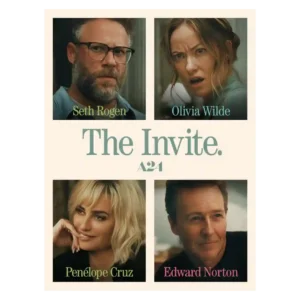
Best for razor-sharp adult comedy, exceptional ensemble work, and a surprisingly moving marriage story. Skip it if talk-heavy chamber pieces, explicit relationship discussions, or an occasionally intrusive string score wear...
Pros: plot originality, lead performance
Cons: runtime, score quality
Best for luminous coastal imagery, an exceptional debut performance, and a tender search through family memory. Skip it if slow pacing, subdued conflict, or a late shift into magical realism...
Pros: ending satisfaction, acting performance
Cons: character development, score quality